The Paraguayan War, explained in one line: from late 1864 to March 1870, Paraguay under President Francisco Solano López fought the Empire of Brazil, Argentina and Uruguay combined — the Triple Alliance — in the bloodiest interstate war in Latin American history, losing about 40 percent of its territory and a share of its people historians still place anywhere between a fifth and two-thirds. It began over Uruguay, was decided on Paraguay's rivers, and ended only when López was killed at Cerro Corá on 1 March 1870.
Key takeaways
- One small country against three neighbours: Paraguay — perhaps 300,000–525,000 people, depending on whose reconstruction is believed — declared war on Brazil in December 1864 and on Argentina in March 1865, facing both plus Uruguay at once.
- The rivers decided it: Brazil's navy destroyed the Paraguayan fleet at Riachuelo on 11 June 1865 and blockaded Paraguay, turning the war into a siege of the Humaitá fortress line that took over two years to break.
- The toll is a range, not a number: some 200,000 lives in total on Leslie Bethell's account — but Paraguay's own loss is estimated anywhere from 8.7 percent to 69 percent of its people (see What did the war cost?).
- Victory transformed the victors: Argentina emerged consolidated; Brazil strained its finances, freed slaves to fill its ranks, and created the politicised army that overthrew its empire in 1889.
Contents
- Overview
- Why did Paraguay go to war with three neighbours?
- How did the war unfold?
- What did the war cost?
- Economic effects
- How did it shape the world?
- What historians debate
Overview
The Paraguayan War — also called the War of the Triple Alliance, and in Paraguay the Guerra Guazú, the Great War — was fought between Paraguay and the alliance of the Empire of Brazil, Argentina and Uruguay from late 1864 to 1 March 1870. Britannica calls it the bloodiest conflict in Latin American history; Bethell's University of London Press history adds that, apart from the Crimean War, it was the bloodiest interstate war anywhere between the end of the Napoleonic Wars in 1815 and the First World War, claiming some 200,000 lives — mostly Paraguayan and Brazilian — in battle or from accompanying disease and deprivation.
The setting was the Río de la Plata basin, where the Paraná, Paraguay and Uruguay rivers carried the interior's trade to the Atlantic. Landlocked Paraguay sat upriver — independent since 1811, kept isolated and self-sufficient by authoritarian modernisers while they built an army and a state-run economy. Both large neighbours held claims against it, and between them lay Uruguay, created in 1828 as a buffer state and chronically fought over by its Blanco and Colorado parties, and by the neighbours backing them.
Why did Paraguay go to war with three neighbours?
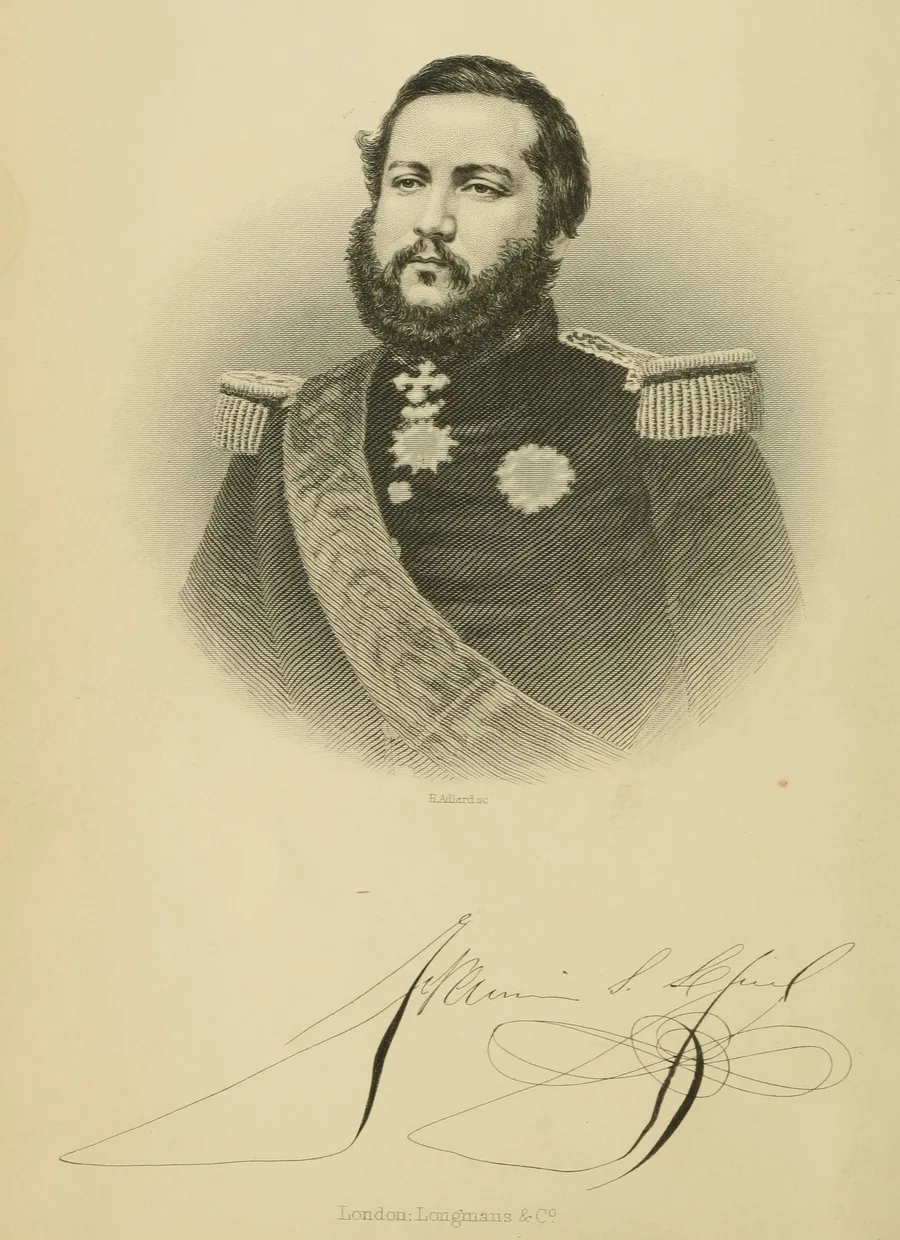
Because a civil war in Uruguay pulled in Brazil, and Paraguay's president answered Brazil's intervention with war — then widened that war himself. In March 1863 the Colorado caudillo Venancio Flores rebelled against Uruguay's Blanco government; Argentina's President Bartolomé Mitre and Brazil backed the Colorados, while the Blancos looked to Paraguay, their only possible ally. When diplomacy failed, Brazil ultimatumed Montevideo and, on 16 October 1864, invaded Uruguay. Francisco Solano López, who had succeeded his father in 1862 and held that an independent Uruguay underpinned the balance of power protecting Paraguay, had already warned Brazil against intervention. He seized the steamer Marquês de Olinda on 12 November 1864, declared war on Brazil on 13 December, and invaded Mato Grosso.
To strike Brazil's southern province of Rio Grande do Sul, López then asked Argentina for passage through the disputed Misiones territory. Mitre refused; López declared war on Argentina on 18 March 1865 and invaded Corrientes. On 1 May 1865 the three signed the Treaty of Triple Alliance — published aims: López's overthrow and free river navigation; secret clauses, revealed by Britain in 1866: annexation of claimed Paraguayan territory.
The disparity was stark: on Bethell's figures Brazil had almost 10 million people, Argentina 1.7 million and Uruguay 250,000–300,000, against Paraguay's 300,000–400,000. Yet Paraguay initially held the military edge — an army Bethell puts at 77,000 men against a Brazilian standing army under 20,000. Whether the gamble was rational defence or miscalculation remains debated (see What historians debate); it produced the outcome Paraguay could least afford — all three neighbours allied at once.
How did the war unfold?
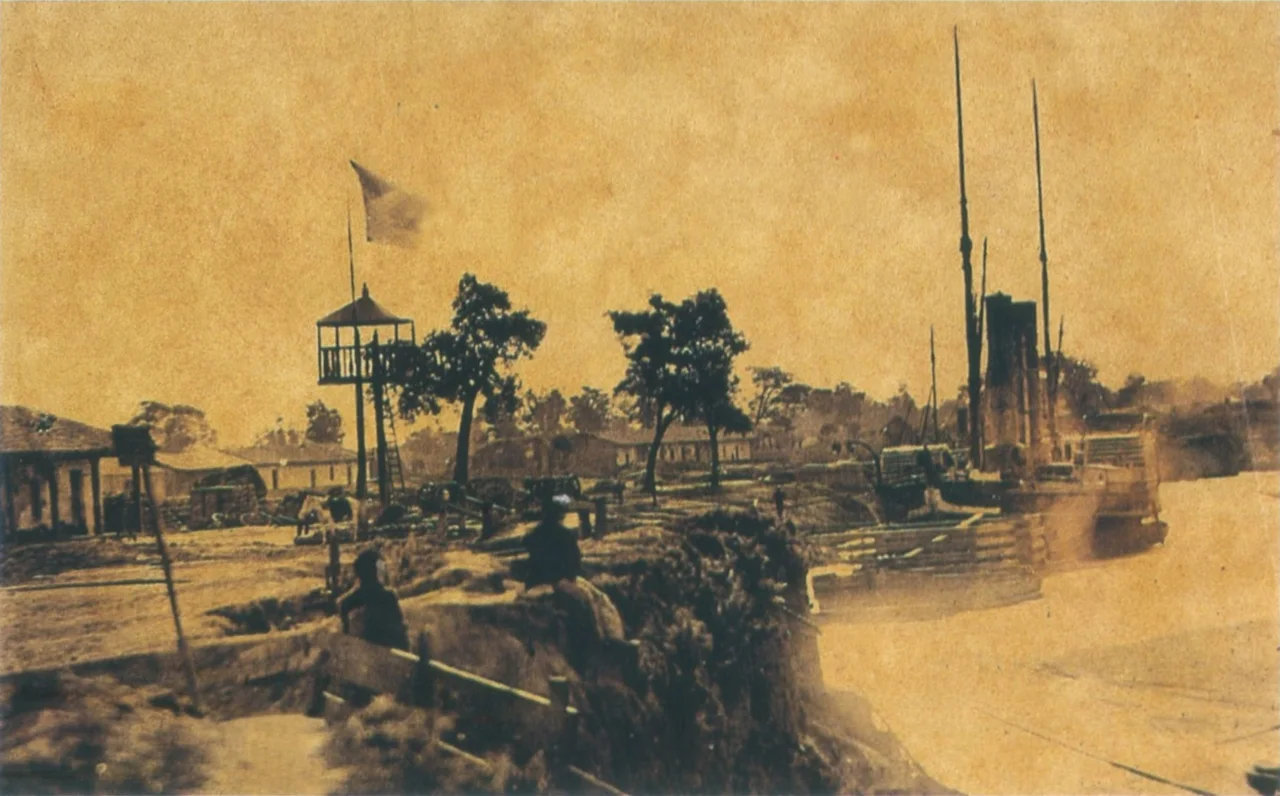
In three phases: a Paraguayan offensive that failed by the end of 1865, a two-year siege of the river fortresses, and a final year of pursuit after the capital fell. The offensive carried Paraguayan armies into Mato Grosso and southward into Corrientes and Rio Grande do Sul — and collapsed on the rivers. At Riachuelo on 11 June 1865, the war's only major naval battle, Brazil's navy destroyed the Paraguayan fleet on the Paraná and imposed the blockade it kept for the rest of the war. The southern invasion force surrendered at Uruguaiana in September 1865; by January 1866 the allies had sealed Paraguay's rivers.
Invading Paraguay itself in April 1866, the allies were stopped almost at once. At Tuyutí on 24 May 1866, the first great land battle, they repelled a Paraguayan assault on their camp. That September, at Yatayti-Cora on the 12th, López offered concessions, including territory, for his survival and Paraguay's integrity — and was refused. Ten days later, at Curupaití (Curupayty) on 22 September 1866, Paraguay inflicted the allies' worst defeat of the war from the trenches south of Humaitá, and the advance stalled for nearly a year.
The siege turned as Brazil took over the war in practice. The marquês de Caxias became allied commander-in-chief in January 1868 in place of Mitre. In February 1868 Brazilian armoured vessels forced Humaitá's passage and bombarded Asunción; the fortress was occupied on 5 August 1868. In the Lomas Valentinas campaign, culminating on 27 December 1868, the Paraguayan field army was destroyed, and on 1 January 1869 the allies entered a largely deserted Asunción. López raised a new army in the Cordillera: the last great battle, at Acosta Ñu (Campo Grande) on 16 August 1869, destroyed it too — by then, the EBSCO history notes, it consisted primarily of teenage boys. López fled north and was killed at Cerro Corá on 1 March 1870. Allied occupation troops remained until 1876.
What did the war cost?
Some 200,000 lives overall, on Bethell's estimate — but the Paraguayan share is the most contested casualty question in Latin American history, and no figure here should be quoted without its rivals. Brazil, which did most of the allied fighting after the first year, lost at least 50,000 in combat, and more from disease on Bethell's count — fewer than the 100,000 sometimes claimed — having mobilised some 140,000 men in total, on figures compiled by Francisco Doratioto. Argentina's losses Bethell gives as an estimated (and possibly exaggerated) 18,000 in battle, plus 5,000 in internal disturbances and 12,000 in cholera.
For Paraguay, everything depends on its population in 1864, reconstructed anywhere from about 300,000 to well over a million. The traditional account, carried by Britannica, holds that approximately 525,000 people fell to about 221,000 by the census of 1871 — of whom only about 28,000 were men. The revisionist challenge came from Vera Blinn Reber's 1988 study in the Hispanic American Historical Review: the supposed 1857 census behind the high figures was, she argued, a government invention; the pre-war population was nearer 300,000; and Paraguay lost between 8.7 and 18.5 percent of its people — casualties that "have been enormously exaggerated." Bethell's synthesis lands higher: 15–20 percent, or 50,000–80,000 deaths from battle, measles, smallpox, yellow fever and cholera — still "enormously high percentages by the standards of any modern war." Against both, Thomas Whigham and Barbara Potthast, working from a newly discovered 1870 census, concluded in the Latin American Research Review in 1999 that "the old stories of a steep loss of population during the war are basically correct" — a loss of 60 to 69 percent. Jan M. G. Kleinpenning's published response disputes their adjustments. The loss was catastrophic by any reckoning; whether it was a fifth of the nation or two-thirds remains unresolved.
Economic effects
The war destroyed Paraguay's economy outright and strained Brazil's finances for decades, while Argentina — which spent the least — gained the most. Paraguay lost all its heavy industry and most of its light industry, on the Encyclopedia.com account, with the development model built since independence; Bethell's verdict is that its manufacturing base and infrastructure were destroyed and its development "set back a generation." The victors imposed a large indemnity that, Britannica records, was never paid — eventually cancelled, Bethell adds, in Brazil's case not until the Second World War. Post-war land sales produced the skewed land tenure Britannica notes; foreign dependence replaced self-sufficiency.
Brazil paid the largest bill. It raised a £7 million Rothschild loan in London in September 1865, partly to buy warships; yet Carlos Marichal's calculation, cited by Bethell, is that foreign loans covered only 15 percent of Brazil's war expenditure (20 percent of Argentina's) — the rest raised at home through deficits and higher tariffs, at what Bethell calls "a great strain on Brazil's public finances." Mobilisation also stimulated Brazilian industry — uniform mills, Rio's arsenal — and forced the state to build a modern army's machinery. Argentina profited from the fighting next door: its ranchers and merchants sold supplies to the Brazilian military while Buenos Aires spent less than either ally.
How did it shape the world?
It fixed the Plata basin's map, ended Paraguay as a regional power, consolidated Argentina, and set Brazil's monarchy on the road to its fall. Paraguay survived — dismemberment was avoided partly because Brazil preferred a buffer against Argentina — but lost about 40 percent of its territory: the north-east between the Apa and Branco rivers to Brazil (1872), Misiones and the Chaco between the Bermejo and Pilcomayo to Argentina (1876). When Argentina claimed the northern Chaco too, U.S. President Rutherford B. Hayes awarded it to Paraguay in November 1878 — why a Paraguayan department is still named Presidente Hayes. The defeated country then cycled through thirty-two presidents between 1870 and 1932; in Uruguay, the Colorados installed by the war held control until 1958.
Argentina was a net beneficiary: its provinces held together, federalist rebellions were suppressed, and Buenos Aires was accepted as capital of a united republic — "the ground had been laid," Bethell writes, "for Argentina's remarkable economic, social and political transformation during the following half century."
Brazil's transformation was deepest. The war made its army — expanded from 18,000 men and professionalised by campaigning — a political actor, raising the question of civilian control of the military. Manpower hunger pushed the empire toward emancipation by instalments: from October 1866 the state freed slaves from the imperial household, state farms and religious orders to fight, and a law of free birth followed in 1871; abolition came in 1888. For many Brazilian historians, Bethell writes, victory was Pyrrhic — "both its apogee and the beginning of its decline" — the line running through the military question of the 1870s–80s to the army coup of November 1889 that overthrew Pedro II.
What historians debate
- Was López a defender or an aggressor? The causes literature catalogued by Encyclopedia.com blames every party in turn: Pelham Horton Box (1930) blames López, F. J. McLynn faults Mitre's Argentina, Carlos Pereyra attributes the war to Brazil, and Efraím Cardozo argues the powers were preserving the Plata balance of power. Bethell keeps the question open — whether López was "rational, provoked by Brazil… or irrational, aggressive and expansionist" is still debated — while judging the decision a miscalculation. In Paraguay, the man Encyclopedia.com calls a "desperate, cruel dictator" for his final-year purges is also, in its words, a national hero.
- Did Britain engineer the war? A thesis popularised by André Gunder Frank (1967) and Eduardo Galeano (1971) holds that Britain, the "indispensable fourth ally," manipulated Brazil and Argentina into destroying Paraguay's development model. Bethell finds "little empirical evidence" for it: Britain stayed neutral, its loans covered a minority of allied spending, and London used its influence for peace. Prime responsibility lay with Brazil, Argentina, Uruguay to a lesser extent, "and of course, most of all, sadly, Paraguay itself."
- How many Paraguayans died? The debate above — Reber against Whigham and Potthast, Bethell between them, Kleinpenning disputing the census work — is not really about arithmetic. It is about which 19th-century counts can be trusted: every position in it is an argument about the evidence before it is an argument about the war.
This explainer is drawn from the sources listed below, all opened or read during this run. Casualty and cost figures are published strictly as the attributed ranges and estimates those sources give.