Iran nuclear facilities damaged in the US and Israeli strikes of 2025 and 2026 show no sign of being rebuilt — the head of the UN nuclear watchdog told the Security Council on Tuesday that his agency has identified no repair or reconstruction work at any of them since June 2025. The finding, by International Atomic Energy Agency (IAEA) Director General Rafael Grossi, is only half of his message. In the same briefing he said the agency still cannot verify Iran's previously declared stockpile of 440.9 kilograms (972 pounds) of uranium enriched to up to 60 percent purity, cannot confirm that no safeguarded nuclear material has been diverted, and has been unable to conduct normal inspections in Iran since its inspectors were withdrawn for their safety when the attacks began in June 2025.
What did Grossi tell the Security Council?
That the bombed sites are quiet, and that quiet is not the same as knowledge. "Since June 2025, we have not identified any activity to repair or reconstruct any of the facilities damaged in the military attacks of 2025 and 2026," Grossi said, in remarks published in full by the IAEA. The agency continues to monitor Iran's declared nuclear facilities and locations associated with its past undeclared programme, he said — the damaged sites named in his statement are the Fordow Fuel Enrichment Plant, the pilot and main fuel enrichment plants at Natanz, a number of facilities at the Esfahan complex, and the Khondab Heavy Water Research Reactor. But monitoring from outside is a substitute with limits he stated plainly: "However, nothing replaces access to the facilities to verify the actual situation." The briefing was Grossi's first to the 15-member council since the IAEA's board of governors formally reported Iran to it last month — the first time in 20 years Iran had been reported for breaching its nonproliferation obligations, in a resolution that passed with 23 votes in favour, three against and eight abstentions, Arab News reported. The meeting itself was called by Bahrain, Denmark, Latvia, France, the United Kingdom and the United States; Russia and China tried unsuccessfully to prevent it, AP reported.
What can the IAEA still not verify?
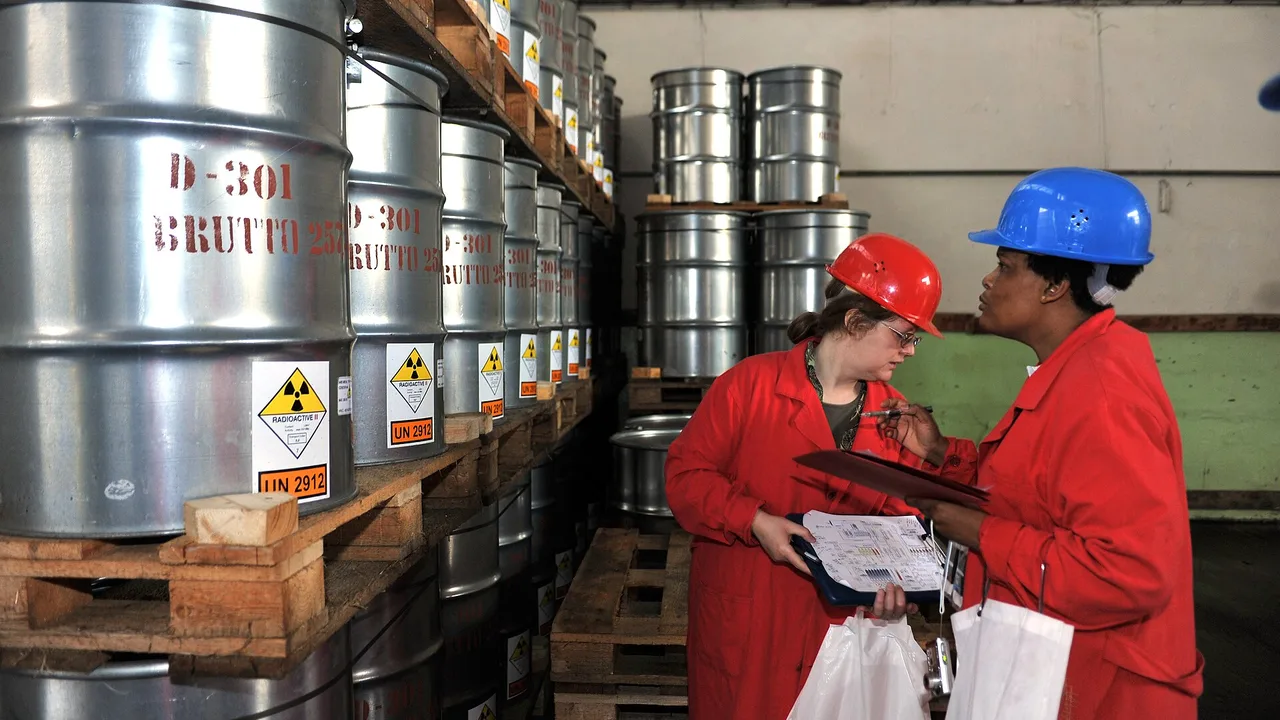
The material itself — above all, the uranium. "As of today, the IAEA has not been able to verify that there has been no diversion of nuclear material required to be safeguarded under Iran's CSA," Grossi said. "This can and must be rectified." One area of particular concern, he said, is Iran's previously declared nuclear material, which includes 440kg of high enriched uranium; AP reported the agency's figure as 440.9 kilograms enriched up to 60 percent — a short, technical step away from weapons-grade levels of 90 percent. Iran has not provided the requested information and access to verify previously declared material at facilities under safeguards, both those affected by the attacks and those that were not, he said. A specific gap is the Isfahan Fuel Enrichment Plant, which Iran declared immediately before the June 2025 attacks: Iran had agreed in 2025 to let inspectors in, the attacks prevented the visit, and Iran has not accepted the agency's repeated requests since. The one exception to the blackout is the Bushehr Nuclear Power Plant, where inspectors are currently undertaking verification activities and Iran's atomic energy organisation has engaged constructively on safeguards equipment ahead of a spent-fuel transfer to a new dry storage facility expected early next year. Under the Nuclear Non-Proliferation Treaty, Iran is legally bound to declare all nuclear material and activities and allow inspectors to verify none is diverted; Grossi said those obligations "cannot be unilaterally suspended under any circumstances."
How did Iran and the United States respond?
With a direct exchange that produced no movement on access. Iran's UN deputy ambassador Gholamhossein Darzi attacked the council for its silence after the US-Israeli attacks, denouncing their "wars of aggression against Iran" and accusing the US of committing war crimes against the Iranian people, AP reported. He did not address the IAEA's unanswered questions or the demand to return its inspectors, instead asserting that "Israel possesses nuclear weapons, yet your concern is the absence of inspectors in Iran" — Israel has never confirmed that it possesses nuclear weapons. US Ambassador Mike Waltz called Iran a "brutal dictatorship" and asked whether the Iranian ambassador wanted to apologise to Bahrain's envoy, a council member, for attacking his country. "What we have not heard today is an explanation for Iran's continued failure to satisfy its safeguard obligations," Waltz said. "Your lies are no good here." For Washington, the briefing touches the stated rationale of the war itself: President Donald Trump has said a major reason the US went to war on February 28 was to deny Tehran the ability to develop nuclear weapons, and has insisted the June 2025 strikes "obliterated" the programme. He has argued higher fuel prices are worth paying to prevent a nuclear-armed Iran; the White House did not immediately respond on Tuesday evening to a request for comment on Grossi's remarks, AP reported. Iran maintains its nuclear programme is peaceful.
What happens next?
Grossi is asking for gradual steps, and pointing at a document that already exists. He invited Iran to work with the agency "without any further delay," encouraged "technical and gradual measures" to create the conditions for inspectors to return, and noted that preparatory technical work done through mediation — he named Oman, Pakistan, Qatar and Egypt — means the foundations for an agreement are clear. He also pointed to the Cairo Agreement he signed with Iranian Foreign Minister Abbas Araghchi on September 9, 2025, under the auspices of Egyptian President Abdel Fattah El-Sisi, which set practical steps for safeguards implementation after the attacks; revisiting it, he said, could address the status of the struck facilities and their material. His closing line framed the stakes for any wider settlement, including the Qatari draft deal Tehran is now considering: "Only diplomacy, underpinned by IAEA verification, can prevent nuclear proliferation in the long-term, in Iran and around the world." The safeguards issues themselves have been outstanding for more than five years, and his inspectors, he said, have been ready to return for many months.
This report is drawn from IAEA Director General Rafael Grossi's statement to the UN Security Council, opened and read in full on iaea.org, AP's October 28, 2026 report, opened and read in full via an AP carrier, and Arab News' October 27, 2026 report, opened and read in full via a carrier. The 440.9-kilogram figure is the IAEA's previously declared stockpile as reported by AP; its current status is unverified, as Grossi stated, and no claim about its present location or condition is made here.