World war 3, explained in one line: it has not started — and it is not a mood, a headline or a single strike, but a specific chain of events that governments, treaties and alliances would have to set in motion, none of which has happened. When searches for the term spiked to a record on 28 February 2026, the day of the joint US–Israeli strikes on Iran, the question underneath them was a definition. This page gives that definition, from the texts that would govern it.
Did World War 3 start?
No — and the quickest way to see why is to measure today's wars against what the first two world wars actually were. World War I (1914–18) embroiled most of the nations of Europe along with Russia, the United States and the Middle East; some 8.5 million soldiers died, and civilian deaths were estimated at around 13 million (Britannica). World War II, in Britannica's words, was a "conflict that involved virtually every part of the world during the years 1939–45," fought between named alliance systems — the Axis (Germany, Italy and Japan) and the Allies (France, Great Britain, the United States, the Soviet Union and China) — and killed 40 to 50 million people. Three tests fall out of that record: the great powers fight each other directly, they do so across several theatres at once, and their governments formally commit — declarations of war, alliance activations, general mobilisation. No war now under way passes those tests. Our explainers on World War II and the Ukraine war set out both sides of that comparison in full.
What would have to happen first?
An armed attack on a treaty ally, taken to the alliance, and answered collectively — in that order. The mechanism most likely to widen a European war is Article 5 of the North Atlantic Treaty, NATO's collective-defence clause, and its text is narrower than its reputation. NATO publishes the article verbatim: an armed attack against one or more allies "in Europe or North America shall be considered an attack against them all," and each ally will assist "by taking forthwith, individually and in concert with the other Parties, such action as it deems necessary, including the use of armed force." Two limits sit inside that sentence. The attack must fall inside the treaty's geography — Europe or North America, which is why our explainer on NATO's eastern flank matters more to this question than any strike outside it. And the response is chosen by each government for itself: Article 5 does not declare war automatically, and "such action as it deems necessary" can mean anything from sanctions and air defence to combat forces.
How would an Article 5 decision actually unfold?
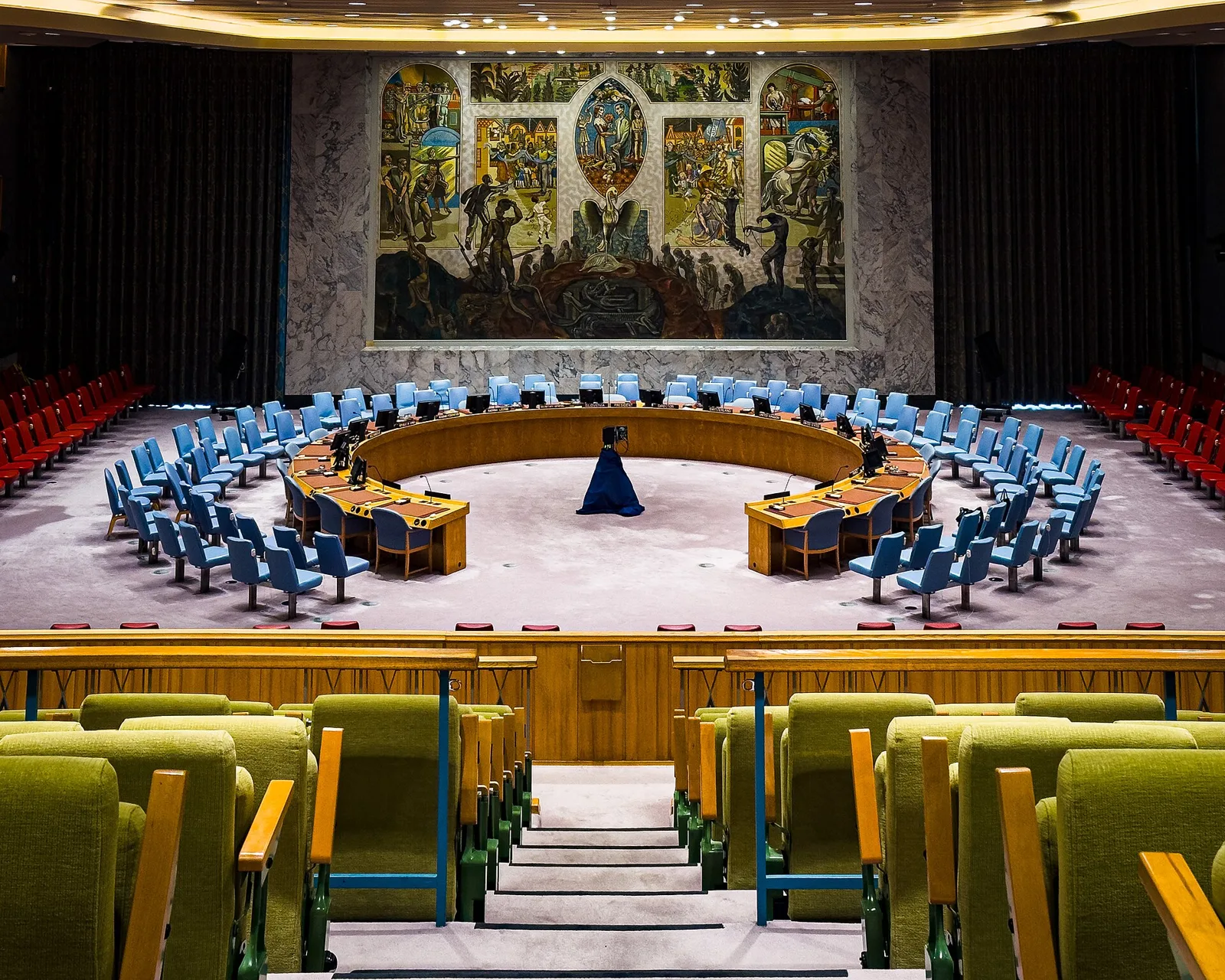
Through the North Atlantic Council, by agreement — and the one time it happened shows the sequence. After the attacks of 11 September 2001, NATO records, the Council condemned the attacks the same day; on the evening of 12 September it agreed that if the attack was determined to have been directed from abroad, it would be regarded as covered by Article 5. Only on 2 October, after being briefed on the investigations, did the Council make that determination — and the collective measures agreed two days later were support measures: intelligence-sharing, overflight clearances, port and airfield access, naval patrols in the eastern Mediterranean, and AWACS aircraft patrolling US skies under Operation Eagle Assist. That is the sole invocation in the alliance's history. A future invocation would follow the same grammar: an attacked ally asks, the Council assesses and agrees, and each capital then decides its own contribution. The decision-makers are named institutions following a published procedure — which is why this article's headline points at the people who would have to declare it.
What would NOT count?
A proxy war, a strike on a non-member state, and any fighting in which great powers arm, fund or advise one side without fighting the other directly would not count — however serious it is, and naming it correctly is not minimising it. Researchers already separate scale from category: the Uppsala Conflict Data Program, whose definitions are the field's standard, counts an armed conflict at 25 or more battle-related deaths in a year and a war at 1,000 or more — thresholds that say nothing about whether a war is world in scope. History supplies the sharper examples. In Korea in 1950–53, the United States fought as the UN's principal participant and China intervened directly for the North — great powers in combat — yet the war stayed peninsular, ended in an armistice in July 1953, and was never even formally declared by Washington (Britannica). The Cold War's proxy wars, in which superpowers armed and funded opposing sides without fighting each other, likewise never became a third world war. A strike on a non-member, a proxy campaign, or a regional war with foreign backers — the pattern of the Iran nuclear file crisis, which drove February's search spike — fails the directness and alliance tests, however dangerous it is on its own terms.
Why did the searches spike on 28 February 2026?
Because a strike that felt like the opening of something larger landed on an audience with no shared definition. Search-press coverage recorded in our 9 November trends brief put "war" search volume on 28 February 2026 — the day of the joint US–Israeli strikes on Iran — at 44,630 searches, 4.8 times the US daily average and an all-time high for the term (dailysearchvolume.com figures, as recorded in the brief). The rising queries around the term are the anxiety in plain text: "what will happen if world war 3 starts," "did world war 3 start," "is this world war 3." The strikes were real and consequential; what they were not, under any definition the treaties or the historical record supply, was the start of a world war — no ally was attacked in the treaty area, no collective-defence decision was taken, and the states involved did not enter direct war with each other. That gap between event and category is exactly what this page exists to close, and it will be updated if the indicators it lists ever change.
This explainer is drawn from the sources listed below, all opened or read during this run. It makes no prediction: it records the thresholds, and the fact that none of them has been crossed.