The Trump Putin Xi meeting in Shenzhen is now a plan, not a rumour: the White House confirmed on Friday that Donald Trump, Xi Jinping and Vladimir Putin will meet on Thursday on the sidelines of the APEC summit in Shenzhen — and a senior US official said Ukraine, the war Putin most wants to discuss, will be steered away from in the three-way session. It would be the first meeting of its kind between the leaders of the United States, China and Russia, the world's three biggest nuclear powers. Reuters, reporting the same day, added the caution the confirmation does not remove: down-to-the-wire negotiations had not yet yielded an agenda or format, and the prospects for any grand bargain are slim.
What has actually been confirmed about the Shenzhen meeting?
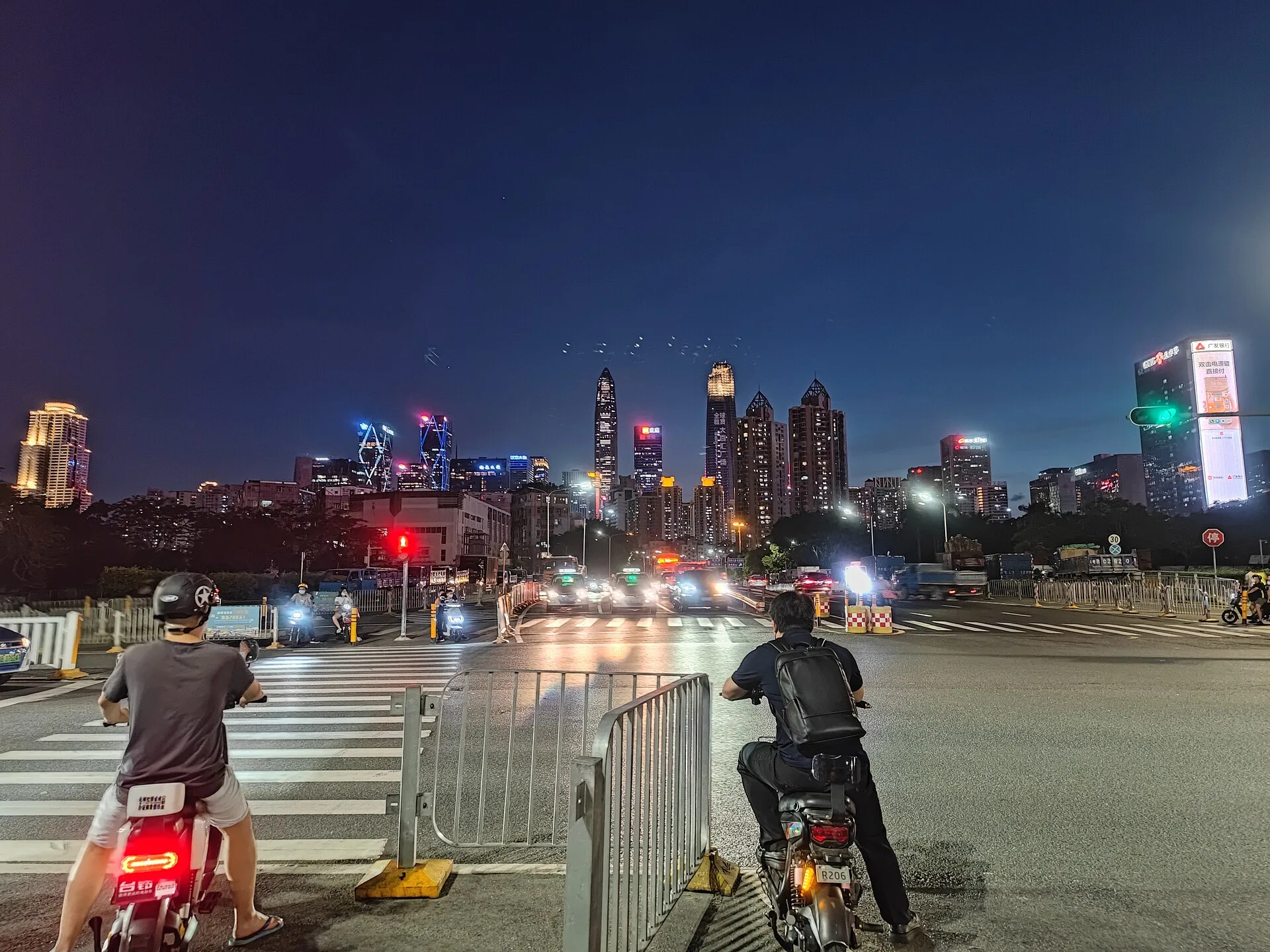
The plan and the setting, not the substance. PA reported that plans for the three-way summit were confirmed on Friday by the White House, for Thursday, on the sidelines of the Asia-Pacific Economic Cooperation summit in Shenzhen, China's southern technology hub. The summit itself is fixed: the APEC Economic Leaders' Meeting runs on November 18 and 19, preceded by a CEO summit on November 17–18, and Xi will chair the leaders' meeting, according to Reuters' explainer. What remains unsettled is what the three men will actually do in the room. "Suggestions are being exchanged regarding a possible agenda," Kremlin spokesman Dmitry Peskov told reporters on Monday, in Reuters' account. Beijing, asked directly, would say only that "China is in communication with relevant parties regarding a meeting between the three heads of state" and that it had "nothing to share at the moment," a spokesperson for China's embassy in Washington told Reuters on Friday. Russia's embassy did not respond to Reuters' request for comment.
Why is Ukraine off the three-way agenda?
Because two of the three governments do not want it there, on the reporting opened. A US official said on Friday that Trump was not likely to raise the war in Ukraine and that three-way talks were not the proper forum to do so, Reuters reported; PA's account of the same official position is that Trump will discuss the Iran war with Xi and Putin but will steer away from Ukraine. Behind that sits a three-way split Reuters laid out plainly: Moscow sought a conversation on the war in Ukraine, while Beijing resisted putting the topic on the agenda, according to a person briefed on the meeting and a European diplomat. Putin's interest is not hard to state — he "sees a chance to secure an agreement to end the war in Ukraine on his terms," Reuters reported. The exclusion is precisely what worries Kyiv. Ukrainian President Volodymyr Zelensky has expressed concern that the trilateral could serve as a platform for discussing a possible Ukraine deal behind Kyiv's back, PA reported, and Zelenskiy said last month, in Reuters' reporting: "We really don't want this to turn into 'Yalta 2, 3, 4,' with a redistribution of influence." Edgard Kagan, the former US ambassador to Malaysia now at the Centre for Strategic and International Studies, put the Kremlin's gain the same way to PA: the meeting signals that the three are "making decisions on Ukraine, which obviously the Ukrainians and the Europeans don't like." The diplomacy this site has tracked all month — the Abu Dhabi talks, the Moscow leg and the European five-nation team's claim to a seat — runs through channels Kyiv sits inside; the standing background is this site's Ukraine war explainer. Shenzhen, on current reporting, is a room it is not in.
What does Washington want instead — and why is Beijing reluctant?
Nuclear arms, as an opening conversation rather than a negotiation. The last nuclear arms pact between Russia and the United States — New START — expired in February, removing caps on the two largest atomic arsenals for the first time in more than half a century, and Trump rejected Russia's call to extend the two-country deal for another year in favour of a new accord that includes China, PA reported. The trilateral is intended as the "beginning of hopefully a conversation" on nuclear disarmament, a US official said, with no agreements expected to be announced; a senior Trump administration official told Reuters the US does "not expect to get to any kind of agreement" on nuclear issues, but that "it's time for China to sort of step up" and talk about the topic. Beijing's reluctance is arithmetic. China has around 500 nuclear warheads on Reuters' figure — more than 600 on the Pentagon estimates PA cited — against more than 5,000 each for the United States and Russia. "This is something the Chinese hate," Kagan told Reuters. "They certainly don't want to do it with the United States and Russia, because it suggests that they accept the framing that they are now a major nuclear power that should be subject to similar restrictions." Chinese academics interviewed by Reuters called Trump's suggestion of nuclear talks a nonstarter for Beijing. For Xi, Reuters reported, the gathering is "an unpredictable gathering full of risks" — hosted in a city chosen to showcase China's technology hub, in a forum where Beijing wants to present itself as an advocate for smaller countries, which is also why the Yalta comparison cuts: the 1945 conference "became shorthand for great-power deals imposed on smaller countries," Reuters noted, while Peskov dismissed the comparison on the ground that anything agreed in Shenzhen cannot be enforced on others. What is scheduled, then, is a photograph with three flags and a conversation Washington wants to start, Beijing wants to contain, and Moscow wants to aim at Ukraine — a war its host and its convener have both, for different reasons, agreed to leave outside the door.
Sources: Reuters (14 November 2026, read in full on reuters.com); the Press Association report of the White House confirmation (14 November 2026, read in full via the Glasgow Times, a rostered PA carrier); and Reuters' APEC explainer (13 November 2026, read in full via BusinessWorld). The two accounts of the US position — Reuters' "not likely to raise Ukraine" and PA's "will steer away from discussing Ukraine" — are the same senior-official line carried by two wires and are reported here as one position, not as two independent confirmations. China's warhead total is carried as both outlets gave it: around 500 (Reuters) and more than 600 (Pentagon estimates, via PA). Beijing has confirmed only that it is "in communication" about a three-heads-of-state meeting; the Thursday plan rests on the White House confirmation reported by PA.