The Ukraine war, explained in one line: a war that began with Russia's covert seizure of Crimea in February 2014 became, on 24 February 2022, the largest war in Europe since 1945 — and more than four years later it has settled into a near-static front, a winter campaign of strikes on Ukraine's power grid, and a diplomatic track that has produced meetings but no settlement. Russia occupies roughly a fifth of Ukraine. The UN has verified more than 17,600 civilians killed since 2022, on top of the 14,000 who died in the Donbas fighting before it, and military casualties on both sides are estimated in seven figures.
Key facts
- Began: February 2014 (Crimea seized 27 February 2014; Donbas fighting from April 2014). Full-scale invasion: 24 February 2022. Status: ongoing.
- Belligerents: Russia (with its Donetsk and Luhansk proxy administrations in 2014–22) against Ukraine, backed by Western military and financial aid.
- Territory: Russia occupies about 20 percent of Ukraine, including Crimea and parts of four south-eastern oblasts it declared annexed in 2022 — annexations most of the world does not recognise.
- Civilians (UN-verified minimum, Feb 2022 – Sep 2026): at least 17,605 killed and 55,846 injured (OHCHR); the UN says the true figures are considerably higher.
- Displacement: more than a third of Ukraine's pre-war population was displaced at the peak; UNHCR planning figures in 2026 put refugees abroad at about 5.9 million and the internally displaced at about 3.7 million.
Key takeaways
- The war started in 2014, not 2022. The full-scale invasion was the expansion of an eight-year conflict: Crimea's annexation and the Donbas proxy war killed more than 14,000 people before a single Russian tank crossed the border in 2022.
- The quick victory failed. Russia's plan to take Kyiv in days collapsed at Hostomel and in the capital's suburbs; Kherson was the only regional capital taken in the opening offensive.
- 2022 belonged to Ukraine's counteroffensives; what followed belonged to attrition. Kharkiv region and Kherson city were retaken in autumn 2022. Ukraine's 2023 counteroffensive gained little against prepared defences, and the front has moved slowly since — while the war's centre of gravity shifted to long-range strikes: Russian missiles and drones against Ukraine's grid, Ukrainian drones and missiles against Russian refineries.
- The human cost is measured in ranges, and every range is large. Verified civilian deaths are a floor, not a total; military casualty estimates from CSIS put combined losses above two million killed, wounded and missing by mid-2026.
Contents
- Overview
- Historical roots: 1991 to 2014
- What caused the full-scale invasion?
- How the war has been fought
- Casualties
- Displacement
- How it changed the world
- Where the war stands now
- What analysts debate
Overview
The Russia-Ukraine war is a war between Russia and Ukraine that began in February 2014 with the covert invasion of Crimea by disguised Russian troops and expanded that April into the Donbas, Ukraine's eastern industrial region, where Russians and local proxy forces seized territory (Britannica). On 24 February 2022 Russia launched a full-scale invasion on multiple axes — toward Kyiv, Kharkiv, the Donbas and the south. The opening offensive failed in the north, succeeded in the south, and the war's geography since has been set by Ukraine's autumn 2022 counteroffensives and the slow attrition that followed. It is the largest conflict in Europe since the Second World War, fought with trench systems, massed artillery, and — increasingly — long-range drones and missiles aimed at the infrastructure behind the front. Our running coverage is collected on the Ukraine hub, and the week's battlefield picture in our Ukraine frontline update.
Historical roots: 1991 to 2014
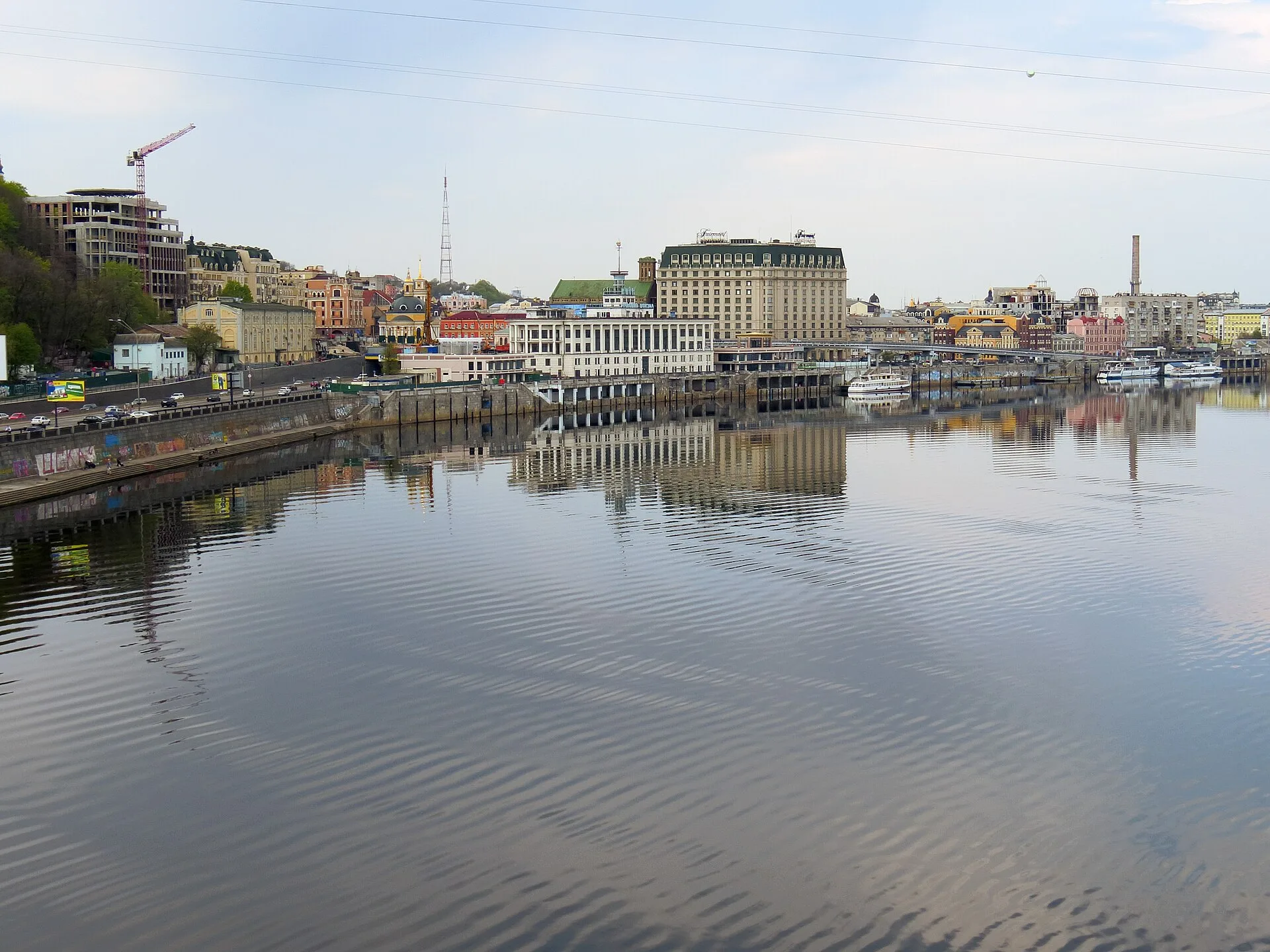
Ukraine's westward turn after 1991 is the root; the winter of 2013–14 is the trigger. Ukraine became independent as the Soviet Union dissolved in 1991. For two decades its politics swung between governments leaning toward Moscow and governments seeking closer ties with the European Union and NATO. In November 2013 President Viktor Yanukovych, after a visit to Moscow, declined to sign an association agreement with the EU and appeared set to commit Ukraine to a Russian-led economic union instead. Within hours, protesters occupied Kyiv's Maidan Nezalezhnosti — the Euromaidan protests. They survived a violent clearing attempt on 30 November, anti-protest laws in January, and escalating violence that culminated on 20 February 2014, when government snipers killed at least 80 protesters. Yanukovych fled Kyiv on 22 February and was stripped of office by parliament.
Russia moved within days. On 27 February 2014 heavily armed troops without insignia — the "little green men," later confirmed to be Russian personnel — seized Crimea's parliament and government buildings in Simferopol. A referendum held on 16 March under that occupation reported more than 95 percent support for joining Russia; it was widely criticised internationally, and Russia annexed the peninsula. In April, armed groups seized administrative buildings across the Donetsk and Luhansk regions; separatists proclaimed "people's republics" after referenda on 11 May, and the Donbas war began.
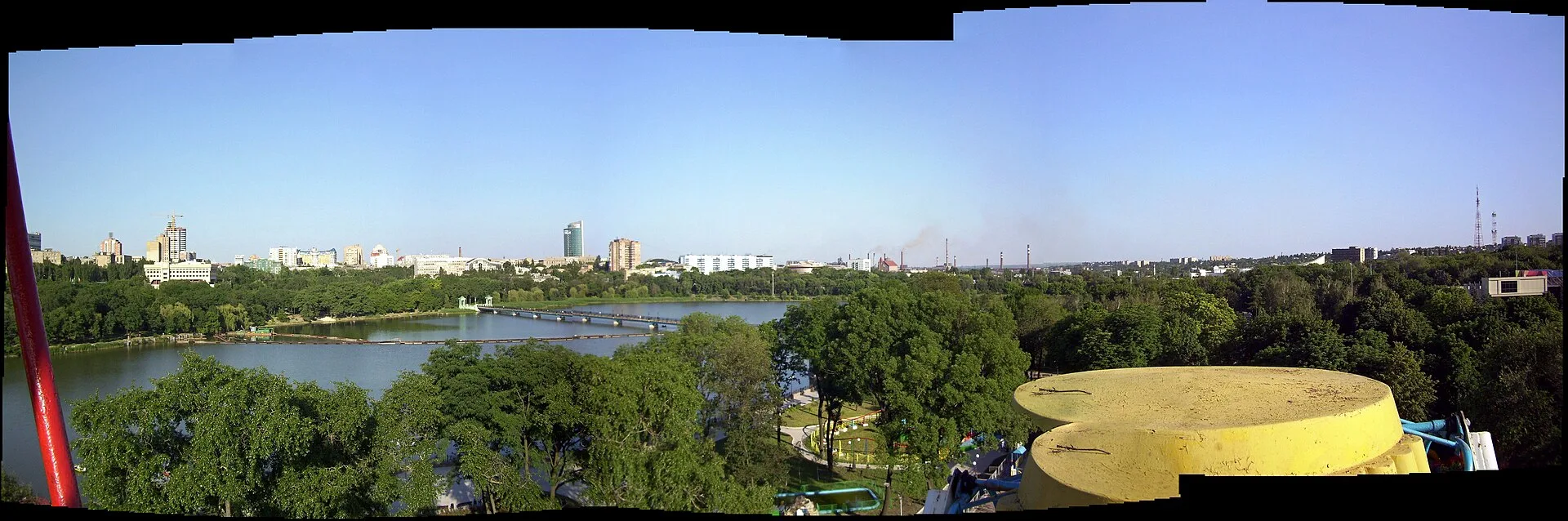
The war's first summer set patterns that never left it: on 17 July 2014 Malaysia Airlines flight MH17 was shot down near Hrabove, killing all 298 people aboard; a Dutch inquiry later determined it was destroyed by a Russian-made Buk missile system, and in November 2022 a Dutch court convicted Igor Girkin (Strelkov) — the Russian former FSB colonel who had commanded separatist forces from Slov'yansk — and two others of murder. In late August 2014 regular Russian troops entered Ukraine and encircled Ukrainian forces at Ilovaisk, even as the Kremlin denied intervening. The result was the Minsk ceasefire of 5 September 2014 and, after renewed fighting, Minsk II on 12 February 2015: cessation of fighting, withdrawal of heavy weapons, prisoner releases, removal of foreign troops. Neither held in full. By the end of 2015 the toll stood above 9,000 dead; the Donbas then settled into a frozen conflict for six years — a frontline that stopped moving but never stopped killing. Volodymyr Zelensky, elected president in 2019 on a pledge to end the Donbas conflict, approved a national security strategy in September 2020 that named Russia the aggressor and NATO membership a key goal.
What caused the full-scale invasion?
The immediate cause was a set of demands the West would not meet, wrapped in claims the evidence did not support. Between October and November 2021 Russia massed troops and equipment along Ukraine's borders and in Belarus; by February 2022 Western analysts estimated as many as 190,000 Russian troops encircling Ukraine. Putin's demands amounted to a de facto veto over NATO expansion and the removal of NATO forces from every country that had joined after 1997 — in effect, stripping the alliance's umbrella from eastern and southern Europe and the Baltic states. They were flatly rejected. On 21 February 2022 Putin recognised the independence of the two Donbas "people's republics" and ordered Russian troops in as "peacekeepers."
Putin's stated reasons for the invasion three days later included the claim that Ukraine was committing genocide against Russian speakers in the Donbas. Britannica's verdict is plain: the claim was false, and his reasons were widely discredited internationally; the invasion is generally read instead as an attempt to reassert Russian influence over Ukraine and prevent its further integration with the EU and NATO. Zelensky, addressing the Russian people in Russian in the early hours of 24 February, vowed that Ukraine would defend itself. Minutes after Putin announced his "special military operation," explosions were heard across Ukraine; Zelensky declared martial law and general mobilisation.
How the war has been fought
The failed drive on Kyiv (February–April 2022)
The plan, as it unfolded, was a decapitation: elite paratroopers seized Hostomel Airport, six miles from Kyiv, in the invasion's first hours, and Wagner Group teams were dispatched to eliminate Ukraine's leadership. Zelensky refused evacuation — "The fight is here. I need ammunition, not a ride," as the remark was reported — and the thrust collapsed against determined resistance and Russian logistics failures. Kharkiv's encirclement failed; Kherson, taken on 2 March, was the only regional capital to fall. In the south, Mariupol was besieged into ruins; a 16 March air strike levelled the Donetsk Academic Regional Drama Theater, the city's main bomb shelter, with as many as 600 people reported killed. As Russian forces withdrew from Kyiv's suburbs in late March, Ukrainian forces entering Irpin and Bucha uncovered mass graves and bodies showing signs of torture. By late March some four million Ukrainians had fled — Europe's largest refugee crisis since 1945.
Ukraine strikes back (April–November 2022)
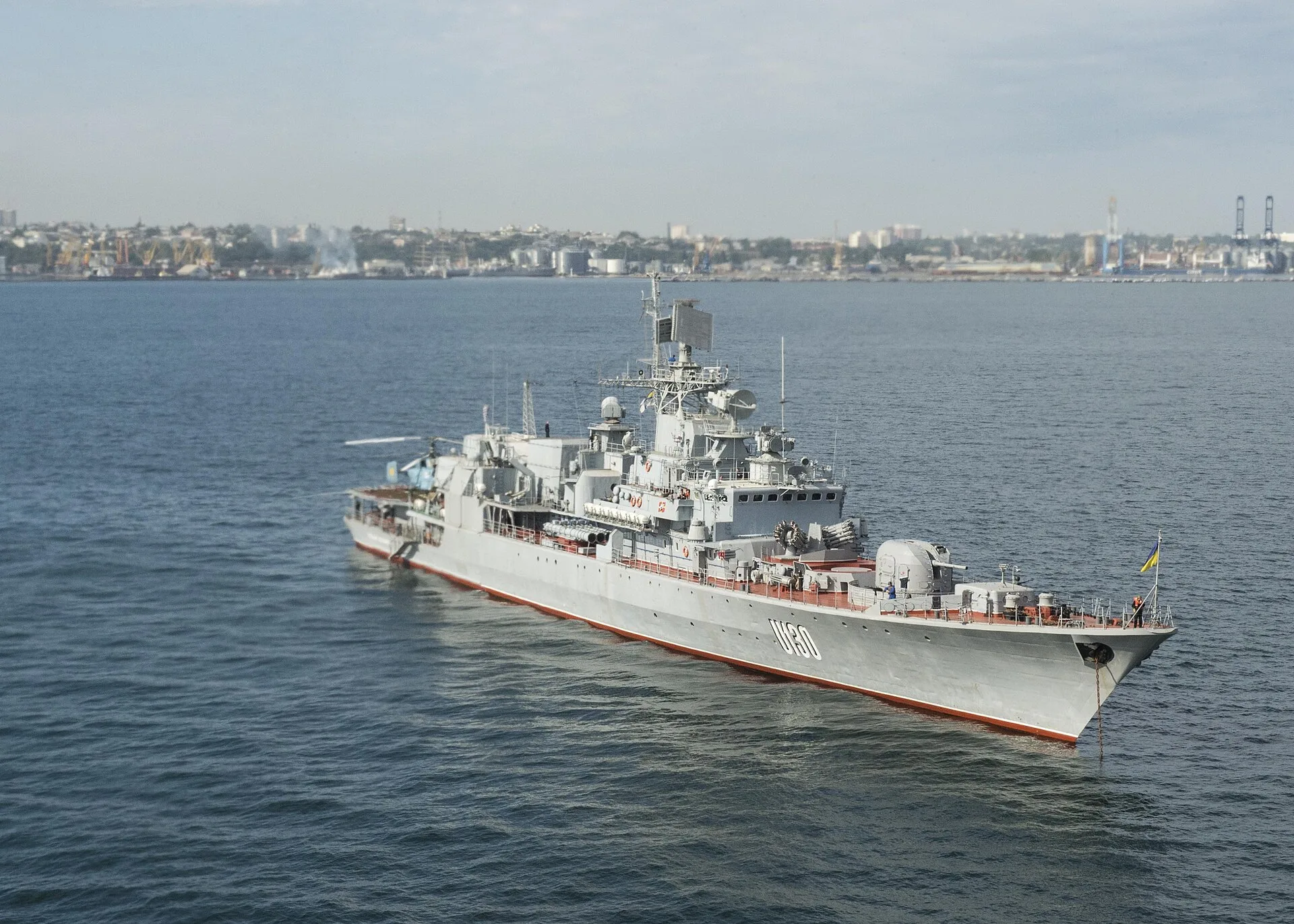
On 13 April 2022 Ukrainian Neptune anti-ship missiles struck the Moskva, flagship of Russia's Black Sea Fleet; it sank the next day, the largest warship lost to enemy action since 1982. Mariupol's last defenders, in the Azovstal steel plant, surrendered in May after a siege in which Ukrainian officials estimated at least 20,000 civilians had been killed in the city. Western aid scaled through the summer — US HIMARS rocket systems arrived in June and were soon striking depots and command posts deep behind the line — and in the autumn Ukraine converted it into territory: the Kharkiv counteroffensive routed Russian forces from almost the whole of Kharkiv region, and in November Ukrainian forces liberated Kherson city, the only regional capital Russia had taken. Russia answered with its first annexation claims of the full-scale war: in September 2022 it declared four partially occupied provinces — Donetsk, Luhansk, Zaporizhzhia and Kherson — annexed, a move internationally condemned and recognised by almost no one.
Attrition, the failed counteroffensive, and the long front (2023–2024)
Through the first half of 2023 the fighting concentrated on Bakhmut in Donetsk region, while Russia — preparing from November 2022 — built an 800 km defensive system of ditches, trenches, artillery positions and dense minefields. On 6 June 2023 the Kakhovka Dam on the Dnipro was destroyed, flooding some 620 square kilometres and leaving up to a million people without drinking water. Ukraine's counteroffensive, launched that June into the prepared defences in Zaporizhzhia and Donetsk, recaptured 14 villages and no breakthrough: the minefields and layered lines held. The war's initiative passed to slow Russian advances in the Donbas — and then, in August 2024, Ukraine seized the initiative in an unexpected direction, crossing into Russia's Kursk region on 6 August in the largest attack on Russian territory since the Second World War and taking ground around Sudzha. Ukraine's commander-in-chief, Oleksandr Syrskyi, later said the operation forced Russia to redeploy some 70,000 troops — paratroopers, marines and special forces among them — to defend its own border. How drones came to dominate this phase is traced in our analysis of how drones rewrote the Ukraine war.
The strike war (2025–2026)
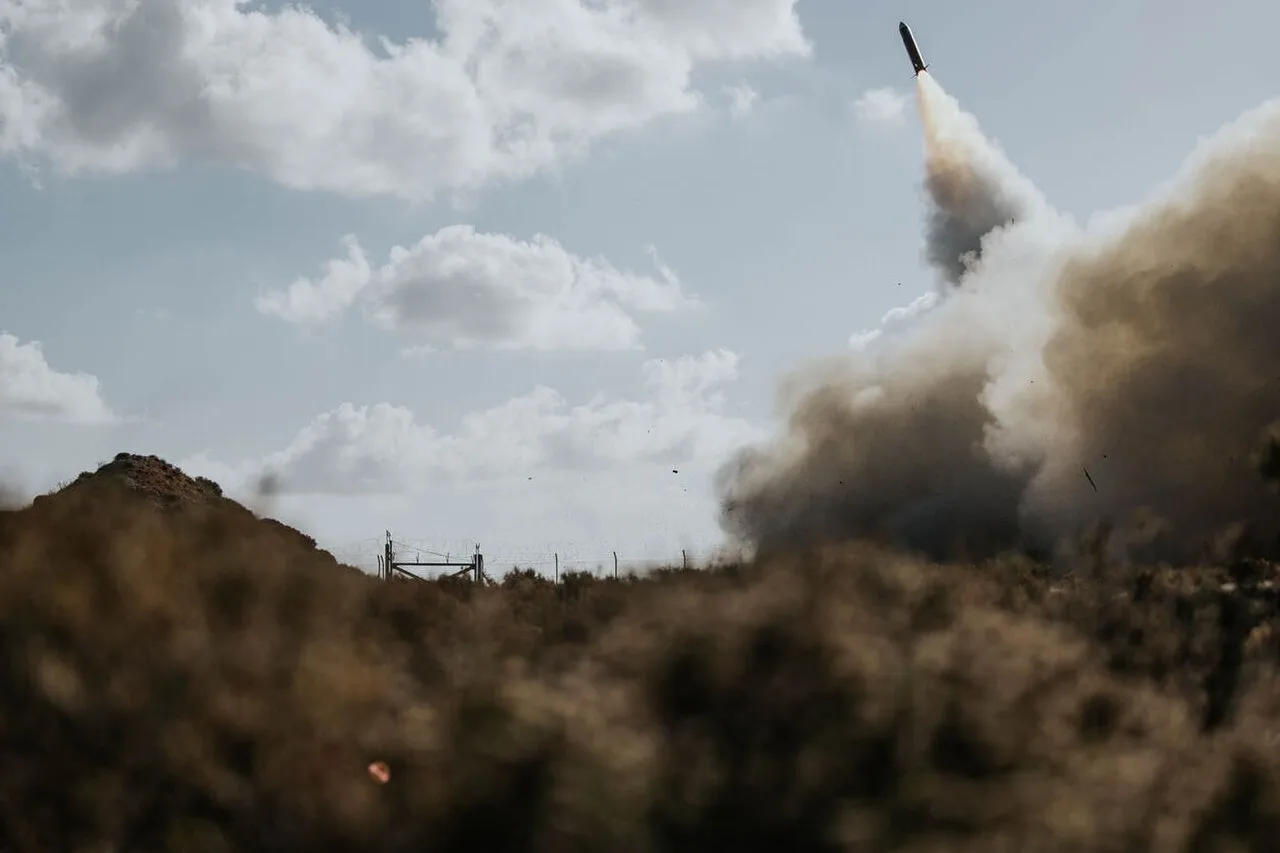
By 2026 the ground war had slowed to what the Institute for the Study of War calls a "static" front, and the campaign's weight shifted into the air. ISW assessed in September 2026 that Moscow had adopted a new theory of victory: massive combined ballistic-missile and jet-powered drone strikes meant to break Ukraine's energy security and force capitulation over the winter of 2026–27, at a production budget Zelensky put at $12 billion for jet-powered drones and loitering munitions. Ukraine's answer is a deep-strike campaign of its own — against Russian oil refineries, data centres and telecom infrastructure — and a publicly stated trade: Zelenskiy has said Kyiv will halt refinery strikes if Russia stops hitting power plants. The air-defence problem at the centre of that exchange is set out in our explainer on the Patriot missile system, and the earlier attempt to formalise the trade in our explainer on the energy ceasefire.
Casualties
Every total in this war is a range with a method attached — and the verified floors alone are large. For civilians, the UN Human Rights Monitoring Mission in Ukraine verifies deaths one by one. Its September 2026 report recorded at least 328 civilians killed and 2,105 injured in that month alone — the deadliest September of the invasion — and 2,570 killed and 15,211 injured across January–September 2026, 59 percent more than the same period of 2025; the cumulative verified count since February 2022 reached at least 17,605 killed and 55,846 injured, with the mission explicit that the real numbers are considerably higher. Long-range missiles and drones caused 53 percent of September's civilian casualties. Before 2022, the Donbas war had already killed more than 14,000 people, combatants and civilians together.
Military losses are guarded by both states and estimated by outsiders. Zelensky said in December 2024 that 43,000 Ukrainian soldiers had been killed and 370,000 injured since February 2022, while claiming 198,000 Russian soldiers killed — figures Britannica notes were not verifiable. The most-cited independent estimates come from the Center for Strategic and International Studies: in June 2025 CSIS put Ukrainian military casualties since 2022 at about 400,000, including an estimated 60,000–100,000 killed, and estimated Russian casualties would reach one million that summer; by July 2026 CSIS data indicated combined Russian and Ukrainian military casualties had surpassed two million, with Russian casualties estimated at about 1.4 million. Read such numbers as orders of magnitude, not counts: killed, wounded and missing are bundled differently by different estimators, and neither belligerent publishes a verifiable ledger.
Displacement
At the peak, more than a third of Ukraine's population was displaced. More than eight million people fled Ukraine after February 2022 and a similar number were displaced inside it; by late March 2022 alone, four million had crossed the borders, most finding safety in Poland, Germany and the Czech Republic. Britannica also records Russia's forcible relocation of up to 1.6 million Ukrainian citizens, including some 260,000 children, to Russian territory — a campaign the International Criminal Court concluded in March 2023 constituted a war crime. The flows have partially reversed but not ended: UNHCR's 2026 planning figures put refugees abroad at about 5.9 million and the internally displaced at about 3.7 million, and its October 2026 update records families still moving through transit centres, citing insecurity, broken services and the coming winter.
How it changed the world
The invasion reorganised Europe's security order within months. Ukraine was granted EU candidate status on 23 June 2022. Finland and Sweden abandoned decades of neutrality and moved to join NATO — signing accession protocols on 5 July 2022 and joining in 2023 and 2024 respectively — turning the Baltic Sea, in the phrase of the moment, into a NATO lake. Russia became the most heavily sanctioned country in history, cut off from much of the international banking system, with Western airspace closed to its aircraft. The war's costs travelled through energy and food markets worldwide: Russia's Black Sea blockade and the battle over Ukraine's grain exports made wheat and fuel prices a front of the war — a connection our War & Markets coverage tracks weekly. And the war rewired military practice everywhere watching it: cheap drones, satellite connectivity and precision rockets have reshaped procurement and doctrine far beyond Ukraine.
Where the war stands now
Updated 6 November 2026, from War Info Hub's own tracker coverage. The ground front is near-static: Ukraine has made local counterattacks — around Oleksandrivka, where ISW recorded liberated villages in late October — while Russia presses toward Kostyantynivka and both sides trade deep strikes. The strike war is intensifying into winter: on 29 October a Russian drone hit Dnipro's main railway station as passengers boarded, killing 14; on 1 November strikes on power infrastructure in four regions left hundreds of thousands of households without power for a second straight night. At Komyshuvakha in Zaporizhzhia region, the toll from a 2 November strike on a humanitarian aid point reached 53 by 6 November, after Reuters-verified police bodycam footage recorded a second strike on the shelter where residents were hiding. A six-day humanitarian ceasefire around Oleshky in Kherson region expired on 2 November; Ukraine's General Staff said Russia used it to rotate units and fortify, a claim the Kremlin disputed. Diplomacy has a date again: on 5 November Putin's envoy Kirill Dmitriev attended a White House event convening Russian and Ukrainian representatives — the first in-person US–Russia contact since the US midterms — ahead of a trilateral meeting scheduled in Abu Dhabi on 10 November. Nothing in the record yet suggests either side's terms have moved.
What analysts debate
- When did the war begin — and does the answer matter? The 2014 dating, adopted here and by Britannica, carries a legal and political load: it frames 2022 as escalation of an existing aggression rather than a new dispute, and it is why Ukraine's negotiating position treats Crimea and the Donbas as one question. Accounts that start in 2022 miss the eight years in which the war's methods — proxies, deniability, frozen lines — were built.
- Attrition or manoeuvre — can either side still win ground? The 2023 counteroffensive's failure against prepared defences, and the near-static front ISW records in 2026, support the attrition reading: that the war will be decided by industrial capacity, manpower and air defence magazines rather than breakthroughs. The Kursk operation is the standing counter-example — proof that surprise can still move a front, though Ukraine's own commander frames its value as diversion, not conquest.
- Does the strike campaign coerce, or harden? Moscow's winter theory of victory assumes energy pain converts into political capitulation; Ukraine's refinery campaign makes the mirror-image bet about Russian fuel and revenue. The historical record of strategic bombing argues both bets are weaker than their makers hope — which is why the stated Zelenskiy trade (refineries for power plants) may be the war's most realistic near-term de-escalation mechanism.
- How will it end? The live options in November 2026 are the same three as a year ago — a negotiated settlement neither side's terms currently fit, a frozen conflict on the 2015–22 Minsk pattern, or exhaustion. What has changed is the machinery: envoys meeting in person, a trilateral date set, and both strike campaigns explicitly priced as leverage for the table.
This explainer is drawn from the sources listed below, all opened or read during this run. Casualty and displacement figures are published strictly as the attributed ranges and verified minimums those sources give.