What is the IRGC? It is Iran's parallel military: the Islamic Revolutionary Guard Corps, upward of 190,000 troops strong on the International Institute for Strategic Studies' count, answering directly to the Supreme Leader — and it is the organisation whose name runs through almost every conflict this site covers, from the Strait of Hormuz tanker campaign to the Houthis in Yemen and Hezbollah in Lebanon. The regular Iranian army, the Artesh, defends the country's sovereignty in the conventional sense; the IRGC's mandate is different — to protect the Islamic Republic itself. This explainer sets out where it came from, how it is organised, what it does abroad and at home, and why it matters to the wars of 2026.
Why was the IRGC created?
Iran's clerical leaders created the corps in 1979 because they did not trust the army they had inherited. In the immediate aftermath of Shah Mohammad Reza Pahlavi's fall, as leftists, nationalists and Islamists contested the course of the revolutionary republic, followers of Ayatollah Ruhollah Khomeini organised counterweights to the inherited institutions — among them the IRGC, which operated beyond the bounds of the law and the judiciary and whose command structure bypasses the elected president, the Council on Foreign Relations (CFR) reports. The guards were conceived as a "people's army," helping consolidate the revolution as Khomeini built a state on the concept of velayat-e faqih, guardianship of the jurist; Khomeini intended the corps in part to protect the new regime from a coup d'état like the one in 1953 that ousted the elected government of Mohammed Mossadeq and restored the shah. The Iran-Iraq War (1980–88) then transformed the IRGC from a revolutionary militia into something closer to a conventional fighting force, with a command structure similar to Western militaries — while remaining, institutionally, a force parallel to the regular armed forces.
How is the IRGC organised?
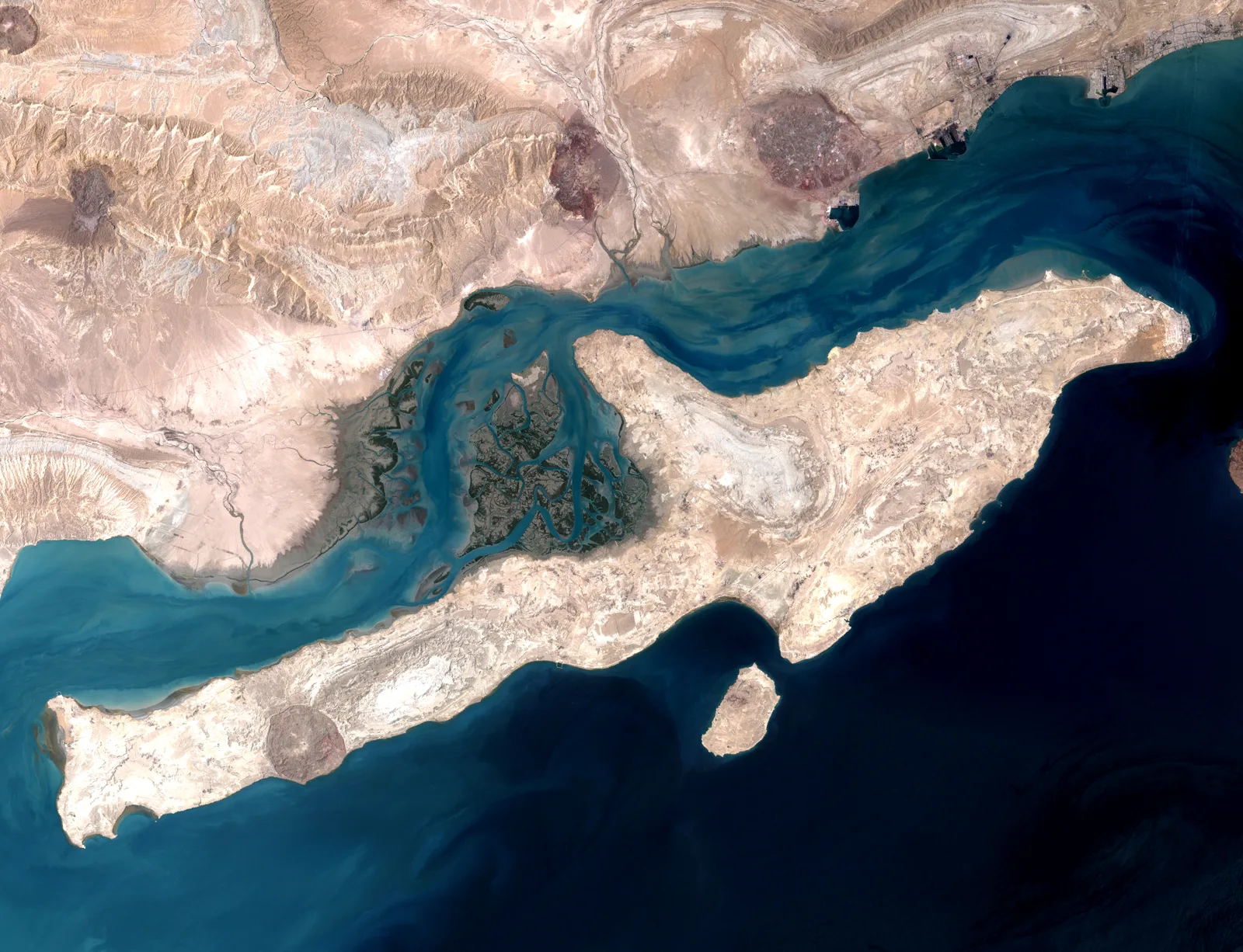
As a state within the state's military — its own ground, naval and air arms, all separate from the regular military's equivalents. CFR, citing IISS, puts upward of 190,000 troops under its command, around half of them conscripts. Its ground forces, based across Iran's 31 provinces and Tehran, number more than 150,000. The Basij paramilitary force, brought under the IRGC's direct command in 2007, claims it can mobilise some 600,000 volunteers. Its naval forces — some 20,000 sailors, separate from the regular navy's — are charged with patrolling Iran's maritime borders, including the Strait of Hormuz, through which CFR notes about one-third of the world's seaborne crude oil passes each year. Its air force of 15,000, also separate, runs Iran's ballistic missile programme; Iran Watch additionally records an Aerospace Force operating the corps' manned aircraft, ballistic missiles, drones and anti-aircraft systems. A cyber command works with IRGC-affiliated businesses on military and commercial espionage and propaganda distribution, according to IISS. The corps' current commander is Major General Ahmad Vahidi, Iran Watch records. Major General Hossein Salami, the corps' head, was the most senior military leader killed in Israel's June 2025 strikes on Iran, which were intended, Prime Minister Benjamin Netanyahu said, to destroy the heart of Iran's nuclear enrichment programme.
What does the IRGC do abroad?
It projects Iranian power through partners rather than, usually, through its own invasions — the model the Quds Force embodies. The IRGC began sponsoring non-state armed groups in the 1980s, and the Quds Force emerged as its de facto external affairs branch, developing ties with armed groups from Afghanistan, Iraq, Lebanon, the Palestinian territories, Yemen and elsewhere — providing training, weapons, money and military advice, CFR reports. Tehran views the network as an anti-West "axis of resistance"; some of the groups frequently operate independently of Iran and of each other. In Iraq after 2003, President George W. Bush accused the Quds Force in 2007 of providing Shiite militants with roadside bombs that killed American forces — an accusation whose chain of orders experts questioned — and the Trump administration later blamed the IRGC for the killings of 608 US troops in Iraq between 2003 and 2011. In Syria after 2011, the Quds Force moved from advising to fighting on the front lines alongside President Bashar al-Assad's forces, Lebanese Hezbollah militants and Afghan refugees serving in IRGC proxy militias; in Yemen, the IRGC channelled intelligence support, training and weapons to the Houthis against the government and Saudi Arabia. The network's architect, Quds Force commander Qasem Soleimani, was killed with Iraqi mobilization leader Abu Mahdi al-Muhandis in a US drone strike in January 2020. In the current war, the IRGC's Hormuz role is the one readers of this site meet weekly: its naval arm operates in the strait, and its statements claiming hits on tankers and drones have been published here throughout 2026 strictly as attributed claims, without independent confirmation where none exists.
What power does the IRGC hold inside Iran?
A central one — former commanders appointed to top political posts, parliamentary influence, and an economic grip a CSIS report called the most powerful in the country; CFR's Ray Takeyh has called the corps the most important organisation in Iran. Supreme Leader Ali Khamenei — who himself led the IRGC during the Iran-Iraq War — has appointed former commanders to top political posts, and former guards in parliament tend to advocate a hard-line foreign policy; the president, by contrast, controls none of the armed forces and has limited sway over foreign policy. The political role is underwritten by money: the corps first became an economic player rebuilding infrastructure destroyed in the Iran-Iraq War and has since expanded into banking, shipping, manufacturing and consumer imports, with political clout securing its affiliated companies no-bid state contracts. A 2020 Center for Strategic and International Studies report concluded, in CFR's quotation, that "the IRGC has become the most powerful controller of all important economic sectors across Iran." Some analysts say US sanctions have perversely benefited the corps, expanding its black-market opportunities as licit trade closed; with oil sanctions reimposed, the IRGC has smuggled oil, mostly to China, generating millions of dollars for the Quds Force and Hezbollah, CFR reports. Experts expect the IRGC to play a pivotal role in selecting a successor to the aging Khamenei — a prospect that could further consolidate its power.
Why is the IRGC designated and condemned?
Because of both its foreign network and its domestic record — and the designations tightened sharply in 2026. Human rights groups documented the Basij attacking protesters after the disputed 2009 presidential election; the corps' reputation took a further hit when it mistakenly shot down a passenger plane over Iran in January 2020, killing all 176 people aboard, most of them Iranians; and the Basij and broader IRGC were accused of beating, shooting, sexually assaulting and torturing participants in the "Women, Life, Freedom" movement of 2022. When antigovernment protests ballooned nationwide at the end of 2025 and grew violent in January 2026, the IRGC and the regime met them with extreme force — Khamenei publicly announced the clashes had killed "thousands of people" — and the European Union listed the IRGC as a terrorist organisation as a result, dated February 20, 2026 in Iran Watch's record. The United States also lists the corps among its designated terrorist organisations. Iran's position, where CFR records one, is denial in specific cases — Tehran says it was not involved in the 1994 Buenos Aires Jewish centre bombing that Western and Middle Eastern intelligence officials tied to the IRGC and Hezbollah — and the corps remains, in the Iranian constitution's own design, a lawful pillar of the state it was built to guard. That dual status — a constitutional army at home, a designated organisation abroad — is the essential fact about the IRGC, and the reason its statements, ships and proxies anchor so much of the region's war news. The missiles it controls are traced in our Iran nuclear programme explainer, and the waterway its navy patrols in our Strait of Hormuz explainer.
This explainer is drawn from the Council on Foreign Relations' IRGC backgrounder and Iran Watch's IRGC entity profile, both opened and read in full during this run. Strength figures are IISS estimates as reported by CFR; contested episodes are reported with the attributions and denials those sources record.