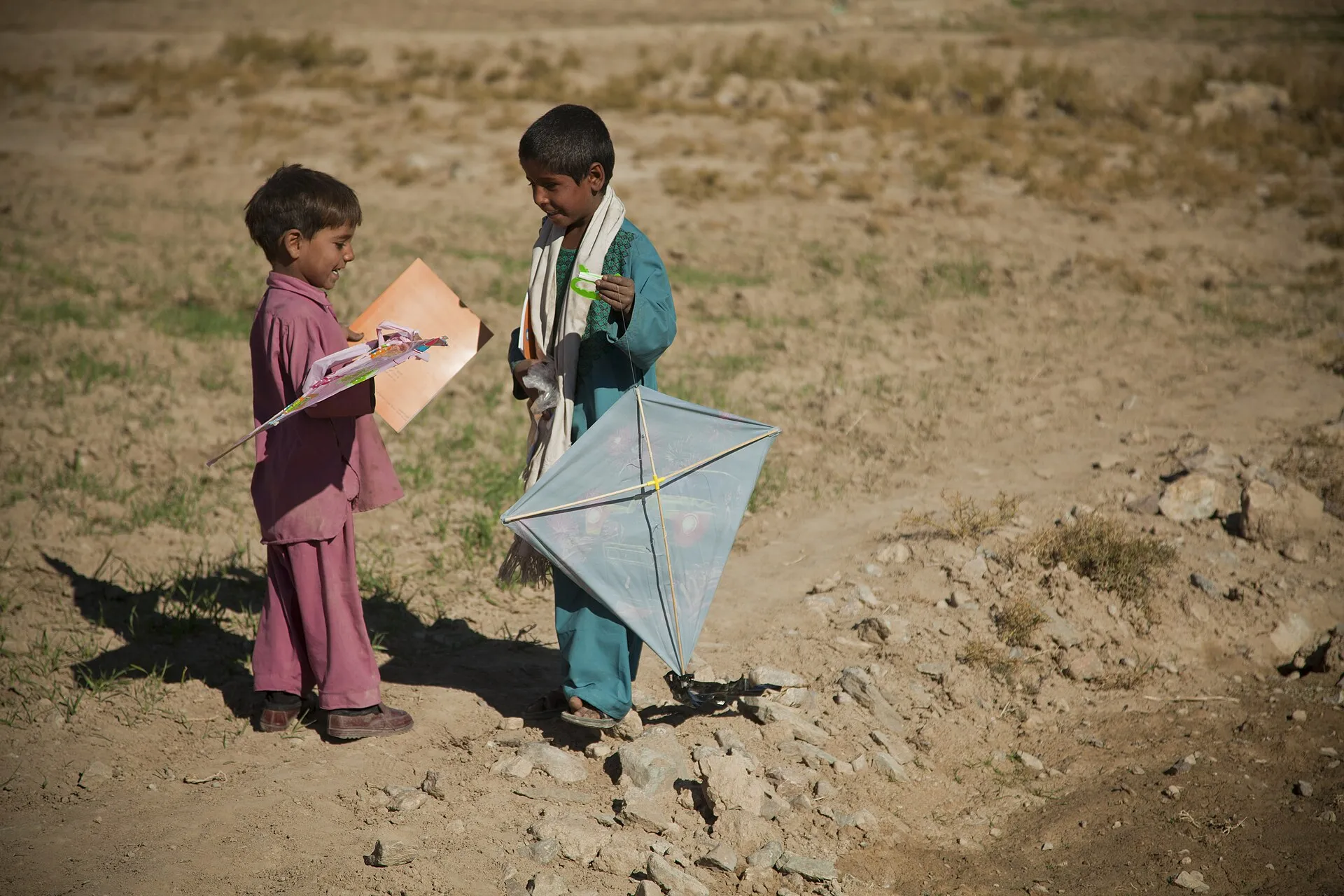
Paper kites flown by children in Gaza became the stated object of an Israeli strike directive in August 2026, when Prime Minister Benjamin Netanyahu and Defence Minister Israel Katz ordered the military to answer kite launches with airstrikes — and strikes within hours killed at least three people, including a four-year-old child. Le Monde's reporting from Gaza found parents hiding their children's kites and camp committees asking families to ground them — and stated plainly that there is no evidence linking the deaths of children that week to the kites.
What exactly did Israel order?
The directive followed the discovery of at least four kites near Nahal Oz, on the Israeli side of the border. On inspection, the Israeli military itself reported that no suspicious elements had been found on them and that they posed no danger, Le Monde reported. Netanyahu and Katz nevertheless announced on Sunday, August 23 that forces would act against anyone launching paper kites. Netanyahu's directive, as documented in the announcement, was "to strike it, to strike those operating it, to strike the place from which it was launched." Katz put the doctrine in one line: "A balloon is like a kite, and a kite is like a drone, whether or not it carries explosives." The threatened measures included airstrikes, targeted killings of those held responsible, and evacuations of areas from which kites were launched. Israel accused Hamas of launching the kites; Hamas denied the accusation, its Gaza spokesperson Hazem Qassem calling the kites "children's toys in the displacement camps" and the threats a pretext to continue attacks.
What happened in the hours after the announcement?
Hours after the announcement, Israeli warplanes struck a warehouse in az-Zawayda and two areas on Salah al-Din Street in central Gaza, killing at least three people, including a four-year-old child, and wounding several others, Al Jazeera reported. Palestinian reporting carried by Press TV named the four-year-old as Mohammad Abdel-Salam Taha. On Monday, August 24, a four-year-old was killed in the same locality in a strike on a house, and in Khan Yunis a 10-year-old, Amal Abou Khater, was shot dead while eating in her family's tent, Le Monde reported. The Israeli army said it had struck Hamas targets and that it did not know the circumstances of the girl's death. Le Monde's conclusion is part of the record and is quoted here because it is the finding of a Tier 1 newsroom that worked the story: "There is no evidence linking these children's deaths to the kites."
Why did parents start confiscating kites?
Because they believed the threats. Le Monde spoke to Amin, 6, in al-Bureij, whose father put his two kites away: "He told me that if I fly them, the Israelis will bomb me. I'm scared." Amer, 11, used to fly his kite near a cemetery about 400 metres from the "yellow line" behind which Israeli forces withdrew; the army still controls almost 70 percent of Gaza, Le Monde reported. Popular committees in the displacement camps asked families to stop children flying kites so that, in their words, "innocent playtime" would not turn into "another bloody tragedy." A shopkeeper who sold kites for 8 to 10 shekels stopped selling them: "It was my only source of income." For many children the kite — four or five sticks, plastic and string — was one of the few games left in an enclave where, according to UNICEF figures cited by Le Monde, some 700,000 children have been out of face-to-face schooling for nearly three years.
Why does Israel treat kites as a weapon at all?
Israeli officials point to 2018, when, during the Great March of Return protests, some Palestinians launched kites and balloons carrying incendiary devices that sparked hundreds of fires in farmland in southern Israel, Le Monde reported. That precedent involves devices fitted with incendiaries; the August 2026 trigger, by the Israeli military's own inspection, involved plain paper kites on which nothing suspicious was found. The gap between those two facts is the centre of this story: a doctrine, stated by Israel's defence minister, that treats any launched kite as a weapon by category — applied against what Palestinian families and the Hamas spokesperson quoted above describe as toys — and, on its first day, dead children whose connection to any kite, Le Monde found, is not evidenced.
What is the latest reported consequence?
On October 14, the Palestinian Information Center reported — in coverage carried by ABNA — that four-year-old Osama Abed had died of injuries sustained in an Israeli strike on al-Zawaida about three weeks earlier, bringing the child death toll from that strike to two. That is single-source Palestinian reporting and is published here as such. It records that, seven weeks after the kite directive, children in the same central Gaza town were still dying of strike wounds.
The directive, the Israeli military's inspection finding and the Le Monde interviews were opened and read on lemonde.fr; the Netanyahu statement and the az-Zawayda strike toll on breakthroughnews.org and the Al Jazeera reporting it cites; the October follow-up is Palestinian Information Center reporting via ABNA, attributed as single-source. War Info Hub's position rests on the documented record in this article: a strike directive aimed at paper kites — issued after the military's own inspection found nothing dangerous on the kites that triggered it — and children dead in the strikes that followed, with, in Le Monde's finding, no evidence linking their deaths to any kite.