This week's war impact on markets was the war premium draining out of oil at the fastest weekly pace since the pandemic. January Brent settled up just 3 cents on Friday at $98.32 a barrel — but down $15.11, or 13.32%, on the week, its largest weekly percentage decline since the week ending April 24, 2020, snapping a six-week winning streak, according to Dow Jones Market Data. West Texas Intermediate for December delivery settled at $90.83, up 0.34% on Friday and down from the $104.12 settlement recorded in this series last Friday. The driver was politics, not a signed peace: the Democratic sweep of Tuesday's US midterm elections raised hopes of an Iran war de-escalation, Reuters reported, while Hormuz tanker attacks at close to record pace stopped the fall going further. Gold ended the week higher, defense stocks sold off, wheat fell for a tenth straight week, and US equities posted their worst week since April 2025. Figures below were checked Friday, November 6, 2026, at 4:20 PM Central Time — snapshots, not live prices.
What pushed Brent to its steepest weekly fall since 2020?
The midterm result, and what traders expect it to mean for the war. Oil prices fell 8% on Wednesday alone after the Democrats swept the elections, settling at two-month lows, Reuters reported; Brent tumbled about 9% on Wednesday to around $94 a barrel, per Reuters' Morning Bid. "The US midterm election results reinforced the view that Washington had more incentive to seek a diplomatic solution, easing some concerns about supply disruptions, but so far this remains largely a market expectation," Linh Tran of XS.com told Dow Jones. Vice President JD Vance blamed the Republicans' losses squarely on the Middle East conflict, and President Trump acknowledged that was probably correct while saying the war was still worth it, Reuters reported; Trump also said on Tuesday that the US would end its $4 billion in annual military aid to Israel at the end of this year. No agreement has been signed — negotiations between the US, Iran and mediators have continued in fits and starts for months, centred on reopening the Strait of Hormuz and curtailing Iran's nuclear programme, with significant gaps persisting, Dow Jones reported. The fall therefore prices an expectation, and the week showed how quickly it can reverse: prices spiked nearly 4% on Thursday following fresh tanker attacks in the Gulf, and crude edged up late on Friday on renewed fears of further US strikes after Trump said he would soon decide whether to pursue a peace agreement or destroy what remains of Iran, Reuters reported via The Edge's settlement wrap.

How did defense stocks perform this week?
All three majors fell, and by more than the wider market. Lockheed Martin closed at $567.08, down 1.58% on Friday and down from $636.95 last Friday — a weekly fall of about 11%, according to Finnhub closing data. RTX closed at $189.53, down 1.22% on Friday and down from $199.80 a week earlier. Northrop Grumman closed at $525.01, down 0.05% on Friday and down from $557.54 last Friday. The pattern matches the week's trading narrative: defense names lagged Wednesday's post-election rally, Pioneer Advisory's weekly recap noted, as the same result that drained the oil premium — a Congress expected to press for an end to the Iran war — weighed on the sector. The reporting opened for this briefing did not attribute any single defense move to a new contract or conflict headline, and none is claimed here.
What happened to gold and natural gas?
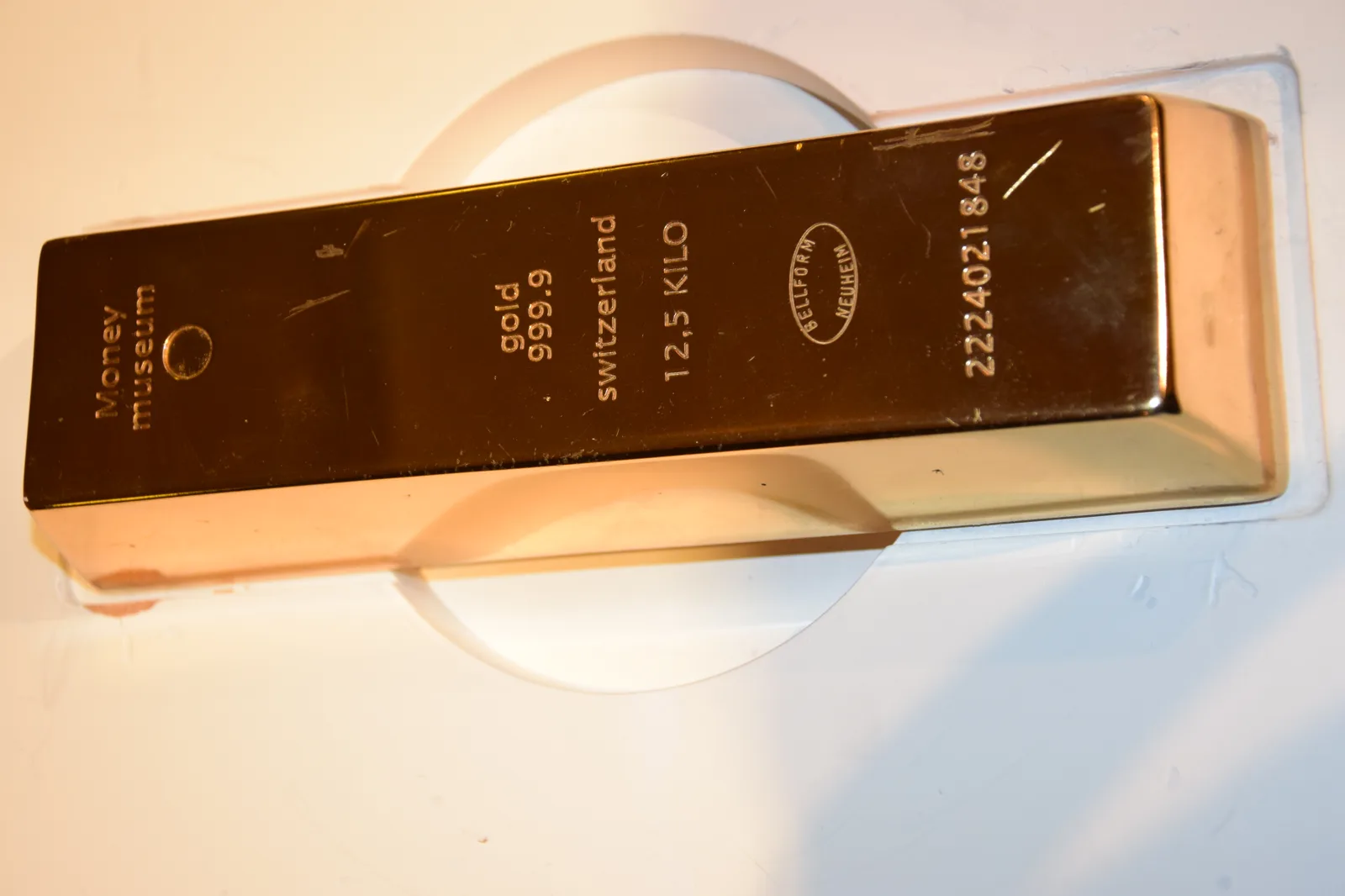
Gold rose on the week — the mirror image of oil. December gold futures settled at $4,074.90 an ounce on Friday, down 0.94% on the day, per The Edge's settlement table, but the metal remained on course for a weekly gain of more than 4%, Dow Jones Market Talk reported. The gain was built midweek: gold jumped 3.37% on Wednesday as crude cratered, on a weaker dollar and safe-haven flows after the midterm result. Friday's fall, Saxo Bank analysts told Dow Jones, reflected risk aversion after Thursday's equity selloff — investors typically cover losses by selling gold — alongside profit-taking after an initial wave of short covering.
US natural gas again moved on its own logic rather than the Gulf's. December Henry Hub futures settled at $2.998 per MMBtu, up 1.73% on Friday — the strongest of the energy contracts — and up from $2.858 last Friday, per The Edge. Natural Gas Intelligence reported the prompt month up 3.7 cents to $2.984 at midday Friday, propelled by resurgent LNG feedgas flows, downward-trending production and modestly cooler forecasts. With US export plants at capacity, the war's gas channel remains a European and Asian story, not a Henry Hub one.
How did food and shipping markets move?
Wheat fell for a tenth consecutive week. December soft red winter wheat settled at $5.91¼ a bushel on Friday, down 1.34% on the day and down 12¼ cents, or 2.0%, on the week from last Friday's $6.03½, per Farmbucks settlement data. This week the war channel into grain ran through diplomacy headlines: wheat futures fell after President Trump said he expects an agreement could be reached soon to resolve the war between Russia and Ukraine, Dow Jones Market Talk reported, with Doug Bergman of RCM Alternatives noting prices dropping to new lows on the comments. Global food prices also eased in October on cheaper grains, dairy and meat, the UN Food and Agriculture Organization said.
Shipping is where the war still bites hardest. Iran said on Thursday that three more tankers had been attacked in the Strait of Hormuz, and UK Maritime Trade Operations data suggested attacks on oil-carrying ships are still running at close to record pace, Reuters reported. At least five vessels have reported incidents since Sunday — around October's rate, when UKMTO said 35 vessels were hit, the most of any month of the war. Iran's Revolutionary Guards said two tankers had struck naval mines and another had caught fire on Thursday — a claim reported here as the Guards' statement, without independent confirmation. It was that attack tempo that produced Thursday's near-4% oil rebound inside a collapsing week.
What happened to the broader stock market?
US equities ended a violent week lower despite a partial Friday bounce. The S&P 500 closed at 7,376.86, up 0.31% on Friday but down 2.7% on the week — its biggest weekly decline since April 2025 — while the Nasdaq Composite fell 3.4% on the week to 24,579.42 and the Dow Jones Industrial Average fell 0.9% to 51,285.73, according to Investopedia and Pioneer Advisory's weekly recap. The damage was done on Thursday, when the S&P 500 lost 4.36% and the Nasdaq 5.52% — its biggest one-day point drop ever — as fears that emboldened Democrats may slow data-centre building hammered the AI trade, wiping roughly $3 trillion from the S&P 500's value, Reuters and Investopedia reported. Friday's October jobs report — payrolls up 165,000 against about 65,000 expected, unemployment down to 4.1% — lifted chip stocks in a partial recovery. The war's own footprint in the index was the sector split: energy was the week's worst S&P 500 sector, down roughly 11%, as the oil premium drained, Pioneer Advisory reported.

War & Markets publishes weekly. Figures are snapshots checked at the time shown above — not live prices, and not financial advice. Nothing here is a recommendation to buy, sell, or hold any security or commodity.