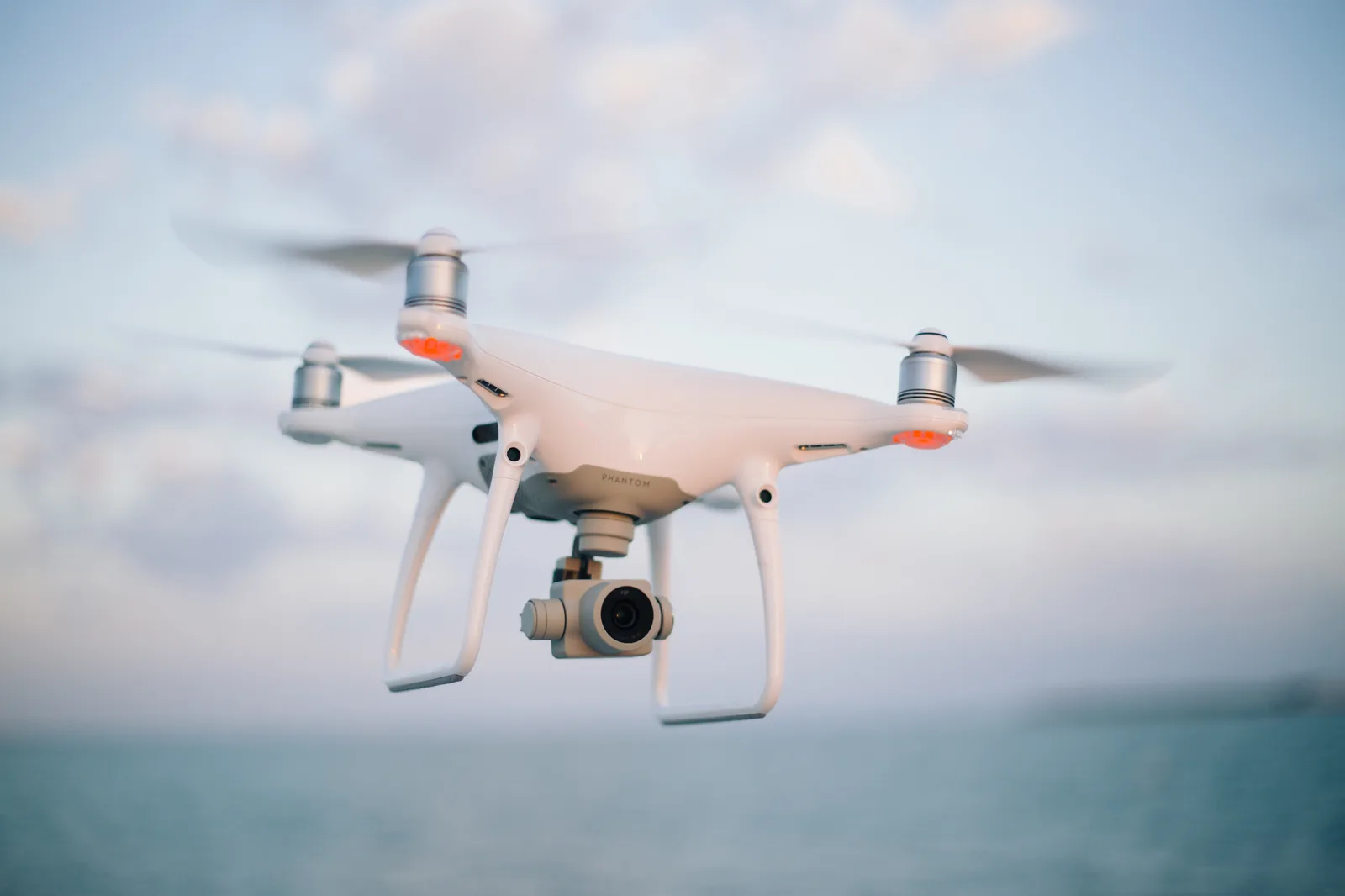
How drones rewrote the Ukraine war can be stated in a single fact: on the modern Ukrainian battlefield, any vehicle that appears within roughly 10 kilometers of the frontline is immediately attacked. What military maps still draw as a line soldiers experience as a belt — saturated with reconnaissance drones, first-person-view (FPV) attack drones, artillery, electronic warfare and precision strikes. Analysts call it the "kill zone," and it has changed the grammar of warfare more in four years than the previous four decades did.
Key takeaways
- Military analyst Konrad Muzyka describes a "kill zone" extending 7 to 10 kilometers into each side's positions, where movement by vehicle is quickly detected and struck by FPV drones.
- Both sides now produce millions of drones a year — Ukraine's FPV capacity has reached about 8 million annually, and Commander-in-Chief Syrskyi warned in May 2026 that Russia plans 7.3 million FPV drones in 2026.
- Fiber-optic drones, which trail an unjammable cable, have partly defeated electronic warfare and pushed the kill zone to ranges of at least 15 kilometers.
- Drones have not replaced infantry, but they have made massing forces for conventional offensives nearly impossible — the key reason the frontline has been largely positional since late 2023.
Contents
- What the kill zone is
- How drones changed the battlefield
- Fiber optics and the jamming war
- The limits of the drone revolution
What the kill zone is
"The kill zone is essentially an area of increasing threat, which gradually turns into a danger zone as you move farther away from the front line. This buffer extends 7 to 10 kilometers into each side's positions," explains Konrad Muzyka, a military analyst and owner of Rohan Consulting, in an analysis published by Eastflank. "The moment any heavy wheeled or tracked vehicle appears in this belt, FPV drones, artillery and other weapons are immediately directed against it."
The Institute for the Study of War describes this area as a "tactical reconnaissance-strike complex" — constant aerial surveillance fused with artillery, mines, fortifications and electronic warfare. That fusion is what has kept much of the front largely positional since late 2023: concentrating the forces needed for conventional maneuver warfare is now extremely easy to detect, and therefore extremely vulnerable.
The scale of the saturation is staggering. In August 2026, the head of the British armed forces, Sir Rich Knighton, traveled close to the "kill zone" and wrote a first-hand account for The Times. He visited the frontline headquarters of Ukraine's 425th Assault Regiment near Pokrovsk, where screens stacked four or five high displayed live drone feeds "as they hunted their enemy" — including, in some cases, intercepted signals from Russian drones. Knighton described the front as a 30-kilometer-wide, 1,200-kilometer-long "kill zone" saturated with deadly drones.
"The moment any heavy wheeled or tracked vehicle appears in this belt, FPV drones, artillery and other weapons are immediately directed against it." — Konrad Muzyka, Eastflank
How drones changed the battlefield
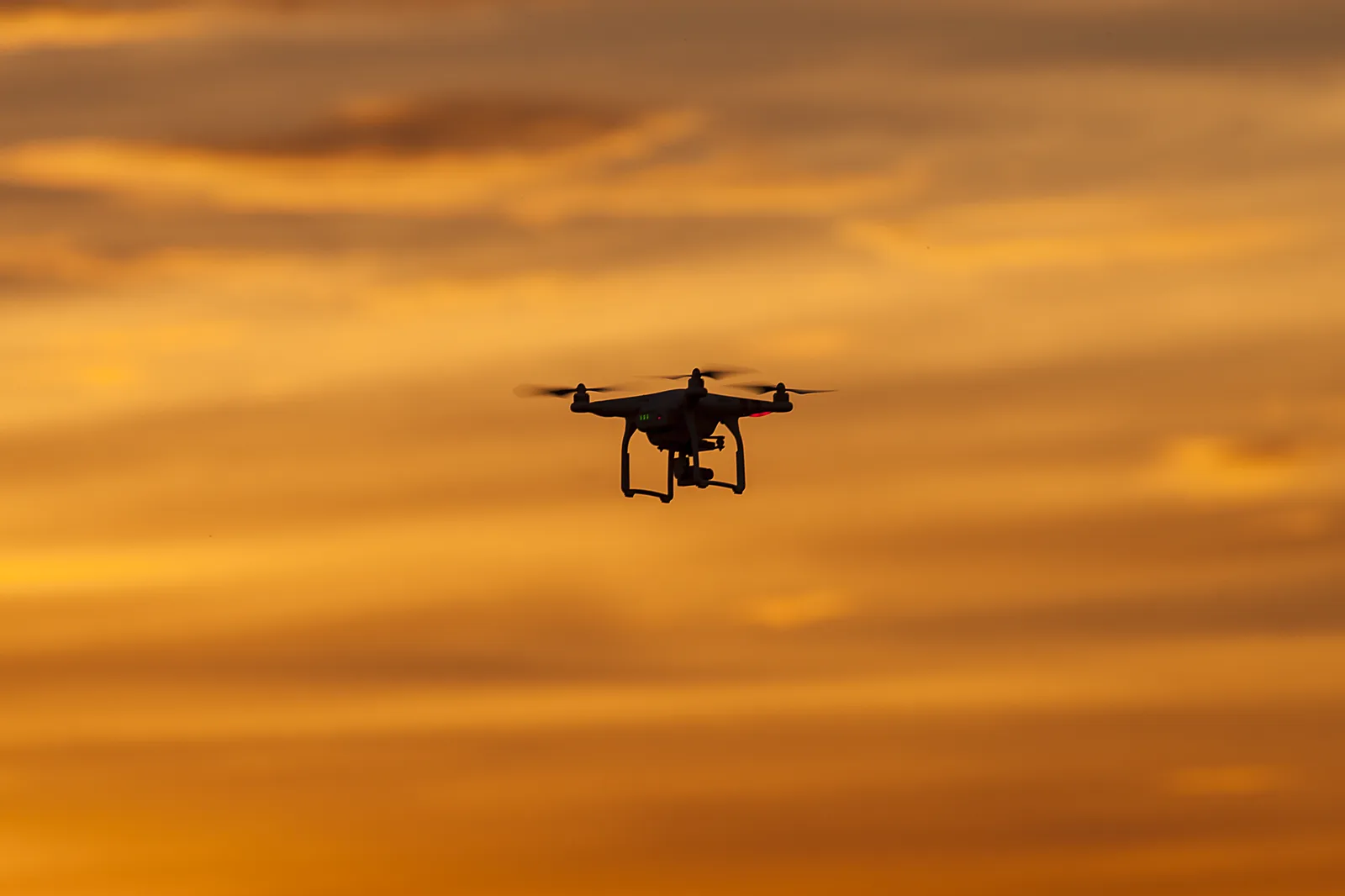
The transformation is quantitative before it is qualitative. In 2022, Ukraine's drone production ran to several thousand units a year; by 2024 Ukraine procured more than 1.5 million FPV drones. As of 2026 Ukraine's annual FPV capacity is roughly 8 million, and Commander-in-Chief Oleksandr Syrskyi warned in May 2026 that "Russia plans to produce 7.3 million FPV drones and 7.8 million warheads in 2026." Together, the two sides are making more than 15 million FPV drones a year for a single battlefield.
That saturation is what made the kill zone. An ISW report on Russian drone innovations described how Russian drones along the critical T0515 highway near Pokrovsk struck two or three Ukrainian vehicles daily, forcing soldiers to bring supplies up on foot. Ukrainian electronic-warfare expert Serhiy "Flash" Beskrestnov reported, citing data from an unspecified medical facility in the Pokrovsk direction, that 70 percent of injuries sustained by Ukrainian forces and civilians resulted from FPV drone attacks along Ukrainian highways.
Logistics, the lifeblood of armies, now move in fragments. The kill zone has accelerated the development of unmanned ground vehicles used for evacuations and for delivering ammunition and food when roads are too exposed; resupply requires counter-drone teams, active electronic warfare, and a vehicle that drives in, unloads and leaves immediately. A wounded soldier may have to remain hidden in a trench for hours or even days before a route becomes safe enough to move.
Combat footage from this environment has become a weapon in its own right — Russia's Rubicon drone unit claims to publish strike videos daily on its Telegram channel — which is why verifying what such footage shows has become its own discipline (see our explainer on [how OSINT analysts verify combat footage](/articles/2026-09-27-how-osint-analysts-verify-combat-footage)).
Fiber optics and the jamming war
The newest twist in the drone war is also the oldest technology: wire. Fiber-optic drones are physically tethered to their operators via ultra-thin cables that transmit real-time video and guidance signals — making them far less vulnerable to the radio jamming that defeats conventional FPV drones. In some configurations they can operate at distances of at least 15 kilometers, and both sides have adopted them.
The Royal United Services Institute (RUSI) describes an emerging Ukrainian approach that divides contested territory into a contact zone, an intermediate zone and a deep zone: Ukrainian forces first conduct reconnaissance, suppress enemy sensors and disrupt logistics, isolate a sector and weaken defending units — and only then attempt to seize ground. RUSI also notes Russian drones are increasingly being used to locate Ukrainian electronic-warfare systems, radars, command posts, artillery and drone operators.

The limits of the drone revolution
For all the transformation, Muzyka cautions against treating either side's "drone supremacy" as real. Such claims are usually local, limited to a specific sector; the kill zone is not uniform — it is more accurate to think of the battlefield as overlapping reconnaissance and strike zones whose coverage shifts with weather, vegetation, frequencies, batteries and trained operators.
Drone production also cannot replace infantry: drones can deny ground, but they cannot hold it. Ukraine's main constraints on larger-scale operations, Muzyka argues, are not technological but social — recruitment and mobilization. "Without forming new, properly trained reserves, it will be difficult to turn the course of the war around," he says.
Russia's adaptation is relentless. Muzyka estimates Russia holds a drone advantage of between 5-to-1 and as much as 10-to-1 depending on the sector, and that up to 20 percent of Russian troops in Ukraine — roughly 120,000 to 140,000 soldiers — are now involved in drone operations. Russia retains major advantages in industrial capacity, missile and glide-bomb production, and the ability to absorb heavy losses. Muzyka's assessment: unless Russia launches a new mass mobilization, the front should not deteriorate dramatically — but Russian forces will keep advancing gradually, concentrating on the Kramatorsk urban area, where fighting for the city could begin by the end of the year.
The human cost behind the technology is enormous. Reuters, citing Center for Strategic and International Studies estimates reported by Eastflank, puts combined Russian and Ukrainian troops killed, wounded or missing at around 2 million — Russian losses at roughly 1.4 million including 400,000 to 450,000 killed, Ukrainian losses at 525,000 including 125,000 to 150,000 killed. The UN confirmed that nearly 1,400 Ukrainian civilians were killed and almost 8,000 injured in Russian attacks in the first half of 2026. The kill zone may be the most important military development of this war — but the war it belongs to is far from over, as our [Ukraine frontline update](/articles/2026-09-29-ukraine-frontline-update) documents.