The Second Opium War explained in one line: from 1856 to 1860 Britain and France fought Qing China to finish what the Treaty of Nanking had left unsettled — above all the still-illegal opium trade — and won a settlement that legalised opium, stationed foreign envoys in Beijing, opened ten more ports plus Tianjin, ceded Kowloon, and was sealed by the burning of the emperor's Summer Palace.
Key takeaways
- The unsettled drug was the core issue: the First Opium War's treaty never legalised or banned opium; Britain's revision demands of the 1850s put legalisation first among equals, alongside opening all of China and a resident ambassador in Beijing (see Why did Britain and France go to war?).
- The trigger was legally hollow: the Arrow's British registration had expired before Qing officials seized it on 8 October 1856 — a fact established afterwards and debated in Parliament, which voted 263 to 249 against the government's handling before Palmerston won the ensuing election (see Why did Britain and France go to war?).
- The war was won twice: the allies imposed the Treaties of Tianjin in June 1858, were bloodily repulsed at the Dagu forts in June 1859 when they tried to force the river route to ratification, and had to return in 1860 with a much larger force (see How did the war unfold?).
- The peace legalised the trade and doubled the bill: indemnities rose from 4 million taels to Britain and 2 million to France at Tianjin to 8 million taels each under the Convention of Peking (see What were the economic effects?).
- Russia gained most land without fighting as a principal: the Treaties of Aigun (1858) and Peking (1860) transferred more than 1.5 million square kilometres in China's north-east and north-west (see How did it shape the world?).
Contents
- Overview
- Why did Britain and France go to war?
- How did the war unfold?
- How many people died?
- What were the economic effects?
- How did it shape the world?
- What do historians debate?
Overview
The Second Opium War — also called the Arrow War or the Second Anglo-Chinese War — was a war between Britain and France, allied, and Qing China, fought from 8 October 1856 to 24 October 1860, which the allies won. It was the second of the Opium Wars, fought over the right to import opium into China, and it ended in a second Qing defeat and the forced legalisation of the opium trade. The Treaties of Tianjin (June 1858) and the Convention of Peking (24 October 1860) together gave foreign envoys residence in Beijing, opened ten more treaty ports plus Tianjin itself, legalised opium imports, ceded the Kowloon Peninsula to Britain, and imposed indemnities totalling 16 million taels of silver. The compiled record adds the judgment the war left on its losers: the defeat caused many Chinese officials to believe that conflicts with the Western powers were no longer traditional wars, but part of a looming national crisis.
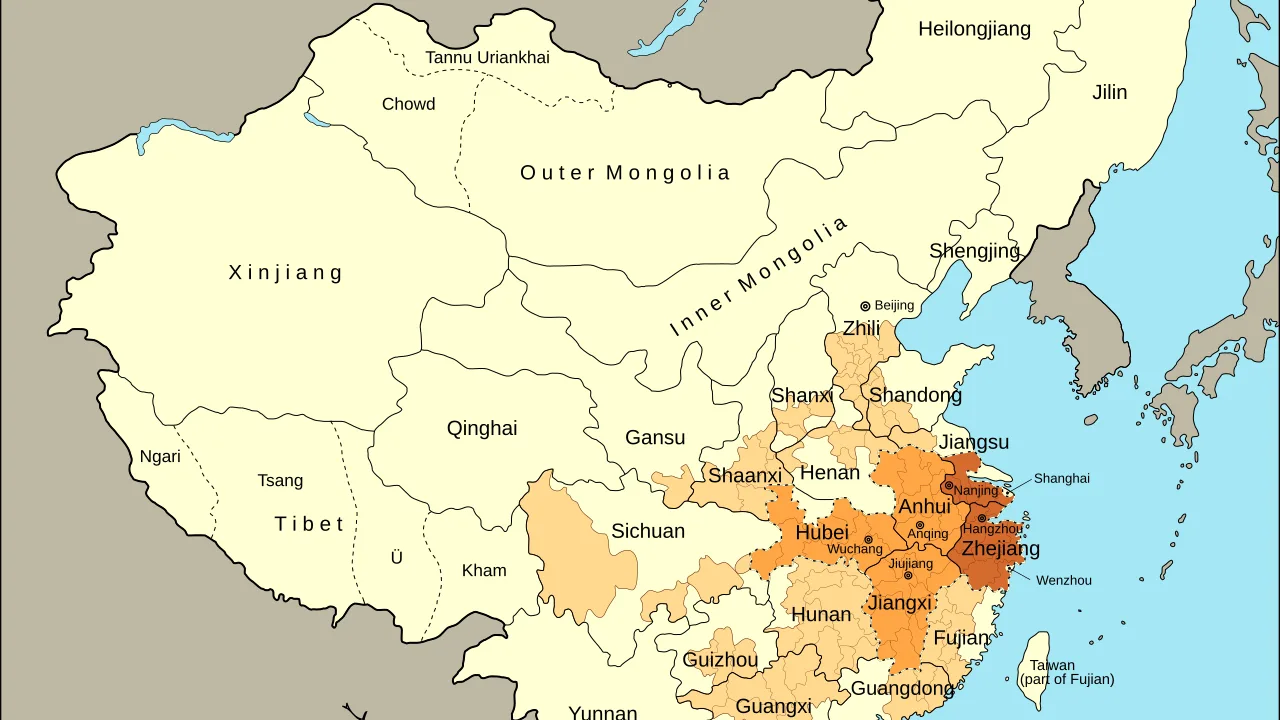
The war came at a moment of Qing weakness. In the mid-1850s the Qing government was embroiled in the Taiping Rebellion (1850–64), which had taken Nanjing, while the settlement of 1842 frayed: British merchants could trade at five ports but could not enter Canton city itself, no foreign envoy could reside in the capital, and the opium whose destruction had caused the first war still entered China illegally. The United States and Russia, Britannica notes, were not combatants, but both also received concessions as a result — a pattern that shaped the outcome as much as the fighting did.
Why did Britain and France go to war?
The war started because Britain and France sought a revision of the 1842 settlement that the Qing court refused — wider markets, legalised opium, and diplomatic residence in Beijing — and two incidents in 1856 supplied the occasions: the seizure of the Arrow for Britain, and the execution of a French missionary for France.
The revision demands are listed in the compiled record. Citing its most-favoured-nation status, Britain demanded that the Qing renegotiate the Treaty of Nanking: opening all of China to British merchant companies, legalising the opium trade, exempting foreign imports from internal transit duties, suppressing piracy, regulating the coolie trade, permitting a British ambassador to reside in Beijing, and giving the English-language text of treaties precedence over the Chinese. The Qing court rejected the demands from Britain, France and the United States. EBSCO's summary locates the deeper cause one level down: fundamentally, it holds, the war grew out of the two sides' different perceptions of international relations — a Qing court that treated foreign powers within a tributary hierarchy against Western insistence on sovereign equality and open trade.
The Arrow incident supplied the spark. On 8 October 1856 Qing officials at Canton seized the lorcha Arrow, a Chinese-owned cargo ship registered as British in Hong Kong, and arrested twelve of its fourteen Chinese crew on suspicion of piracy. Its captain, Thomas Kennedy, reported seeing Chinese marines pull the British flag down. The acting British consul, Harry Parkes, demanded the crew's immediate release and an apology; the imperial commissioner Ye Mingchen released the crew but refused to apologise. Afterwards it emerged that the Arrow's British registration had expired — it was, technically, not a British ship at the time of its seizure. Britain nevertheless bombarded Canton from 23 October: EBSCO records that British gunboats attacked four barrier forts that day, killing five defenders. In December, Chinese in Canton burned the foreign factories, and the stalemate hardened into war. France joined the expedition citing the execution of the missionary Auguste Chapdelaine by local authorities in Guangxi in February 1856, in a province not open to foreigners.
The war was contested at home. On 3 March 1857 the House of Commons passed a resolution by 263 votes to 249 holding that the papers laid before it failed to establish satisfactory grounds for the violent measures at Canton. Prime Minister Lord Palmerston dissolved Parliament, fought the ensuing general election on the China question, and won an increased majority — after which the new Parliament decided to seek redress from China on the basis of Parkes's report on the Arrow incident.
How did the war unfold?
The war unfolded in two campaigns separated by a failed peace: Canton and Tianjin in 1857–58 produced the Treaties of Tianjin; the Qing refusal to ratify them, and the allied repulse at the Dagu forts in 1859, produced the larger 1860 expedition that took Beijing.
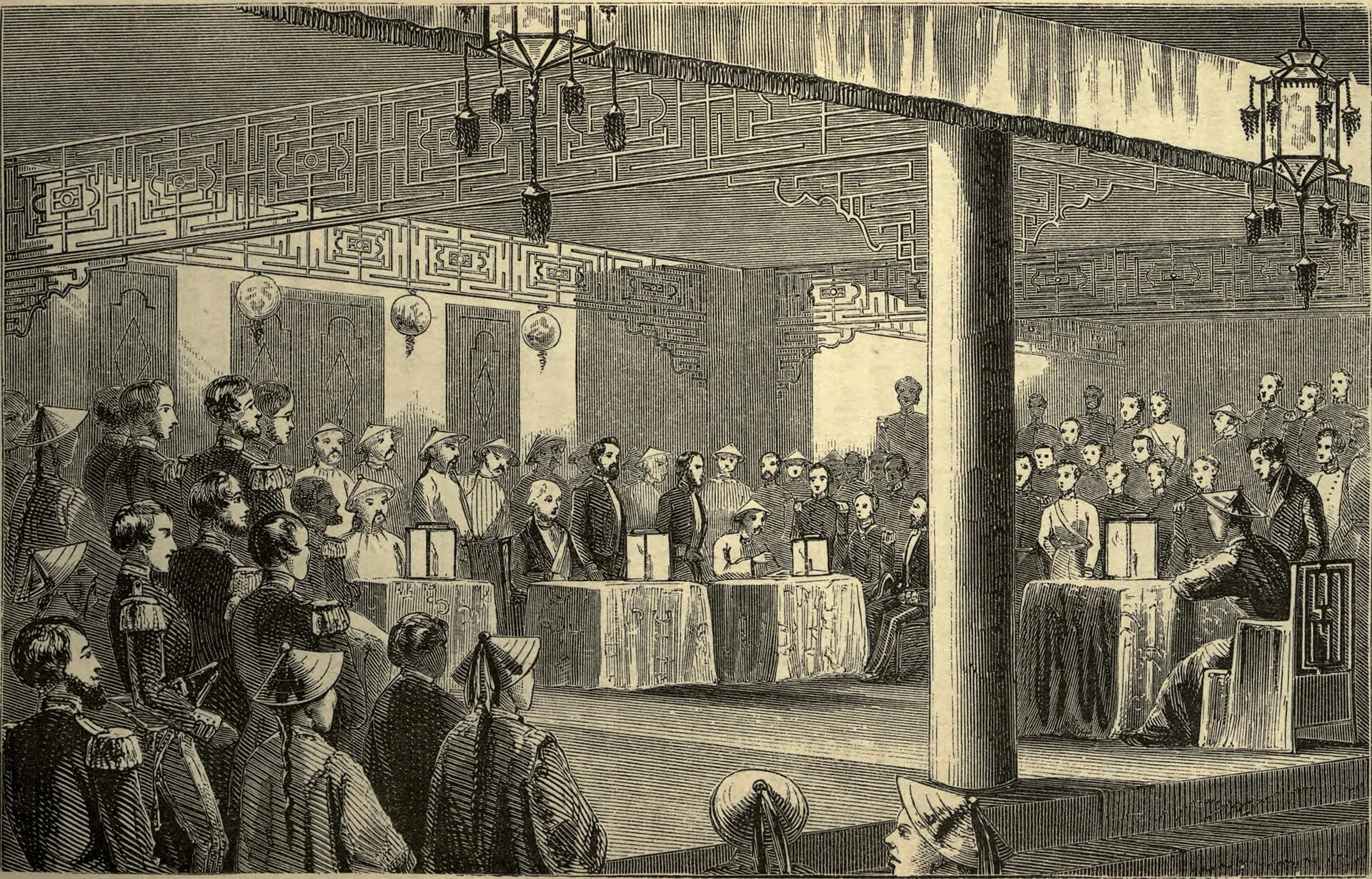
Operations began late because British troops bound for China were first diverted to India to help quell the Indian Mutiny. In December 1857 the allied force attacked Canton. The compiled record dates the city's capture to 1 January 1858, taken by fewer than 6,000 troops at a cost, in that account, of 15 allied killed and 113 wounded against 200–650 casualties among the defenders and inhabitants. Ye Mingchen was captured and shipped to Calcutta, where he died in exile a year later. The allies then sailed north, took the Taku (Dagu) forts on 20 May 1858, reached Tianjin, and forced the Qing to negotiate. In June 1858 the Treaties of Tianjin were signed with Britain, France, Russia and the United States; the treaties gave all four powers the right to establish diplomatic legations in Beijing. Russia, separately, signed the Treaty of Aigun on 28 May 1858, gaining the left bank of the Amur River.
Ratification destroyed the peace. The Xianfeng Emperor refused to ratify the treaties, and the Mongol general Sengge Rinchen was ordered to hold the Dagu forts. In June 1859 the British plenipotentiary Frederick Bruce insisted on forcing the main river route past the forts rather than landing by the alternative Beitang route the Qing offered. The forts' fire sank four British gunboats and severely damaged two others; EBSCO puts British casualties in the repulse at 424, with four ships sunk and two badly damaged. The American commodore Josiah Tattnall, though under orders to maintain neutrality, provided covering fire for the British retreat — "blood is thicker than water," as he is reported to have declared.
The 1860 expedition was built to make refusal impossible. The accounts differ modestly on its size — the compiled record gives 11,000 British troops under General James Hope Grant and 6,700 French under General Cousin-Montauban with 173 ships, while EBSCO gives about 10,000 British and 5,800 French — but not on its result. Landing near Beitang, the allies took the Dagu forts on 21 August 1860, occupied Tianjin, defeated Sengge Rinchen at Zhangjiawan on 18 September, and on 21 September at Baliqiao (Palikao) destroyed his army of some 10,000 men, including the elite Mongol cavalry, in frontal charges against concentrated allied firepower. A negotiating party under Parkes, seized on 18 September, was imprisoned and tortured, and a number of the prisoners were killed. The Xianfeng Emperor fled to Chengde, leaving his brother Prince Gong to negotiate. Allied troops reached the Old Summer Palace (Yuanmingyuan), the emperor's garden-palace north-west of Beijing, on 6–7 October and looted it. After the surviving prisoners were released on 8 October and the extent of their mistreatment became known, Lord Elgin — who had considered burning the Forbidden City itself — ordered the palace burned instead, writing that the punishment would fall "not on the people, who may be comparatively innocent, but exclusively on the Emperor, whose direct personal responsibility for the crime committed is established." British soldiers began the burning on 18 October; the French refused to assist. On 24 October 1860 Prince Gong signed the Convention of Peking, and the war ended.
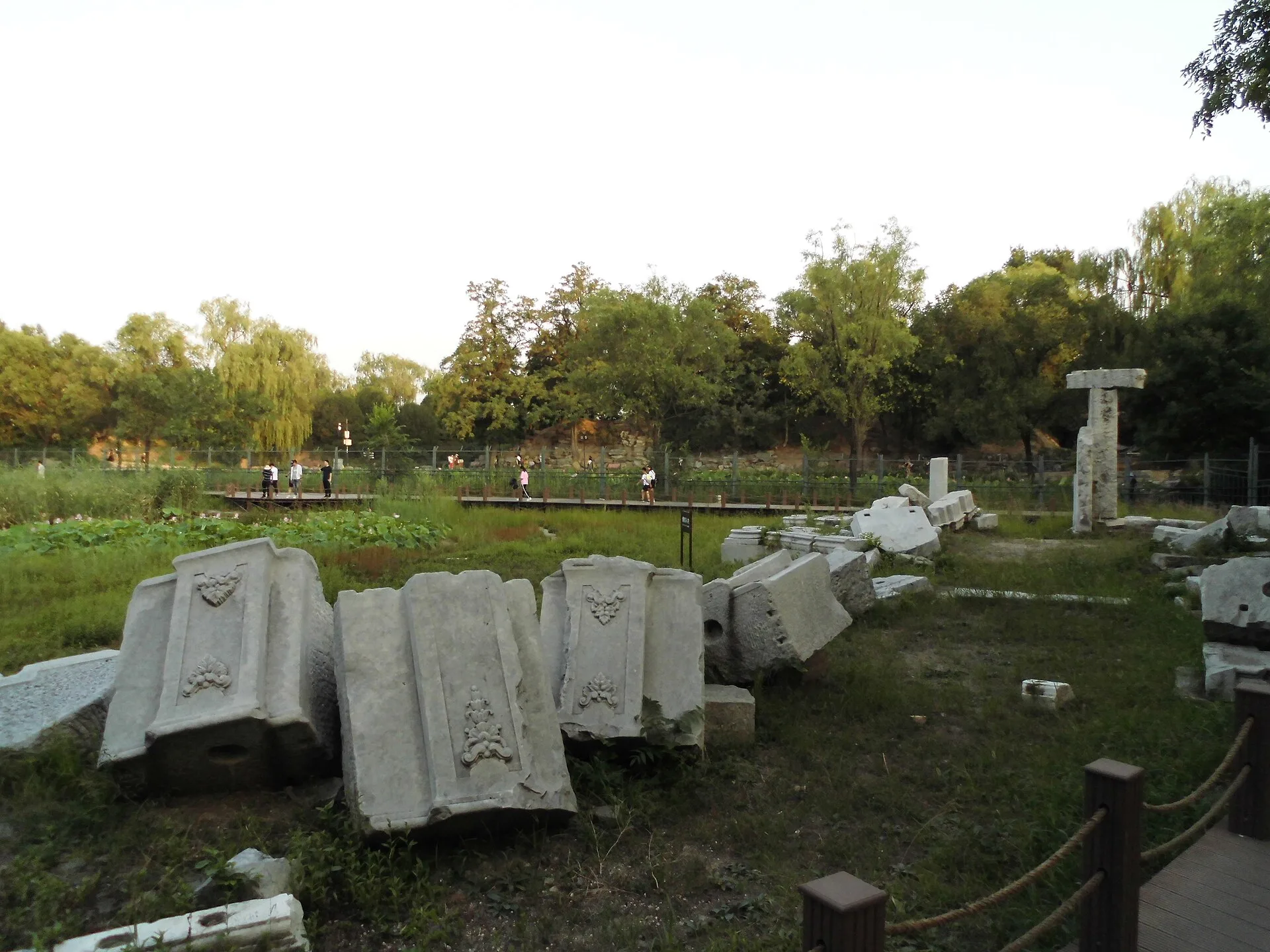
How many people died?
No agreed death toll exists for this war, and the published figures must be read for what they count. The compiled tabulation of the war gives allied losses as 134 British killed and 642 wounded, at least 25 French killed and at least 146 wounded, and — for the separate American clash at the Pearl River forts in 1856 — 11 United States killed and 23 wounded. Against those, it gives Qing losses of 2,100 to 2,801 killed or wounded combined, with a further 2,100 captured, 10 or more forts taken, 736 guns captured and 99 to 109 or more war junks captured or destroyed.
Two cautions govern those numbers. First, the Qing figure combines the killed and the wounded, so no separate Qing death toll can be extracted from it: any single "Chinese death toll" for this war goes beyond what the tabulation supports. Second, the tabulation counts recorded military losses in tabulated engagements, not all deaths connected with the war — it does not capture, for example, the Canton inhabitants counted among the 200–650 casualties in the account of the city's capture, nor deaths from disease. Single-engagement figures show the asymmetry: at the Dagu forts in June 1859 the attacking British suffered 424 casualties in a defeat; at Baliqiao in September 1860 Sengge Rinchen's army was, in the compiled account's word, annihilated. This article publishes the tabulation as attributed, and adopts no single total.
What were the economic effects?
The war's economic settlement moved in one direction: China paid for the expeditions sent against it, accepted limits on its customs and transit taxation, and legalised the drug trade whose revenues had underwritten Britain's Asian commerce.
The indemnity doubled between the two settlements. At Tianjin in 1858 China agreed to pay 4 million taels of silver to Britain and 2 million to France, and accepted that inland transit dues on foreign imports would not exceed 2.5 per cent. The Convention of Peking raised the indemnity to 8 million taels each for Britain and France — 16 million taels in all; the figure published here is the treaty figure both EBSCO and the compiled record give. The opium settlement mattered more than the silver. The Treaty of Nanking had left the trade neither legalised nor prohibited; in further negotiations at Shanghai later in 1858, following Tianjin, the importation of opium was legalised, and the Convention of Peking confirmed the legalisation. Julia Lovell's summary of J. Y. Wong's research states the fiscal logic: opium was the only commodity that saved the British balance of payments with Asia from ruinous deficit, set against British demand for Chinese silk, ceramics and tea — which is why, in Wong's account, protecting the trade was a revenue necessity for British India rather than a preference.
The trade terms widened the opening the first war had made. Ten more ports were opened at Tianjin — Niuzhuang, Tamsui, Hankou and Nanjing among them — foreign vessels gained free navigation of the Yangtze, foreigners gained the right to travel in the interior, and the Convention added Tianjin itself as a trade port and permitted British ships to carry indentured Chinese labourers to the Americas. One longer consequence followed from legalisation itself: with enforcement ended, Chinese domestic opium cultivation expanded in the later nineteenth century and in time overtook imports — the legalised trade ultimately supplied itself from inside China.
How did it shape the world?
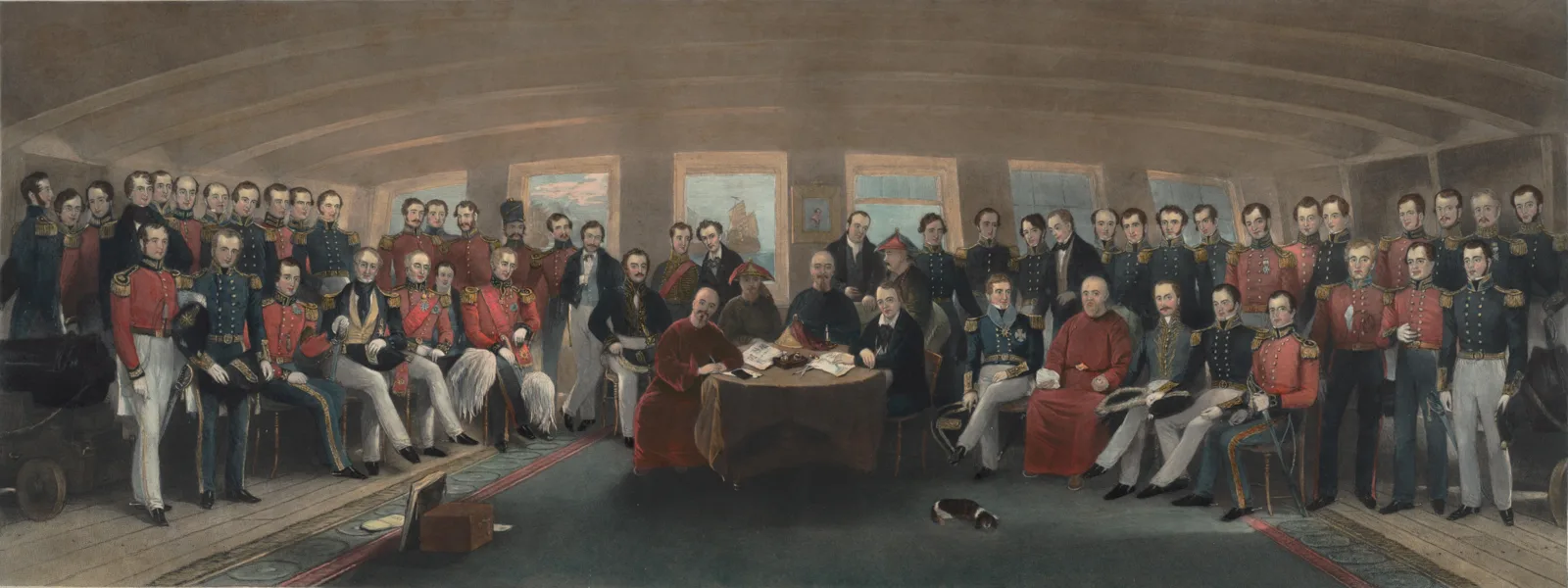
The Convention of Peking, signed on 24 October 1860 by Prince Gong for the Qing and the allied plenipotentiaries, ratified the Treaties of Tianjin and added its own terms: Tianjin opened to trade, the Kowloon Peninsula south of present-day Boundary Street together with Stonecutters Island ceded to Britain as part of Hong Kong, freedom of religion established, and the indemnity raised as described above. Britain, France and Russia were all granted a permanent diplomatic presence in Beijing — the concession the Qing had resisted to the very end, because resident envoys implied equality between China and the European powers.
Russia collected the largest territorial price without fighting as a principal. The Treaty of Aigun (1858) had already moved the Amur border south; two weeks after the Convention, the Russian envoy Nikolay Ignatiev pressed the Qing into a Supplementary Treaty of Peking ceding the Maritime Provinces east of the Ussuri River, where Russia founded Vladivostok in 1860–61. The compiled record puts China's total cessions to Russia in the north-east and north-west at more than 1.5 million square kilometres. With the war over, the Qing government was able to turn its full force against the Taiping Rebellion.
Inside China, the defeat changed the state. EBSCO records that the war provoked the Qing's first round of reforms, the Self-Strengthening Movement of the 1860s and 1870s. In 1861 Prince Gong established the Zongli Yamen (Tsungli Yamen), a de facto foreign-affairs ministry, which in 1867 set up a college teaching foreign languages, mathematics, international law and science; reformers such as Zeng Guofan and Li Hongzhang built Western-style arsenals — Shanghai in 1865, Fuzhou in 1866, Nanjing in 1867 — and shipyards and schools for interpreters, under the formula later captured as "Chinese learning for substance, Western learning for function." EBSCO's assessment is that the movement's premise failed: Western methods could not be sealed off from values, too few industries were built, and the reforms did not prevent further foreign intrusion. Britannica's longer verdict on both Opium Wars is that they marked the start of the era of unequal treaties, whose inroads on Qing sovereignty helped weaken the dynasty until it was toppled in favour of republican China in the early twentieth century. The Xianfeng Emperor, who had fled the capital, died in 1861 without returning to it.
What do historians debate?
Historians debate whether this war was fundamentally about opium revenue, about a clash of diplomatic and commercial systems, or about the two empires' incompatible pictures of the world — and the debate has itself changed as Chinese sources entered the scholarship.
- Was it about opium? J. Y. Wong's Deadly Dreams: Opium and the Arrow War (1856–1860) in China (Cambridge University Press, 1998) argues, in Julia Lovell's summary in History Today, that Lord Palmerston's government depended on opium revenues throughout the middle decades of the century, and that opium was the only commodity that saved the British balance of payments with Asia: on this account both Opium Wars arose from Britain's need to protect the crucial opium trade rather than from a general commercial or cultural conflict. Lovell herself, in The Opium War: Drugs, Dreams and the Making of China (Picador, 2011), treats the wars as at once an event and the founding story of modern Chinese nationalism: in China they are remembered as a national wound, the start of a Western conspiracy to destroy China with drugs and gunboats; in Britain, she notes, they barely register in public memory.
- Or about two world orders? An older tradition, represented in Lovell's survey by Leslie Marchant's 2002 article, sought the cause in ideological difference — British attachment to free trade and progress against a Confucian order biased against merchants — and, Lovell argues, thereby played down opium as the casus belli in search of a moral justification for wars essentially fought to protect an illegal, profitable drugs trade. EBSCO's reference summary states the diplomatic version neutrally: beneath the disputes over Canton, treaty revision and representation lay the two sides' different perceptions of international relations, tributary hierarchy on one side and sovereign equality with open trade on the other. The two explanations are not strict rivals: the revision demands Britain actually tabled put trade, diplomacy and opium in a single list.
- Whose sources, whose war? Lovell records that Anglophone historians long relied on Western sources and neglected internal Chinese factors, until Paul Cohen's 1984 call for a "China-centred" history pushed the field toward Chinese archives; the resulting work showed a Qing court split over opium policy, a military and diplomatic response that was, in her summary, chaotic and absent-minded, and ordinary Chinese reactions more complex than either national story allowed. Frank Dikötter, Lars Laaman and Zhou Xun complicated the drug story itself, portraying opium use in late-imperial China with more subtlety than the simple picture of a nation of addicts.
This explainer is drawn from the sources listed below, all opened or read during this run. Casualty and indemnity figures are published strictly as the attributed totals those sources give, and no single Qing death toll is asserted, because the published tabulation combines Qing killed and wounded.