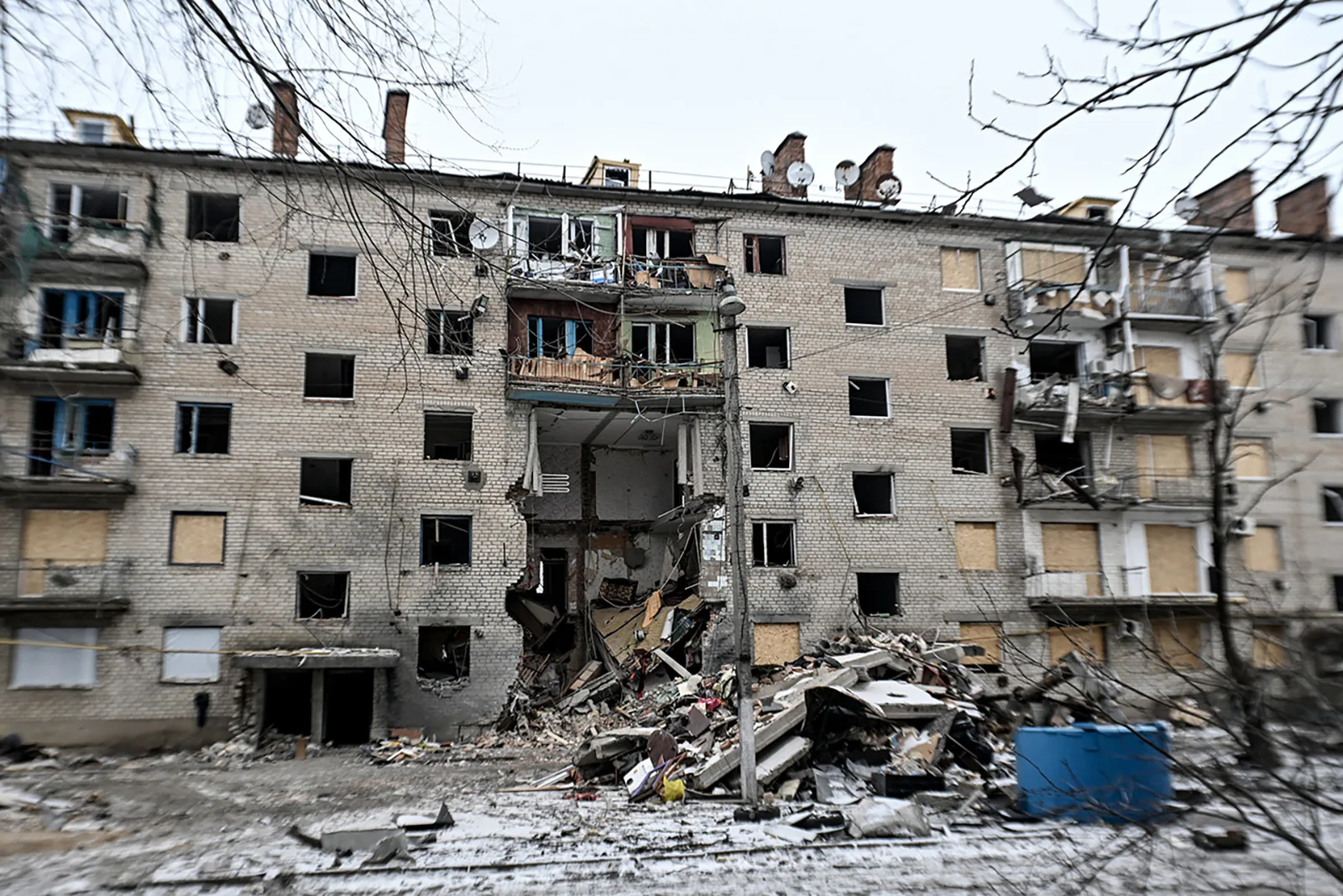
The death toll from Monday's bombing of a school used as a humanitarian aid centre in Komyshuvakha has risen to at least 31, officials said on Tuesday, and nearly 50 people are still missing under the rubble of the village's destroyed shelter. The Associated Press and The Times both reported the toll of 31 on Tuesday, up from the 26 known dead on Monday night, and CNN reported a higher figure of at least 33 confirmed dead, with 50 people still unaccounted for. The UN humanitarian coordinator for Ukraine condemned the strikes in a statement issued on Tuesday. Every figure in this update comes from Ukrainian officials, carried by independent outlets; none has been independently verified. This report follows Monday's bombing report.
How high has the death toll risen?
To at least 31 on the officials' Tuesday account, with one higher count also reported. The toll has now risen in stages since the strikes on Monday morning: 18 killed in President Volodymyr Zelenskyy's first account, 24 confirmed by Ukraine's state emergencies service, and 26 known dead by Monday night. On Tuesday, acting regional head Mykhailo Semikin put the toll higher again: the Associated Press reported 31 dead, with more than 45 missing residents still being sought under the rubble, and The Times reported the same figure of at least 31, with five people injured. CNN reported at least 33 people confirmed dead. Semikin, in an online post on Tuesday, called it "one of the worst tragedies in terms of the number of civilian victims in our region since the start of the full-scale war," the Associated Press reported, and three days of mourning were declared in Zaporizhzhia. Zelenskyy said on Tuesday that it was "one of the deadliest attacks of this war," CNN reported.
What has the United Nations said?
The UN's humanitarian coordinator for Ukraine, Matthias Schmale, condemned the strikes on Tuesday. The morning strikes of November 2 "reportedly killed at least 29 civilians, the majority of whom were local residents who came to get aid at a local school and employees of the local administration," his statement said, and "subsequent strikes at the same location killed two rescuers and four police staff who responded to the first attack," with several rescuers and police also injured. Nearly 50 people are still missing and might be trapped under the rubble as rescue operations continue, the statement said. Both the school used for distributing assistance and a nearby shelter where civilians had sought safety were hit. "Civilians seeking support and first responders coming to the rescue must never be a target," Schmale said. "Civilian facilities, including humanitarian assistance, must be respected and protected under international humanitarian law."
Who are the rescuers and police officers among the dead?
Two rescuers and four police officers, named in Tuesday's reporting. The rescuers were named locally as Denys Konovalenko and Oleksiy Sushchevsky, both 44, who were killed after rushing to the scene of the first strike, CNN reported. The police said at least four of its officers were killed: Mykhailo Buzhenko and Mykola Balanda, both with more than two decades of police service, and Mykhailo Romanov and Dmytro Besedin, both community police officers for more than a decade. "(They) were helping local residents take shelter in an underground school. A treacherous follow-up strike trapped everyone who was trying to escape," the police said in a statement reported by CNN.
What do officials say about the shelter and the bombs used?
The shelter was a newly built, EU-funded reinforced basement that the bombs collapsed, on the regional head's account. Semikin said the victims were in a basement designed to withstand most strikes, but the massive force of the bombs caused the concrete structure to collapse and a fire broke out, CNN reported. The shelter was built last year in an effort to keep classes going during wartime; it is not currently used as a school, and local authorities use it as an administrative centre and humanitarian hub. Semikin told Ukraine's national television on Tuesday that Russia used KAB-500 and FAB-3000 bombs in the attack, CNN reported. "To put this into perspective, this is a three-ton aerial bomb containing nearly 1.5 tons of explosive material; such weapons are primarily designed to destroy heavy concrete fortifications and bunkers," he said. The Associated Press likewise reported that bunker-busting bombs filled with nearly 1.5 tons of explosives were used in Monday's attack. Zelenskyy, in remarks reported by The Times, said: "After the first strike, there was a repeat strike with another nine bombs, aimed precisely at the shelter where people were gathered," and "the Russians could not have failed to know that every week the locals who remain in Komyshuvakha receive humanitarian aid right there."
Has Russia responded?
No Russian statement on the Komyshuvakha strikes appeared in the reporting opened on Tuesday. The casualty figures, the missing count, the bomb types and the attribution of the strikes to Russia all rest on Ukrainian official statements — the president, the regional head and the police — carried by the Associated Press (Tier 1 wire), CNN and The Times (Tier 2), and reflected in the UN humanitarian coordinator's statement, which itself uses "reportedly" for the civilian toll. No independent count was available, and the final toll will not be known until the search of the rubble is complete: with nearly 50 people still unaccounted for, officials expect it to rise further.
This update is drawn from the Associated Press report of November 3, 2026, opened and read in full via the Gazette & Herald; CNN's November 3 report, opened and read in full; The Times' November 3 report, opened and read in full; and the UN OCHA statement posted on ReliefWeb on November 3, opened and read in full. Casualty and missing figures are Ukrainian officials' figures, published with their differing counts shown and the absence of independent verification stated, per the two-source rule.