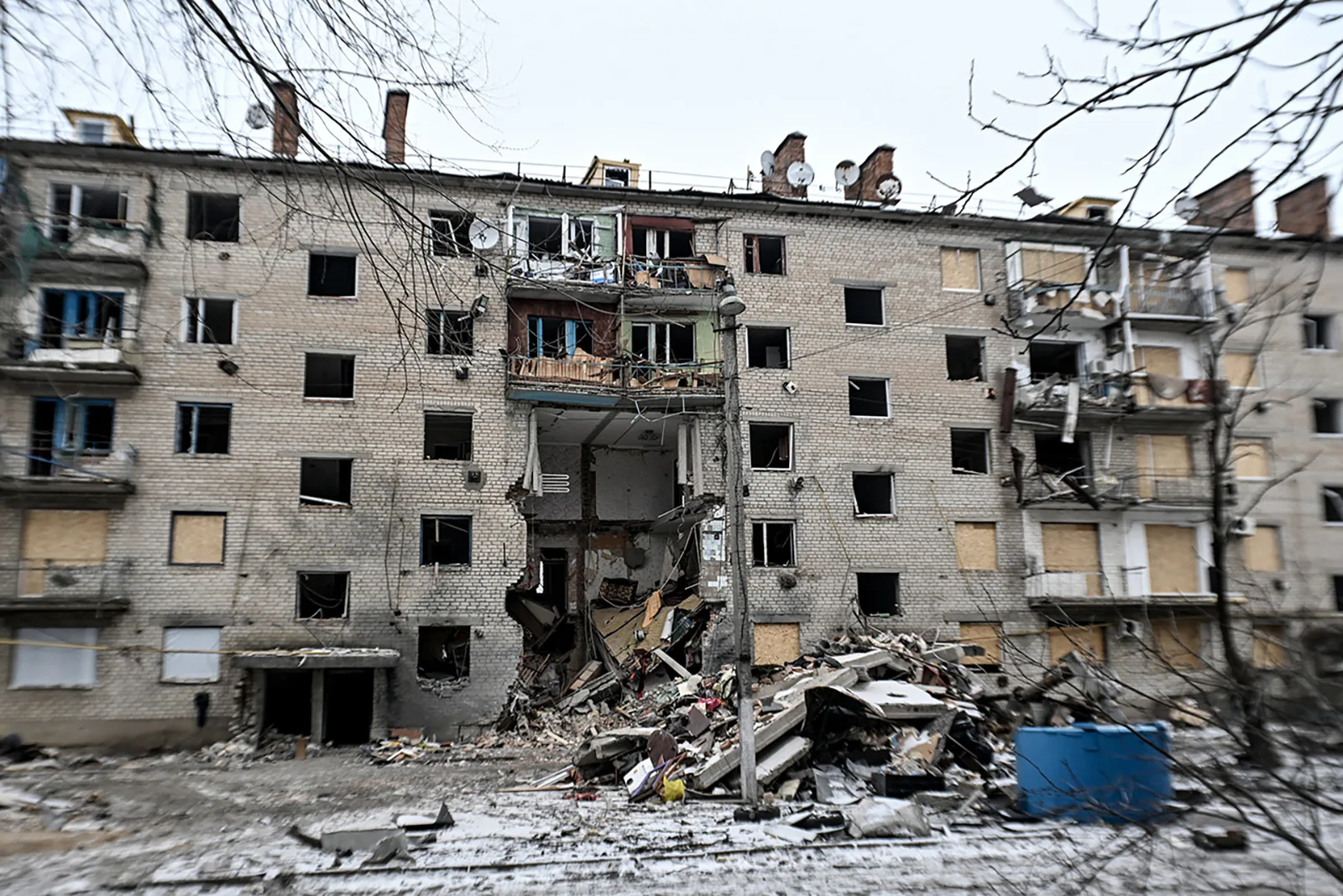
At least 26 people were killed on Monday when Russian aerial bombs hit a school in the village of Komyshuvakha, in Ukraine's Zaporizhzhia region, while the building was being used to distribute humanitarian aid, President Volodymyr Zelenskiy said — and a repeat strike then hit the shelter where people had gathered. Zelenskiy raised the toll to 26 known dead in a video address late on Monday, the BBC reported, up from the 18 he had first reported. The Russian military has not publicly commented, and the toll and the attribution rest on Ukrainian official statements that have not been independently verified.
What happened in Komyshuvakha on Monday?
Russian forces bombed the village, which lies southeast of the region's main city, also called Zaporizhzhia, Zelenskiy said, writing on Telegram in remarks reported by Reuters. The first aerial bombs fell on the village school, which was being used for distributing humanitarian assistance. "After the first air strike, there was a repeat strike with nine more bombs, directly on the shelter where people were gathered," Zelenskiy wrote. Regional head Mykhailo Semikin said at least nine aerial bombs, each weighing 3,000 kilograms, hit the village, the BBC reported. Zelenskiy said the residents who had remained in Komyshuvakha received humanitarian aid at that same school every week, on Mondays, and that Russian forces could not have been unaware of the weekly distribution.
How did the death toll rise through the day?
The toll rose in stages as rescue work continued. Zelenskiy initially reported 18 people killed and five injured, in the account Reuters published on Monday afternoon. Ukraine's state emergencies service, DSNS, later said 24 people were confirmed killed — a figure that included two rescuers and four police officers, the BBC reported. In his video address late on Monday, Zelenskiy said 26 people were now known to have died. Semikin had initially reported 27 people missing, and officials said a number of people were still under the rubble, so the final toll may not be known until the search is complete. Every figure in this report comes from Ukrainian officials — the president, the regional head and the emergencies service — carried by Reuters and the BBC; no independent count was available.
What is happening with the rescue operation?
A rescue operation is underway at the site, and the search for people continues. "Military forces, first responders, and special services are involved," Zelenskiy said. Semikin said rescue teams were working at the scene but had been forced to halt their operation a number of times because of Russian drone attacks in the area, the BBC reported. A video Zelenskiy posted showed a huge crater at the site and rescue teams searching through the rubble. A day of mourning was declared for Tuesday across the entire Zaporizhzhia region, the BBC reported.
How has Russia responded?
The Russian military has not publicly commented on the Komyshuvakha strikes, the BBC reported. There was no Russian statement on the bombing in any of the reporting opened for this article. The attribution of the strikes to Russia, the bomb count and weights, and all casualty figures are therefore published here as Ukrainian officials' accounts, reported by two independent outlets — Reuters (Tier 1 wire) and the BBC (Tier 2 broadcaster) — with the limitation stated plainly: the underlying figures originate with one side to the conflict and have not been independently verified.
Why does the timing matter?
Because the bombing came hours after the longest local ceasefire of the war expired. The six-day humanitarian ceasefire around the Russian-held town of Oleshky in the neighbouring Kherson region — the longest local pause in fighting since Russia's full-scale invasion in 2022, Reuters reported — allowed aid deliveries and the evacuation of nearly 800 people before it ended at 21:00 GMT on Sunday, and the Kremlin said on Monday that no similar local ceasefires were planned for now. Zelenskiy drew the contrast himself: after the Oleshky operation, he said, there had been a moment when next steps could have shown progress toward peace was possible, and the Komyshuvakha killings sent the opposite signal. His initial statement called the attack "yet further proof that Russia does not want any kind of de-escalation, any real justice." Whether the toll rises further now depends on a rescue operation that, on the regional head's account, keeps being halted by Russian drone attacks in the area.
This report is drawn from Reuters' November 2, 2026 reporting, opened and read in full on reuters.com, BBC News reporting by Jaroslav Lukiv opened and read in full, and Australian Associated Press reporting opened and read in full. The casualty figures and the attribution of the strikes are Ukrainian officials' figures, published with that limitation stated, per the two-source rule.