Humanitarian aid was entering the Russian-occupied town of Oleshky in southern Ukraine on Friday, and residents who wish to leave were offered buses to Ukraine or to Russia, officials from the two warring sides said — while Kyiv's prime minister retracted an early count of evacuees, saying the number planning to leave was still unknown. The relief operation, made possible by a local ceasefire brokered by US First Lady Melania Trump, is the culminating phase of the most striking example of cooperation between the two sides in four years and eight months of war, Reuters reported. In Oleshky, Russian human rights commissioner Yana Lantratova and her Ukrainian counterpart Dmytro Lubinets appeared side-by-side on Friday to update reporters on the mission.
What did the aid operation deliver to Oleshky?
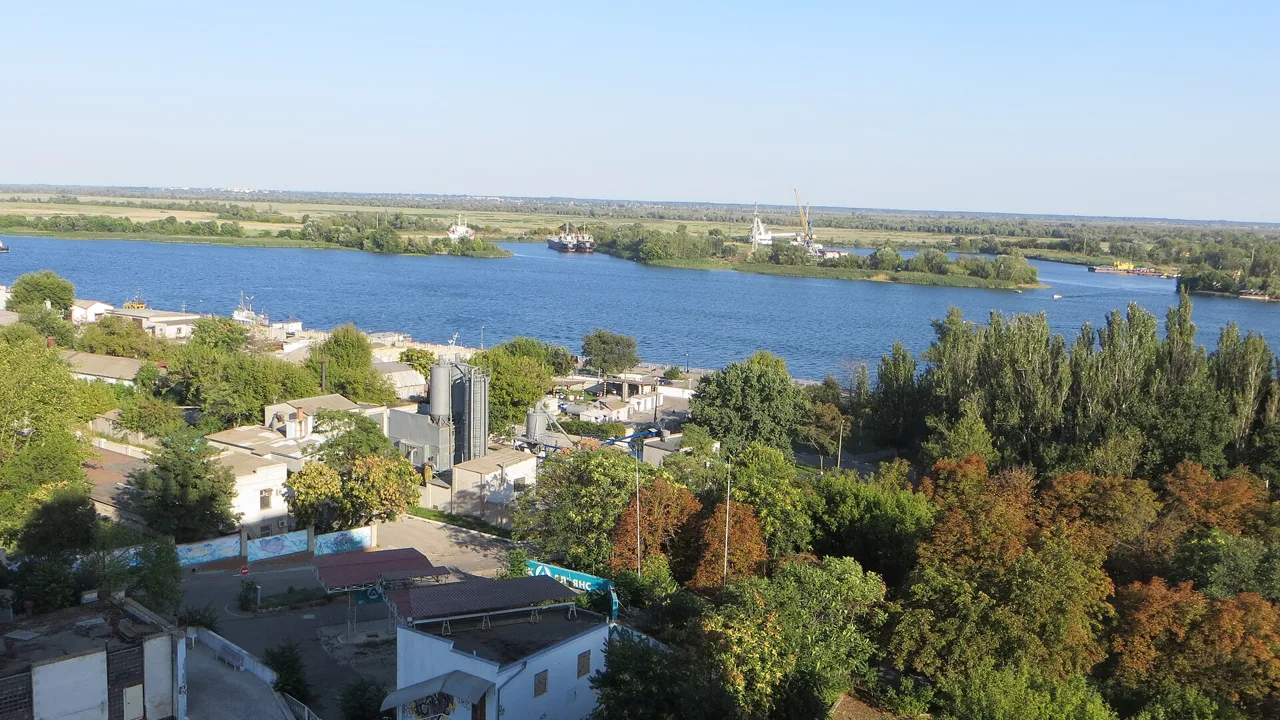
Food, hygiene products, essential medical supplies and fuel. "The aid was assembled based on the specific needs reported to us; it includes food, hygiene products, essential medical supplies, fuel – everything the people require," Lantratova said. Lubinets said on Thursday night that designated evacuation routes out of the mine-ringed town had been cleared and a humanitarian convoy was ready to set off, with delegations from Ukraine, Russia and the United States gathered to coordinate and journalists from all three countries present, RFE/RL reported. Lantratova confirmed demining operations had been completed, with "tens of tons of humanitarian aid" being sent in. The need behind those tonnages is documented in Reuters' reporting from the town: residents have given harrowing accounts of risking their lives travelling mine-strewn roads — one known as the "road of death" — just to get food and water, and some say they have survived on a cup of rice or buckwheat a day, sometimes with a tomato, cucumber or wild plants added. Oleshky, on the Dnipro River opposite the city of Kherson, was seized in the first days of Russia's full-scale invasion in February 2022, suffered extensive damage, and was badly flooded after the destruction of the upriver Kakhovka dam in 2023, when an estimated 90 percent of the town's territory went under water, RFE/RL reported. Once home to around 24,000 people, fewer than 2,000 remained by the fall, including around 50 children, according to Melania Trump's office — most of them elderly residents unable or unwilling to leave.
How does the Oleshky evacuation work?
By bus, in either direction, with the numbers still unknown. "We have reached an agreement to assist citizens who wish to travel to Ukraine – they will be provided with the opportunity to do so. Likewise, assistance will be available to those who wish to travel to the Russian Federation," Lubinets said. Lantratova said 25 buses were on hand to evacuate people, with special provision for those who are bedridden, and 50 medical personnel were present; there was even a bus with pet cages for those who wished to take their animals with them, Reuters reported. Lubinets had said all residents wishing to leave could do so until 2 p.m. local time on Friday, October 30, with aid distribution beginning shortly after. How many will actually leave is the operation's open question: Ukraine's Prime Minister Sergiy Koretskyi retracted a remark he made to parliament earlier on Friday that 527 people were planning to leave Oleshky for Ukrainian-held territory. "There are no exact figures at the moment. The rescue operation is ongoing, and the data is changing," he wrote on Telegram. Speaking to parliament, Koretskyi had said the evacuation route would lead through Russia to Belarus, from where the residents would enter Ukraine through the Kyiv and Chernihiv regions, Interfax Ukraine reported. The arrival of the aid was preceded by demining operations this week in which Lantratova said a sapper and one other person were killed.

Why does the evacuation route worry analysts?
Because no one leaving Oleshky for Ukraine can simply cross the river. Evacuations will not be conducted across the Dnipro directly into Ukrainian-held territory, likely due to the dangers of transit across heavily mined water and marsh areas, the Institute for the Study of War said in its October 29 occupation update. Reported ceasefire documents published by Fox News state that residents who wish to return to Ukraine will be transferred first to Anapa, in Russia's Krasnodar region, and then to Gomel, Belarus, while the Financial Times, citing people familiar with the matter, reported that evacuees would be transferred to occupied Crimea before they can return to Ukraine. That routing through several Russian-controlled destinations, ISW said, provides Russian authorities with ample opportunities to exert coercive influence over evacuees, potentially to convince them not to return to Ukraine — and Russia may use the evacuations to legitimise the forced transfer or deportation of residents further into Russian-occupied Ukraine or to Russia itself. The fear is not abstract for the town's people: some residents expressed concern about the evacuation process, fearing "filtration" while travelling through Russian territory, Ukrainian journalist Maria Semenchenko, who grew up in Oleshky, told RFE/RL's Ukrainian Service — coercive screenings and interrogations, she said, that some residents have already experienced in the past, and at least one person she knew did not want to leave for precisely this reason. Kyiv has blamed Russia for the dire situation in the town; the Kremlin, in turn, has blamed Ukrainian drone strikes for its inability to ensure residents' safety, RFE/RL reported.
How long can the Oleshky ceasefire hold?
It has already outlasted every comparable local truce of this war, and it is scheduled to run until Sunday night. The ceasefire came into force in Oleshky and the Kherson region early on Tuesday and has held for more than three days, proceeding in three stages — a total cessation of combat, humanitarian aid delivery, and the free movement of civilians out of the town — with its term running to 22:59 Kyiv time on November 1, ISW said. "This is the first time since 2022 that a ceasefire has been established across such an extensive stretch of the front line and has been maintained for such a significant duration," Lubinets said. Kremlin spokesman Dmitry Peskov said there was a "high degree of coordination" between Lantratova and Lubinets. The joint operation offers hope the two sides can work together despite a war in which both have intensified long-range air strikes while front lines remain largely static, Reuters reported: Moscow said on Friday it had hit energy infrastructure in and around Kyiv and the Dnipro region, port facilities in the Odesa region and cargo vessels it said were used by the military. US-mediated peace talks are due to resume next month in Abu Dhabi for the first time since February. Whether Friday's buses and food parcels become a precedent for other front-line towns now depends on the one figure nobody could give on Friday: how many of Oleshky's remaining residents chose to get on them.
This report is drawn from Reuters' October 30, 2026 reporting, opened and read in full via a verbatim carrier and on reuters.com; RFE/RL's October 30, 2026 report, opened and read in full via europesays.com; and the Institute for the Study of War's Russian Occupation Update of October 29, 2026, opened and read in full. The evacuee count is published as unresolved — Kyiv's prime minister retracted the only figure given — and ISW's deportation-risk assessment is published as that institute's analysis, attributed as such.