
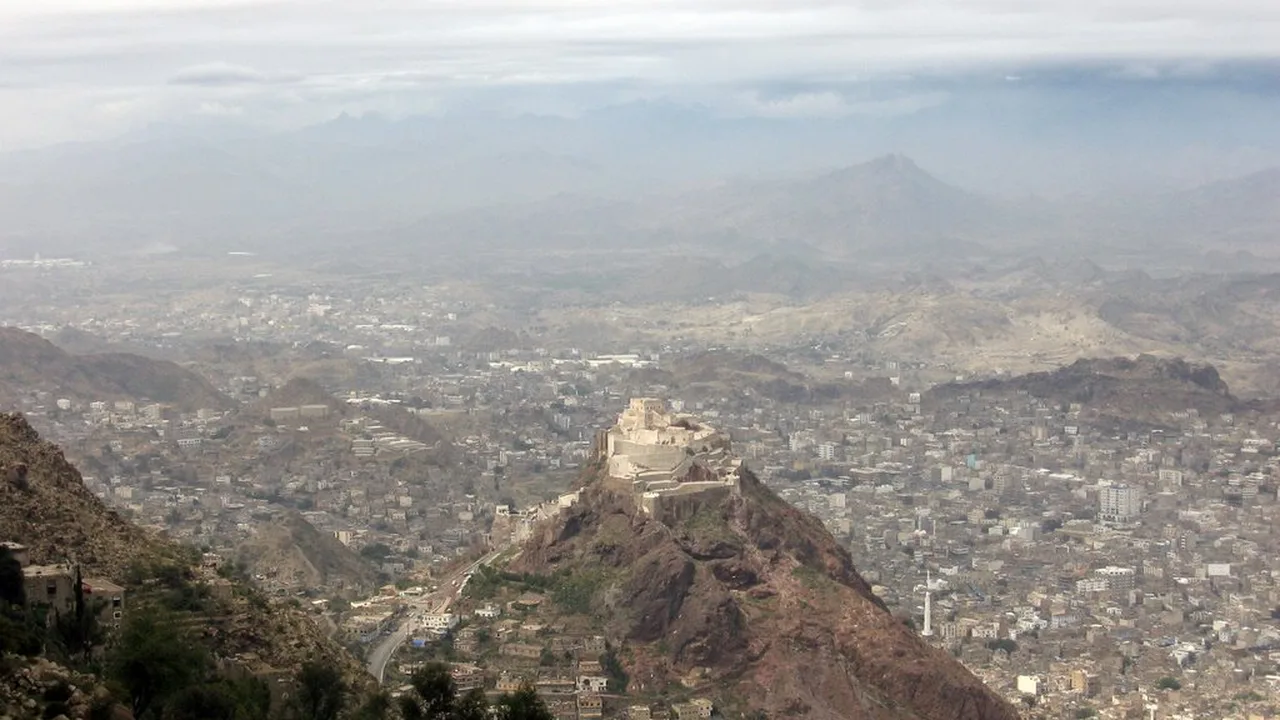
Taiz, Yemen's third-largest city, is in famine — not approaching it — its governor said this week, as Human Rights Watch reported on Thursday that the Houthi siege of the city had closed completely in October and may amount to the war crime of using starvation as a method of warfare. "The city is in famine, not on the brink of it," Taiz Governor Nabil Shamsan said in a briefing, adding that he was speaking a mile away from the front line, the Associated Press reported. Human Rights Watch said Houthi forces fully encircled Taiz in October 2026 and blocked and attacked the remaining major supply route, producing severe shortages of fuel, food, water, medicine, cooking gas and access by humanitarian agencies in a city of about a million residents that Houthi forces have surrounded since 2015.
What changed in the siege of Taiz in October?
A partial siege became a complete one. Houthi forces have surrounded Taiz since 2015, early in the conflict with the Yemeni government, and while government-backed forces control the city centre, Houthi forces have blocked access to all major roads connecting Taiz to the rest of the country — the road to Aden, the seat of the internationally recognised government, being the most important. In October the encirclement was completed and the remaining route blocked and attacked, Human Rights Watch said. On October 23, Jens Laerke, spokesperson for the UN Office for the Coordination of Humanitarian Affairs, stated that it had been "20 days and counting since Taiz has been cut off," Al Jazeera reported. "We are seeing increasingly that the fighting makes it impossible for us to get in and impossible for people to get out," Laerke said. Local humanitarian groups distributed their remaining supplies to keep water pumps and hospitals running, he added, but "it comes with a time code: The clock is running out." A Houthi spokesperson told Human Rights Watch on October 21 that Yemeni government forces, not Houthi forces, were blocking roads into the city; residents, civil society workers and United Nations officials placed responsibility for the shortages on the Houthis, the organisation said.
How bad is the hunger inside Taiz?
The flour is nearly gone and the aid cannot get in. On October 14, the UN World Food Programme said it had not been able to access the "more than 600,000 people in Taiz who depend on humanitarian assistance," which was "especially alarming" since most of Taiz's districts are considered to have emergency levels of hunger; wheat flour stocks are nearly exhausted, and remaining food supplies in local markets may last only a short time if access constraints continue. Altogether, more than 800,000 people in Taiz are cut off from aid, about three-quarters of whom depend on humanitarian assistance, according to the WFP — at least 200,000 of them women and children. UN screenings have found more than 52,000 children in Taiz acutely malnourished, approximately 11,500 of them severely, Al Jazeera reported on October 23. Human Rights Watch, which spoke to 15 people in October — five residents, four doctors and six civil society workers — recorded the mechanics of the collapse: one resident said vegetables were "in very short supply" and their prices had doubled; another said on October 15 that he had been searching for wheat and flour for three days without finding any. "The crisis in Taizz isn't in the food itself, it's in the fuel," the leader of a local civil society group said. "Transporting food depends on fuel… and truck drivers' costs have doubled." The price of cooking gas had increased by about 400 percent, an aid organisation's head told the investigators, and bottles had become hard to find at any price.
What is happening to Taiz's water and hospitals?
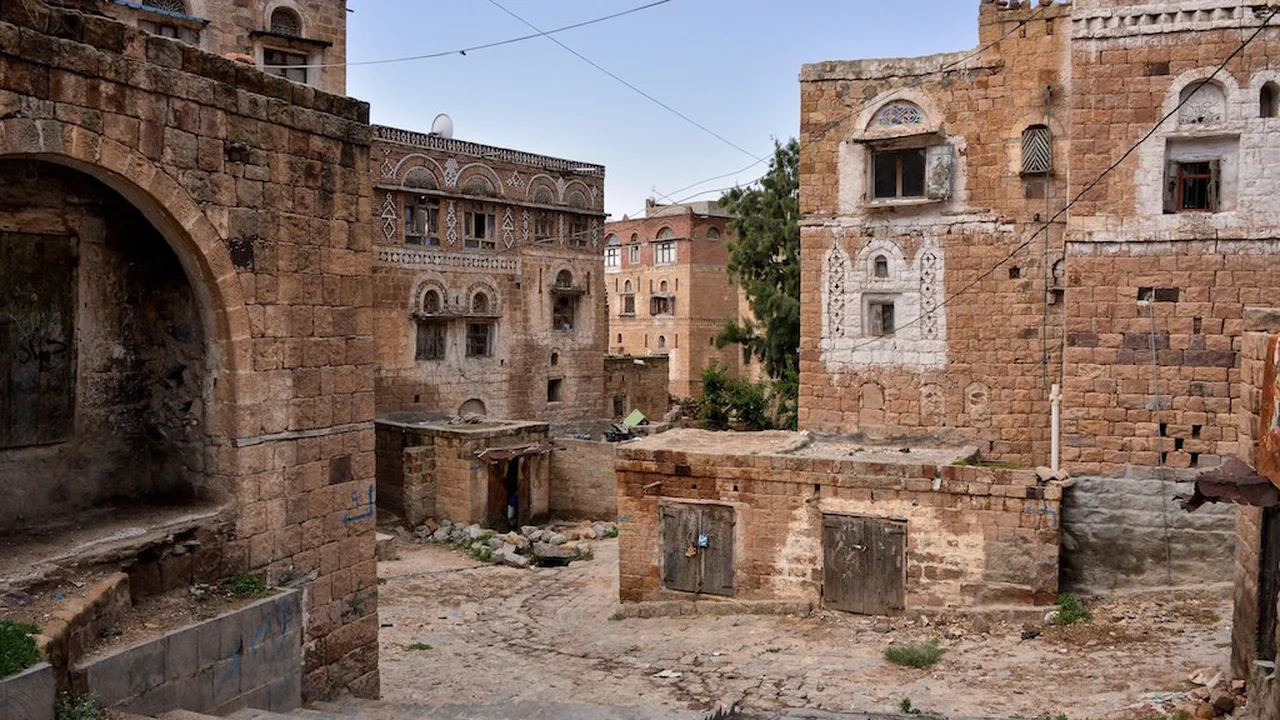
Both are failing on the same missing input: fuel. Laurent Bukera, the UN humanitarian coordinator for Yemen, said in an October 20 statement that water production had been halved in Taiz city and that alternatives were "running out." Akhil Iyer, UNICEF's country representative in Yemen, said "diesel shortages threaten to bring water pumps to a halt, while the cost of trucked water has tripled since this latest escalation." Water tank operators told a siege-tracking organisation they had been stopped at Houthi checkpoints when trying to bring water into the city, Human Rights Watch said. Forty-two health facilities in Taiz face "acute" deficits of fuel, oxygen, medicine and supplies, World Health Organization spokesman Christian Lindmeier said. Doctors told Human Rights Watch that road closures and fuel shortages prevented patients — especially those with cancer, kidney disease, hypertension and other chronic conditions outside the city centre — from reaching hospitals at all; one facility "had to stop working for three days because we run out of diesel," a doctor said. Stocks of anaesthesia were short, and a health worker warned that the shortage of oxygen posed "an additional threat to essential health services, emergency surgeries, intensive care, dialysis, and neonatal care." Bukera's verdict was the bleakest official summary: Taiz's "health system is close to collapse," with shortages that "threaten hospital energy supply and medical oxygen availability, putting hundreds of patients' lives at risk." The European Commission said on October 23 it would release an additional €22.5 million ($25.2 million) in aid to Yemen — money that, on the UN's own account, cannot presently reach the city it is most needed in.
Why do investigators call it a possible war crime?
Because the law bans starving civilians, even inside a lawful siege. International humanitarian law does not prohibit siege warfare so long as its purpose is a military objective and not to starve or cause disproportionate harm to the civilian population, Human Rights Watch set out; starvation can include the intentional deprivation of medicine and other necessities, in addition to food and water. All warring parties, including a besieging army, must facilitate access of humanitarian aid to civilians and not arbitrarily delay it. Customary international humanitarian law prohibits as a war crime the use of starvation of civilians as a method of warfare by depriving them of objects indispensable to their survival, including by impeding relief supplies — and criminal intent can be inferred from the totality of the circumstances, without proof that people in fact starved. "Renewed efforts by the Houthis to cut off food, water, and medicine to Taizz show their utter disregard for civilian lives," said Niku Jafarnia, Human Rights Watch's Yemen and Bahrain researcher. "Throughout the 12-year-long siege of Taizz, the Houthis have bombed, starved, and denied humanitarian aid to a million residents of the city with scant adherence to international law." The Houthis should immediately open vital roads for essential goods and aid, and all parties need to facilitate aid and the safe movement of civilians, the organisation said. In the same AP report as the governor's briefing, the Houthi-run health ministry said a Saudi airstrike in western Taiz killed at least 13 people on Thursday; that claim is published here as the ministry stated it — no independent confirmation of it appears in the reporting opened, and no coalition comment was reported alongside it. What is not contested by any agency working on the city is the direction of the numbers: the flour nearly exhausted, the water halved, the oxygen running out, and a governor saying the word his predecessors in besieged cities have usually reached only in retrospect — famine, now.
This report is drawn from Human Rights Watch's October 29, 2026 investigation, opened and read in full on hrw.org; the Associated Press report of Governor Shamsan's briefing, opened and read via an AP wire carrier; and Al Jazeera's October 23, 2026 report of the UN agencies' Geneva briefing, opened and read in full via a verbatim carrier. The Houthi spokesperson's competing account of the road closures is published as he stated it to Human Rights Watch, and the health ministry's airstrike toll is published as an unconfirmed claim, attributed, with its limitation stated.