Yemen's Houthis said on Wednesday that they had not launched any drones towards the Saudi holy city of Medina and had not conducted any military operations towards Saudi Arabia at all, denying the Saudi-led coalition's account that it had intercepted drones over Medina and the Eastern region, Reuters reported. The flat denial from the group's military spokesperson, Yahya Saree, is a contested claim published here as the two sides stated it: the coalition said drones were intercepted; the Houthis said none were launched. It lands in the most serious round of Saudi–Houthi fighting since a UN-brokered truce largely halted cross-border attacks in 2022 — and on the same day Iran said its offer to mediate between the two sides had gone unanswered by both.
What exactly is being disputed?
The Wednesday incident itself. The Saudi-led coalition backing Yemen's internationally recognised government said it had intercepted drones over Medina — one of Islam's holiest cities — and over Saudi Arabia's Eastern region, the province that holds much of the kingdom's oil infrastructure. Saree's response, as Reuters reported it, denied the premise rather than the interception: no drones towards Medina, and no military operations towards Saudi Arabia either. Neither side's account could be independently verified in the reporting opened, and Reuters reported the dispute without resolving it. The distinction matters because the Houthis have not been shy about claiming attacks in this round of fighting: the group claimed responsibility on Monday for attacks on a Saudi Aramco site in Yanbu, the Shaybah oilfield and the Riyadh and Abha airports. A denial, from a group that claims strikes it wants credited, is a different kind of statement than silence.
How did the fighting reach this point?
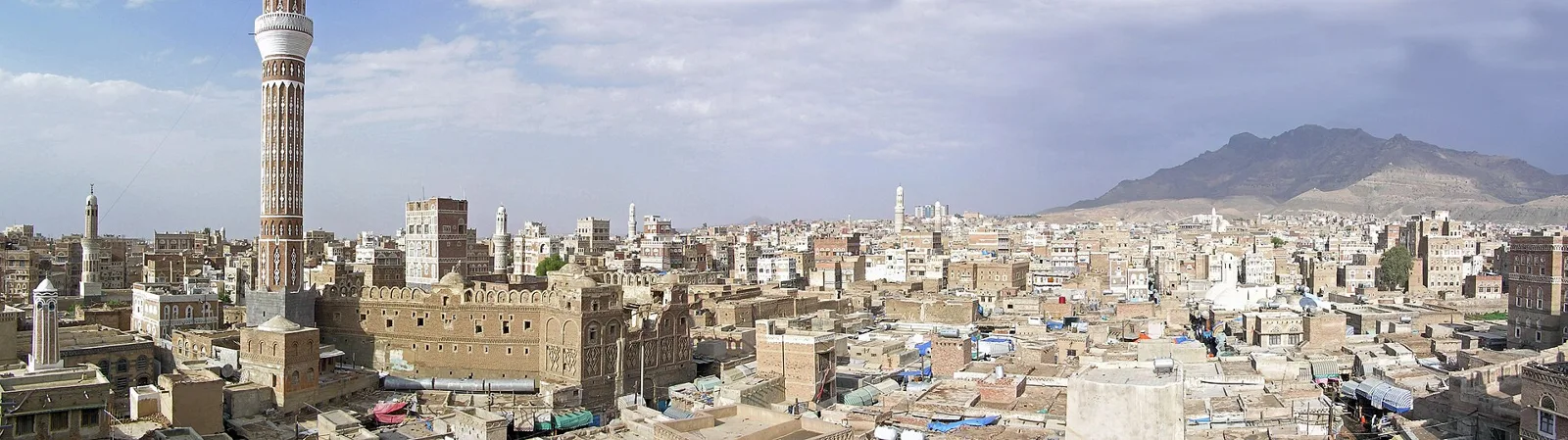
Fighting between the Saudi-led coalition and the Houthi militia, which controls the capital Sanaa, has escalated in recent weeks, becoming another front in the US–Israeli war on Iran, Reuters reported. The Houthis have attacked Riyadh's international airport and Saudi Aramco, disrupting flights and oil exports. Inside Yemen, a Houthi missile attack on a government security forces training camp in Shabwa province killed 73 people — the toll Reuters carried on Wednesday, revised up from the 53 first reported on Monday. Yemen has been mired in civil war since 2014, when the Houthis drove the government out of the capital, drawing Saudi-led military intervention, and remains one of the world's worst humanitarian crises. The 2022 truce had largely held the cross-border part of that war down for four years; Reuters' assessment is that the current violence is the most serious breach of it.
Why does a denial from the Houthis stand out?
Because this round of fighting has run on claimed attacks. The group claimed the Monday strikes on the Yanbu Aramco site, the Shaybah oilfield and the Riyadh and Abha airports, and it claimed the Shabwa camp missile attack inside Yemen. Its spokespeople have used claims throughout the escalation to signal reach — Riyadh's international airport and Saudi Aramco have both been attacked, disrupting flights and oil exports, Reuters reported. Against that pattern, a categorical denial covering not just Medina but any operation towards Saudi Arabia on Wednesday reads as a boundary the group is drawing in public, at the one target — a holy city — whose targeting would carry costs of a different kind. Whether the coalition's interception account or Saree's denial is accurate cannot be established from the reporting opened; what can be established is that both sides chose to put their versions on the record on the same day, which is itself a measure of how contested the information space around this front has become.
What did Iran offer, and what did it warn?
Iranian Foreign Minister Abbas Araqchi said in a television interview with Iraq's Al Ekhbariya TV, aired on Tuesday, that Iran has not received a response from Saudi Arabia or the Houthis to its offer to help broker talks to end the fighting between them. Araqchi had made the offer as the Iran-aligned Houthis intensified strikes on Saudi Arabia earlier this month. In the same interview he responded to the possibility of Egypt joining Saudi Arabia in the war against the Houthis: "Any foreign intervention would complicate matters," he said, adding that Cairo has previously told Tehran that it would "not directly" interfere in the Yemeni conflict. Egypt has said it is ready to provide Saudi Arabia with the support it needs to defend its security, potentially raising the stakes in the Middle East, and a vote in the Egyptian parliament on a possible move against the Houthi fighters by the country's military — one of the Arab world's largest — was delayed until October 26. So the diplomatic picture on Wednesday is two unanswered channels at once: Tehran's mediation offer ignored by both belligerents, and a drone incident over Medina that the two belligerents describe in directly contradictory terms. Neither channel, on the reporting opened, is currently carrying the fighting anywhere but up.
This report is drawn from Reuters' October 21 report of the Houthi denial, opened and read in full via its verbatim carrier, and Reuters' October 20 report of Foreign Minister Araqchi's interview, opened and read in full via its verbatim carrier. The Medina drone incident is published strictly as the coalition's and the Houthis' competing accounts, neither independently verified in the reporting opened. The Houthis' claimed Monday attacks on Saudi sites are published as claims, as in previous coverage.