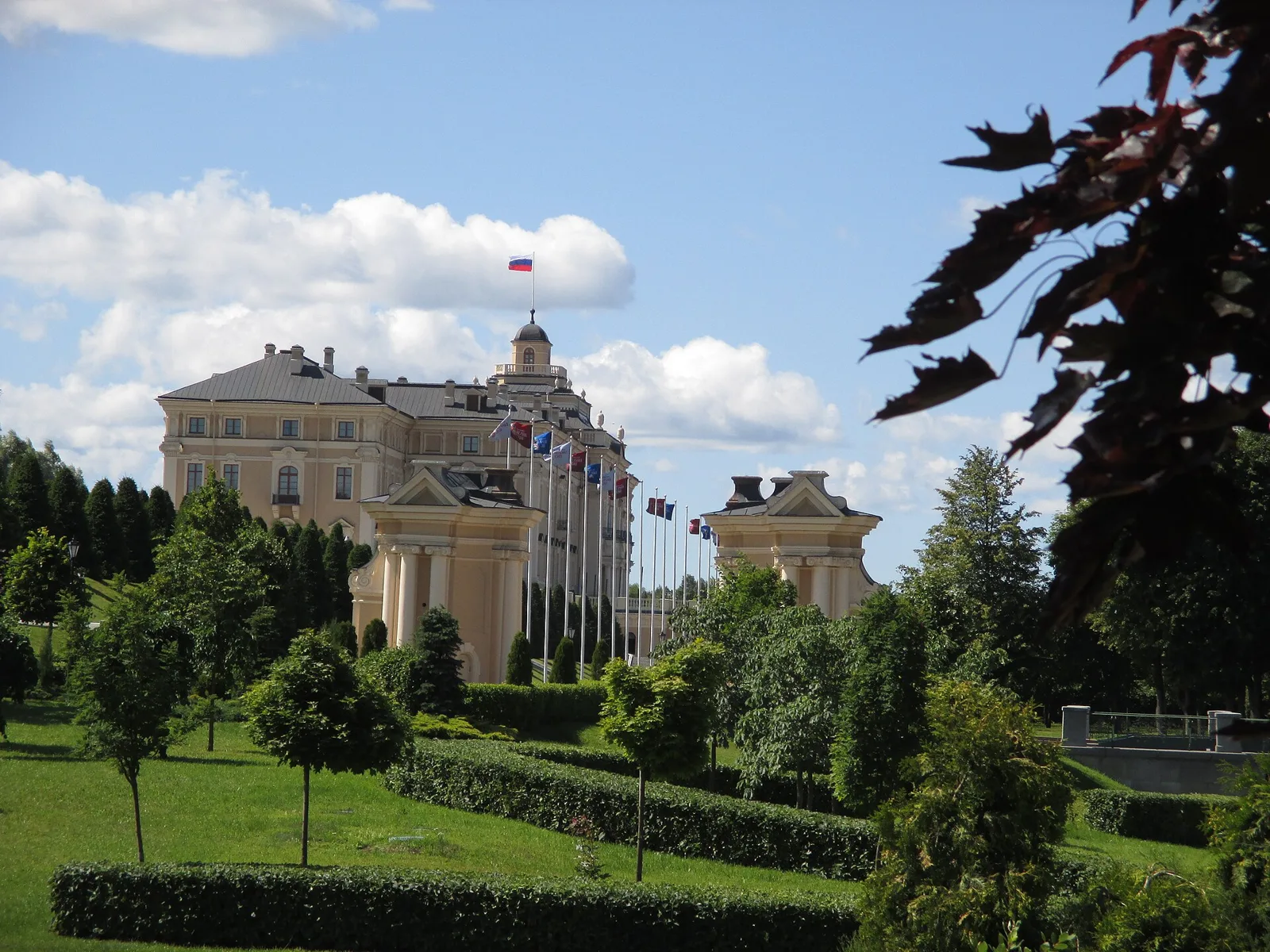
President Vladimir Putin hosted US special envoy Steve Witkoff at the Constantine Palace in St Petersburg on Wednesday to review new ideas on ending the war in Ukraine, and opened the talks — their ninth in-person meeting — by announcing that Russia had freed Stephen Hubbard, the 74-year-old retired American teacher held in Russian custody since 2022. Putin said Hubbard was already at St Petersburg's Pulkovo airport. Witkoff thanked him on camera: "Because of you, he's going home to his family." Russian news agencies reported that Witkoff told Putin there was a basis for a ceasefire and that he hoped Putin would consider resuming three-way talks between Russia, the United States and Ukraine. No agreement was announced.
What happened at the meeting?
It was the ninth time Witkoff has met Putin in person, and it was staged as a goodwill encounter. Reuters reported that the talks, in a grand imperial palace, began with the release gesture. Putin conveyed his thanks to President Donald Trump for his efforts to settle the conflict and said Russia was interested in restoring economic ties with the United States, according to Interfax and TASS as reported by Reuters. Witkoff arrived in St Petersburg on Wednesday morning, a day after holding what a US official called "constructive" talks in Oslo with Ukrainian President Volodymyr Zelenskiy, the leaders of Finland and Norway, and European and NATO representatives. The Associated Press, reporting the release, noted that the deal comes at a time when Trump has taken actions meant to benefit Moscow.
Who is Stephen Hubbard, and why was he held?
Hubbard is a 74-year-old retired schoolteacher from Big Rapids, Michigan, who served in the US Air Force and National Guard, earned a master's degree in English, taught in Japan for 25 years and, after a period in Cyprus, moved in 2014 to Izyum in eastern Ukraine with a Ukrainian partner, according to his sister, Patricia Hubbard Fox, in Reuters' account of his case. Russia launched its full-scale invasion in February 2022 and captured Izyum two months later; Hubbard was in Russian custody by April 2022. Russian state media said he had been detained after allegedly manning a Ukrainian military checkpoint, and reported that he pleaded guilty; he was convicted of mercenary activity at a closed-door trial and sentenced to nearly seven years in prison. His US-based lawyer, Martin De Luca, previously told Reuters that Hubbard had told him the charges were false and that he was not in any combat or military unit, and Hubbard and the United States have denied he was a mercenary, the Wall Street Journal reported. The State Department designated him as wrongfully detained last year; at the time of his release he was the only US prisoner held by Russia carrying that designation. The Journal reported that Witkoff is escorting him back to the United States, travelling in a separate plane because of Hubbard's poor health. Trump had trailed the outcome on Tuesday, telling reporters he had raised the case with Putin directly and at length: "I've asked him to release him."

What did the two sides say about ending the war?
Witkoff's public message, as reported by the Russian agencies, was that a basis for a ceasefire exists and that three-way talks should resume. Putin's was gratitude to Trump and an interest in restored economic ties. What was not reported was any Russian concession on the questions that have blocked a settlement, or any Ukrainian involvement in Wednesday's room: Ukraine's seat at the table was the thing Witkoff said he hoped Putin would agree to restore. Zelenskiy, for his part, appeared pessimistic about a peace deal after the Oslo meeting, The Times reported: "Steve Witkoff is going to Russia tomorrow. Let's see what Putin has to say."
Why does the meeting matter beyond the release?
Because it took place against a sharp deterioration in US–Ukraine ties, which Reuters set out in its report. Since Trump announced a diesel export deal with Russia earlier this month, Ukraine has complained of disruption to some US intelligence sharing and to its use of the Starshield military satellite system; Zelenskiy said Tuesday's Oslo meeting had reached an agreement to resolve those issues. The encounter also comes amid concerns in Kyiv and among its allies that the United States is backing away from Ukraine, at times holding back real-time intelligence on Russian attacks. On Tuesday, Trump said it was time for Ukraine to end the war or face "a very bad thing," and The Times reported him accusing Ukraine of giving the United States nothing but "grief" while Russia "just keep[s] grinding forward." The St Petersburg talks came more than two years after Trump promised in his election campaign to end the Ukraine war within 24 hours — and, as Wednesday's overnight strikes on Ukraine underlined, the war the talks are meant to stop continued through them.
This report is drawn from Reuters' October 21 reporting on the St Petersburg meeting, the Hubbard release and Hubbard's background, the Associated Press report opened via its carrier, The Times' report opened in full, and the Wall Street Journal's report read via search text. The ceasefire-basis and three-way-talks remarks are published as the Russian news agencies reported them, via Reuters; no outcome beyond the release was announced in the reporting opened.