The Chaco War, explained in one line: from 1932 to 1935, landlocked Bolivia and Paraguay fought over the Chaco Boreal — some 100,000 square miles (259,000 square km) of waterless scrub north of the Pilcomayo River and west of the Paraguay River — in the deadliest interstate war in 20th-century Latin America, which cost about 100,000 lives, ended with Paraguay holding most of the disputed land, and was fought, in part, for oil that was never found in the disputed territory itself. It is also called La Guerra de la Sed — the War of Thirst — because water, not firepower, decided where armies could move.
Key takeaways
- The smaller country won: Bolivia had about three times Paraguay's population, a German-trained army and arms bought with American bank loans — and lost every major battle, on the Library of Congress account.
- Logistics beat equipment: Matthew Hughes argues Paraguay's victory rested on the supply system it built in the late 1920s — river barges, railways to the front and four-day journeys against Bolivia's fourteen — not on better weapons.
- The toll is a range, not a number: about 100,000 dead in total on Britannica's figure, roughly 2 percent of Bolivia's people and 3 percent of Paraguay's on the standard synthesis — many of them killed by disease, thirst and snakebite (see What did the war cost?).
- The oil thesis is disputed: no known oil deposits existed in the disputed Chaco at the time, Stephen Cote argues, and Hughes finds little hard archival evidence the oil companies caused the war — the popular Standard Oil versus Shell story survives anyway.
Contents
- Overview
- Why did Bolivia and Paraguay fight over the Chaco?
- How did the war unfold?
- What did the war cost?
- Economic effects
- How did it shape the world?
- What historians debate
Overview
The Chaco War was fought between Bolivia and Paraguay from 1932 to 1935 over the Chaco Boreal, the northern part of the Gran Chaco. Oxford Bibliographies calls it the deadliest interstate conflict in 20th-century Latin America: the two belligerents mobilised between 10 and 15 percent of their populations, suffered at least 25 percent casualty rates, and depleted their coffers. It was primarily an infantry war — the terrain made cavalry and tanks of little use — fought with the machine guns, mortars, aircraft and barbed wire of the interwar period across a landscape with few water sources, where the rainy season turned scrubland to impassable mud.
Both countries were landlocked, and both carried the memory of catastrophic 19th-century losses: Paraguay had lost almost half its claimed territory to Brazil and Argentina in the War of the Triple Alliance (1864–70), and Bolivia had lost its entire Pacific coast to Chile in the War of the Pacific (1879–84). The Chaco dispute sat on top of both traumas.
Why did Bolivia and Paraguay fight over the Chaco?
Because Bolivia, landlocked since 1884, wanted a route to the Atlantic — and the Chaco, which Bolivians believed held large oil reserves, lay across it. Britannica traces the conflict to the War of the Pacific: after Chile annexed Bolivia's coastal region, Bolivia tried to break out of its landlocked position through the Río de la Plata system to the Atlantic coast, and the Gran Chaco stood athwart that route. Oxford Bibliographies adds the structural cause — boundaries poorly defined when the two states formed in the 19th century — and the proximate one: nationalist efforts in both countries to develop the region and improve export routes.
Oil sharpened everything without settling anything. Standard Oil was already producing from wells in the Andean foothills of eastern Bolivia, and speculation held that the same geology ran under the Chaco. Stephen Cote, in Environmental History (2013), reframes the motive: from the late 1920s, Bolivia's growing need for petroleum to fuel its mining sector and urban centres drove its expansion into the Chaco Boreal. But Cote also argues — in the argument carried in the reference record — that at the time of the conflict, no known oil deposits existed in the disputed Chaco region; what Bolivia concretely sought was a river port that might be navigable to the Atlantic. The two claims were argued differently in law as well: Bolivia held the region had belonged to the Spanish colonial province it inherited, while Paraguay rested its case on actual occupation — Paraguayan and Argentine ranchers, quebracho exploitation, and the Mennonite colonies settled in the Chaco in the 1920s under Paraguayan auspices.
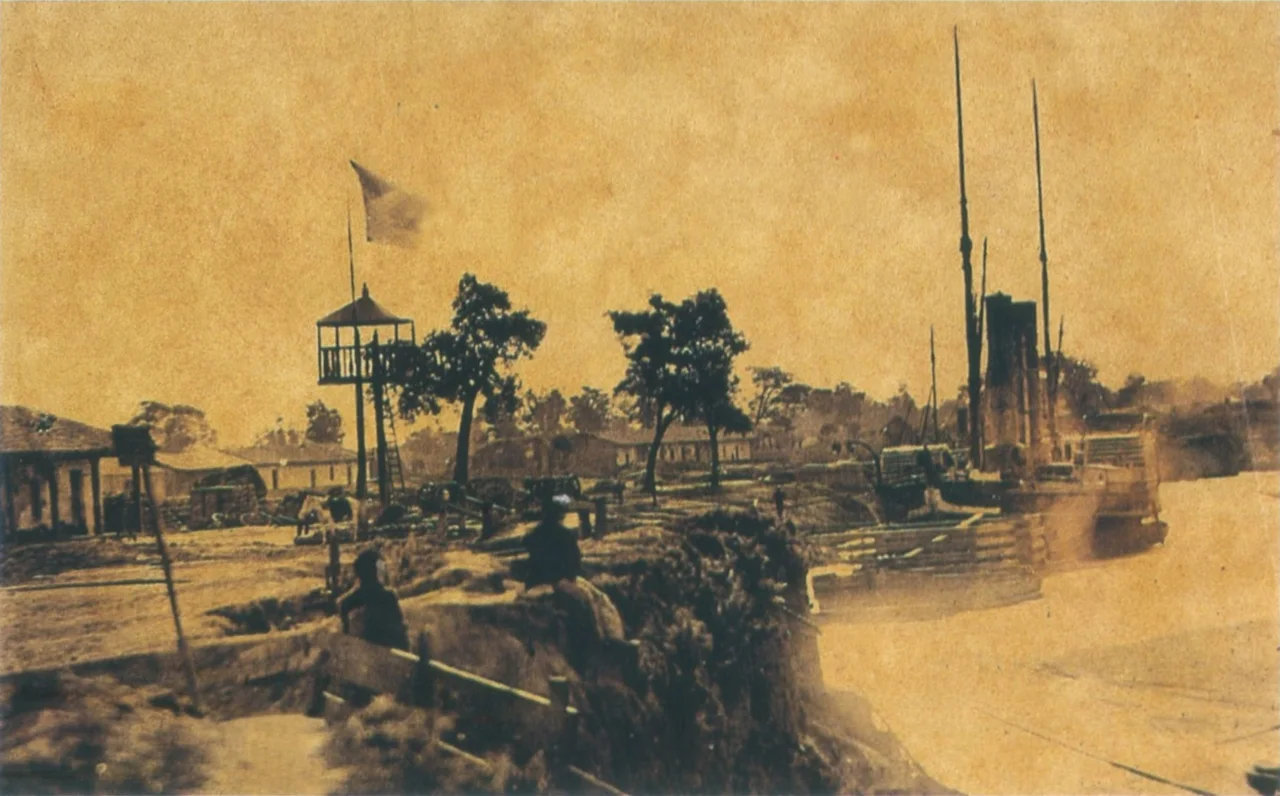
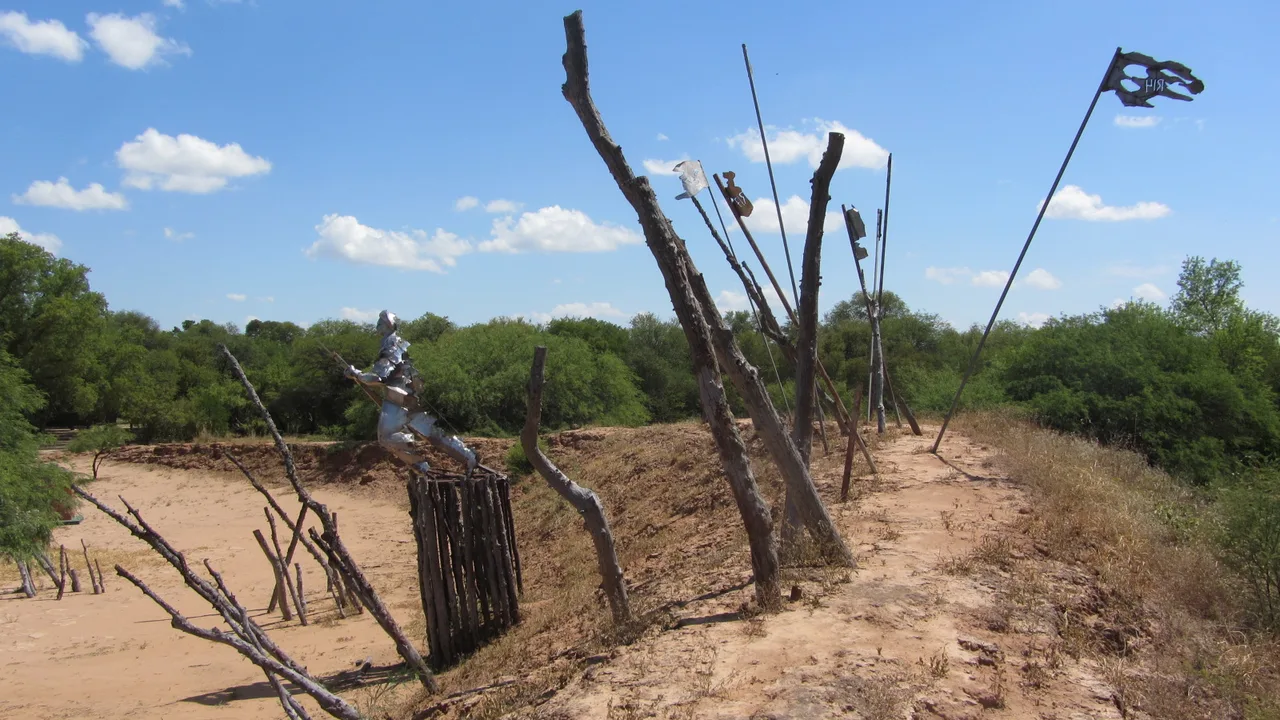
The slide to war ran through the fortines — the small trench-and-pillbox outposts both armies planted across the wilderness. On 5 December 1928 a Paraguayan unit overran the Bolivian Fortín Vanguardia; Bolivia retaliated at Fortín Boquerón; a Washington-brokered return to the status quo in September 1929 stopped the shooting but not the arms race. In June 1932 a Bolivian detachment seized the Paraguayan post at Pitiantutá Lake, President Daniel Salamanca ordered three more Paraguayan outposts taken, and in August Paraguay mobilised. Neither side had an arms industry; both had spent the interval importing weapons from Europe and the United States.
How did the war unfold?
In three movements: a Paraguayan counter-offensive that took Boquerón, a failed Bolivian offensive that broke at Nanawa, and a long Paraguayan advance that ended only at the foothills of the Andes. The first major battle opened on 9 September 1932, when some 5,000 Paraguayans besieged the roughly 600-man Bolivian garrison of Fortín Boquerón. The fort fell on 29 September after a 22-day siege — Paraguayan mortars, a weapon the Bolivians had not faced before, proved decisive, and the offensive rolled on into the Bolivian outposts behind it. Paraguay formally declared war on 10 May 1933.
Bolivia's answer was weight. Its mobilisation complete by December 1932, Salamanca recalled the German general Hans Kundt — a First World War Eastern Front veteran who had advised Bolivia for decades — to command the counter-offensive against the Paraguayan stronghold of Nanawa. Two great assaults, in January and July 1933, failed against zigzag trenches, wire and machine-gun nests; in the second, Bolivia lost more than 2,000 men killed or wounded against 559 Paraguayan casualties, on the reference record's figures. Paraguay's commander, José Félix Estigarribia, then took the initiative permanently with the method that defined his war: rapid marches and flanking encirclements through the scrub, directed in Guaraní — a language Bolivian troops did not speak — and aimed, as the WarHistory.org account puts it, at capturing the Chaco's water sources. At Campo Vía on 10–11 December 1933, the encirclement of the Bolivian 4th and 9th divisions ended with thousands of Bolivian soldiers surrendering and their equipment — rifles, machine guns, mortars, artillery and tanks — passing into Paraguayan hands. Kundt resigned.
The third phase was exhaustion administered slowly. After a 20-day truce, Paraguay renewed the advance in January 1934 toward Ballivián, where, Britannica records, the heaviest fighting of the war occurred from March to July; Ballivián fell on 17 November 1934. Days later, Bolivian generals confronted Salamanca at his Villa Montes headquarters and forced his resignation; his vice-president, José Luis Tejada Sorzano, who favoured peace, succeeded him. In January 1935 Paraguayan troops advanced into indisputably Bolivian territory — but there the war turned for the last time: closer to their own supply lines and in hill country, Bolivian forces under more capable officers checked the overextended Paraguayans at Villa Montes and Camiri. When the cease-fire was signed on 12 June 1935, Paraguayan troops stood, on the reference record, only about 15 kilometres from the Bolivian oilfields — the fields in the Andean foothills, not in the disputed Chaco itself.
What did the war cost?
About 100,000 lives, on Britannica's figure — "about 100,000 men lost their lives in the war" — with the split between the two countries, and the exact totals, varying by source. The Library of Congress country study gives Bolivia alone an estimated 65,000 killed and 35,000 wounded or captured, out of a population of just under 3 million. The standard synthesis carried in the reference record puts Bolivia's dead at 56,000–65,000 (about 2 percent of its population) and Paraguay's at about 36,000 (about 3 percent of its population); wider compiled ranges in the same record run higher — 50,000–80,000 Bolivian dead and 35,000–50,000 Paraguayan dead. Britannica's own FAQ gives approximately 57,000 Bolivian deaths. No single figure commands agreement; the honest statement is a total near 100,000, roughly 60 percent of them Bolivian on the WarHistory.org account.
A large share never faced a bullet. Britannica notes that many Bolivians died of disease and snakebite as well as gunfire; the reference record counts thousands of non-combat casualties from dehydration, mostly Bolivian — highland Quechua and Aymara conscripts, raised at over 3,700 metres on the altiplano, fighting at near sea level in tropical heat at the end of an 800-kilometre supply line. Paraguay also captured some 21,000 Bolivian soldiers — against roughly 2,500 Paraguayans held by Bolivia — a disparity that itself maps the encirclement war Estigarribia waged. Mobilisation totals are likewise reported as ranges: WarHistory.org gives 250,000 Bolivian and 140,000 Paraguayan troops mobilised; the reference record's strengths run 210,000 and 150,000.
Economic effects
The war bankrupted the treasuries of two of South America's poorest states in the middle of the Great Depression. Oxford Bibliographies' summary is blunt: the belligerents "depleted their coffers." WarHistory.org concludes that both states emerged "exhausted and debt ridden," with Paraguay — the victor — running out of food, supplies and ammunition and on the verge of bankruptcy by June 1935, a material fact behind the cease-fire's timing.
Bolivia entered the war already weakened: the Depression had collapsed tin prices — its main export revenue — and by 1932, on the WarHistory.org account, the country was deeply in debt with declining living standards. Its arms had been purchased with loans from American banks, on Britannica's account, and its supply problem was structural: no railway ran to the Chaco, imports were hostage to neighbours reluctant to pass war material through their ports, and food for the southeastern front entered through Argentina. Paraguay's economy, based on subsistence agriculture, was mobilised whole — buses commandeered, conscription widened — and partly sustained by captured Bolivian equipment on a scale (42,000 rifles and 5,000 machine guns on the reference record) that amounted to a transfer of Bolivia's imported arsenal to its enemy. The disputed prize itself yielded nothing to either side during the war: Bolivia retained the actual petroleum fields in the foothills, the Library of Congress records, and no commercial oil was found in the Paraguayan share of the Chaco for decades afterward.
How did it shape the world?
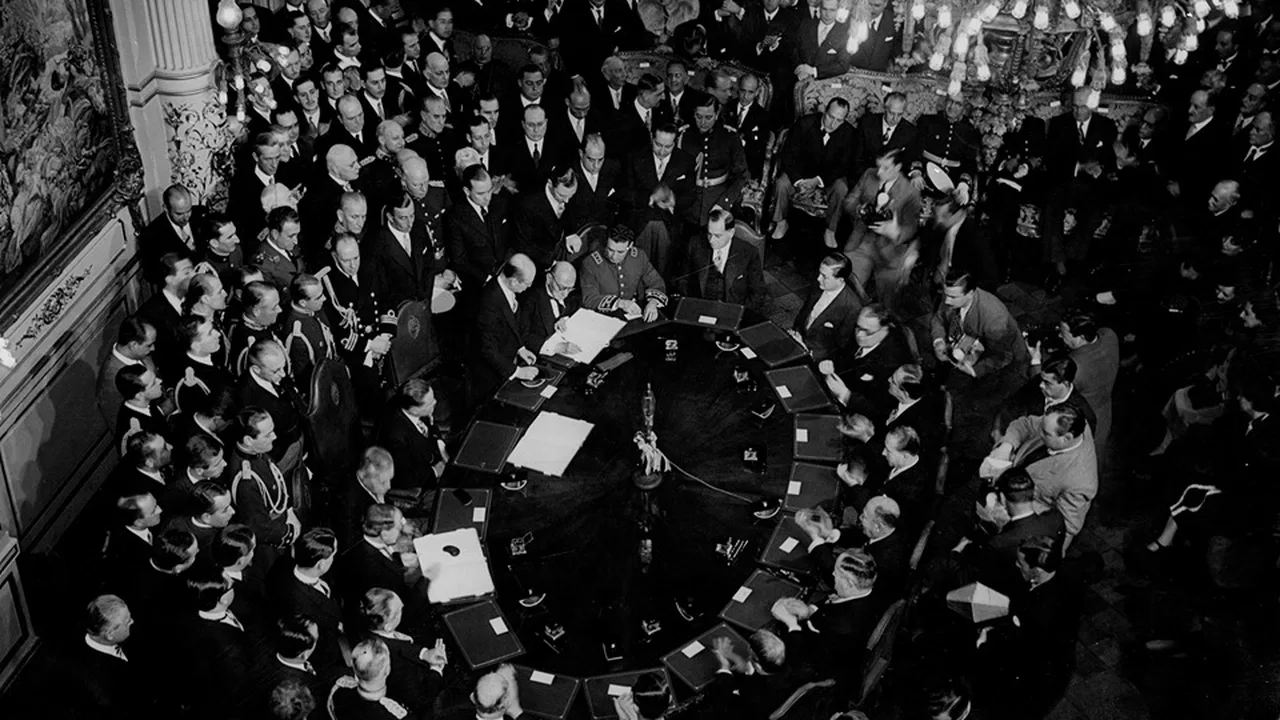
It fixed South America's interior map, ended the liberal era in both countries, and wrote the Chaco Generation's grievances into Bolivian politics for a generation. The treaty signed in Buenos Aires on 21 July 1938, arranged by the Chaco Peace Conference of Argentina, Brazil, Chile, Peru, Uruguay and the United States, gave Paraguay clear title to most of the disputed region — three-quarters of the Gran Chaco on the standard summary — while Bolivia received a corridor to the Paraguay River and, on Britannica's account, a port at Puerto Casado. The border then held: a final demarcation document based on the 1938 settlement was signed on 28 April 2009, when Presidents Evo Morales and Fernando Lugo closed the file in Buenos Aires.
Politically, defeat and victory detonated in the same direction. In Paraguay, Colonel Rafael Franco overthrew President Eusebio Ayala in the Febrerista Revolution of February 1936, establishing, in Oxford Bibliographies' words, a populist administration emphasising veterans' needs; Estigarribia himself became president in 1939 and died in office in 1940. In Bolivia, the Library of Congress records, the humiliating disaster divided the country's 20th century "like a knife": the traditional oligarchy was discredited by its inept civilian and military leadership, and the middle-class professionals, writers and young officers who called themselves the Chaco Generation demanded land reform, mine nationalisation and social change — the line that runs through the military governments of 1936 to the Bolivian National Revolution of 1952, led by the Revolutionary Nationalist Movement that, Oxford notes, emphasised wartime sacrifice. Internationally, the war was an early interwar proof — alongside Manchuria — that the League of Nations' machinery could not stop a determined war: arms embargoes were evaded, mediation failed for three years, and the settlement, when it came, was regional, made in Buenos Aires rather than Geneva.
What historians debate
- Did the oil companies cause it? The popular thesis — Standard Oil behind Bolivia, Royal Dutch Shell behind Paraguay, fighting a proxy war for Chaco petroleum — was stated on the U.S. Senate floor by Huey Long in 1934 and, on the Library of Congress account, was believed by the Chaco Generation, which accused Standard Oil of delivering oil to Paraguay clandestinely through Argentine intermediaries. Against it, Matthew Hughes argues there is "little hard evidence available in the company and government archives to support the theory that oil companies had anything to do with causing the war or helping one side or the other during the war." Bret Gustafson occupies the middle: the blurred lines between banking and oil show Standard Oil did finance the Bolivian build-up, even if instigating the war was left to Bolivian generals. Cote dissolves part of the premise — no known deposits existed in the disputed Chaco — while restoring oil as motive in a different form: Bolivia's domestic petroleum needs. The two presidents who signed the 2009 demarcation themselves declared the war had been brought on by foreign interests, on Britannica's account — the thesis is now part of the war's official memory, whatever the archives say.
- Willpower or logistics? Hughes notes that the enormous Spanish-language literature is dominated by a "heroic" interpretation — Estigarribia's own memoirs explain victory by "the virile tradition of our people and the discipline of our courage" — with little interest in logistics as a determining factor. His Journal of Military History study argues the opposite case from the archives: Paraguay's pre-war acquisition of matériel and its river-and-rail supply system, built in the late 1920s, were decisive. The English-language shelf remains thin — of some 450 publications Hughes counted, only 14 were in English — with David H. Zook's The Conduct of the Chaco War (1960) and Bruce W. Farcau's The Chaco War: Bolivia and Paraguay, 1932–1935 (1996) the standard general histories in the WarHistory.org bibliography.
- How many died? The casualty dispute above is partly a records problem: conscript armies, deaths from disease and thirst far from any registry, and two national historiographies — heroic in Paraguay, accusatory in Bolivia — that had political uses for both higher and lower numbers. The ranges, attributed, are the finding.
This explainer is drawn from the sources listed below, all opened or read during this run. Casualty and cost figures are published strictly as the attributed ranges and estimates those sources give.