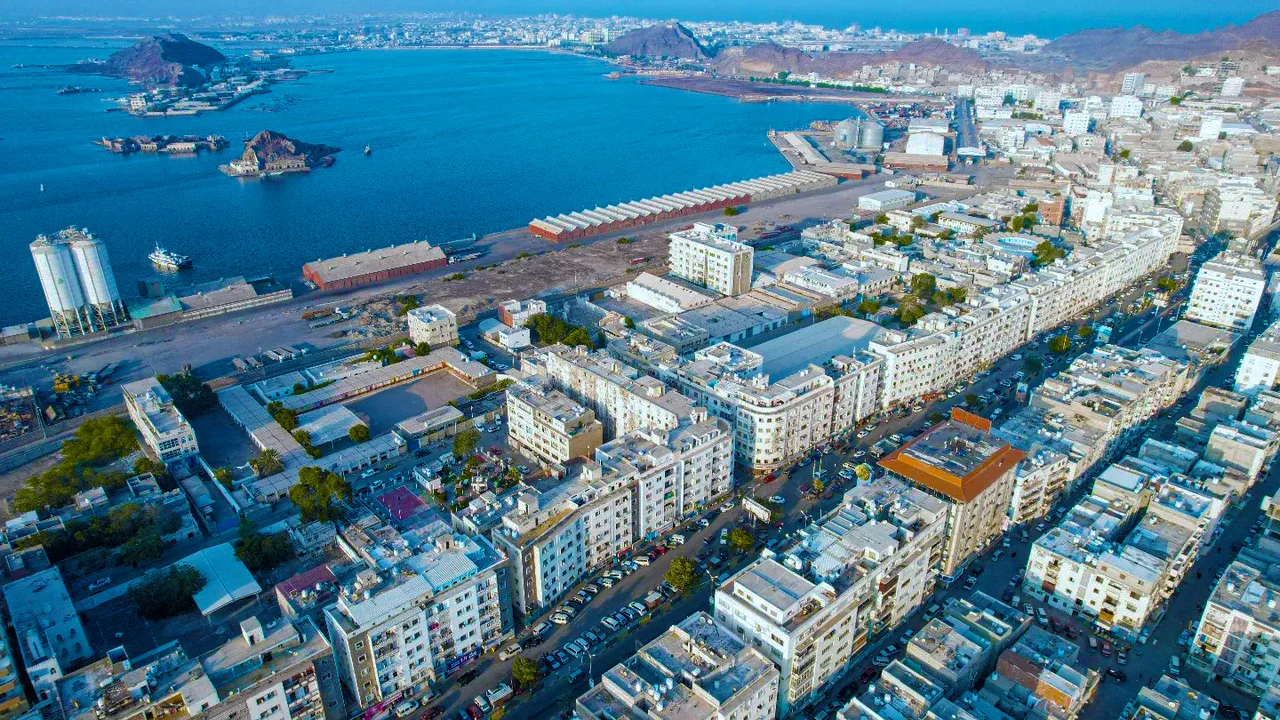
Yemen's Houthis attacked Aden international airport on Wednesday after warning everyone inside to evacuate, and the facility — the main gateway to southern Yemen and a lifeline for aid workers — was left completely deserted, with air traffic halted and flights diverted. An Associated Press reporter in Aden witnessed explosions that shattered windows at the airport building and nearby homes after Houthi spokesman Yahya Saree urged people to leave. Flights from Cairo and Mumbai bound for Aden were diverted to Seiyun Airport in Hadramawt province, and a flight to Cairo was cancelled, a security official told AP.
What happened at Aden airport on Wednesday?
The Houthis struck the airport after a public warning. Saree said in a post on X that the evacuation was prompted by what he said was the presence of a Saudi military cargo aircraft delivering weapons — a claim he made without providing evidence, AP noted, and on which there was no immediate comment from Saudi authorities. Residents in Aden, the seat of the internationally recognised, Saudi-backed government, told Reuters they heard an explosion near the airport, and that explosions had also been heard elsewhere in the city before the warning was issued. Two transport ministry officials told Reuters air traffic was halted after the strike. AP's reporter saw the aftermath at closer range: explosions shattered windows at the airport building and nearby homes, and airport employee Salem Al-Awlaqi told AP the airport was completely deserted after the warning; a security official, speaking on condition of anonymity, said no staff or security personnel remained.
Whether anyone was hurt is not settled in the reporting opened. Yemeni government forces told Reuters the attack caused injuries among civilians and material damage. An aid source told Reuters some UN staff had left the airport shortly before the attack and that no one was hurt; two aid sources said a flight carrying aid workers had departed Aden safely for Amman on Wednesday morning, before the incident; and the International Organization for Migration said its personnel travelling through Aden were safe and accounted for. Both the forces' injury account and the aid source's account are published here as reported.
Why does Aden airport matter?
Because it is the door into southern Yemen. "Aden airport is the main entry point for humanitarian workers, supplies and medical equipment to the southern parts of Yemen, and safe access to it is crucial," Médecins Sans Frontières said in a statement on Tuesday — issued after one of its own aircraft, about to take off from Aden a few days earlier, was held on the ground while humanitarian workers were told to seek shelter as a missile struck nearby. Wednesday's attack was not the first this month: on October 24, the Transport Ministry reported two ballistic missiles targeted the airport, in what AFP described as the fourth such attack in October, and on October 7 a missile landed near the runway shortly before a flight from Cairo was due to arrive — that flight was diverted to Jeddah, the terminal evacuated and two aircraft moved from the tarmac.

What else escalated in Yemen on Wednesday?
Two more fronts moved the same day. In the north, the Houthi-run Health Ministry said Saudi-led airstrikes hit a crowded market near a gas station in al-Hazm, the capital of al-Jawf province, killing 14 people and wounding 15 — three women among the wounded — with shops and houses nearby heavily damaged, AP reported; the ministry called the attack a war crime requiring an international investigation. Houthi-run Al Masirah TV carried the same 14 killed and 15 injured via Reuters. There was no immediate statement from the Saudi-backed Yemeni government, and no independent confirmation of the toll appears in the reporting opened; the figures are published as the Houthi authorities' claim. In Taiz, in the southwest, government officials appealed to the international community to help protect civilians and reopen roads into the city as the Houthis tightened their siege, AP reported. Governor Nabil Shamsan said residents had lost access to about 3 million litres (about 793,000 gallons) of water previously available from wells in Wadi al-Dhubab, which he said is now under Houthi control — a claim AP said it could not independently verify. Legal affairs minister Eshraq al-Maqtari said more than 2,000 projectiles and explosives fired by the Houthis had struck Taiz city districts in recent days, and Shamsan said fighting had intensified across the province, with Houthi reinforcements deployed to multiple fronts and the city encircled on all four sides. Taiz province has taken in around half of Yemen's population displaced by fighting, AP reported.
Why is the fighting escalating now?
The airport attack comes as fighting between the Houthis and the Saudi-led coalition backing Yemen's government has intensified in recent weeks, opening a volatile new front in the wider US-Israeli war on Iran, Reuters reported. Last month Houthi forces advanced towards the Bab el-Mandeb Strait, one of the world's most important shipping routes; government forces have since pushed to retake territory on the Red Sea coast, and the coalition has stepped up strikes against Houthi positions in response to the group's escalating attacks on Saudi Arabia. The renewed fighting has shattered the 2022 UN-brokered truce that had largely halted major attacks, and aid agencies warn the violence is rapidly worsening conditions in what is already one of the world's worst humanitarian crises. On Wednesday that escalation had an address travellers can picture: an empty terminal in Aden, its windows broken, and the south's main door to the world closed.
This report is drawn from Reuters' October 28, 2026 account of the Aden airport strike, opened and read in full via two verbatim Reuters carriers (the wixx.com version updated 14:29 UTC and the srnnews.com version carrying the government forces' injury statement), the Associated Press's October 28, 2026 Middle East roundup, opened and read in full via newsline24.online (published 18:30 UTC), and AFP's October 28, 2026 report, opened and read in full via europesays.com. The airport casualty question is published unreconciled — civilian injuries per Yemeni government forces via Reuters, no one hurt per an aid source via Reuters — and the al-Jawf market toll is published as the Houthi authorities' claim, with no independent confirmation in the reporting opened. Saree's Saudi cargo-aircraft claim is published as his claim; AP noted he provided no evidence for it.