This week's war impact on markets landed on Friday afternoon in New York, when crude oil surged even as the wider stock market fell. Front-month WTI settled up 3.5% at $101.41 a barrel — its first close above $100 in a month — and Brent for December delivery gained 3.7% to $109.86, its highest since May 19, according to the Wall Street Journal. The Journal attributed the move to Ukraine's renewed attacks on Russian refineries, layered on top of persistent Middle East supply risk and unreliable flows through the Strait of Hormuz. Both benchmarks ended the week higher than last Friday's snapshots in this series (Brent $102.93, WTI $91.63). Figures below were checked Friday, October 16, 2026, at 4:20 PM Central Time — snapshots, not live prices.
What pushed oil back above $100 this week?
Two wars, one Friday. The immediate trigger, per the Journal, was Ukraine stepping up strikes on Russian refineries again, just as traders were already pricing fragile Hormuz transit. Spartan Capital's Peter Cardillo told the Journal the refinery attacks were the main reason prices rose, and noted that prices kept climbing even though the IEA and its members have already released roughly 300 million barrels from emergency reserves, with about 100 million more likely to follow.
The Hormuz numbers explain why the market stays bid. Ship-tracking firm Kpler put average oil flows through the strait at 11.62 million barrels a day in the week to October 13, against a 17.15 million baseline — roughly a third of normal throughput not getting through, as Reuters reported and OilPrice.com summarised on Friday. ING's commodity team said the market is pricing a significant risk premium for that uncertainty, and that only a US–Iran agreement would fully remove it. US crude inventories also fell 8.56 million barrels in the week to October 9. Working against the rally: the IEA agreed Thursday to accelerate the remaining emergency release, including more than 20 million barrels of diesel, and Washington has weighed easing sanctions on some shadow-fleet tankers — neither stopped Friday's rise.
The longer view darkened too. Reuters' market column noted that Brent contracts for December 2027 delivery have climbed more than 13% since early September, and December 2027 diesel futures crossed $1,000 a ton for the first time this week, against $644 before the war — traders are paying up for the possibility that today's disruption becomes the new normal.

How did defense stocks perform while the market fell?
They rallied hard on Friday, against the tape. Lockheed Martin closed at $552.09, up 3.65% on the day and 8.7% over five sessions; RTX rose 3.73% to $193.92, up 5.2% over five sessions; Northrop Grumman gained 4.05% to $519.86, up 7.3% over five sessions, per Finnhub market data. MarketWatch noted Northrop's rise came on an all-around poor session for the broader market, and that all three names beat their competitors on the day.
Friday's named catalyst was analyst conviction about missile demand, not a new contract. The Motley Fool reported that Lockheed's third straight daily gain followed UBS reiterating its case that the company's Missiles and Fire Control division can grow about 20% a year through 2030 on PAC-3 Patriot, THAAD and JASSM/LRASM sales. A Vertical Research note earlier in the week, also covered by the Fool, argued that air-defense missile funding looks secure because the Iran war severely eroded Patriot stockpiles — replenishment demand is the thread connecting this week's fighting to the defense order books. All three companies report quarterly results between October 20 and 22.

What happened to gold and natural gas?
Gold edged higher while equities slid. Front-month gold futures settled up 0.3% in New York at $4,159.50 a troy ounce on Friday, with spot gold trading around $4,174–$4,182 during the day, per Wall Street Journal market reporting and FXEmpire. The Journal attributed the gain to a second straight session of dollar weakness, with most traders still expecting the Federal Reserve to hold rates steady this month. The metal ended the week slightly below last Friday's roughly $4,200 snapshot in this series — supported by the week's uncertainty, but capped by hot US inflation data that keeps a December rate increase in play.
US natural gas stayed calm by comparison. The Henry Hub front-month contract last closed at $3.113 per MMBtu on October 16, with spot references near $3.12 — modestly above last week's roughly $3.03 snapshot. The EIA reported storage rose 67 billion cubic feet in the week ending October 9, to 3,567 Bcf, slightly above the five-year average. The war's gas story remains offshore: Europe's market stays far tighter than America's because of the Hormuz LNG disruption.
How did food and shipping markets move?
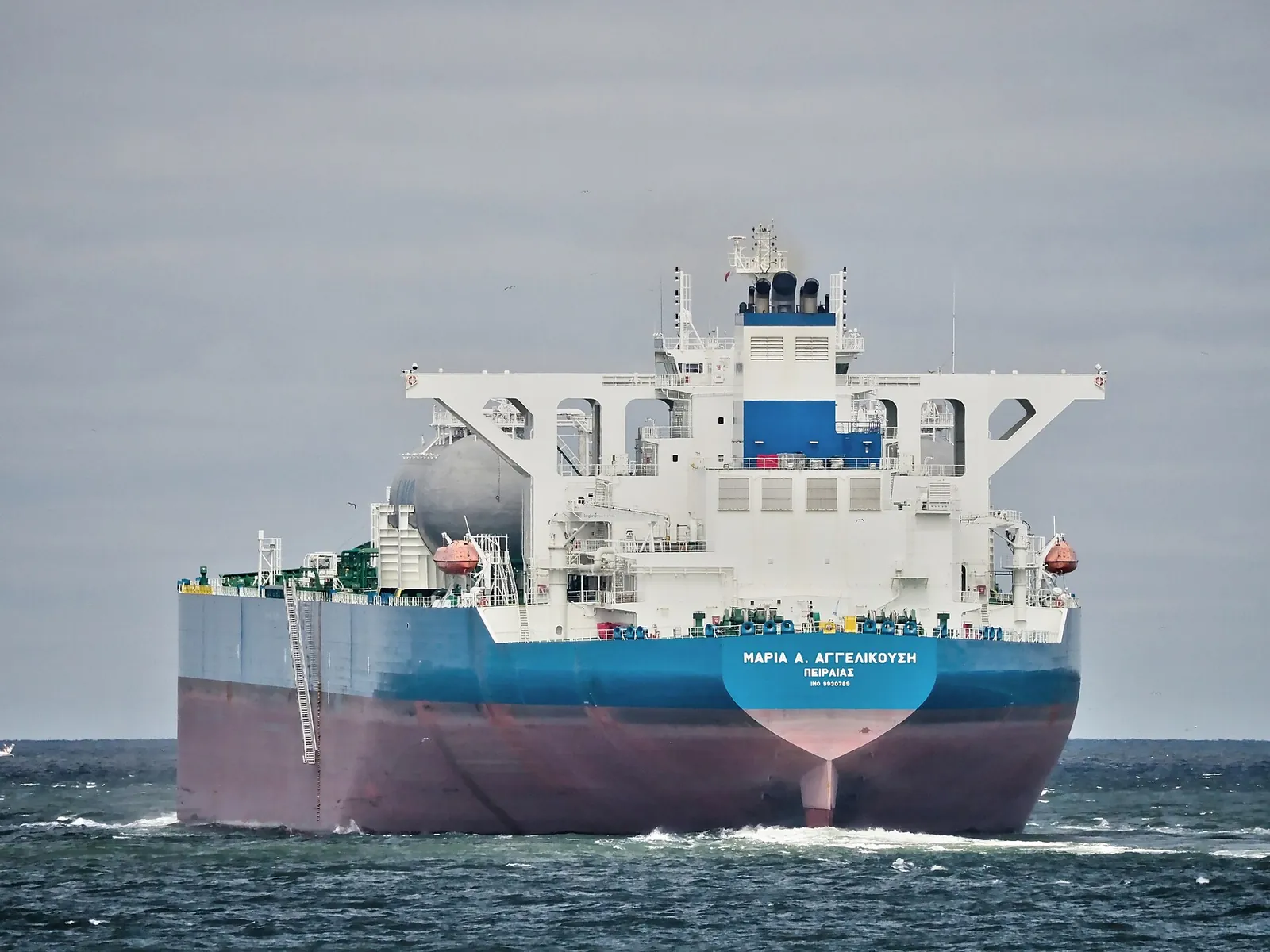
Shipping was the week's extreme market — again. Reuters reported that rates to move oil from the Strait of Hormuz and the Red Sea to Asia hit a record of around $34 a barrel this week, and that tanker owners have recently earned as much as $1.3 million per ship per day on the Persian Gulf–Asia round trip, against a 2025 average of $55,000 a day, citing Signal Ocean analyst Georgios Sakellariou. Reuters reported that attacks on ships linked to both the US–Iran war and the Russia–Ukraine war pushed freight and insurance rates to these levels, with longer routes tying up scarce tankers. Two more vessels were hit off Romania's Black Sea coast this week, keeping the second war's shipping risk live as well.
Wheat, by contrast, drifted lower despite the Black Sea risk. CBOT December wheat traded at $6.62¾ a bushel at Friday midday, down 7¼ cents on the day and slightly below last Friday's $6.68½ close, per Barchart. The USDA's weekly export sales report showed 319,901 metric tons of wheat sold in the week of October 8 — at the low end of the 300,000–600,000 ton range traders expected, down 29% from the prior week. Black Sea shipping disruption remains the standing upside risk for grain prices, but this week the demand data, not the war, set the direction.
What happened to the broader stock market?
US equities had their worst week in a month. The S&P 500 fell 84.62 points, or 1.09%, on Friday to close at 7,659.44, down 1.95% on the week — its largest one-week percentage decline since late June, according to Dow Jones market data published by Morningstar. The Nasdaq Composite fell 2.1% on Friday and 4.5% on the week, ending a four-week winning streak, while the Dow slipped 0.3% Friday but still gained 0.7% on the week, per Investopedia. Investopedia attributed the selloff to AI-linked stocks sinking further after hotter-than-expected consumer and producer price readings, with traders still pricing a high likelihood of a December Fed rate increase. The war's contribution runs through the inflation channel rather than the headline: with diesel and freight costs at records, the energy shock is one of the forces keeping US inflation — 3.7% in September, per Reuters — well above the Fed's 2% target.
War & Markets publishes weekly. Figures are snapshots checked at the time shown above — not live prices, and not financial advice. Nothing here is a recommendation to buy, sell, or hold any security or commodity.