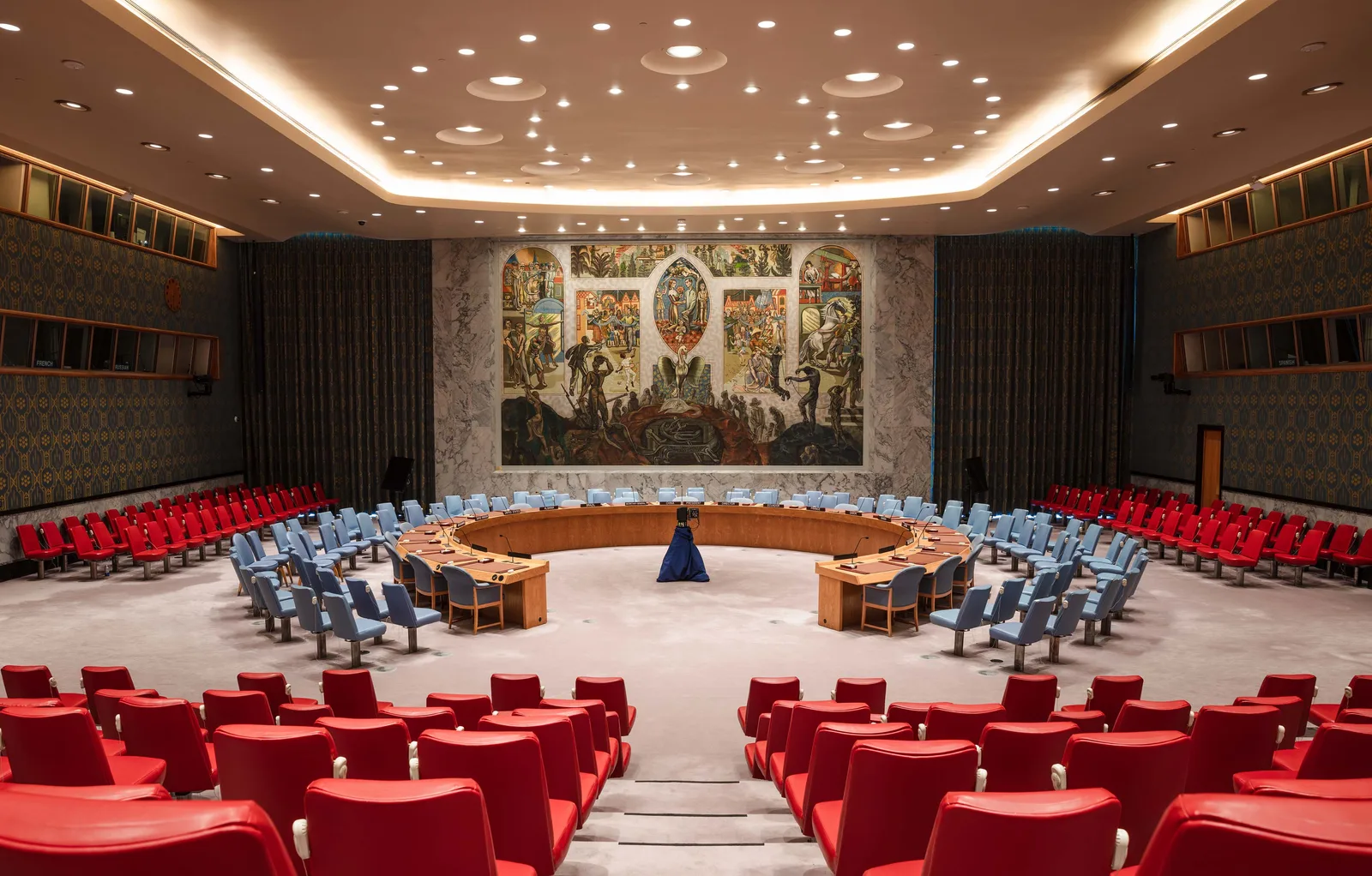
Sudan's drone war now accounts for most civilian deaths in the conflict, UN figures show, with drones causing roughly 1,100 of the 1,400 civilian deaths recorded in the first half of 2026 — a toll the UN's political chief laid before the Security Council on Friday as she warned that neither side is moving toward dialogue. "In each of my statements to this Council on Sudan this year, I have indicated that the situation is deteriorating, with no breakthrough in sight," Rosemary DiCarlo, the UN Under-Secretary-General for Political and Peacebuilding Affairs, told members. "Unfortunately, today I can tell you that little has changed."
What did the Security Council hear about the fighting?
The Council heard that the fighting is concentrated in three states but its reach is national. "Since my last briefing, fighting has continued, most notably in North Kordofan, South Kordofan and Blue Nile states," DiCarlo said. "While these states remain the epicenters of violence, the conflict's impact extends far beyond these front lines. Across the country, drone and air strikes continue to place civilians at risk." Airstrikes and drone attacks are hitting camps for displaced people, schools, civilian infrastructure and even mining sites far from the main fighting, the Pan African News Agency (PANA) reported from the briefing. On October 3, two trucks chartered by the World Food Programme, carrying food between Dilling and Kadugli in South Kordofan, were struck by a drone; one driver was killed. The vehicles were clearly identified as humanitarian and had all the necessary permits, and the UN has not formally attributed the strike. A drone strike near the Ethiopian border killed 41 displaced people on October 10, UN News reported.
Why are drones changing this war?
Because they let both sides kill far behind the front lines, cheaply and at distance. According to figures presented by the UN in August, drones caused approximately 1,100 of the 1,400 civilian deaths recorded in the first half of 2026, and both the Sudanese army and the Rapid Support Forces (RSF) use them against targets sometimes located far from the fighting. DiCarlo proposed an immediate measure: that the belligerents cease using drones or, failing that, accept specific commitments and operational mechanisms strictly regulating their use. With weapons continuing to flow into Sudan and all parties continuing to recruit fighters, she said, the risk of further escalation in the coming months remains high.
How bad is the hunger crisis behind the front lines?
Sudan remains the world's largest hunger and displacement crisis. Twenty million people face acute hunger, 200,000 of them at catastrophe levels, and famine risk is rising in parts of Darfur and Greater Kordofan, UN News reported. More than 700,000 displaced people in Tawila are short of food, water and healthcare. Three and a half years after the conflict began, neither the regular army nor the RSF seems willing to lay down their arms; worse, both sides continue to believe they can improve their position on the battlefield, at the cost of increased civilian suffering, PANA reported.
What is diplomacy doing — and not doing?
Diplomacy is active but, on the UN's account, not moving the parties. The UN is working with the Quartet — the United States, Egypt, Saudi Arabia and the United Arab Emirates — to secure a humanitarian truce, while its personal envoy to Sudan, Pekka Haavisto, is intensifying contacts with the warring parties, and a new meeting of international mediation actors is scheduled for next week in Geneva, PANA reported. Both sides have established committees to examine possible unilateral releases of detainees and prisoner exchanges. On sanctions, the Council on October 8 merely extended the sanctions regime for two months amid a lack of agreement on strengthening existing measures; the arms embargo remains confined to Darfur, with sanctions extended to December 11, UN News reported. Sudan's ambassador, Al-Harith Idriss al-Harith Mohamed, told the Council that any humanitarian truce must end the militia's control over civilian facilities and civilians' homes, and described a newly established, independent committee preparing a Sudanese-Sudanese dialogue, with guarantees issued by General Abdel Fattah al-Burhan including dropped charges against opposition figures and protection for participants.
What did the UN ask of the war's outside backers?
Pressure, and accountability. "The security situation along Sudan's borders is increasingly worrying," DiCarlo said. "We urge all actors to avoid any acts that could result in conflict spilling over across borders. Preventing a wider regional crisis must remain our collective priority." And on responsibility: "Preventing further atrocities requires more than expressions of concern. It requires action. The parties, and those who continue to enable, arm, finance or politically support them, must face far greater pressure to end this war. They must also understand that accountability is not optional."
This article is drawn from sources opened and read for this article: UN News' October 16, 2026 live coverage of the Security Council briefing, the UNifeed transcript of the October 16 statements by Rosemary DiCarlo and Sudan's ambassador, and the Pan African News Agency's October 17 report of the briefing. The drone-casualty figures are UN figures presented in August, as PANA reported them; the October 10 strike toll is UN News' figure; the October 3 aid-truck strike is reported with the UN's non-attribution stated. The FAQ answers are drawn only from the article's own text.