The Second Sino-Japanese War, explained in one line, was an eight-year war in which Japan invaded China, took its capital and its coast, and still could not force it to surrender: from 7 July 1937 to September 1945, the Republic of China — governed by Chiang Kai-shek's Nationalists, in an uneasy United Front with Mao Zedong's Communists — traded space for time, moved its capital inland to Chongqing, and held on until Japan was defeated in the wider Second World War into which this war had merged. It was the largest Asian war of the 20th century, and, in Rana Mitter's phrase, it made China the "forgotten ally": the first country to resist an Axis power, two years before Britain and France entered the war in Europe.
Key takeaways
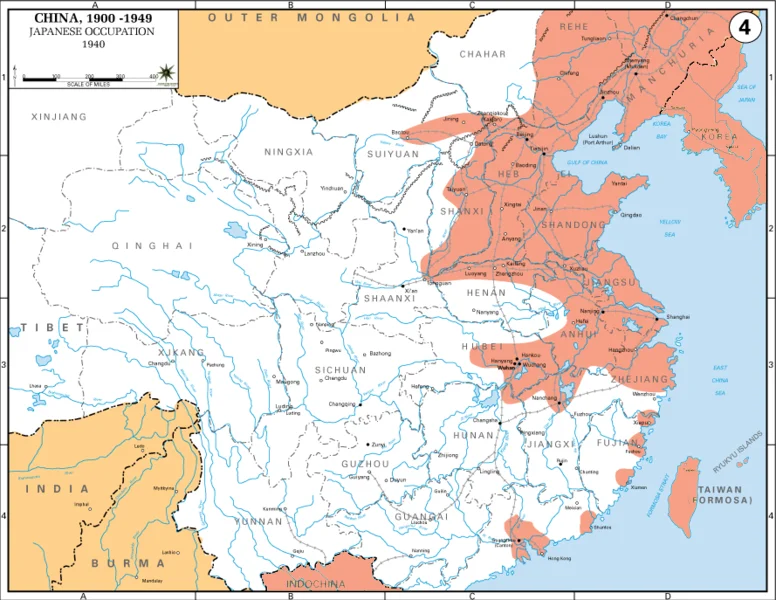
- Japan won the battles and lost the strategy: by the end of 1938 Japan held Beijing, Shanghai, Nanjing and Wuhan, and most of China's industry and ports. It never obtained a Chinese surrender or a negotiated settlement, and its armies were stretched across a country too large to occupy in full.
- The casualty totals do not agree, and the range is the honest answer: total Chinese deaths are put at 14 million to 22 million across the estimates historians cite; Japanese military dead at 455,700 to 700,000. Both sides' wartime claims about the other's losses were inflated at the time and are still argued over.
- The war was also a Chinese civil war in waiting: the Nationalist-Communist United Front, formed in 1936-37, frayed from late 1938 and effectively broke down after the New Fourth Army incident in January 1941. Communist base areas grew while the Nationalist state, based in Chongqing, was ground down by inflation and conscription.
- Its largest single Japanese offensive came last, not first: Operation Ichi-Go in 1944, with 500,000 Japanese troops, overran American air bases and large parts of central China — and arrived too late to change the outcome of the Pacific War, while further damaging the Nationalist government's standing.
Contents
- Overview
- Why did Japan invade China?
- How did the war unfold?
- Casualties
- Economic effects
- How it shaped the world
- What historians debate
Overview
The Second Sino-Japanese War — in China, the War of Resistance Against Japan — is dated in two ways, and the dating itself is an argument. The conventional start is 7 July 1937, the Marco Polo Bridge incident. Since 2017, the Chinese Communist Party's official view has dated a "Fourteen Years' War of Resistance" from 18 September 1931, when Japan staged the Mukden incident, invaded Manchuria and created the puppet state of Manchukuo; Japanese historiography has its own "Fifteen-Year War" framing covering 1931 to 1945. Between 1931 and 1937 the two countries fought local clashes, in Shanghai in 1932 and along the Great Wall in 1933, while Chiang's government pursued a policy summarised as "first internal pacification, then external resistance" — destroying the Communists before confronting Japan.
That order was reversed by force of events. The Communists, driven onto the Long March in 1934-35, regrouped at Yan'an; in December 1936 Chiang was seized by his own generals in the Xi'an Incident and pressed into a United Front. When fighting broke out seven months later, China went to war — formally undeclared until 9 December 1941 — as a nominally united, materially weak state against an industrialised empire.
Why did Japan invade China?
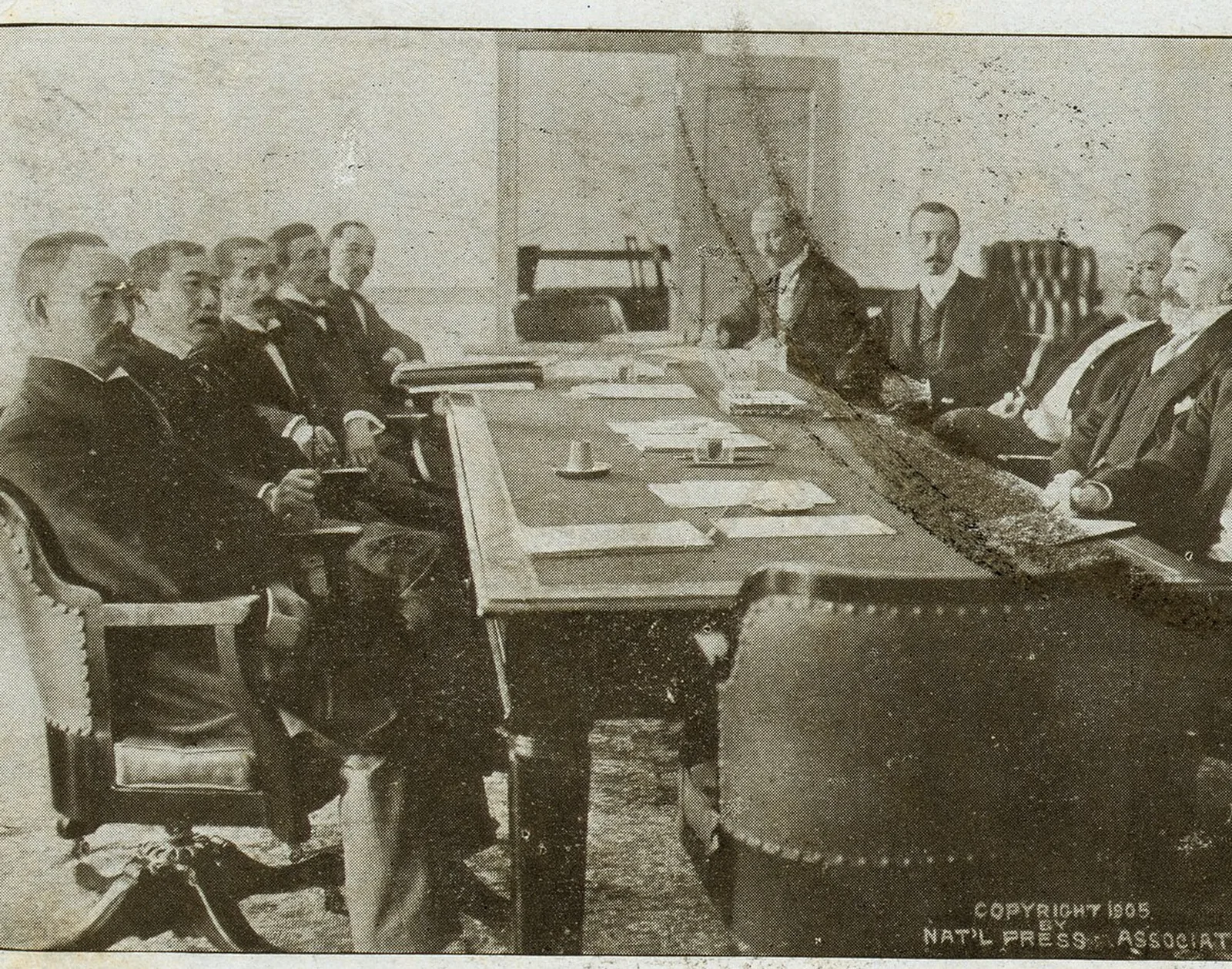
Because six years of piecemeal expansion in Manchuria and north China had met no effective military resistance, and in July 1937 a local clash gave Japanese field armies the opening to escalate. Japan's position in Manchuria dated from its victory over Russia in 1905; the Twenty-One Demands of 1915, the seizure of Manchuria in 1931-32 and the creation of Japanese-backed autonomous councils in north China in 1935 followed. Britannica frames the war as China beginning "a full-scale resistance to the expansion of Japanese influence in its territory (which had begun in 1931)".
On the night of 7 July 1937, Japanese troops on exercises near the Marco Polo (Lugou) Bridge, about 16 kilometres from Beijing, demanded entry to the walled town of Wanping to search for a missing soldier; the Chinese garrison refused, and fire was exchanged. Who fired first is highly contested, and the exact cause remains unknown. A local ceasefire was agreed on 11 July, but both capitals sent reinforcements, further incidents followed at Langfang and Guang'anmen, and by 28-29 July Japan had taken Beijing and Tianjin. Chiang, in his Lushan statement of 17 July, declared China had reached its "limit of endurance". In August, fighting opened in Shanghai as well — a second front Chiang chose in part, the standard accounts note, to fight in front of the city's large foreign community.
How did the war unfold?
In Britannica's three phases: rapid Japanese advance to the end of 1938, virtual stalemate to 1944, and a final phase in which Allied counterattacks elsewhere brought Japan's surrender.
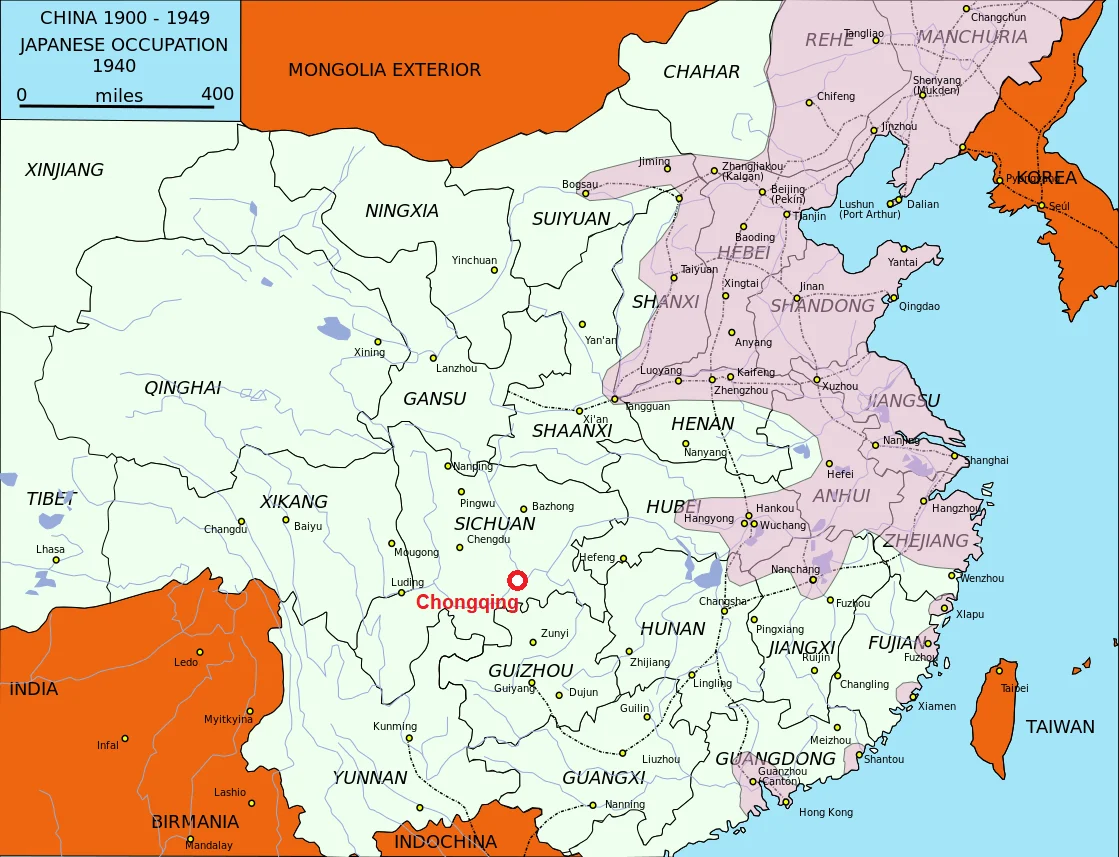
The advance was brutal and fast. At Shanghai (August-November 1937) Japan ultimately committed more than 300,000 troops, and China's best-trained divisions were largely spent there. Japanese forces then pursued the retreating Chinese past their own staff's restriction line and took Nanjing on 13 December 1937 (see Casualties for the massacre that followed). In 1938 China won a rare clear victory at Taierzhuang in March-April, then lost Xuzhou and, in June, breached the Yellow River dikes at Huayuankou in a deliberate flood intended to slow the advance on Zhengzhou and Wuhan (see Economic effects). Wuhan fell in October 1938 after four months, at a cost the standard summary puts at up to 500,000 Chinese and up to 200,000 Japanese killed or wounded. The Nationalist government, which had already re-established itself in Chongqing, settled into a strategy the sources call "trading space for time".
The stalemate held because occupation remained shallow. Japan blockaded China's ports, closed the Indochina railway in 1940 and, after taking Hong Kong and Burma in 1942, left Free China supplied mainly by air over the Himalayas — "the Hump". The Soviet Union was China's largest supplier from 1937 until Soviet aid halted in April 1941; American Lend-Lease and the "Flying Tigers" followed. Behind Japanese lines, Communist guerrillas — most largely in the Hundred Regiments Offensive of August 1940 — were answered from 1941 with the "Three Alls Policy" ("kill all, loot all, burn all"), which the sources state killed millions of civilians without suppressing the guerrillas. In Nanjing, Japan installed a rival government in March 1940 under Wang Jingwei; Britannica notes it could take no important step without Japanese approval.
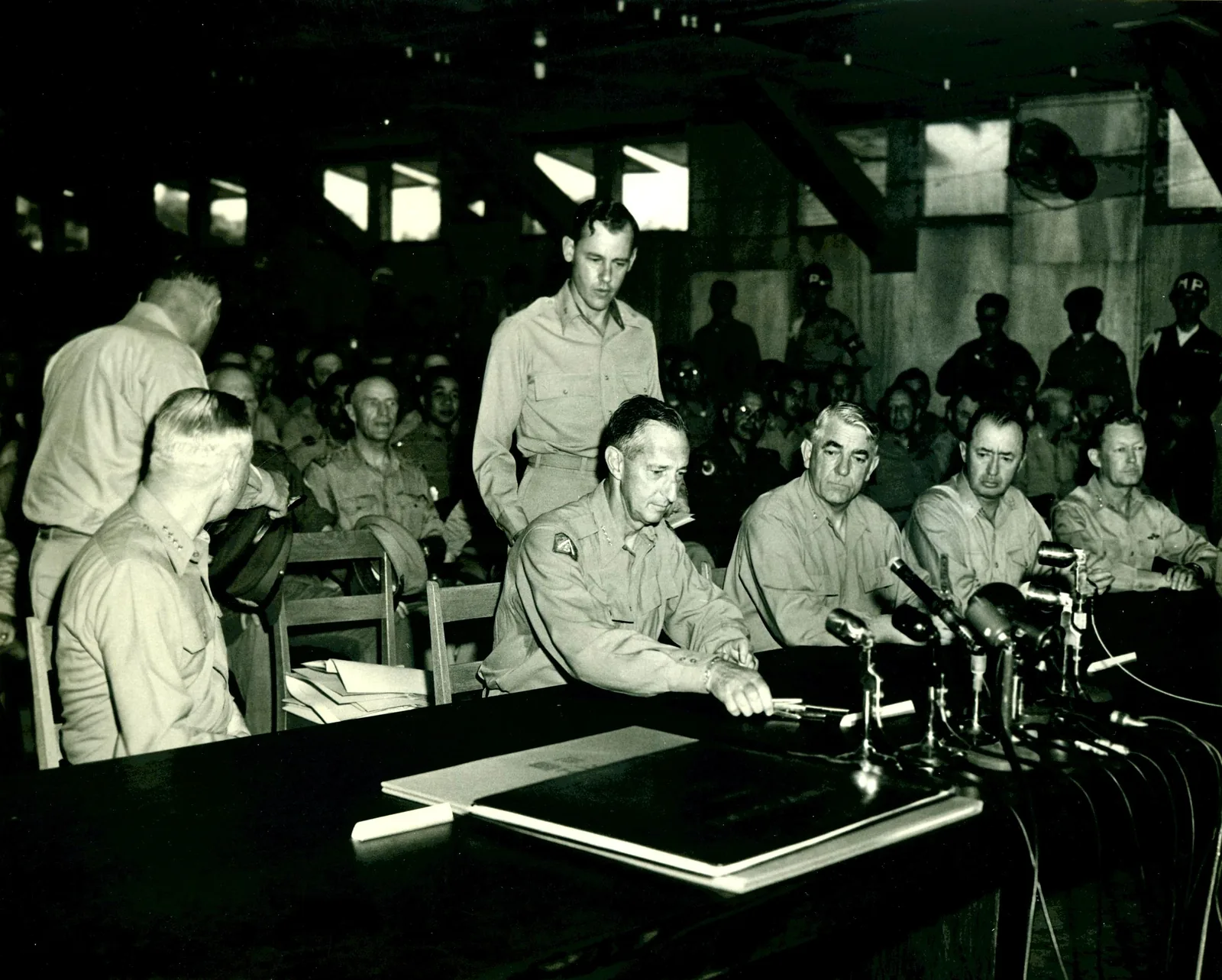
The final phase still contained China's largest battle. In 1944 Operation Ichi-Go mobilised 500,000 Japanese troops, 1,500 artillery pieces and 800 tanks, inflicted some 300,000 Chinese casualties, seized the American air bases in central China and opened a land corridor toward Indochina — too late, as American bombers simply moved to the Marianas. In spring 1945 Chinese forces, better trained and equipped, retook parts of Hunan and Guangxi. Japan surrendered after the atomic bombings and the Soviet invasion of Manchuria in August 1945: the formal instrument was signed on 2 September, and General Yasuji Okamura surrendered Japanese forces in China to General He Yingqin at Nanjing on 9 September 1945.
Casualties
This war's numbers were contested while it was being fought — both Nationalist and Communist sources claimed their forces alone had killed more than 1.7 million Japanese soldiers, a claim Nationalist war minister He Yingqin himself disputed for the Communist figures — and they remain ranges, not points.
- Chinese military dead: official Nationalist data record 1,319,958 killed, 1,761,335 wounded and 130,116 missing (3,211,409 total casualties). Communist data record 160,603-161,067 killed and 285,669-290,467 wounded. A Western estimate cited in the standard tables puts Chinese military dead at more than 2,000,000.
- Chinese civilian and total deaths: civilian deaths are put at more than 12,000,000, and total Chinese deaths at 14,000,000-22,000,000 across the estimates in the standard summary. Odd Arne Westad estimates 14 million Chinese died directly from the war, two million of them soldiers, with five to six million more starving or dying of disease in the wider count; Mitter considers Westad's figures conservative. Rudolph Rummel's lower total is 10,216,000 dead, of which he attributed 3,949,000 to direct killing by the Japanese army. Official People's Republic of China statistics state 20 million dead and 15 million wounded; the often-quoted Chinese claim of 35 million is a total-casualties figure (dead and wounded), not a death toll.
- Nanjing, December 1937-January 1938: estimates of those killed in the massacre range from 100,000 to more than 300,000. The International Military Tribunal for the Far East estimated at least 200,000 murders and 20,000 rapes, and those are the figures the standard summary says most scholars use.
- Japanese and collaborationist forces: Japanese military dead are put at 455,700-700,000 in Japanese medical and related data, with about 900,000 wounded — a total of roughly 1.5 million casualties, excluding Manchuria and Burma. Chinese puppet-state forces add a further 288,140-574,560 dead in the same tables.
- Displacement: the war created about 95 million refugees in the count cited in the standard summary; Mitter puts the refugee figure at 80 to 100 million. In Chongqing alone, Mitter records 218 air raids between May 1938 and August 1941, killing nearly 12,000 people, mostly civilians.
Economic effects
- The Nationalists lost their fiscal base in the first phase: Britannica's account of the stalemate years is blunt — the government "had lost its industrial and financial base in east China and the flower of its armies", the western provinces lacked the modern industry and transport to support huge armies and a government, and the region was crowded with refugees while its cities were bombed. The shortage of manufactured goods and the cost of the war brought inflation, "intensified by the government's fiscal policy", and with it hoarding, speculation and graft.
- The Yellow River flood was a military decision with an economic and human bill that is still disputed: the June 1938 breach at Huayuankou was intended to shield the Longhai railway, block a Japanese move into Shaanxi and Sichuan, and wreck the rail lines Japanese forces needed. Diana Lary's survey of the figures, in War in History, records how far apart the counts remain: a 1994 official PRC history put the flood dead at 900,000 and the homeless at nearly 10 million; a 1995 Taiwan study based on Nanjing archives put the dead at 400,000-500,000, refugees at 3 million and people affected at 5 million; another estimate put the dead at 500,000. The flood also silted farmland across Henan, Anhui and Jiangsu and contributed to the conditions of the Henan famine of 1942-43.
- Occupation was extraction without consolidation: Japan held China's ports and most of its industry, yet its occupation remained costly — roughly 50,000 military dead and 200,000 wounded a year in the summary's estimate — and never produced a settlement. The American oil and scrap embargoes of 1940-41, and Japan's refusal to withdraw from China, formed the immediate background to the attack on Pearl Harbor in December 1941.
How it shaped the world
- It tied down the Japanese army: Mitter's central argument in Forgotten Ally: China's World War II, 1937-1945 (published in Britain as China's War with Japan, 1937-1945: The Struggle for Survival) is that Chinese resistance held down large Japanese forces — 800,000 troops at their peak, in his HistoryExtra account — that would otherwise have been free for Southeast Asia, India or the Soviet border. The Reviews in History assessment of the book puts its conclusion plainly: without the resistance, "China would have become a Japanese colony as early as 1938".
- It made China a founding great power: China was treated as one of the "Big Four" Allied powers and one of Roosevelt's "Four Policemen"; Chiang attended the Cairo Conference in November 1943 as an Allied partner, the colonial-era unequal treaties were renounced, Taiwan was recovered, and China became a permanent member of the United Nations Security Council.
- It decided the Chinese Civil War before it resumed: Britannica notes that Communist-controlled areas grew during the war to cover large parts of north and east China, on the strength of land and tax reforms favouring poor peasants and of armies noted for discipline and close relations with the population, while the Nationalist government was blamed for inflation, corruption and heavy taxation. When Japan surrendered, full civil war followed within a year; the Communists won in 1949.
What historians debate
- Nationalists or Communists — who resisted? The Reviews in History survey of the field traces the shift: Lloyd Eastman's Seeds of Destruction (1984) argued the Nationalist regime was inherently reactionary and corrupt; Hans van de Ven's War and Nationalism in China (2003) urged a more realistic view of a Nationalist leadership facing opposition inside and outside its ranks, and credited it with channelling a growing national consciousness into resistance; Diana Lary's The Chinese People at War (2010) made the war a social history of refugees, women and ordinary soldiers. Mitter synthesises that work into the position the review endorses: the resistance that saved China from colonisation was "primarily a Nationalist endeavour, despite CCP claims to leadership" — while the Communists' wartime expansion is what won them the country afterwards.
- Chiang and Stilwell: older Western accounts, shaped by Barbara Tuchman and by General Joseph Stilwell's reporting, treated Chiang as incompetent. Mitter, using Chiang's opened diaries, presents Stilwell as, in the review's summary, a "poorly-informed gambler with other nations' assets" who won "the war for Washington's ear", and notes China received only 1.5 percent of American Lend-Lease in 1941-42. Van de Ven treats the breakdown as a more complicated clash of strategies.
- When did the war begin — and whose war was it? The 1937, 1931 and "Fifteen-Year War" datings each assign the leading role differently. R. Keith Schoppa's In a Sea of Bitterness (2011), on civilian diaries, finds nationalism "almost nowhere to be found" among ordinary refugees — a challenge, noted in the same review, to any simple story of a united national resistance.