The Vietnam War was the longest and costliest armed conflict the United States fought during the Cold War, a two-decade struggle that began as a post-colonial war of independence against France and hardened into a proxy confrontation between communist North Vietnam — backed by the Soviet Union and China — and anti-communist South Vietnam, backed by the United States and its allies. It ended in 1975 with the reunification of Vietnam under communist rule, but its effects — on American politics, on Southeast Asia's borders and peoples, and on the Cold War itself — are still traceable today.
Key takeaways
- A colonial war that became a Cold War war: France's defeat at Dien Bien Phu in 1954 and the Geneva Accords' temporary division of Vietnam at the 17th parallel set the stage; the U.S. entered to contain communism under the "domino theory," escalating from advisers to more than 500,000 combat troops.
- America's exit came through negotiated withdrawal, not victory: the Paris Peace Accords of January 27, 1973 ended direct U.S. involvement; Saigon fell to communist forces in April 1975, and Vietnam was formally reunified that July.
- The human cost is still disputed: U.S. military deaths are precisely documented at 58,220, but Vietnamese military and civilian deaths are estimated only in broad ranges, with figures varying by source and political attribution.
- The war rebuilt American institutions: it ended the military draft, pushed Congress to reassert control over war-making, and reshaped U.S. relations with Southeast Asia for decades.
Contents
Overview
The war's roots lie in the French colonial period. After Japan's wartime occupation of Indochina collapsed in 1945, the Viet Minh — Ho Chi Minh's communist-led nationalist movement — fought France for independence from 1946 until its decisive victory at Dien Bien Phu in May 1954. The July 1954 Geneva Accords established the 17th parallel as a temporary demarcation line between a communist Democratic Republic of Vietnam in the north, led by Ho Chi Minh, and a U.S.-backed State of Vietnam in the south under Ngo Dinh Diem. Nationwide reunification elections scheduled for 1956 were never held; Diem declared himself president of the Republic of Vietnam in October 1955.
Insurgency in the South grew through the late 1950s, organized from December 1960 under the National Liberation Front — the "Viet Cong" — with northern backing, while the U.S. steadily increased its advisory presence. After the August 1964 Gulf of Tonkin incident, Congress passed the Gulf of Tonkin Resolution authorizing the president to use armed force, and in March 1965 the first U.S. combat troops landed at Da Nang. Operation Rolling Thunder began a sustained bombing campaign, and by 1968 American troop levels had surged past 500,000.
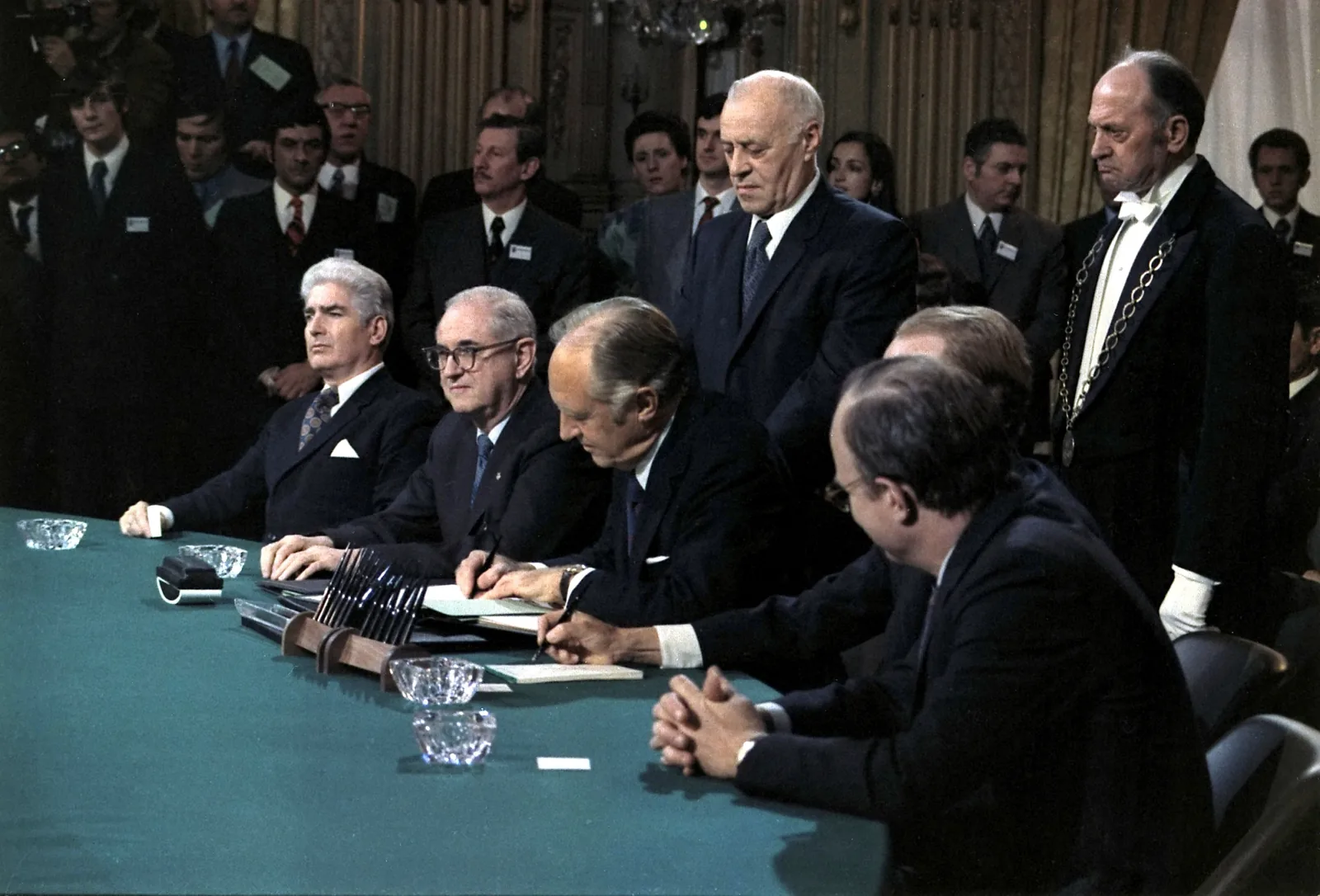
The January 1968 Tet Offensive — coordinated attacks in more than 100 South Vietnamese cities — marked the war's turning point: although communist forces suffered heavy losses, the scale of the attacks contradicted official U.S. claims of progress and accelerated the shift toward withdrawal. From 1969, the Nixon administration pursued "Vietnamization," reducing U.S. forces from a peak of about 549,000 to 69,000 by 1972. The Paris Peace Accords, signed on January 27, 1973, ended direct U.S. involvement and secured the return of 591 American prisoners of war in Operation Homecoming. Fighting continued between the Vietnamese sides until communist forces seized Saigon in April 1975; North and South Vietnam were formally unified as the Socialist Republic of Vietnam that July.
Casualties
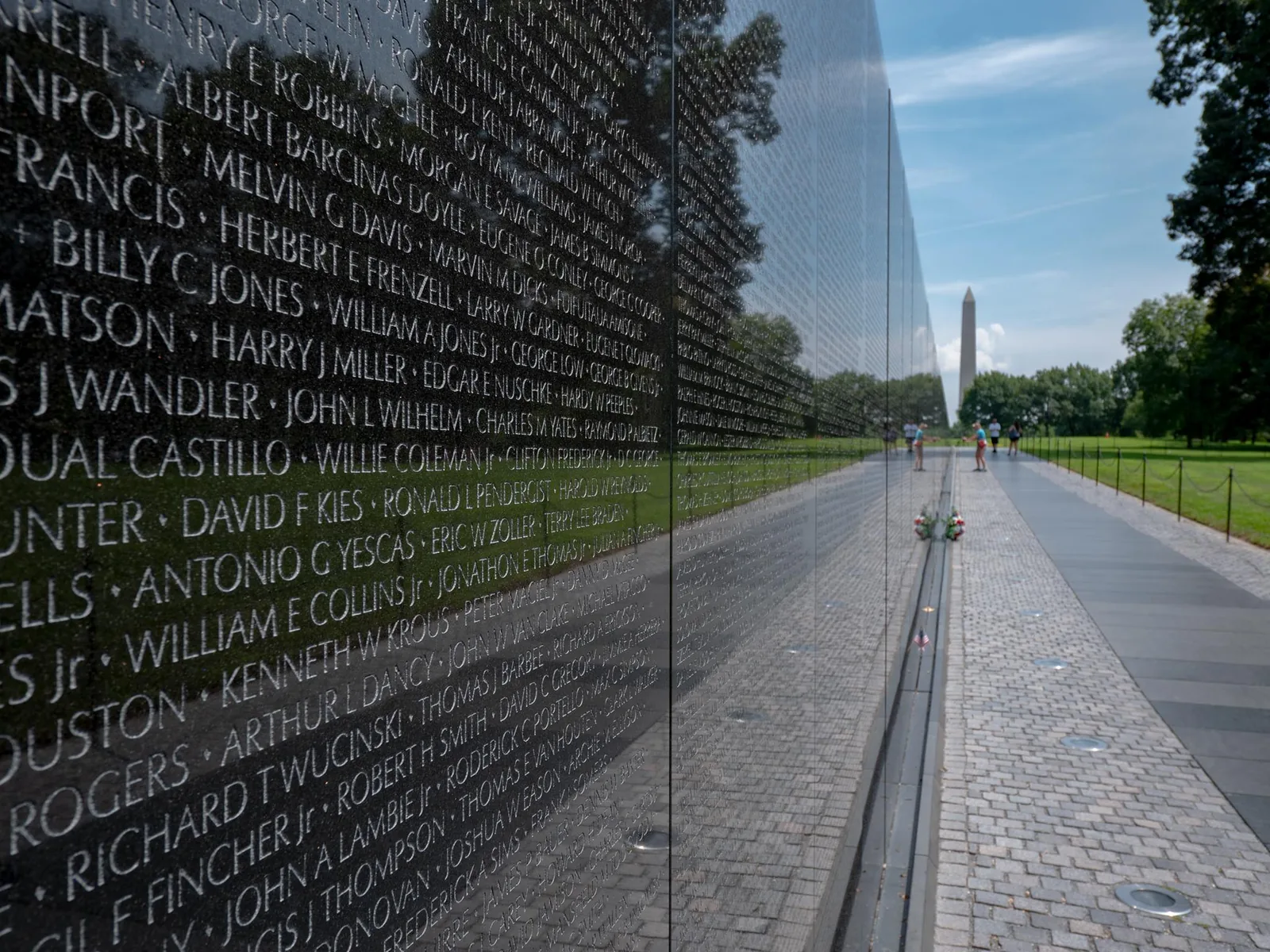
American losses are documented with unusual precision. The National Archives' Defense Casualty Analysis System extract records 58,220 U.S. military fatal casualties of the Vietnam War, of which 47,434 are classified as hostile deaths and 10,786 as non-hostile deaths.
Vietnamese deaths are harder to fix, and historians disagree on every component. History.com, summarizing figures the Vietnamese government later released, reports that some 1.1 million North Vietnamese and Viet Cong fighters were killed, up to 250,000 South Vietnamese soldiers died, and more than 2 million civilians were killed on both sides. The Vietnam Veterans Memorial Fund's education guide puts the civilian toll at nearly 3 million Vietnamese civilians over the course of the war. These are point estimates from particular sources, not a consensus: independent demographic studies have produced markedly lower totals for the 1965–1975 period, while other estimates run higher, which is why no single authoritative total exists. The fair statement is a broad one — Vietnamese deaths, military and civilian combined, are estimated in the millions, and the true figure remains contested.
Economic effects of the Vietnam War
For the United States, the Congressional Research Service's "Costs of Major U.S. Wars" report (RS22926) estimates the incremental military cost of the Vietnam War at $111 billion in current-year dollars for 1965–1975 — about $738 billion in constant FY2011 dollars — making it the most expensive U.S. conflict of the Cold War era after the two world wars. War spending peaked in 1968, when it absorbed 2.3% of GDP. CRS notes these figures cover military operations only and exclude veterans' benefits, interest on war debt, and aid to allies, so they understate the full fiscal burden.
For Vietnam itself, the economic destruction was far more direct. As the Vietnam Veterans Memorial Fund's legacy guide notes, when the Paris Peace Accords were signed in 1973, both North and South Vietnam were "plagued by vast economic problems due to decades of war that had destroyed agricultural land and damaged the nations' limited industrial facilities." After 1975, the United States treated Vietnam as a hostile power, imposing a trade embargo, blocking international loans, and refusing diplomatic relations; the embargo was officially lifted only in 1994, and diplomatic relations were reestablished the following year — a twenty-year economic freeze between the two former belligerents.
How it shaped the world
In Southeast Asia, the war redrew the map and displaced millions. Vietnam's reunification under communist rule was followed by Vietnamese intervention in Cambodia — Vietnam invaded in 1978 and removed the Khmer Rouge, under whose rule the VVMF guide notes as many as 2 million Cambodians died — which in turn provoked a Chinese invasion of Vietnam in 1979. In Laos, the Pathet Lao seized power after Saigon's fall, and the United States' sustained bombing of North Vietnamese strongholds there left the country saturated with unexploded ordnance that still kills civilians. The "boat people" exodus followed: more than 130,000 Vietnamese were evacuated during the fall of Saigon, and roughly two million people from the region eventually emigrated, settling in the United States, Canada, and Europe.
In the United States, the war rewrote the rules of war-making itself. The draft ended on January 27, 1973 — the same day as the Paris Peace Accords — and the all-volunteer force has been in place ever since; Congress repealed the Gulf of Tonkin Resolution in 1970 to reassert control over presidential war powers; and the Pentagon Papers, published by The New York Times in June 1971, revealed that the government had repeatedly and secretly expanded its involvement, permanently damaging public trust in official war narratives. As the 2012 Congressional Record observed:
America's experience in Vietnam led to the replacement of the military draft with an all-volunteer force, the reduction of the voting age to 18, and the passage of the War Powers Act.
Globally, the war strained the U.S. policy of containment that had organized Western strategy since 1947, emboldened the Soviet Union and its allies during the 1970s, and demonstrated — in terms watched closely by every Cold War capital — the limits of a superpower's ability to impose a political outcome by force in a determined nationalist insurgency.