The Russo-Japanese War, fought from February 1904 to September 1905, was one of the most consequential conflicts of the 20th century — fought over two prizes of empire, Korea and Manchuria. Russia, a sprawling European great power, and Japan, a modernizing island nation barely a generation removed from feudal rule, had spent a decade circling each other in the Far East. When Japan struck first — a surprise night attack on Russia's Pacific fleet at Port Arthur on February 8–9, 1904 — the war that followed redrew the map of Asia and made Japan a great power.
The war's outcome stunned the world: a European empire had never lost a full-scale modern war to an Asian state. As Britannica puts it, Japan became "the first Asian power in modern times to defeat a European power." History.com calls it "the beginning of global-power warfare in the Pacific."
Key takeaways
- A war over Korea and Manchuria: Russia's push into Manchuria collided with Japan's ambitions in Korea. After the Triple Intervention of 1895 and Russia's 1898 lease on Port Arthur, Japan decided only war would dislodge Russia — and struck first on February 8–9, 1904.
- Tsushima decided it: On May 27–28, 1905, Admiral Tōgō's fleet annihilated Russia's Baltic Fleet in one of history's most one-sided naval battles.
- Enormous human cost: History.com reports combined military casualties of "more than 150,000," while Britannica records some 89,000 Russian and 71,000 Japanese casualties at Mukden alone. Some 20,000 Chinese civilians were killed as the war was fought on Chinese soil.
- A war financed on Wall Street and in London: Japan floated $535 million in war bonds in London and New York — over half its war costs — yet finished, in History.com's words, with coffers "virtually empty."
- Global aftershocks: Russia's defeat fed the 1905 Revolution, Japan annexed Korea in 1910, Tsushima's lessons launched the battleship arms race, and U.S.–Japan relations began deteriorating toward 1941.
Contents
Overview
The road to war
The war's roots run back to the First Sino-Japanese War of 1894–95: the Treaty of Shimonoseki gave Japan the Liaodong Peninsula, but Russia, backed by France and Germany in the Triple Intervention, forced Japan to give it up. Stung, Japan spent a decade building the army and navy for revenge.
Russia, meanwhile, moved deeper into the region. In April 1898 it secured a 25-year lease on Port Arthur and Dairen (Dalian) and pushed its railway south through Manchuria to Port Arthur. Japan, which regarded Korea as within its sphere of influence, signed the Anglo-Japanese Alliance with Britain in 1902 — guaranteeing no third power would intervene on Russia's behalf. When negotiations over Korea and Manchuria broke down in early 1904, Japan decided on war.
Port Arthur, the Yalu, and the land war
Japan opened the war with a surprise attack. On the night of February 8–9, 1904, Admiral Tōgō Heihachirō's torpedo boats struck the Russian Pacific Squadron anchored at Port Arthur without a declaration of war, disabling several ships; Japan's formal declaration followed days later. Japanese troops landed in Korea and advanced into Manchuria.
The land campaign was a series of Japanese victories bought at terrible cost. At the Yalu River (May 1, 1904), Japanese forces crossed into Manchuria in what Britannica calls Japan's first victorious engagement against a Western country; at Liaoyang, some 130,000 Japanese fought 180,000 Russians at a cost of about 23,000 Japanese casualties. The siege of Port Arthur was the war's bloodiest grinding battle: repeated Japanese storming attacks broke against machine guns and barbed wire until the fortress commander, General Stessel, surrendered on January 2, 1905 — despite, as Britannica notes, having provisions for three more months.
Then came Mukden (February 19–March 10, 1905), the largest land battle the world had yet seen: some 330,000 Russians faced 270,000 Japanese, and after three weeks the Russian armies were driven back in disarray. But Japan was now exhausted — financially and materially — and, as Britannica records, it was the Japanese government that took the initiative in proposing peace negotiations.
Tsushima: the battle that ended an empire's fleet
Even before Mukden, Russia had gambled on a naval rescue. In October 1904 the Baltic Fleet, under Admiral Rozhdestvensky, sailed from Libava (in present-day Latvia) on a voyage halfway around the world — already notorious after the Dogger Bank incident, when nervous Russian gunners fired on British trawlers in the North Sea, killing fishermen; only a Russian apology and compensation averted war with Britain. On May 27–28, 1905, Tōgō's fleet intercepted the exhausted Russians in the Tsushima Strait and annihilated them: Britannica reports that two-thirds of the Russian fleet was sunk, six ships were captured, and only four reached Vladivostok, while the Japanese lost just two torpedo boats. (History.com gives slightly different figures — eight Russian battleships and more than 5,000 men lost, only three vessels reaching Vladivostok — but the verdict is the same.) The Russian navy in the Pacific ceased to exist.
Peace at Portsmouth
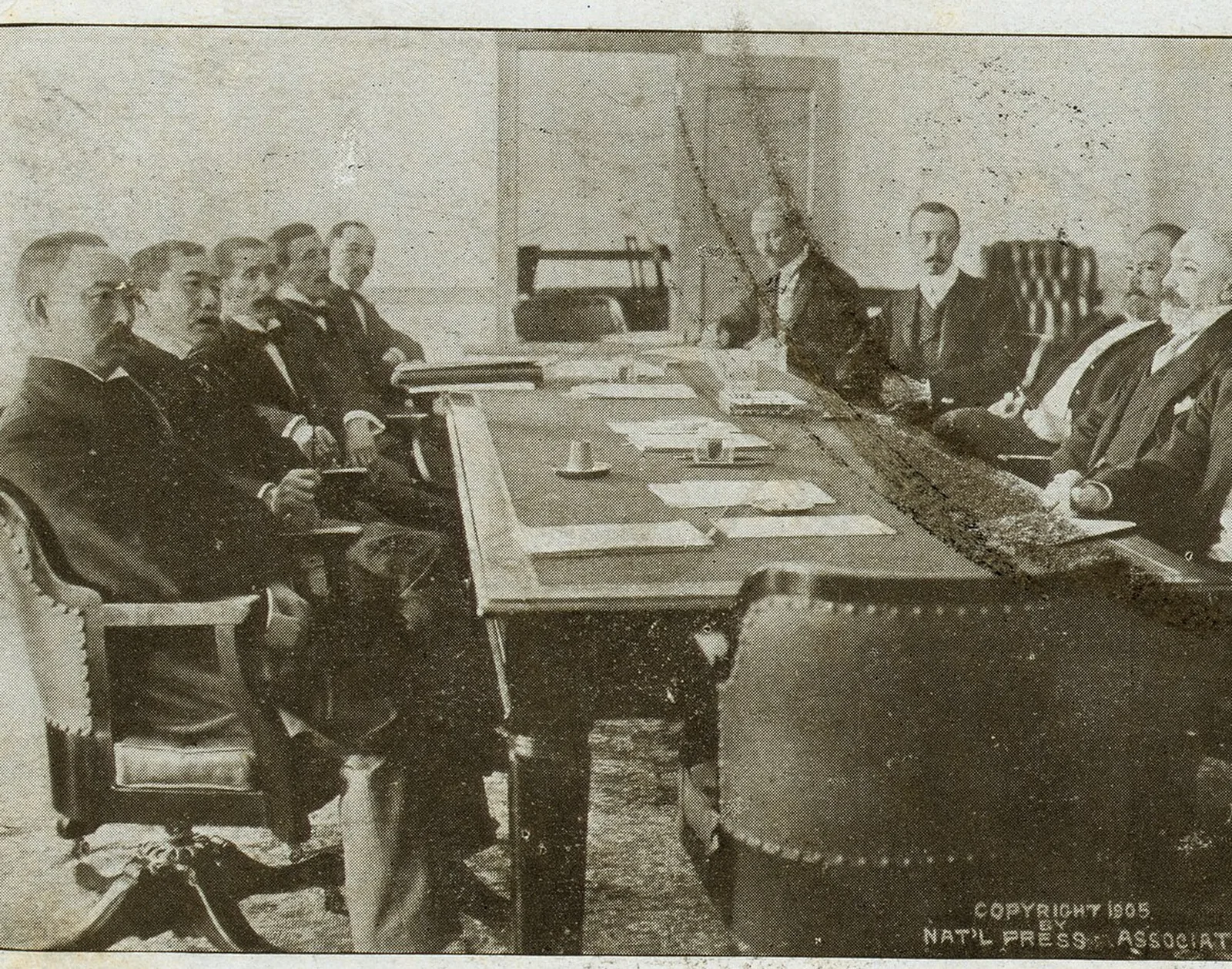
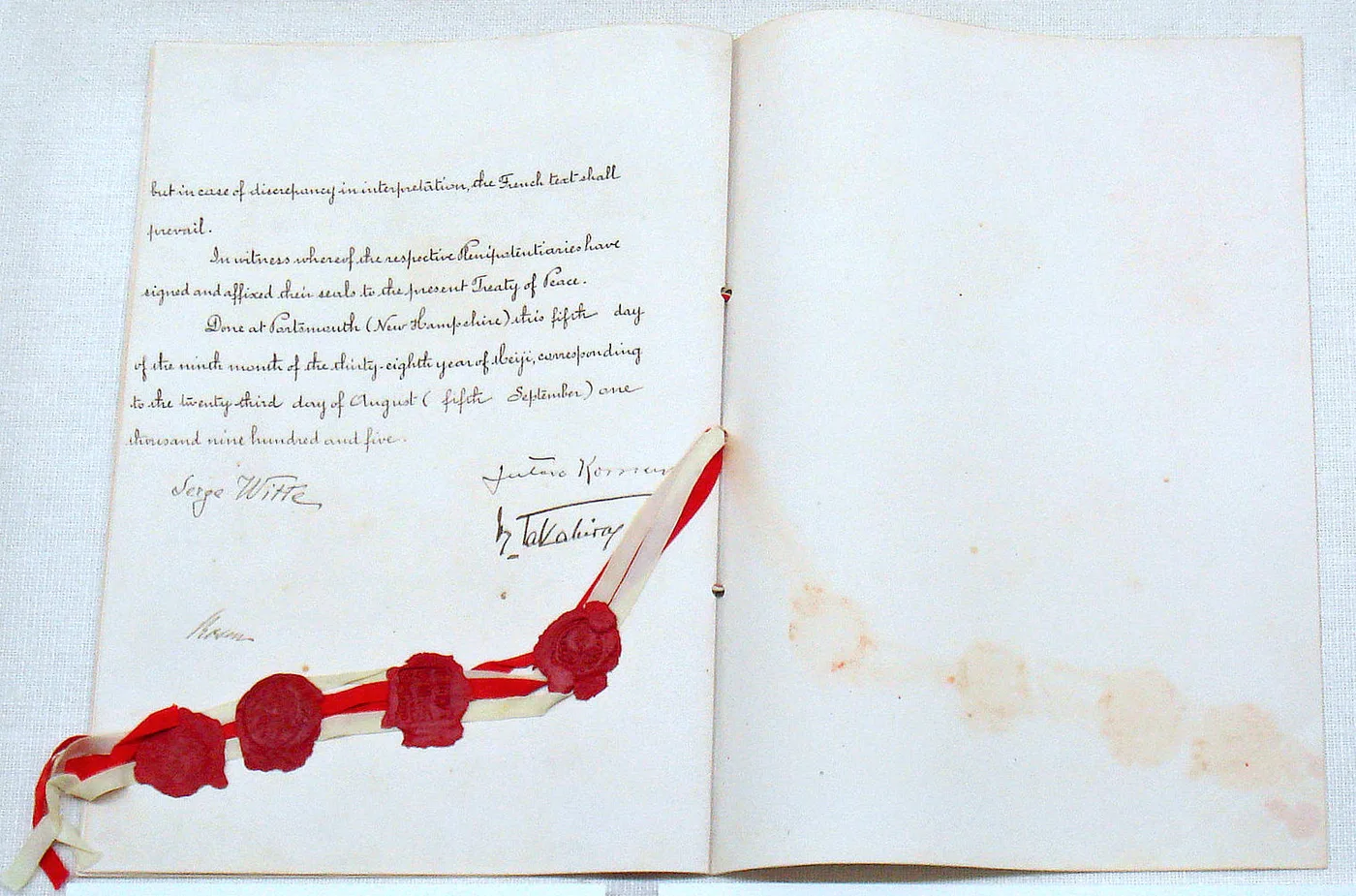
With both sides spent, U.S. President Theodore Roosevelt mediated a settlement at the Portsmouth Naval Shipyard in Kittery, Maine (August 9–September 5, 1905). The terms, per Britannica: Japan gained the Liaodong Peninsula and Port Arthur, the South Manchurian Railway, and southern Sakhalin; Russia evacuated southern Manchuria; Japan's control over Korea was recognized — converted into outright annexation in 1910.
The treaty won Roosevelt the Nobel Peace Prize — but it detonated a crisis in Tokyo. Roosevelt sided with the tsar's refusal to pay an indemnity, and when the terms became known, Japanese crowds, feeling cheated of the fruits of victory, rioted against Americans for days. History.com notes that the treaty's financial sting lingered in Japanese memory for decades.
Casualties of the Russo-Japanese War
Casualty figures for the Russo-Japanese War are estimates, and sources differ in their details. History.com gives combined military casualties of "more than 150,000" for the war as a whole. The single bloodiest engagement was Mukden, where Britannica records some 89,000 Russians and 71,000 Japanese "having fallen" — a figure that covers killed and wounded — in the largest land battle of modern warfare up to that point.
The war was also fought on Chinese soil, and civilians paid a price. Drawing on contemporary journalists' reports of harsh Russian tactics, History.com attributes the deaths of some 20,000 Chinese civilians to the conflict — a reminder that Korea and Manchuria, the war's prizes, were populated lands rather than empty battlefields. Russia's losses were compounded by the disaster at Tsushima, where thousands of sailors died with the Baltic Fleet.
Economic effects
The Russo-Japanese War was a landmark in war finance — and a cautionary tale about what modern war costs even the victor. Japan's government knew it could not pay for the war from domestic resources alone. As Priscilla Roberts documents, the American bank Kuhn, Loeb & Company organized the New York syndicates for Japan's successive war loans — every one heavily oversubscribed — while Jacob Schiff mobilized his European contacts to get the bonds handled on favorable terms in London. The result: $535,000,000 of Japanese war securities floated on European and American markets — the United States taking $196,250,000 — covering more than half of Japan's total war costs and, Roberts judges, "probably a vital factor in Japan's military success."
Victory nearly bankrupted the victor: when the war ended, History.com reports, Japan's coffers were "virtually empty." Financial exhaustion drove Tokyo to seek peace — and the treaty's lack of a Russian indemnity sent rioters into Tokyo's streets. Ian Nish observes the war's consequences unfolded gradually "largely for financial reasons": Japan had won an empire it could barely afford.
Russia's economy absorbed the defeat differently. The war's cost, piled atop military humiliation and domestic unrest, helped detonate the Revolution of 1905 — strikes, mutinies, and uprisings that forced Tsar Nicholas II to grant the October Manifesto. The war did not bankrupt Russia the way it strained Japan, but it broke the regime's aura of competence.
How it shaped the world
It announced the arrival of Japan — and of Asia. Japan's victory was the first time in modern history that an Asian state defeated a European great power in a full-scale war. The shock ran across colonized Asia and Africa, where nationalists took notice that European empires could be beaten.
It shook the Russian Empire to its foundations. Within two months of the war's end, Britannica records, Russia was convulsed by the Revolution of 1905 — the dress rehearsal for 1917. The war exposed the incompetence of the tsarist military establishment, discredited the autocracy, and set Russia on the road to revolution.
It redrew the map of East Asia. Japan emerged with Port Arthur, the South Manchurian Railway, half of Sakhalin, and recognized control of Korea — converted into outright annexation in 1910. Strangely, as Ian Nish notes, Russia–Japan enmity then cooled into friendship by 1907, sealed by agreements dividing their spheres of influence at China's expense.
It launched the battleship arms race. Tsushima was watched by some 30 military observers from about 16 countries, and its lessons electrified navies. As Frank Hoffman and George Garrett document, the British observer Captain William Pakenham — who watched the battle from the battleship Asahi — filed reports that reinforced Admiral Jackie Fisher's enthusiasm for big-gun battleships and helped confirm the decision to build HMS Dreadnought; in the United States, analyst William Sims factored the battle's long-range firepower lessons into President Roosevelt's 1906 decision for the all-big-gun USS South Carolina. And the war taught a darker lesson that went unlearned: Britannica notes that the slaughter of Japanese infantry against machine guns and barbed wire at Port Arthur previewed the Western Front — "the lessons of Port Arthur would go largely unheeded" in 1914.
It poisoned the Pacific. The war's most fateful paradox, in Nish's summary, is that "the initial goodwill on both sides of the Pacific before and during the clash in Manchuria turned into a slow diplomatic deterioration." In 1907 the U.S. updated War Plan Orange — its contingency plan for war with Japan — while Japan's Imperial Defence Plan named the U.S. its navy's "hypothetical enemy": a rivalry that would run all the way to 1941.