The Korean War, fought from June 25, 1950, to July 27, 1953, was one of the bloodiest conflicts of the 20th century — and one of the strangest. It pitted North Korea, backed by the Soviet Union and China, against South Korea, defended by a United States-led United Nations coalition. It killed millions of people, transformed the Cold War, and ended not with a peace treaty but with an armistice. That armistice is still in force, the two Koreas remain divided and technically at war, and the demilitarized zone between them is one of the most heavily fortified borders on earth.
Key takeaways
- A divided peninsula: After Japan's defeat in 1945, the U.S. and the Soviet Union split Korea at the 38th parallel for administrative purposes; the temporary line hardened into two rival states, and on June 25, 1950, North Korea invaded the South.
- Enormous human cost: Estimates range from at least 2.5 million dead (Britannica) to nearly 5 million (History.com), with more than half of the dead — about 10 percent of Korea's prewar population — civilians, a higher civilian share than in World War II or Vietnam.
- The war that militarized the Cold War: The invasion triggered the first great U.S. Cold War military buildup; real defense spending, never above $60 billion a year in 1947–50, never fell below $143 billion after 1952, and stayed roughly three times higher for a decade.
- A frozen conflict: Combat ended with the Korean Armistice Agreement of July 27, 1953 — a ceasefire South Korea never formally signed — and no peace treaty has replaced it, leaving the peninsula in a state of suspended war more than 70 years later.
Contents
Overview
The Korean War's origins lie in the collapse of the Japanese empire at the end of World War II. Korea, annexed by Japan in 1910, had no native government waiting to take power when Japan surrendered in September 1945. In August 1945, in a hurried effort to disarm Japanese forces and repatriate Japanese civilians, the United States and the Soviet Union agreed to divide the country for administrative purposes at the 38th parallel, according to Britannica. From the American perspective the division was a temporary expedient; in practice it hardened. The two sides could not agree on a formula for reunification, the United Nations assumed responsibility for Korea in 1947, and in 1948 two rival states emerged: the Republic of Korea (South Korea) under the U.S.-educated Syngman Rhee, and a communist state in the north under Kim Il-sung, a former guerrilla leader who had served as a major in the Soviet army.
Even before 1950, the peninsula was already bleeding. Partisan warfare had engulfed parts of every southern province, and limited border fighting between the new South Korean army and the North Korean People's Army cost nearly 8,000 South Korean security-force lives and at least 30,000 other Korean lives. By 1950, Britannica writes, the violence had convinced Kim Il-sung that a war under Soviet auspices was necessary for reunification.
On June 25, 1950, North Korea — supplied and advised by the Soviet Union — launched a full-scale invasion of the South. The United Nations Security Council denounced the invasion and called on member nations to defend South Korea; the United States, as the principal participant, mobilized more than 1.7 million service members and led a unified United Nations Command under General Douglas MacArthur. The People's Republic of China came to North Korea's aid.
The war's first months went badly for the Allies: the North Korean army was disciplined and well-equipped, while South Korean forces were, in History.com's description, "frightened, confused and seemed inclined to flee the battlefield." The tide turned with the Inchon landing in September 1950, an amphibious assault that pushed the North Koreans back across the 38th parallel — but as American troops advanced toward the Yalu River, the border with China, Beijing warned Washington away. Chinese leader Mao Zedong sent troops into Korea, and the war escalated again. President Harry S. Truman, fearing a wider war would provoke Soviet aggression in Europe and the use of atomic weapons, sought a limited war; MacArthur openly demanded an all-out war against China, writing to a Republican congressman that "there is no substitute for victory" — and Truman fired him for insubordination on April 11, 1951.
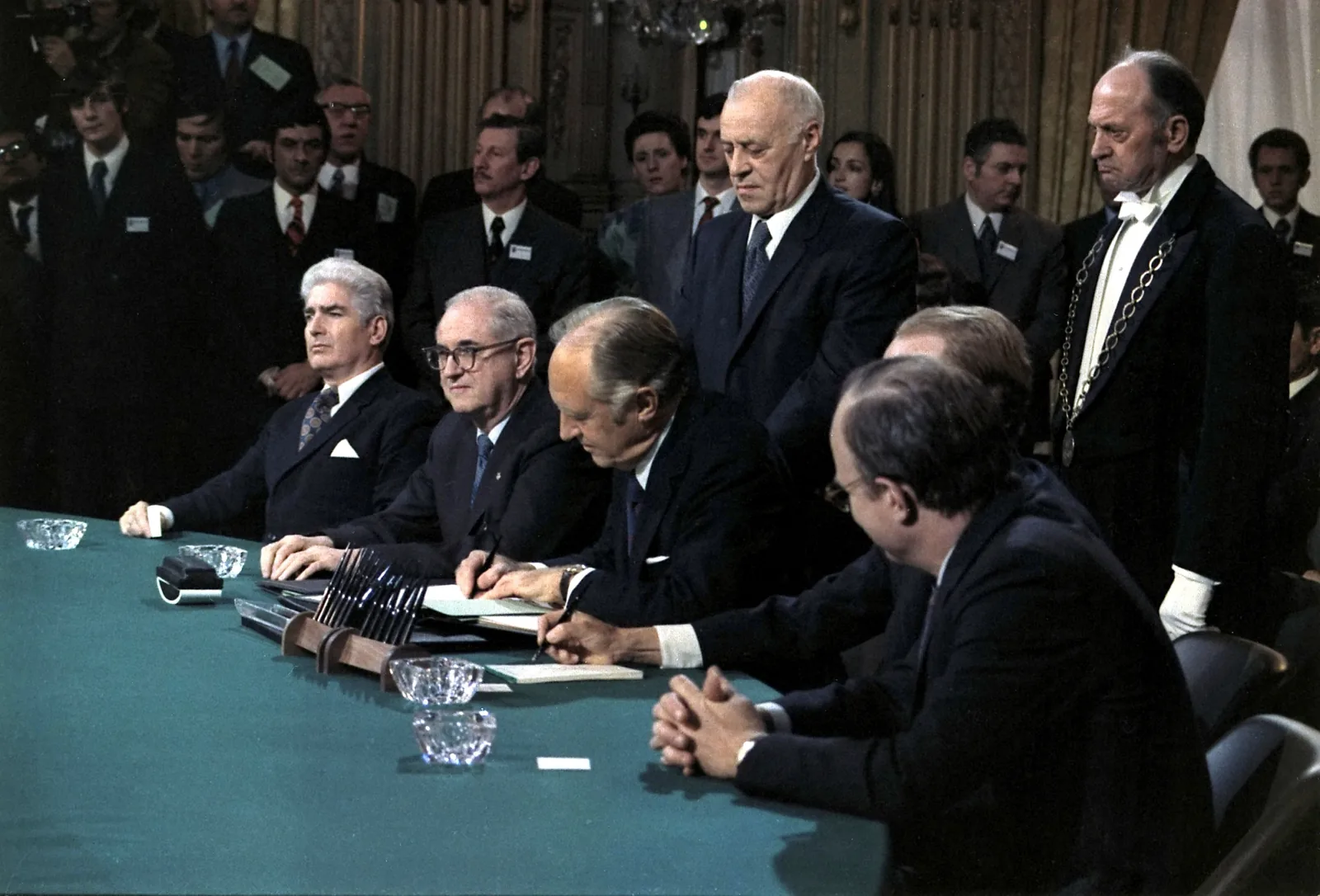
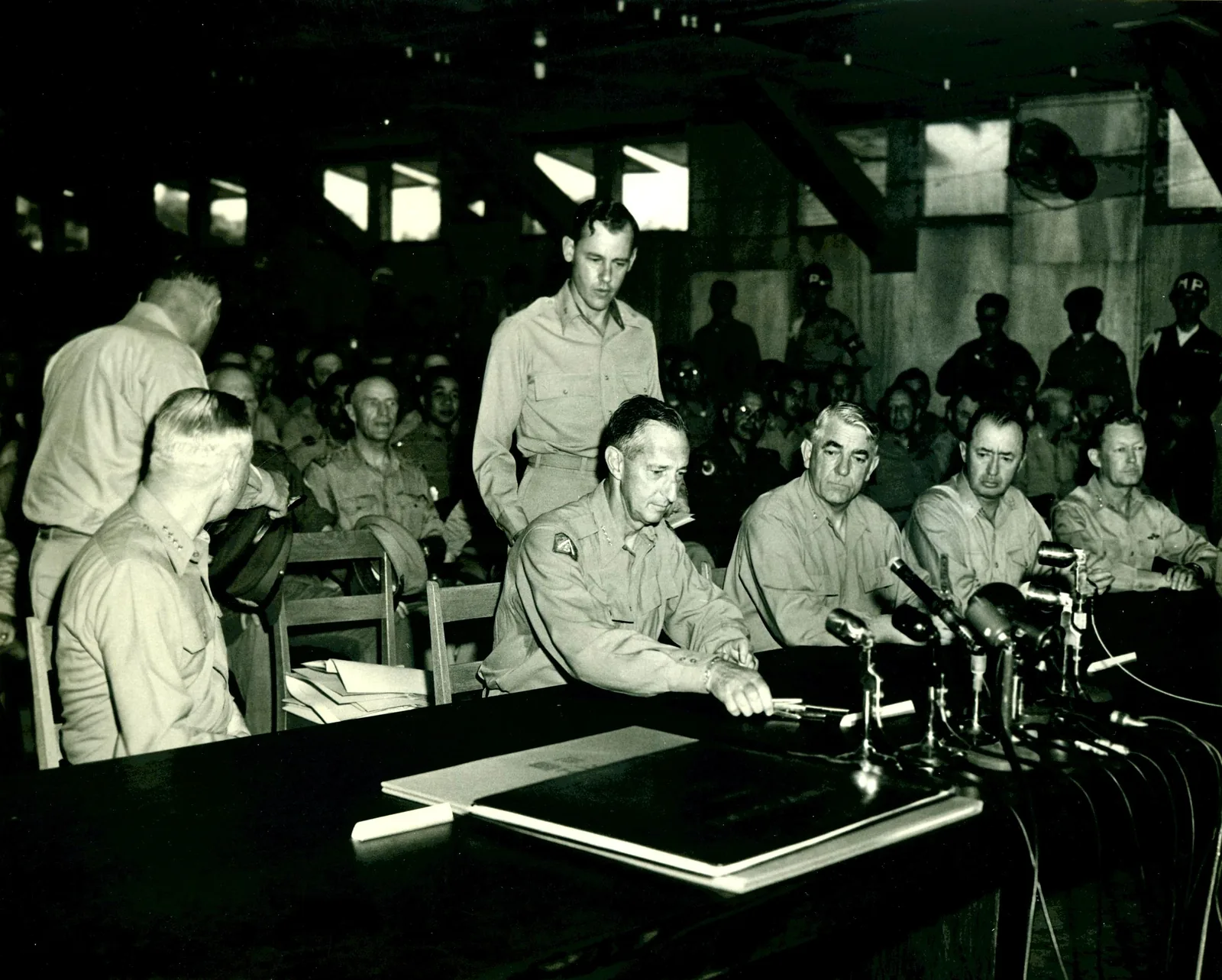
From July 1951 the war ground into a bloody stalemate along the 38th parallel while peace talks dragged on at Panmunjom. The talks stalled above all on prisoners of war: the United States refused to forcibly repatriate captured soldiers who did not want to return, while China and North Korea insisted on it. Finally, after more than two years of negotiation, the adversaries signed the Korean Armistice Agreement on July 27, 1953. It let prisoners stay where they liked, drew a new boundary near the 38th parallel that gave South Korea an extra 1,500 square miles of territory, and created a two-mile-wide demilitarized zone that still exists today.
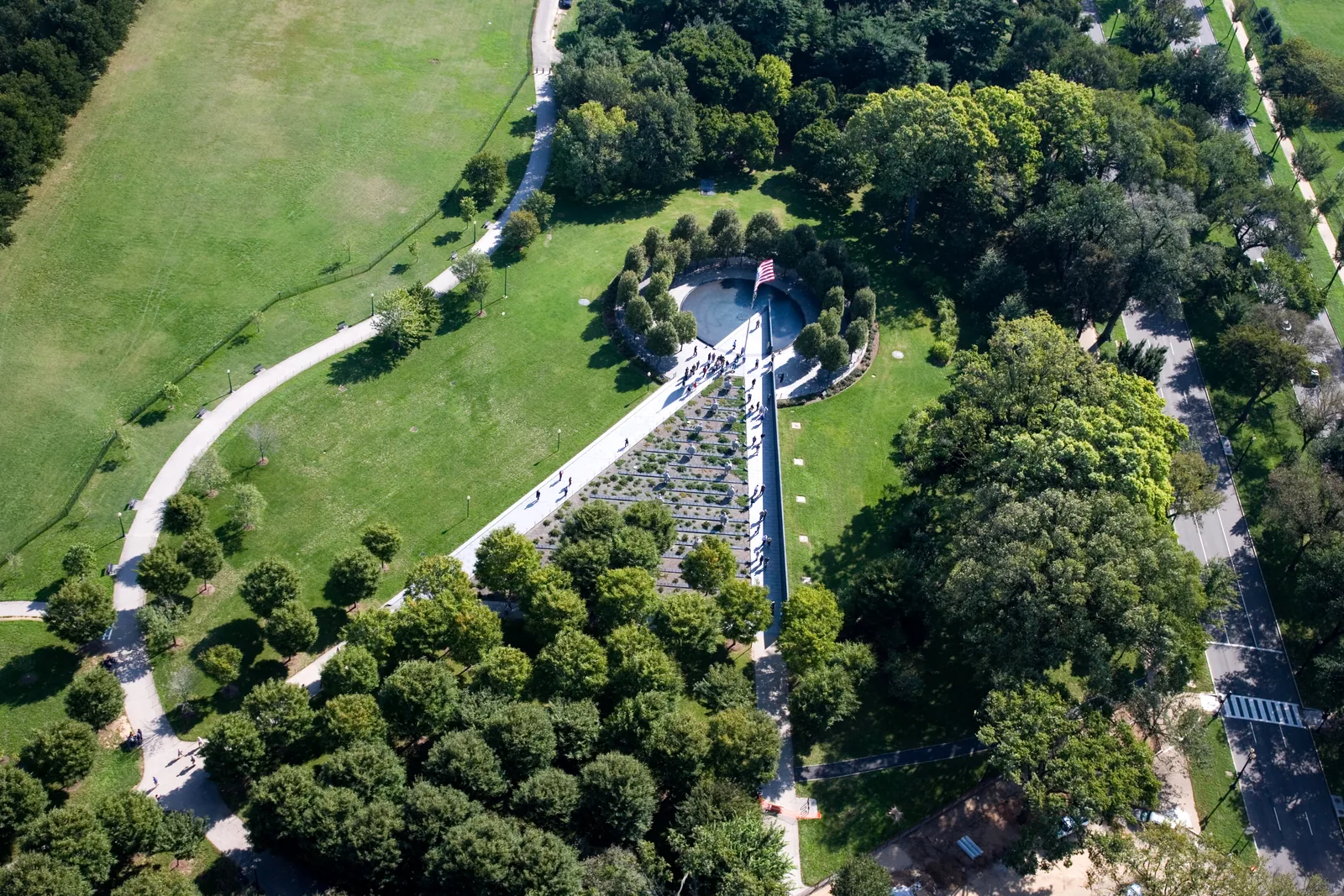
Casualties of the Korean War
The Korean War was exceptionally bloody for its length, and its death toll is genuinely disputed. Britannica puts the war's cost at "at least 2.5 million persons" dead, with more than a million combat casualties on both sides. History.com gives a higher figure: "nearly 5 million people died. More than half of these — about 10 percent of Korea's prewar population — were civilians," noting that this civilian share was higher than in World War II or the Vietnam War. The wide gap between the two figures reflects how contested the Korean War's toll remains; historians differ in their methods, records are incomplete, and published estimates for North Korean and Chinese losses diverge widely.
The figures that are best documented are the American and South Korean ones. According to U.S. Department of Defense statistics cited by Britannica, 36,574 American service members died in the Korean War, including more than 4,800 missing troops later declared dead. A 2025 U.S. Senate resolution commemorating the war's 75th anniversary records that more than 103,000 Americans were wounded and more than 7,500 remain unaccounted for; History.com describes "almost 40,000" Americans dead in action and more than 100,000 wounded. For South Korea, the same Senate resolution records 137,899 soldiers killed, 450,742 injured, and more than 30,000 missing or captured, in addition to almost 1,000,000 civilian casualties.
Economic effects
The Korean War's most immediate economic consequence was not in Korea but in Washington: the invasion detonated the first great military buildup of the Cold War and permanently transformed the American defense budget.
As the economic historian Robert Higgs documents in a published survey of the Cold War economy (Independent Institute), U.S. officials had struggled before 1950 to persuade Congress to fund the large peacetime military envisioned in NSC-68, a landmark April 1950 planning document. The North Korean invasion broke the deadlock: the fear that it "was just the first step in a broad offensive by the Soviets proved highly useful when it came to persuading Congress to increase the defense budget." As Secretary of State Dean Acheson said afterwards, "Korea saved us."
"Korea saved us." — Secretary of State Dean Acheson, on how the Korean War persuaded Congress to fund the Cold War military buildup, as quoted in Robert Higgs's survey of the Cold War economy
The numbers trace the transformation. During 1947–1950, real annual U.S. military spending never exceeded $60 billion (in 1982 dollars); after 1952 it never fell below $143 billion and was usually substantially higher, peaking with the 1953 truce. The ensuing demobilization lasted only two years, leaving defense outlays during the following decade nearly three times higher than in the late 1940s. The defense scholar Samuel Huntington estimated that without the war, the increase would have been roughly 20 percent — the size of the 1948–49 rise — instead of nearly 200 percent.
For Korea itself, the war was an economic catastrophe followed by a divergence without parallel. Britannica's summary of the outcome captures it: the war restored the peninsula to the status quo ante bellum, but the two Koreas "have since developed in starkly different ways" — the South became a representative democracy with one of the world's most advanced economies, while the North, ruled by Kim Il-sung and his descendants for more than 75 years, became one of the poorest countries in Asia. The war's destruction cleared the ground, literally and institutionally, for both trajectories: the South's postwar reconstruction and the North's militarized command economy.
How it shaped the world
The Korean War's signature legacy is that it never formally ended. Combat stopped with the July 27, 1953 armistice — a ceasefire agreement, not a peace treaty — and Britannica notes that South Korea's government never formally signed even that document, so "peace between the North and the South remains fragile." The two-mile-wide Demilitarized Zone still divides the peninsula, and Korea remains the Cold War's last great frozen conflict, more than seven decades on.
The war also reshaped the architecture of international security. It was the first major conflict fought under United Nations Security Council authority, with a unified UN Command led by the United States — a precedent for collective-security operations that would be invoked for decades. And it converted the U.S.–South Korea relationship into a formal, permanent alliance: the Mutual Defense Treaty between the United States and the Republic of Korea was signed on October 1, 1953, committing each party to the other's defense in the Pacific area (U.S. Senate resolution). That alliance became the anchor of American power in Northeast Asia.
In American life, the war became known as the "Forgotten War" — overshadowed by World War II before it and Vietnam after it — even as it created the permanent global military posture the United States maintains today. Higgs's verdict is that the first rapid multiyear Cold War mobilization "did not begin until after the outbreak of the Korean War"; the United States never really stood down afterward. In Korea, the armistice line became one of history's most durable borders, separating a prosperous democracy from an isolated dictatorship.