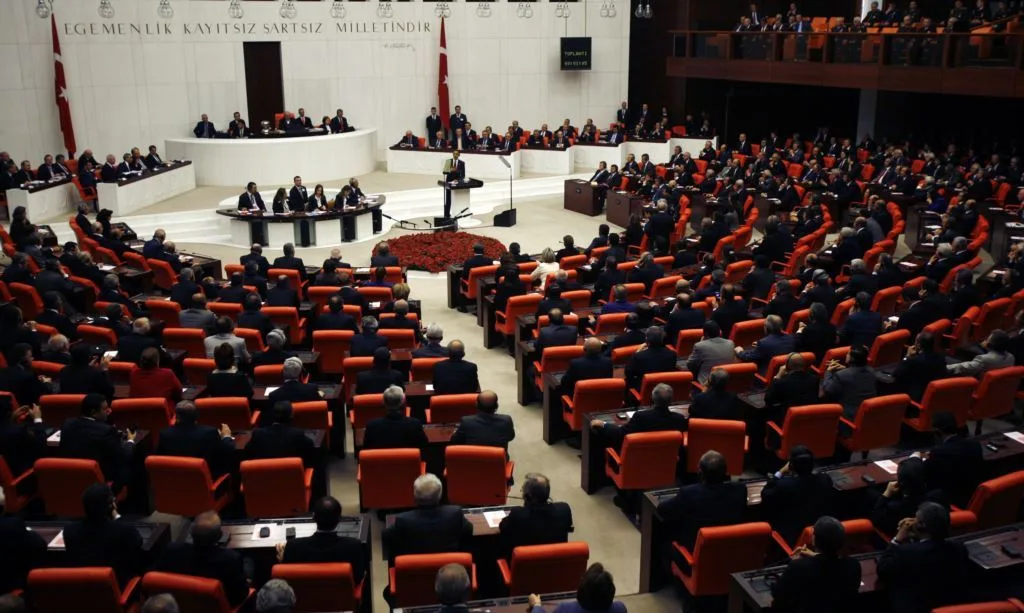
Turkey will submit to parliament a mandate allowing military personnel to be deployed to Saudi Arabia under its joint defence pact with Saudi Arabia and Pakistan, a lawmaker from the ruling AK Party told Reuters on Wednesday — the legal step that would move NATO's second-largest army from supplying equipment to putting its own technical personnel inside the kingdom as it faces Houthi attacks. The lawmaker, speaking on condition of anonymity, said the mandate would be sent to parliament once a bill ratifying the accord has been approved. Turkey submitted the Mecca Joint Defence Agreement — signed by the three countries in August, under which an armed attack on one member is considered an attack on all — to parliament for ratification on Tuesday.
What would the mandate allow?
Personnel, in defensive roles, sent in stages. The AK Party lawmaker said no Turkish troops deployed to other countries under the pact would take part in offensive operations, and that technical personnel and experts would be sent initially to help with air defences, electronic warfare technologies and other defensive support. The mandate is a distinct legal instrument from the pact itself: Turkey's constitution requires separate permission from parliament to deploy troops abroad regardless of any international agreement, Reuters reported in its account of the ratification bill, so ratifying the Mecca agreement alone would not authorise a deployment. The sequencing the lawmaker described — ratification bill first, deployment mandate after — is Ankara working through both steps in the same week. Turkey, which has condemned the Houthi attacks on Saudi Arabia, has also agreed to join a Saudi-led coalition to ensure navigational safety in the Red Sea, Reuters noted.
What does the pact commit the three countries to?
More, on paper, than the joint statement issued at the signing specified. The agreement's first article says the parties shall use "all necessary means" to eliminate threats to one another's territorial integrity, sovereignty or internationally recognised borders, according to a text seen by Reuters. Its second article says: "In the event one of the parties is subjected to an armed attack or military aggression by another country or group of countries, the parties shall immediately provide assistance to the party under attack, utilising the full range of mutual assistance measures available to them." The provision is similar to NATO's Article 5 and refers to Article 51 of the UN Charter, which covers the individual or collective right of states to self-defence against armed attack. The same article says the three "will decide on the scope and nature of the support to be provided following an objective assessment of the assistance required" and will cooperate within their available resources, including military capabilities. The pact also envisages close cooperation on defence industry, intelligence sharing, logistical support and the fight against "all means of terrorism," including at the operational level. At an emergency meeting of the alliance in Riyadh earlier this month, the three countries agreed to ensure the "rapid deployment" of military forces and capabilities in Saudi Arabia. In Ankara, Parliament Speaker Numan Kurtulmus, currently visiting Kyrgyzstan, will refer the agreement to parliament's foreign affairs commission on his return, and the commission could debate it as early as Friday, parliamentary sources told Reuters. President Tayyip Erdogan's communications director, Burhanettin Duran, called the ratification step "an important milestone towards the institutionalisation of strategic cooperation between the three nations," saying the partnership "aims to strengthen collective deterrence, enhance joint capabilities in the defence sector, and safeguard security and stability in our region."

How does the mandate change Turkey's expected role?
It goes beyond what Turkish officials had described as the likely contribution. Earlier, two officials had told Reuters that Turkey's contribution was expected to be limited to military equipment, intelligence sharing and weapons systems, adding that no other form of deployment had taken place under the alliance so far. Foreign Minister Hakan Fidan, asked how Turkey could help Saudi Arabia defend against Houthi attacks, had said the Mecca Agreement was not an "offensive agreement" and that Turkey would not send troops to another country to carry out attacks on its territory. The mandate the lawmaker described on Wednesday keeps that defensive framing — air defence and electronic-warfare experts, no offensive operations — while changing the form of the contribution from materiel to personnel. That distinction is the step Saudi Arabia's partners have been approaching since the Riyadh meeting agreed on rapid deployment: equipment can be delivered by cargo aircraft, but a parliamentary mandate is what puts Turkish specialists next to Saudi air-defence systems if the Houthi campaign against the kingdom's airports and energy sites continues.
What else did Ankara sign on Wednesday?
A second, wider defence-industry accord. Turkey, Qatar, Pakistan and Indonesia signed an agreement on Wednesday to boost defence cooperation and strengthen defensive capabilities, the Turkish Defence Ministry said. The four countries signed the "Badr Memorandum of Understanding" in Doha "as a sign of their desire to further deepen cooperation and develop partnerships," the ministry said. "The agreement holds substantial economic importance," it added, saying the accord sought to foster cooperation in military production, boost military capabilities and help collaboration in technical military training, research and development. "By leveraging the unique military production capabilities of each country, the initiative will facilitate cooperation and integration, enhance defense industrial capacities, and enable the fulfillment of the needs of allied and friendly nations," the ministry said. Reuters noted that Turkey has been helping Gulf nations, including Qatar — where it has a military base — bolster their defences amid the Iran war, and that Ankara also has close ties with Indonesia, notably in the defence industry. The ministry said the Badr accord would strengthen ties between the countries' defence industries and bolster collaboration to promote security and achieve shared objectives. Read together, Wednesday's two moves run in parallel: a personnel mandate that operationalises the mutual-defence pact with Riyadh and Islamabad, and an industry accord that widens the supplier network behind it.
This report is drawn from Reuters' October 21 report of the AK Party lawmaker's account, its October 20 report of the ratification submission including the pact text it has seen, and its October 21 report of the Turkish Defence Ministry's Badr statement, each opened and read in full via verbatim Reuters carriers. The mandate is published as the anonymous lawmaker described it to Reuters; it has not yet been submitted, and no deployment has been announced.