One year after El Fasher fell, the UK sanctioned 15 senior commanders from both of Sudan's warring armies — the RSF and the SAF — for suspected atrocities including the systematic use of rape, and put £15 million behind survivors and aid. The designations, announced on Monday, October 26, 2026, impose travel bans and asset freezes, and they rest on UK-funded investigations that found the methods of the El Fasher siege — starvation, sexual violence, drone attacks on civilian infrastructure and the blocking of aid — are still being used across Sudan today, by both sides.
Whom did the UK sanction, and for what?
Fifteen senior commanders from both the Rapid Support Forces (RSF) and the Sudanese Armed Forces (SAF) have been sanctioned for suspected atrocities, including conflict-related sexual violence, the UK government said. The announcement names Hussein Abu Jalak, an RSF colonel linked to atrocities during the siege of El Fasher, and Al-Nour Ahmed Adam ("Al-Qubba"), identified as present and playing a prominent role in besieging and attacking the city. The sanctions impose a travel ban and asset freeze on those designated. Today's designations follow five previous rounds of UK sanctions related to Sudan's conflict, which targeted suspected perpetrators and the networks which support them. The designations are the UK government's own determinations, published as such; the commanders' suspected roles are stated in the announcement in those terms.
What did the investigations behind the sanctions find?
The announcement follows the release of UK-funded reporting by the Centre for Information Resilience (CIR), revealing a campaign of systematic starvation and conflict-related sexual violence against civilians in Sudan from both sides of the conflict, the government said. One year after the fall of El Fasher, further CIR reporting this week has shown the brutal tactics used during the siege are still being deployed across Sudan: siege tactics, drone attacks on civilian infrastructure and humanitarian operations, and the systematic obstruction of aid are all regularly used as weapons of war, with CIR-sourced footage showing RSF fighters discussing shutting off water supplies to El Fasher and preventing traders from bringing food into the city. Foreign Secretary Ed Miliband said: "A year on from the atrocities in El Fasher, UK-funded investigations have shown that rape and starvation are still being weaponised against the people of Sudan. These are crimes against our humanity — the perpetrators must be held accountable and support from all external backers to the warring parties must end."
What is life in El Fasher like a year on?
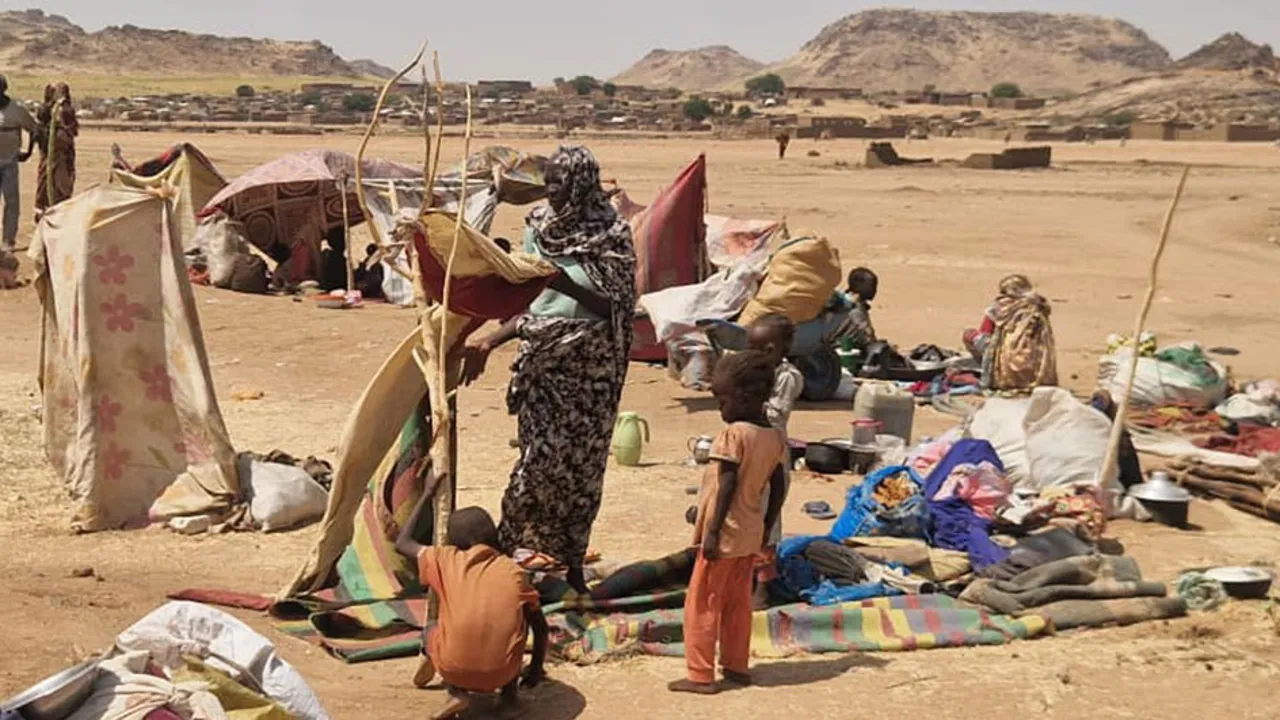
The sanctions land on a city that, on the testimony gathered by Amnesty International, remains under a regime of detention and surveillance. Civilians in El Fasher are still suffering detention, torture and limited access to humanitarian aid one year after the RSF captured the city, Amnesty said on October 23, based on interviews in August and September 2026 with 25 civilians, including 19 residents and six humanitarian workers. Residents who recently escaped told Amnesty that schools had been turned into detention centres, their movement was strictly controlled, and unlawful killings were rife; of the 19 residents interviewed, 17 had been detained by the RSF, most of them held for months and released only after families paid ransom, or by escaping. According to figures gathered by humanitarian organizations working in the city, fewer than 70,000 people are present in El Fasher, compared to its pre-war population of more than one million, and arbitrary detention risks for civilians and humanitarian workers remain extremely high. Official assessments cited by Amnesty hold that IPC Level 5 famine — the highest threshold — is highly likely in North Darfur, including in El Fasher, in the months ahead.
What support comes with the sanctions?
Money for survivors and for the aid operation, aimed at the places the displaced have fled to. The UK is allocating £5 million to support survivors of conflict-related sexual violence in Sudan, funding sexual and reproductive healthcare, maternal health services, psychosocial support, and safe spaces for women and girls. A separate £10 million package will support the humanitarian response as the risk of famine grows, driven by attacks on markets, health facilities, displacement camps and other infrastructure, obstruction of aid and El Niño-induced drought, the government said. It will help improve access to clean water and sanitation in displacement sites around Tawila — where many of those who escaped El Fasher have gathered — reducing the risk of disease outbreaks, while supporting health, protection and other essential services in El Obeid, where conflict and restrictions on humanitarian access have left civilians facing acute needs. Miliband's statement put the famine choice on the armies themselves: "El-Nino may worsen an already desperate situation, but whether famine takes hold is in the hands of the RSF and SAF — they must stop attacking aid convoys and let food reach communities."
This report is drawn from the UK government's October 26, 2026 announcement, opened and read in full on gov.uk, and Amnesty International's October 23, 2026 testimony report, opened and read in full via ReliefWeb. The sanctions designations and the commanders' suspected roles are the UK government's determinations, reported in its terms; the CIR findings are reported as the UK government presented them; conditions inside El Fasher are Amnesty's interview-based findings, attributed as such throughout.