El Fasher one year after the RSF capture holds fewer than 70,000 people — in a city whose pre-war population was more than one million, Amnesty International said. In new testimony gathered from 25 civilians in August and September 2026, residents who recently escaped described schools turned into detention centres, movement strictly controlled, and unlawful killings rife, Amnesty said. A separate BBC investigation, published the same week, documented at least 43 attacks on the city's hospitals and health sites during the siege and takeover. Together the two releases describe a city that is still under surveillance, still short of aid, and still losing the systems that kept it alive.
What does life in El Fasher look like a year on?
Residents told Amnesty that a small number of humanitarian organisations were operating again as of September 2026, but that the RSF closely monitored their movements and prevented residents from speaking freely to them. One resident who returned in June 2026 said: "The El Fasher I knew is gone, it is a completely destroyed city. The public infrastructure, the schools, government institutions, hospitals, all are destroyed… It seemed like everybody is watched very closely, they don't give humanitarian workers any private space to talk… Everybody is terrorized." Humanitarian workers expressed concern about malnutrition amid a poor harvest, and Amnesty reported that official assessments judge IPC Level 5 famine — the highest threshold — highly likely in North Darfur, including El Fasher, in the months ahead. Amnesty's Secretary General, Agnès Callamard, said: "A pervasive pall of fear hangs over El Fasher today. Men and women live under constant RSF surveillance, and with the ongoing threat of detention, torture and killing."
What happened to people detained by the RSF?
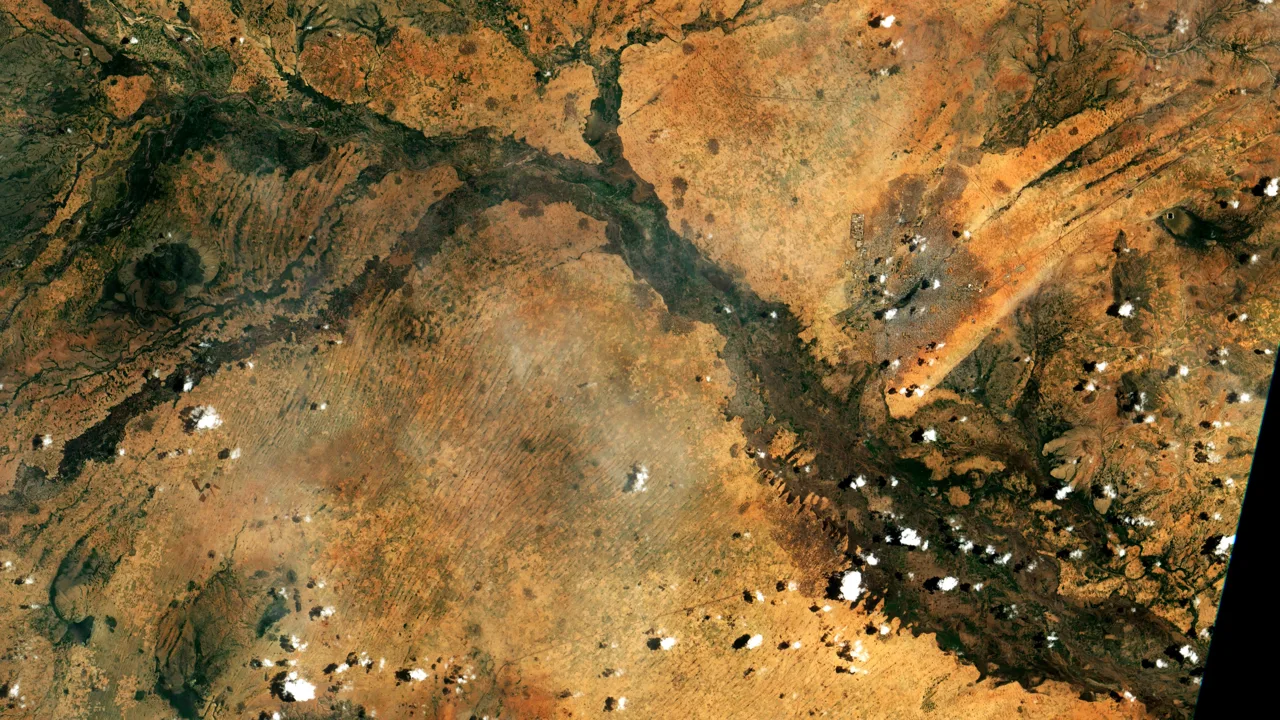
Of the 19 residents Amnesty interviewed, 17 had been detained. Most men were held in detention centres or prisons, where they witnessed unlawful killings, suffered torture and ill-treatment, and were given minimal food or water; all were released only after family members paid ransom, or by escaping, Amnesty said. Several interviewees noted that people from particular ethnic groups, notably Zaghawa and Masalit people, were more likely to be detained and abused. Women, children and some older or injured men were held in schools used as de facto detention centres, with extremely limited food and medical treatment; one woman said four to five people were dying daily, mostly from lack of food. Amnesty said both men and women were subjected to forced labour, including collecting dead bodies and rubble, or cooking and cleaning for the RSF without pay. Its satellite analysis found several school detention sites showed little daily activity by September 2026, suggesting they may have closed, while Shala prison and the Mina al-Bari detention centre still showed significant signs of activity. Amnesty wrote to the RSF about the findings on October 9; at publication, no response had been received.
How were El Fasher's hospitals destroyed?
The BBC investigation traced care as it moved — and was hit again. After the Teaching Hospital closed early in the war, services moved to South Hospital, which was shelled several times in late May and early June 2024 and raided on June 8, 2024, then closed, the BBC found via Addis Standard's summary. Services then moved to the Saudi Maternity Hospital, struck repeatedly — on some days up to 25 times, according to fuller summaries of the investigation — while a children's hospital was shelled at two successive relocation sites and a dialysis centre was hit again after it moved. Between April 2023 and October 2025 the BBC counted 55 medical workers killed, 120 injured and 10 forcibly disappeared or abducted. By the October 2025 takeover, Saudi Hospital was the city's last functioning facility; the takeover was accompanied by allegations that more than 460 patients and their companions were killed there, which the RSF denied and the WHO condemned. UN High Commissioner for Human Rights Volker Türk called the findings "deeply disturbing," said they were consistent with his office's monitoring, and said repeated attacks on civilian infrastructure including health facilities are serious violations of international humanitarian law that may amount to war crimes. The RSF rejected the investigation: its health minister, Dr Alaa Eldin Nugud, called the allegations propaganda and said witnesses were aligned with the Sudanese army; the BBC said it found no independent evidence for his claim about hospital military use.
Why does this anniversary matter now?
Because the city Amnesty describes is not recovering. The population figure — under 70,000 against more than a million before the war between the Sudanese Armed Forces and the RSF began in April 2023 — is the measure of what a year of RSF control has meant, and the famine assessment means the remaining residents face a further threat even without new fighting in the city. Amnesty called for an immediate ceasefire, release of all arbitrarily detained people, an end to arms transfers to all parties — in particular to the United Arab Emirates until it stops supplying the RSF, in Amnesty's account — expansion of the Darfur arms embargo to the whole country, and deployment of an international protection force. It also criticised the Sudanese Armed Forces for opposing extension of an arms embargo and a ceasefire. None of those calls had been answered in the reporting opened for this article; what is documented is an emptied city, a destroyed health system, and testimony collected from the people who got out.
This report is drawn from Amnesty International's October 23, 2026 release, opened and read in full via ReliefWeb, and from the BBC's October 2026 investigation by Barbara Plett Usher and Mohamed Madi as summarised in Addis Standard's Daily Brief, opened and read in full. Detention, torture and forced-labour accounts are Amnesty's interview findings, attributed as such; the hospital-attack counts are the BBC's documented figures, attributed as such, with the RSF's rejection and denial published alongside them. The reported killing of more than 460 patients and companions at Saudi Hospital is published as a reported allegation denied by the RSF, not as an established count.