The Sri Lankan Civil War explained in one line: for 26 years the Liberation Tigers of Tamil Eelam fought to carve an independent Tamil state out of Sri Lanka's north-east — and the war ended, uniquely among modern insurgencies of its scale, not at a negotiating table but with the Tigers annihilated and their leader dead on a lagoon shore in May 2009. The war ran from 23 July 1983 to 18 May 2009. It killed, on the estimates carried below, somewhere between 70,000 and 100,000 people, displaced 800,000 at its peak, pulled in an Indian army that came as peacekeepers and left as belligerents, and left a casualty count for its final months that the two sides' successors still do not agree on.
Why did the war start?
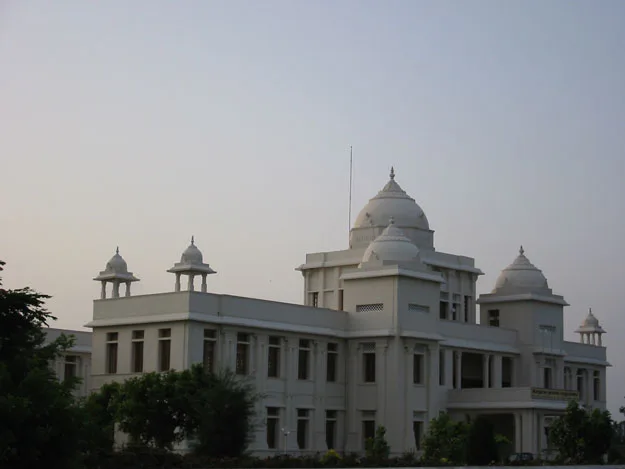
Because the post-independence state was built, step by step, in one community's language. After independence in 1948, Sinhalese was recognised as the sole official language; in 1956 Prime Minister S. W. R. D. Bandaranaike's "Sinhala Only Act" replaced English with Sinhala as the only official language — a move Tamil-speaking minorities read as linguistic, cultural and economic discrimination aimed at them. The 1972 constitution gave Buddhism "the foremost place" and again recognised Sinhalese as the official language. Between those statutes came the violence: anti-Tamil pogroms in 1956, 1958, 1977 and 1981, and the 1981 burning of the Jaffna Public Library, carried out by majority Sinhalese mobs, often with state support, on the compiled record. Tamil groups moved toward organised insurgency in the early 1980s, building bases in the island's north and east and across the strait in India's Tamil Nadu. The strongest of them was the LTTE under Velupillai Prabhakaran, fighting for a state it called Tamil Eelam. In July 1983 the LTTE ambushed an army patrol, killing thirteen soldiers; extensive organised anti-Tamil riots — "Black July" — followed in Colombo and elsewhere, in which Sinhalese mobs systematically attacked Tamils and destroyed Tamil property, driving refugees across the island and to Tamil Nadu. The insurgency became a war — the start of a pattern this site's History section has traced in other civil wars, from the Lebanese Civil War to the Nigerian Civil War.
How did the war unfold?
In phases, each closed by a peace that failed. India's attempt came first: an accord signed on 29 July 1987 offered the Tamils an autonomous province within a united Sri Lanka, Tamil was recognised as an official language later that year, and an Indian Peace-Keeping Force deployed to enforce the terms. The government, the LTTE and the IPKF disagreed over implementation; the LTTE resumed its offensive — against the IPKF, which was trying to disarm it — and India withdrew by March 1990, its peacekeepers having become a third army in the war. The killing reached the top of the state: President Ranasinghe Premadasa was assassinated on 1 May 1993 by a suicide bomber allegedly linked to the LTTE, and President Chandrika Kumaratunga was injured in an assassination attempt blamed on the LTTE in 1999. In 2002 a landmark ceasefire — negotiated by Norway, on the Contested Histories record — paused a war-weary conflict, but violence resumed and the ceasefire virtually dissolved. Even the December 2004 tsunami, which killed tens of thousands around the coast, produced no lasting truce; recovery in the north lagged because the war continued there.
How did it end?
By decision and then by encirclement. Mahinda Rajapaksa, elected in 2005 on a strong stance against the LTTE, chose a military finish. The European Union declared the LTTE a terrorist organisation in 2006; in January 2008 the government formally abandoned the 2002 ceasefire and the fighting intensified. Government forces captured Kilinochchi, the LTTE's administrative centre, in January 2009, and by late April had cornered the remaining fighters along the north-east coast. The government declared the LTTE militarily defeated on 16 May; the LTTE admitted defeat on 17 May; the army's final mid-May offensive overran the last stronghold at Mullivaikkal, and Prabhakaran was killed at the Nandikadal lagoon. On 19 May, Rajapaksa declared the civil war over in parliament. The LTTE effectively ceased to exist as an organisation, and the government re-established control over the entire island.
How many people died?
Nobody knows, and the dispute is part of the record. Britannica estimates the number of civil-war-related deaths since the early 1980s at between 70,000 and 80,000. The UN, immediately after the war's end on 20 May 2009, estimated a total of 80,000–100,000 deaths. For the final phase alone, the UN Secretary-General's Panel of Experts reported in 2011 that "a number of credible sources have estimated that there could have been as many as 40,000 civilian deaths". The Sri Lankan government has repeatedly refused an independent international investigation to ascertain the full impact of the war — which is why no agreed counter-count exists. The compiled record also carries the conduct findings both ways: the Sri Lankan state has faced global criticism for bombing civilian targets, using heavy weaponry, and abductions and massacres of Tamils; the LTTE gained notoriety for attacks on civilians of all ethnicities — particularly Sinhalese and Sri Lankan Muslims — for using child soldiers, and for assassinations and suicide bombings against military, political and civilian targets. A war that ended in total victory left behind the question total victory usually suppresses: what the last five months cost the civilians trapped inside them. That question, unanswered by any agreed count, is the war's unfinished business — and it is the same question, asked in real time, that hangs over the civil war still being fought in Sudan, where this site profiles the RSF, the paramilitary at its centre.
Sources: Encyclopaedia Britannica's Sri Lanka history (read in full, updated 12 November 2026); the compiled reference record of the war (read in full); and the Contested Histories case study of the Mullivaikkal Memorial (read this run) for the Black July ambush sequence, the Norwegian negotiation of the 2002 truce and the location of the war's end. Contested figures — above all the death tolls — are published as attributed ranges from those sources, never as single settled numbers.