The Lebanese Civil War explained in one line: from 13 April 1975 to 13 October 1990, Lebanon's confessional state — which divided office by sect under the 1943 National Pact — collapsed into overlapping wars among its own militias and the armed Palestinian movement on its soil, which Syria, Israel and Iran each entered; it ended a year after the Taif Agreement, when Syrian troops removed the last general who rejected it.
Key takeaways
- The trigger was a bus, the cause a state that could not disarm anyone: on 13 April 1975 four people were killed at a church and 30 Palestinians on a bus hours later (see Why did the war start?).
- The death toll is a dispute, not a number: the most careful count puts the dead at around 90,000; the 120,000–150,000 in reference works traces to early-1990s press reports repeated uncritically (see How many people died?).
- Peace kept the system, changed its ratios: Taif moved parliament to 50:50 and cut the president's powers — leaving confessionalism, and one armed militia, in place (see How did it shape the world?).
Contents
- Overview
- Why did the war start?
- How did the war unfold?
- How many people died?
- What were the economic effects?
- How did it shape the world?
- What do historians debate?
Overview
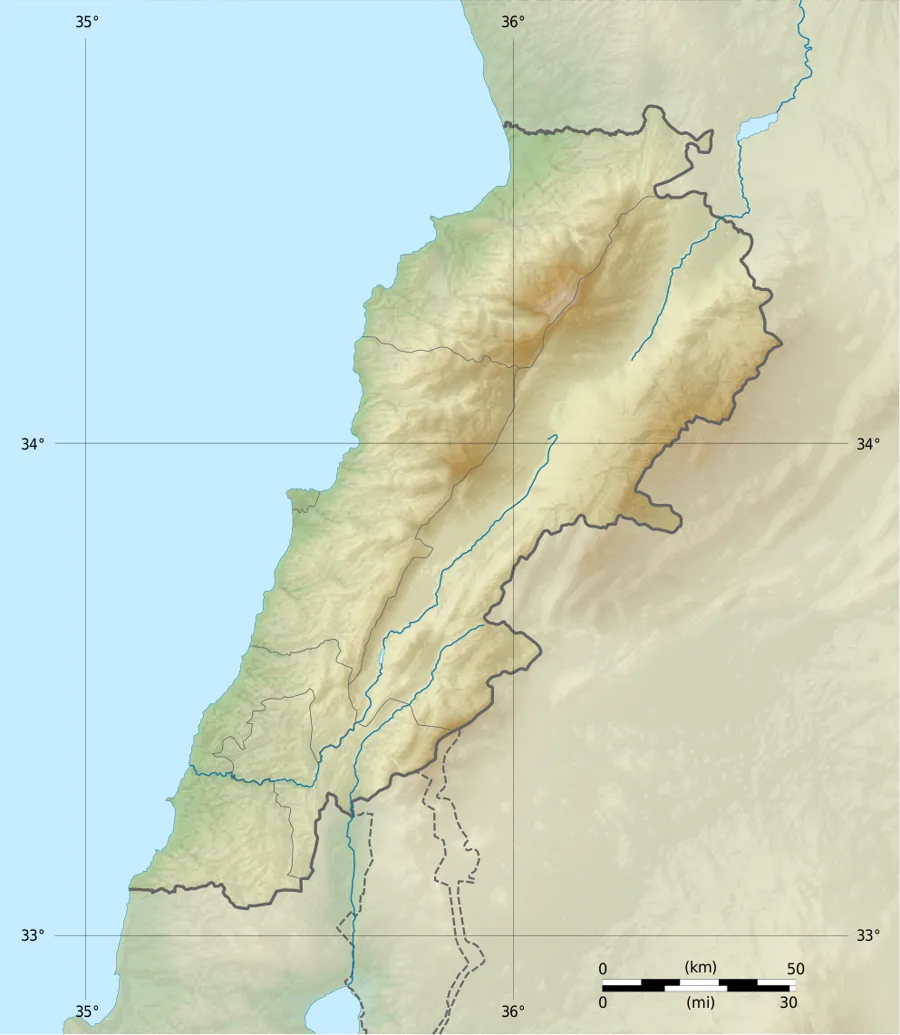
The Lebanese Civil War explained: a multi-sided war in Lebanon fought from 13 April 1975 to 13 October 1990, principally among militias formed along communal lines — the Phalangist-led Lebanese Front, the Lebanese National Movement (LNM), the Shi'a Amal movement and later Hezbollah, and Druze forces — together with the Palestine Liberation Organization (PLO) (Britannica; compiled record). Syria, Israel and Iran intervened directly; UNIFIL (from 1978) and a US-led Multinational Force (1982–84) deployed without ending the fighting (compiled record). Beirut was divided along a Green Line until 1990, nearly one million people were displaced, and the dead numbered between roughly 90,000 and 150,000 on the estimates examined below (Britannica; Haugbolle). It ended with the Taif Agreement of 1989, implemented by Syrian force in October 1990 (Britannica).
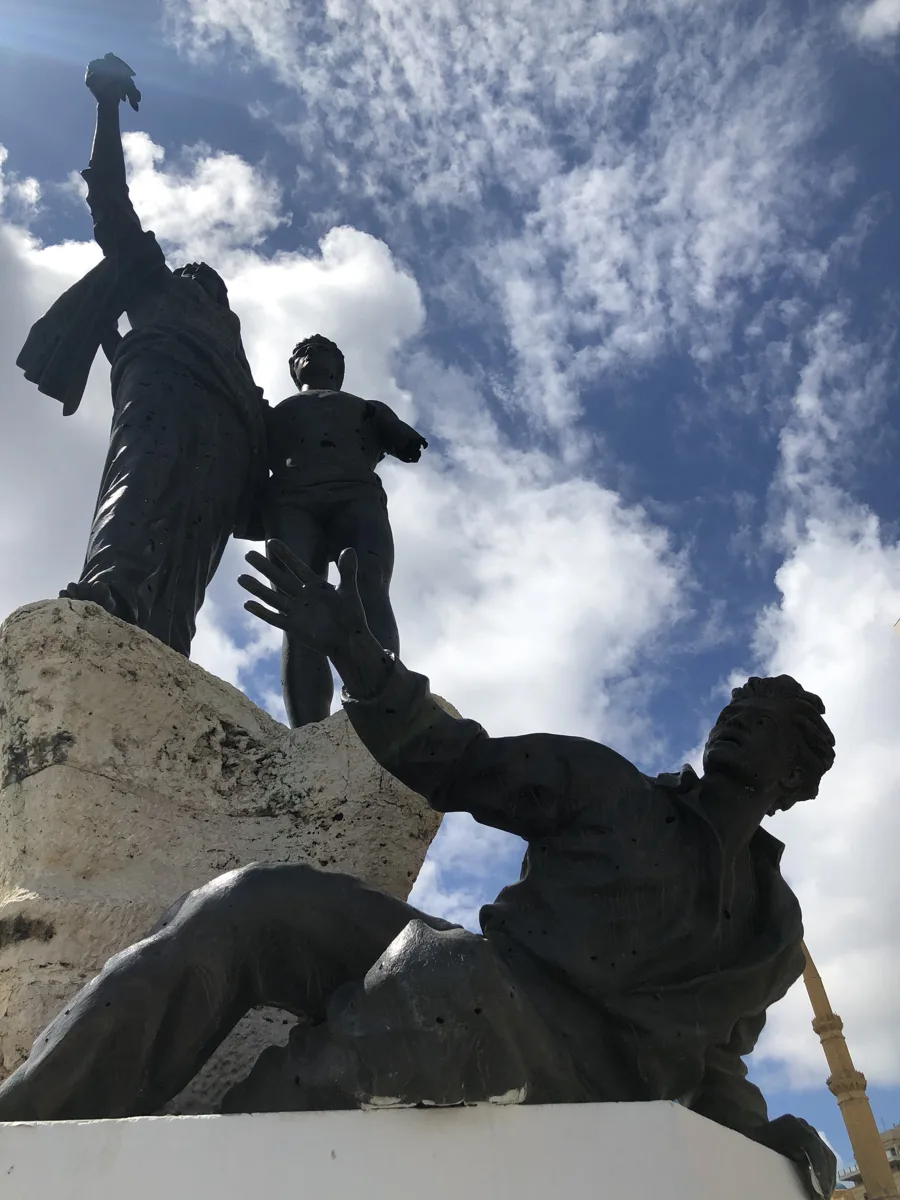
Why did the war start?
The war started because Lebanon's state was designed to share power among sects rather than to monopolise force — and by 1975 it could do neither. The 1943 National Pact reserved the presidency for a Maronite Christian, the premiership for a Sunni Muslim and the speakership for a Shi'a Muslim, with seats divided six-to-five for Christians (compiled record; Taif record). Britannica generalises the causes as a crisis of insecurity: the government had negotiated the PLO's presence inside the camps, Israeli raids followed — notably on Beirut airport in 1968 — and patronage networks armed their own security (Britannica).
After Jordan expelled the Palestinian factions in 1970, the PLO relocated its fighting strength to Lebanon — home to some 400,000 Palestinian refugees — and created what the compiled record calls a state within the state (compiled record). Historians agree the outbreak turned on the division between Lebanese who supported the Palestinian resistance operating from Lebanese soil and those who opposed it (Haugbolle). The spark came on 13 April 1975: gunmen fired on a church in Ain el-Rummaneh, killing four people, and hours later Phalangists killed 30 Palestinians travelling by bus — the "Bus Massacre" from which the war is dated (compiled record; Britannica).
How did the war unfold?
The war unfolded as distinct conflicts under one name. In the two-year war of 1975–76, the Phalangist-led front fought the LNM–PLO alliance through massacres that sorted Beirut by sect: Black Saturday on 6 December 1975 (200–600 killed); Karantina on 18 January 1976 (an estimated 1,000–1,500 killed); and the retaliatory strike on Damour two days later (compiled record). Some 60,000 people were killed in 1975–77 alone (compiled record). Syria intervened: 12,000 troops entered on 1 June 1976 against the Palestinian and leftist militias, Maronite forces supported by Syria took Tel al-Zaatar that August, massacring 1,000–1,500 civilians, and that October the Arab League mandated Syria's troops as an Arab Deterrent Force (compiled record). LNM leader Kamal Jumblatt was assassinated in March 1977, widely blamed on Syria (compiled record).
After Fatah fighters killed 37 Israelis in the Coastal Road massacre of 11 March 1978, Israel invaded as far as the Litani River; the UN created UNIFIL, and Israel kept a border zone through the South Lebanon Army (compiled record). On 6 June 1982 Israel launched Operation Peace for Galilee, drove to Beirut and besieged its western half; a US-negotiated truce brought a multinational force that from 21 August oversaw the PLO's evacuation to Tunis (compiled record; Britannica). Bashir Gemayel, elected president on 23 August, was assassinated on 14 September; on 16–18 September Phalangist militiamen killed civilians in the Sabra and Shatila camps — 460 to 3,500 people on the compiled record's range, several hundred to several thousand on Britannica's — and Israel's Kahan Commission found Defence Minister Ariel Sharon personally responsible; he resigned as defence minister (compiled record; Britannica). The same year, Iran's Revolutionary Guards founded, financed, trained and equipped Hezbollah in the Bekaa Valley (compiled record).
The US embassy was bombed on 18 April 1983, killing 63, and on 23 October 1983 barracks bombings killed 241 American and 58 French servicemen; the multinational force withdrew early in 1984, the 17 May Agreement was cancelled that March, and Israel pulled back by mid-1985 to its southern buffer zone (compiled record; Britannica). The Mountain War left the Druze holding most of the Chouf by September 1983; the War of the Camps (1985–86) pitted Syrian-backed Amal against the PLO (compiled record). The last phase began in deadlock: when Gemayel's term expired in September 1988 with no agreed successor, he named army commander General Michel Aoun acting prime minister, leaving two rival governments (Britannica). Aoun declared a "war of liberation" against Syria in March 1989 (Britannica; compiled record). The parliament elected in 1972 met at Taif, Saudi Arabia, and accepted a reform settlement on 22 October 1989, ratified on 5 November; Aoun rejected it, fought Samir Geagea's Lebanese Forces in early 1990, and on 13 October 1990 Syrian troops attacked by ground and air and forced him into exile (Britannica).
How many people died?
No agreed total exists: Lebanon had no wartime count. The most careful reconstruction, by Labaki and Abou Rjeily (1994), puts the dead at around 90,000, built from army, security-force, Red Cross, party, militia and press records — with the caveat that the real number may exceed 100,000 (Haugbolle, summarising Labaki and Abou Rjeily and Hanf 1993). Close to 20,000 of that 90,000 are people kidnapped or disappeared, assumed dead; nearly 100,000 were badly injured (Haugbolle). Against it stand the figures reference works repeat: 120,000–150,000 (compiled record) and "more than 100,000" (Britannica). Haugbolle's reading is that the numbers up to 150,000 rest on early-1990s press reports, subsequently repeated uncritically (Haugbolle). This article therefore publishes the toll as a range — roughly 90,000 to 150,000 — attributed at each bound. Displacement is least disputed: nearly one million people, on both counts (Haugbolle; Britannica).
What were the economic effects?
The economic effects were the destruction of the entrepôt economy that had made Beirut the Arab Middle East's commercial hub, and its replacement by a militia economy. Britannica records several billion dollars of damage and businesses fleeing the capital (Britannica). The war's financing explains its length: militias drew on outside support from Syria, Israel, other Arab governments and Iran; on taxation of their own populations, often through checkpoint levies many Lebanese regarded as extortion; and on smuggling, in a Lebanon that became a major narcotics producer (compiled record). By 1985–89, Britannica records, they provided wages and rationed goods amid high unemployment and capital flight, through cantons administering territory the state no longer reached (Britannica). The pound collapsed in 1987 (Britannica). Downtown Beirut was rebuilt through Solidere, a private corporation, around luxury real estate and services — a model whose battles, Deen Sharp argues, fed Lebanon's later public debt (Sharp).
How did it shape the world?
The war shaped the region first by rearranging who held Lebanon. Taif restored consociational government in modified form: parliament's ratio moved from six-to-five Christian to equality — seats rising from 99 to 108, eventually 128 — the Maronite president's powers were reduced relative to the Sunni prime minister, now responsible to the legislature, and the Shi'a speaker was strengthened, alongside a commitment to eliminate confessionalism gradually (Taif record; Britannica; compiled record). But Taif's implementation was Syrian: Syrian forces remained dominant until 2005, Israel held its southern zone until 2000, and Hezbollah — exempted in practice from disarmament, on the stated ground of resisting that occupation — remained armed after every other militia demobilised under the settlement and the 1991 general amnesty for political crimes (Britannica; compiled record).
Second, the war exported its methods and actors: the PLO's expulsion moved the Palestinian armed struggle's centre to Tunis, and the 1982 invasion produced the era's defining attacks on Western forces — the 1983 bombings — and the withdrawal that followed (Britannica; compiled record). And it created Hezbollah, which adapted, in Britannica's summary, into a political party and social welfare network as well — the one wartime creation that outlasted every other armed actor (Britannica; compiled record).
What do historians debate?
Historians debate, first, whether the war was Lebanon's own or, in Ghassan Tueni's famous 1985 shorthand, "a war of others" — a phrase that became, in Haugbolle's summary, a way of displacing collective guilt onto outside forces (Haugbolle). Farid al-Khazen's Breakdown of the State in pre-war Lebanon (2000) makes the scholarly version: the system had proven flexible, all but one cabinet crisis between 1969 and 1975 revolved around the PLO, and destabilisation was therefore primarily an effect of the Palestinian question (Haugbolle, summarising al-Khazen). Critics answer that this overwrites the internal critique — the quota system's inability to accommodate rising Shi'a numbers and Maronite hegemony (Haugbolle).
Second, they debate what the system rests on. Kamal Salibi argued in A House of Many Mansions (I.B. Tauris, 1988) that the Lebanese have always lacked a common vision of their past — Christians affirming Lebanon's legitimacy, Muslims its place in Arab history — where his own Lebanon is a mosaic of communities over which no group exerted dominance (Salibi, publisher's description). The political-economy school pushes below identity: Fawwaz Traboulsi's A History of Modern Lebanon (Pluto Press, 2007) — the first comprehensive modern history of the country — situates the war inside five centuries of confessional and class structure, and Michael Johnson's Class and Client in Beirut (1986) argued that when the zu'ama bosses' influence waned, social control unravelled (publisher's description of Traboulsi; Haugbolle, summarising Johnson). Robert Fisk, based in Beirut from 1976, wrote the war as eyewitness reportage in Pity the Nation: Lebanon at War (1990) (Fisk book record).
Third, they debate whether the peace settled anything. Taif, Haugbolle notes, failed to address the core conflicts — sectarian power-sharing itself, the Palestinian refugee issue, Syrian tutelage, and Hezbollah's status as the only armed militia (Haugbolle). It ended the fighting; it left the confessional architecture, and one army outside the state, in place (Taif record; Haugbolle).