The Boxer Rebellion explained in one line: from 1899 to 1901 a Shandong peasant movement that believed its rituals made it bullet-proof rose against missionaries, Chinese Christians and foreign privilege, won the Qing court's backing and a declaration of war on eleven powers, besieged Beijing's legations for 55 days — and brought an eight-nation invasion, the flight of the court, and the heaviest indemnity China had ever been charged, set at one tael of silver for every person in the empire.
Key takeaways
- The trigger province was Shandong: drought and floods in 1897–98, missionary-protected converts in local lawsuits, and Germany's seizure of Jiaozhou Bay after two of its missionaries were killed turned village martial societies into an anti-foreign movement (see Why did the Boxers rise?).
- The court chose the Boxers over the powers: after crushing the Hundred Days' Reform in 1898, Empress Dowager Cixi's government enrolled Boxer bands as militia, then declared war on 21 June 1900 and besieged the legations — while the viceroys of the Yangtze and the south simply ignored the order (see How did the war unfold?).
- The relief took Beijing in a day of gates: a first 2,100-man column was turned back; the second, some 19,000–20,000 strong, took Tianjin, reached Beijing on 14 August 1900 and ended the 55-day siege (see How did the war unfold?).
- The bill was priced per head: 450 million taels — roughly one for each of China's roughly 450 million people, and more than the government's annual tax revenue — rising to 982,238,150 taels with interest (see What were the economic effects?).
- Part of the money came back as a university: the United States remitted its excess share in 1908 for scholarships; the preparatory school it funded in 1911 became Tsinghua University (see How did it shape the world?).
Contents
- Overview
- Why did the Boxers rise?
- How did the war unfold?
- How many people died?
- What were the economic effects?
- How did it shape the world?
- What do historians debate?
Overview
The Boxer Rebellion — also called the Boxer Uprising or the Yihetuan Movement — was an anti-foreign, anti-imperialist and anti-Christian uprising in northern China between 1899 and 1901, at the end of the Qing dynasty, carried out by the Society of Righteous and Harmonious Fists and defeated by the Eight-Nation Alliance of Austria-Hungary, France, Germany, Italy, Japan, Russia, the United Kingdom and the United States. Its members were known in English as "Boxers" because many practised Chinese martial arts, then called "Chinese boxing", and performed rituals they believed made them invulnerable to foreign weapons. The uprising culminated in the 55-day Siege of the International Legations in Beijing (20 June–14 August 1900) and in the Qing court's declaration of war on the treaty powers; it ended, after allied occupation, with the Boxer Protocol of 7 September 1901, which stationed foreign troops in Beijing and charged China 450 million taels of silver.
The rebellion was the third great collision in the sequence this section has followed — after the First Opium War (1839–42) and the Second Opium War (1856–60) — but its direction was reversed. Those wars were foreign expeditions against the Qing state; this one began as a popular movement against the foreign presence itself, which the state first tolerated, then adopted, and finally paid for. The treaty system the Opium Wars had built — treaty ports, extraterritoriality, missionaries preaching and buying land anywhere in China under the 1858–60 settlements — supplied both the grievances the Boxers acted on and, in 1901, the machinery of the settlement imposed on them.
Why did the Boxers rise?
The Boxers rose in Shandong because natural disaster, missionary privilege and a new scramble for Chinese territory converged on one province at the end of the 1890s — and because the Qing court, after 1898, stopped suppressing them and began to use them.
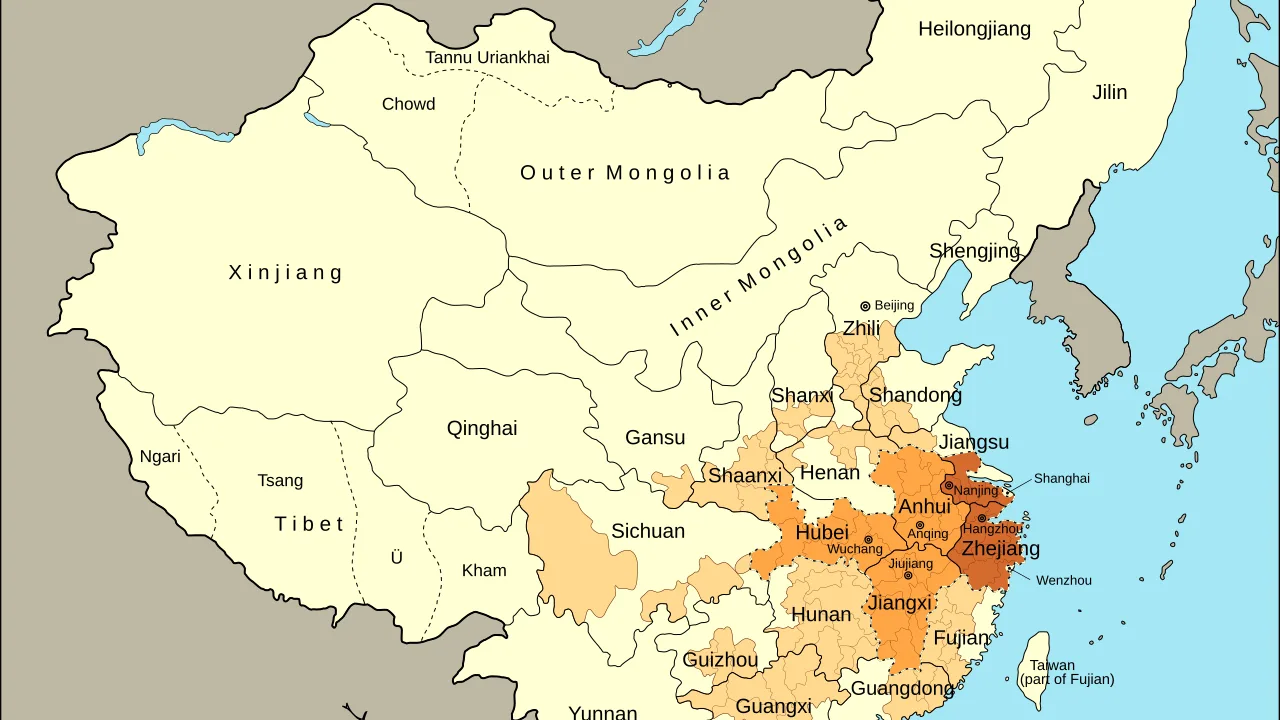
The society arose in the inland districts of Shandong, a province long troubled by social unrest, religious sects and martial societies. Its primary practice, in the compiled record's description, was a form of spiritual possession involving the whirling of swords, prostrations and incantations, and its members — armed with rifles and swords — claimed supernatural invulnerability against cannon, rifle shot and knife. The opportunities to fight Western encroachment appealed especially to unemployed village men, many of them teenagers. Britannica traces the group's origins to the Yihequan ("Righteous and Harmonious Fists"), thought to be an offshoot of the Eight Trigrams Society, and notes its original aim was the destruction of both the dynasty and the privileged Westerners; only in 1898 did conservative, antiforeign forces at court persuade the Boxers to drop their opposition to the Qing and unite with it against the foreigners, the governor of Shandong enrolling Boxer bands as local militia under the more official name Yihetuan, "Righteous and Harmonious Militia". Their slogan, first used at the village of Liyuantun in October 1898 in a dispute over a temple converted into a Catholic church, was "Support the Qing, destroy the foreigners" (fu Qing mie yang).
Three pressures fed the movement. First, weather: a drought followed by floods in Shandong in 1897–98, including Yellow River flooding, forced farmers to flee to cities and seek food, and the compiled record notes that some Chinese linked the drought itself to Christian influence — churches displacing temples and offending feng shui, converts neglecting local deities. Second, the missions: the Treaties of Tianjin and the Convention of Peking (1860) had granted missionaries freedom to preach anywhere in China and to buy land for churches, and by the late 1890s extraterritorial privilege covered converts as well as foreigners. Britannica states the grievance plainly: converts flouted traditional ceremonies and family relations, and missionaries pressured local officials to side with converts — often from the lower classes — in lawsuits and property disputes. Paul Cohen, quoted in the compiled record on the Shandong society the Big Swords, observed that after bandits defeated by the society claimed to be Catholics to escape prosecution, "the line between Christians and bandits became increasingly indistinct". Third, territory: in November 1897 armed men killed two German missionaries in the Juye incident; Germany answered by occupying Jiaozhou Bay in Shandong, and its seizure triggered a scramble for concessions in which Britain, France, Russia and Japan secured spheres of influence across China. Local economies were already strained — northern Shandong's cotton production was hampered by foreign cotton imports, and traffic on the Grand Canal was declining.
Politics completed the turn. In the summer of 1898 the Guangxu Emperor's Hundred Days' Reform attempted a sweeping modernisation; in September 1898 Cixi, prompted by her adviser Ronglu, staged a coup, placed the emperor under house arrest, and ruled outright on a narrowly antiforeign line. Encouraged by officials in North China, Boxer groups attacked foreigners and Christians through 1899; by May 1900 Boxer bands were roaming the countryside around Beijing, burning churches and foreign residences and attacking Chinese Christians.
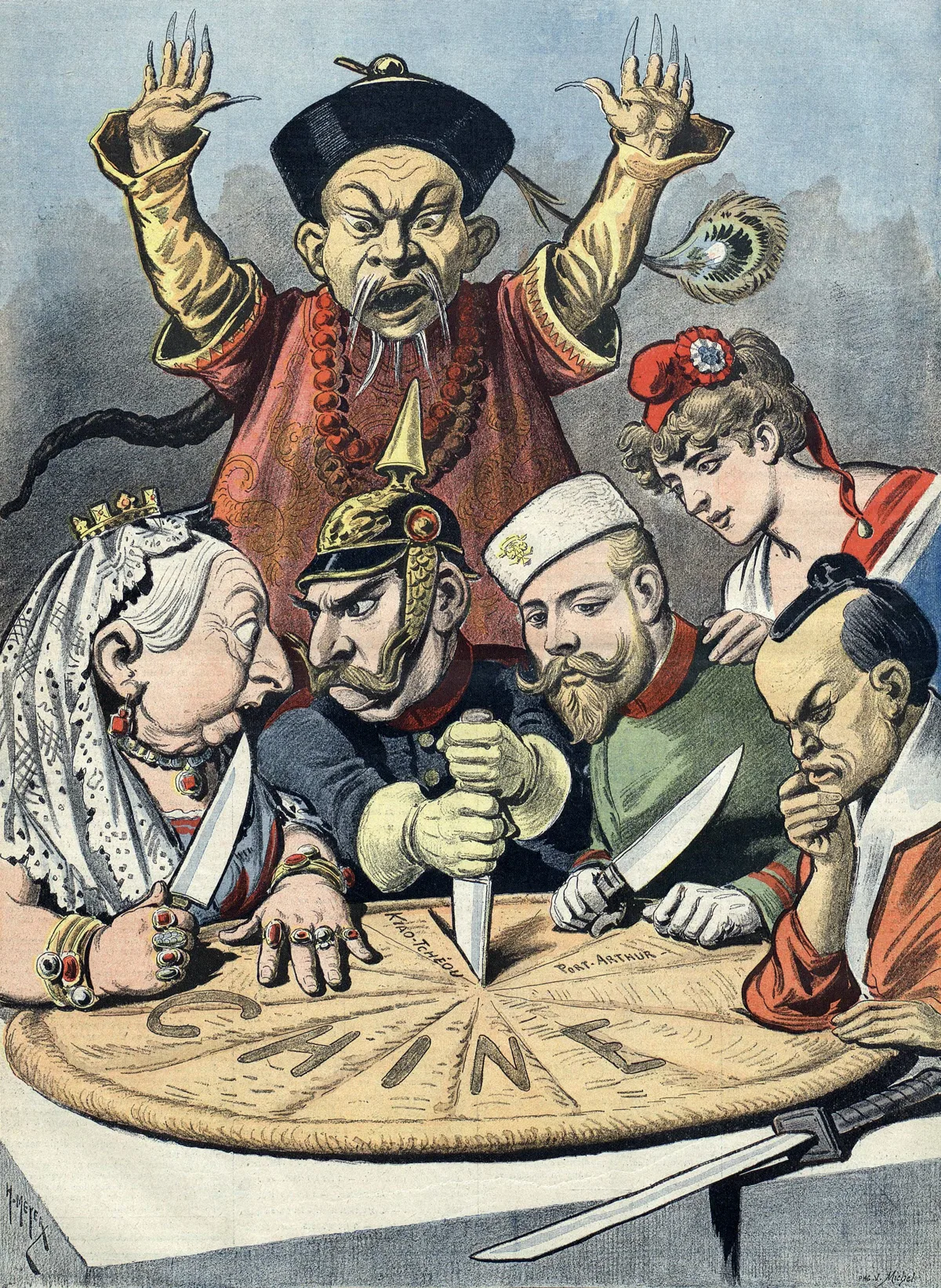
How did the war unfold?
The war unfolded as a siege the court chose and a relief it could not stop: the legations held for 55 days, the first relief column was turned back, and the second took Beijing on 14 August 1900 — after which the court fled, the capital was occupied and looted, and the provinces of the south, which had refused to fight, negotiated the peace.
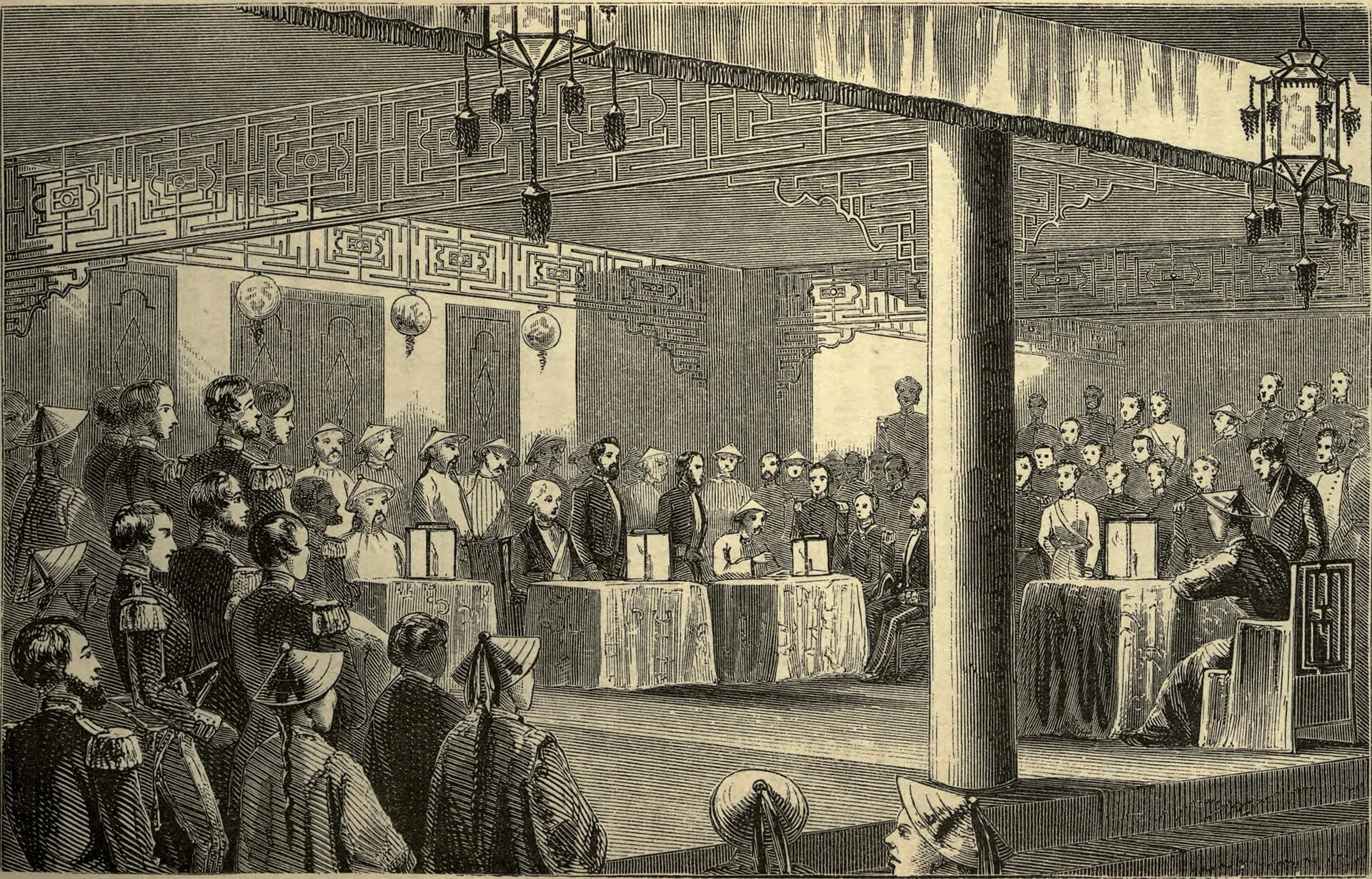
In early June 1900 the legations requested troops, and an international force of some 2,100 men — the Seymour Expedition, 2,100–2,188 strong in the compiled tabulation — was dispatched from Tianjin. On 13 June Cixi ordered imperial forces to block its advance, and the column was turned back. On 17 June the foreign powers seized the Dagu forts on the coast to restore access between Beijing and Tianjin. On 20 June the siege of the Legation Quarter began; the German minister, Clemens von Ketteler, was murdered, and on 21 June the Qing government issued its decree declaring war on the treaty powers and directing officials throughout the empire to attack foreign strong points in conjunction with the Boxers. Inside the quarter, on the compiled record, 473 foreign civilians, 409 soldiers, marines and sailors from eight countries, and about 3,000 Chinese Christians took refuge behind improvised defences. A cease-fire was agreed on 17 July, although the siege was maintained.
The empire did not fight as one. Britannica records that imperial viceroys in the central Yangtze valley and in South China ignored the government's orders and suppressed antiforeign outbreaks in their jurisdictions — the arrangement remembered as the Mutual Defence Pact of Southeast China — which helped sustain the position that the war was a northeastern uprising rather than the policy of the whole Chinese state. EBSCO likewise notes that, North China apart, provincial officials ignored, defied or stalled the June edicts, and that commanders such as Yuan Shikai, sceptical of the Boxers' combat abilities, kept aloof.
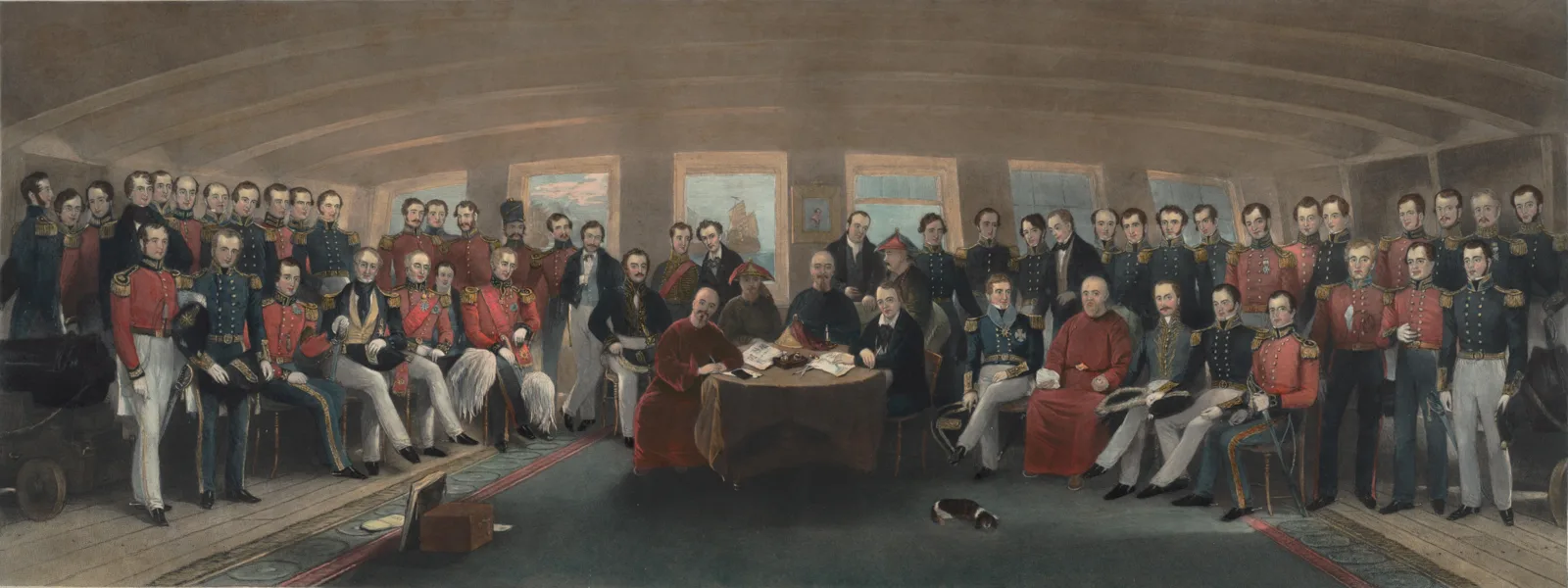
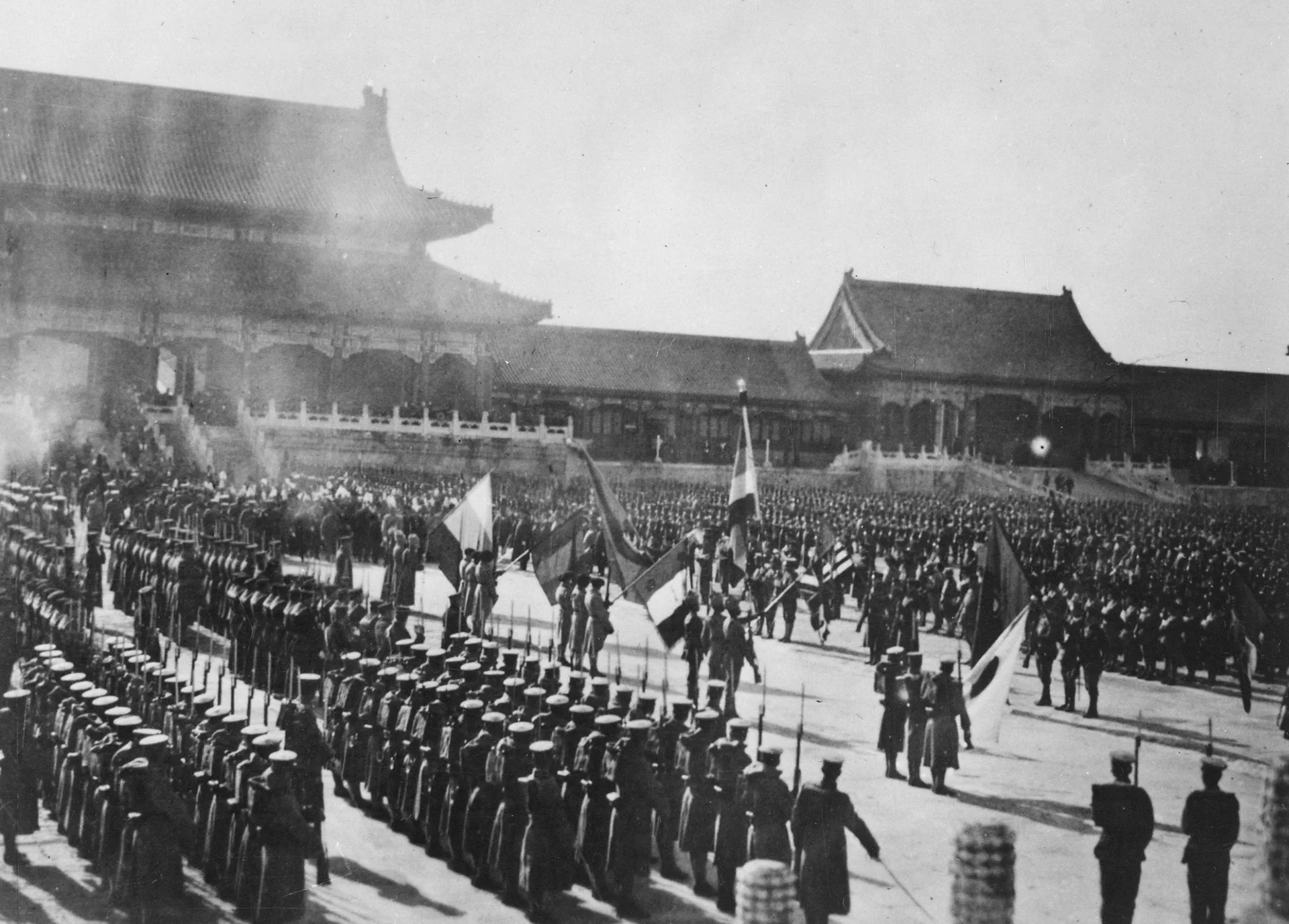
The relief force that followed was of a different scale. Britannica gives an international force of some 19,000 troops, most of them from Japan and Russia, with many also from Britain, the United States, France, Austria-Hungary and Italy; EBSCO gives a force of twenty thousand assembled at Tianjin under Count Alfred von Waldersee. The allies defeated the imperial army at Tianjin — the international force's heaviest casualties of the rebellion, on the compiled record — and reached Beijing on 14 August 1900, relieving the legations after 55 days. The empress dowager and her court fled westward to Xi'an. Foreign troops looted the capital, in Britannica's account, and EBSCO records that the allies then launched continuous punitive expeditions around Beijing and Tianjin against suspected Boxers; international forces remained in occupation until September 1901, and the court did not return to Beijing until the beginning of 1902. Russia, separately, occupied Manchuria in October 1900, a move the compiled record notes threatened Anglo-American hopes of keeping China open to commerce under the Open Door Policy. After extensive discussions, conducted for China by Li Hongzhang and Prince Qing, the Boxer Protocol was signed on 7 September 1901.
How many people died?
No agreed death toll exists, and the two published summaries this article relies on agree on the shape of the loss — overwhelmingly civilian — while differing in what they count. Britannica's estimate is that perhaps up to 100,000 or more people died in the conflict, although estimates on casualties have varied widely; the great majority of those killed were civilians, including thousands of Chinese Christians and approximately 200 to 250 foreign nationals, mostly Christian missionaries. Some estimates cited by Britannica put military deaths in combat at about 3,000, the great bulk of them Boxers and other Chinese fighters.
The compiled tabulation's casualty line gives the same components in different form: 32,000 Chinese Christians and 200 Western missionaries killed in northern China, and 100,000 total deaths in the conflict, civilian and military included. The two accounts therefore converge on an order of magnitude — around 100,000 dead, most of them Chinese civilians — without supporting a precise figure, and neither separates Boxer and Qing military deaths from civilian deaths in a way that would let a single "battle death toll" be stated. The strengths in the same tabulation underline how much of the fighting was done by irregulars: 100,000–300,000 Boxers and 100,000 Qing troops against expeditionary forces numbered in the tens of thousands. This article publishes the figures as attributed — Britannica's "up to 100,000 or more", with its own warning that estimates varied widely, is the ceiling it adopts, not a count.
What were the economic effects?
The economic settlement was designed to be unpayable quickly and unforgettable annually: an indemnity larger than the state's yearly tax revenue, secured on the revenues the foreigners already supervised, and raised, in part, by taxing Chinese subjects harder and borrowing from Western banks.
EBSCO calls the Boxer Protocol the most severe of the many "unequal treaties" imposed on China during the sixty years following the First Opium War. Its financial core was an indemnity of 450 million taels of fine silver — $333 million in EBSCO's figure, US$335 million in the scholarship record — payable over 39 years at 4 per cent interest. With interest, the compiled record gives the total as 982,238,150 taels. The sum was calculated against population: it was estimated by the Chinese population size, roughly 450 million in 1900, at one tael per person, and Britannica's summary of the parallel figure is that the 450 million was more than the government's annual tax revenue; EBSCO puts the installments as nearly matching the annual revenue of the empire. To help meet the demands, the existing tariff was raised from 3.18 per cent to an effective 5 per cent, and formerly duty-free merchandise was newly taxed.
The security for the debt tells the story of the treaty system itself: Chinese customs income and salt taxes guaranteed the reparation — revenues already administered under foreign supervision. EBSCO records the domestic consequence: customs revenue, internal transit taxes and the salt tax together proved inadequate, producing a large increase in the tax burden on Chinese subjects and wholesale borrowing from Western banks to make the scheduled installments. The payments ran for nearly the whole schedule: China paid 668,661,220 taels of silver from 1901 to 1939, on the compiled record, before the indemnity — never fully paid — was lifted during the Second World War. The Protocol's other terms were economic in effect as well as political: the execution, exile, degradation and dismissal of officials charged with collaborating with the Boxers, the suspension of the official examinations for five years in cities where Boxer activity had taken place, foreign occupation of the Beijing–Tianjin corridor, and foreign troops stationed in Beijing itself.
How did it shape the world?
The Protocol, signed at Beijing on 7 September 1901 by China and the eleven powers — the eight that had fought, plus Belgium, the Netherlands and Spain — left the Qing on the throne and ended their credibility. EBSCO's significance judgment is that the dynasty effectively squandered what was left of its legitimacy in the eyes of both the Chinese and the rest of the world, while nationalism spread steadily, especially among Chinese communities abroad; China avoided partition, but the Manchu government appeared largely under foreign control, and the trend toward regionalism that had grown since mid-century strengthened.
The court's answer was to enact, too late, the programme it had crushed in 1898. Cixi, fearful of reform in 1898, now allowed many of the Hundred Days edicts to be implemented: the traditional examinations were abandoned for modern curricula — the compiled record dates the abolition of the imperial examinations to 1905 — army training was revamped, sinecures eliminated, officials toured the West studying legislative systems, a plan for constitutional monarchy was prepared, and elections for regional and national assemblies were held in 1909 and 1910. The initiative, EBSCO concludes, had already passed to reformers and revolutionaries for whom the rebellion had proved the Qing incapable of reform and too weak to rule: Sun Yat-sen's Revolutionary Alliance toppled the dynasty in the Revolution of 1911, and on 12 February 1912 the boy emperor Puyi abdicated, ending imperial rule.
Two foreign consequences outlasted the dynasty. In Washington, the historian Walter LaFeber has argued — in the compiled record's quotation — that President William McKinley's decision to send 5,000 American troops to fight the Boxers, a recognised government, without consulting Congress, marks "the origins of modern presidential war powers"; Arthur M. Schlesinger Jr. concurred that the intervention began a crucial shift in the presidential use of armed force overseas. In Beijing, the indemnity itself was partly converted into education. The United States share was 7.32 per cent of the total; Qing minister Liang Cheng established that the United States had been awarded more than it originally demanded, and Congress's Joint Resolution of 25 May 1908 returned the excess, over $11.9 million. The Roosevelt administration directed the money to the Boxer Indemnity Scholarship Program, set up in 1909 on a proposal first made in 1906 by Edmund J. James, president of the University of Illinois. Part of the first remission established a preparatory school in Beijing on 29 April 1911, on the site of a former royal garden, named Tsinghua College — which became Tsinghua University. From 1909 to 1937 the program sent around 1,300 Chinese students to the United States — 47 selected from 630 candidates in the first year — among them, in the scholarship record's list, the philosopher Hu Shih, the Nobel laureate Yang Chen-Ning, the linguist Yuen Ren Chao and the rocket scientist Qian Xuesen. A second remission in 1924 founded the China Foundation, which funded the China Institute in New York in 1926.
What do historians debate?
Historians debate what the Boxers fundamentally were — an anti-imperialist movement produced by foreign aggression, a product of Shandong's own social ecology and popular religion, or an experience later rebuilt as national myth — and Joseph W. Esherick, quoted in the compiled record, holds that there is no major incident in China's modern history on which the range of professional interpretation is as great.
- Origins: ecology, not an old sect. Joseph W. Esherick's The Origins of the Boxer Uprising (University of California Press, 1987) is described by EBSCO as a major revisionist study based on extensive Chinese archival material and oral histories, arguing that the Boxers were never antidynastic, and that their opposition to Christianity grew out of the "social ecology" of the region. Esherick's own summary of the argument stresses the impact of social ecology and popular culture, challenging the traditional view — the one Britannica's entry still reflects in calling the Yihequan an offshoot of the Eight Trigrams Society — that the Boxers grew out of earlier anti-dynastic sects.
- Experience: drought before imperialism. Paul A. Cohen's History in Three Keys: The Boxers as Event, Experience, and Myth (Columbia University Press, 1997) separates the event as historians reconstruct it, the experience of those who lived it, and the myths later built on it. Reviewing the book for Education About Asia, Robert Entenmann summarises Cohen's own contribution: in "The Boxers as Experience" Cohen suggests anxiety over drought was the basic cause of the outbreak of violence, placing less emphasis than Esherick on the direct effect of foreign presence. Esherick, reviewing Cohen in the Journal of Social History, makes the complementary observation from the other side: the Boxers did not arise where the impact of imperialism was greatest, which tells against explanations linking them directly to the aggressive imperialism of the late 1890s. Both scholars, by different routes, loosen the simple line from foreign aggression to uprising.
- Myth: bandits, then patriots. Chinese judgments reversed within a generation. The compiled record notes that Sun Yat-sen delivered scathing criticism of the Boxers' "anti-foreignism and obscurantism" and called them "bandits", while praising their "spirit of resistance", and that reformers such as Liang Qichao criticised the Boxers as superstitious and ignorant — the dominant narrative among Chinese intellectuals until the 1920s and 1930s, after which nationalistic Chinese opinion grew more sympathetic. Cohen's third key, the mythologized past, traces exactly this process: later generations interpreting the uprising in light of their own immediate concerns.
This explainer is drawn from the sources listed below, all opened or read during this run. Casualty and indemnity figures are published strictly as the attributed totals those sources give, and no single precise death toll is asserted, because the published estimates varied widely and count different things.