The Iraq War, explained in one line: in March 2003 the United States and Britain invaded Iraq to disarm a weapons programme that did not exist, destroyed Saddam Hussein's regime in three weeks, and then spent eight years fighting the insurgency and sectarian war the occupation itself had made possible. It killed at least 150,000 Iraqis on the most conservative official reckoning and several times that on survey estimates, displaced millions, and cost the United States more than $2 trillion in the long run.
Key takeaways
- The invasion succeeded; the occupation was the war. Baghdad fell in three weeks. The following eight years were shaped above all by two decisions of May 2003: purging the Ba'ath Party from the state and disbanding the Iraqi army.
- The casus belli collapsed. The Iraq Survey Group found no WMD stockpiles in 2003; they had been destroyed in the early 1990s. Chilcot found the intelligence had been presented with unjustified certainty, before peaceful options were exhausted.
- The death toll is a range, not a number. Estimates run from about 150,000 violent deaths by mid-2006 to some 655,000 excess deaths over the same period and about 461,000 by 2011 — different methods counting different things.
- The bill outlasted the war. Pre-war officials spoke of $50–60 billion. Costs of War puts the ultimate US cost at $2.2 trillion; Stiglitz and Bilmes put Iraq alone at $3 trillion.
Contents
- Overview
- What caused the war?
- How was the war fought?
- Casualties
- Economic effects
- How it shaped the world
- What historians debate
Overview
The Iraq War was fought from 20 March 2003 to December 2011. Britannica divides it into two phases: a brief conventional campaign in March–April 2003, in which a US- and British-led force invaded Iraq and rapidly defeated its armed forces; and a much longer second phase in which a US-led occupation was opposed by an insurgency. After violence declined from 2007, the United States drew down under a bilateral agreement and completed its withdrawal in December 2011, the last troops leaving on 18 December. American casualties, counted exactly, were some 4,500 killed and 32,000 wounded; 179 British soldiers also died. The Iraqi toll has never been counted exactly, and the dispute over it is part of the war's history (see Casualties).
What caused the war?
The stated cause was weapons of mass destruction in the shadow of September 11; the deeper cause was a twelve-year unresolved confrontation. Iraq's 1990 invasion of Kuwait had ended in defeat in 1991, but Saddam retained power, crushing Kurdish and Shia uprisings, while the UN imposed sanctions, inspectors hunted his proscribed weapons programmes, and US and British aircraft patrolled no-fly zones. Iraq's obstruction led President Clinton to bomb Iraqi installations in Operation Desert Fox in 1998, after which inspectors were barred and sanctions eroded.
In 2002 President George W. Bush argued, in Britannica's summary, that American vulnerability after September 11, combined with Iraq's alleged WMD and its alleged support for terrorist groups including al-Qaeda, made disarming Iraq a priority. Resolution 1441 (8 November 2002) demanded Iraq readmit inspectors and comply with earlier resolutions. Baghdad appeared to comply; Bush and Prime Minister Tony Blair judged it still hindering inspections, while France and Germany argued for more time. On 17 March 2003, seeking no further resolution, Bush gave Saddam 48 hours to leave. The Council on Foreign Relations records the legal position plainly: the Security Council did not explicitly authorise the invasion, though it later approved the occupation force's presence in annually renewed resolutions from October 2003.
How was the war fought?
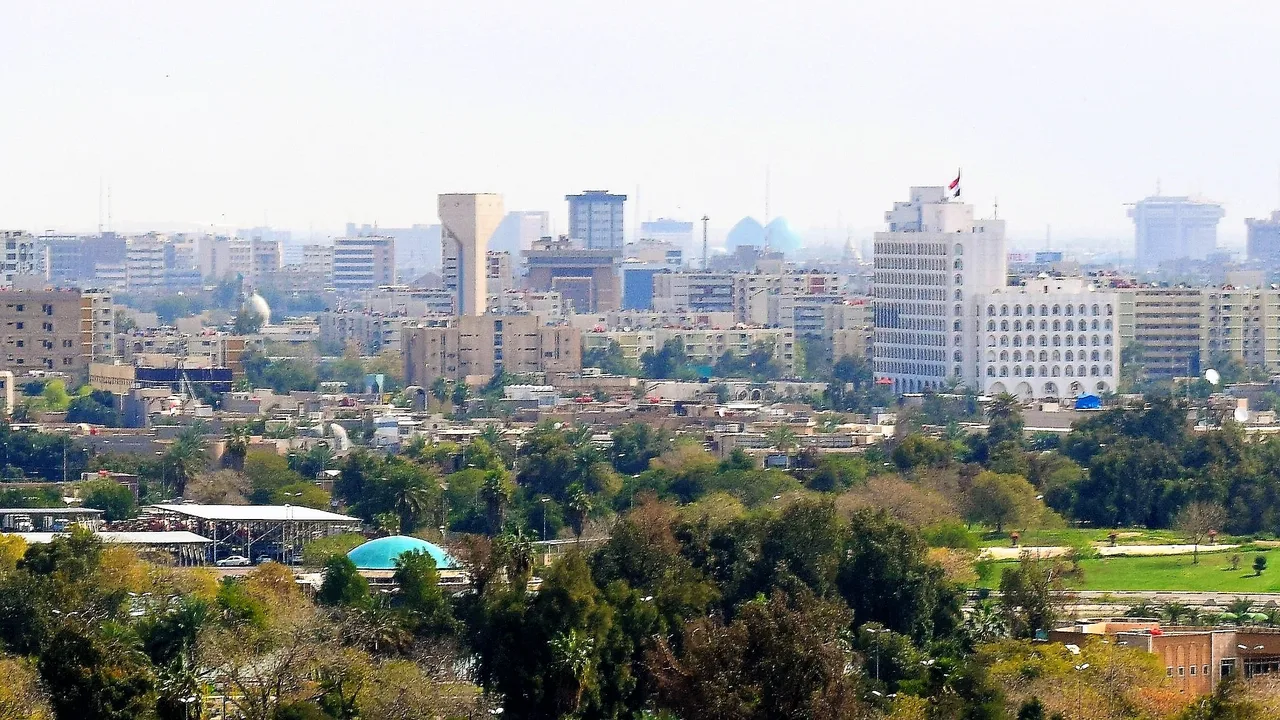
A three-week conquest, then an occupation that generated its own war. The attack opened on 20 March 2003 with strikes on a Baghdad bunker complex, followed by a ground invasion from Kuwait; US special forces were already operating with Kurdish forces in the north. Large numbers of Iraqi troops declined to resist; the stiffest fighting came from Ba'athist irregulars, the Saddam Fedayeen. US forces took Baghdad on 9 April; British forces secured Basra, and Kirkuk, Mosul and Tikrit fell within days. Turkey's refusal of transit had frustrated plans for a full northern front. On 1 May 2003 Bush declared major combat over. Saddam was captured on 13 December 2003 and executed on 30 December 2006 after conviction for crimes against humanity.
The occupation was administered by the Coalition Provisional Authority under L. Paul Bremer. His two most consequential acts came within a week: CPA Order 1 (16 May 2003), de-Ba'athification, barring the top four Ba'ath tiers from public employment, and CPA Order 2 (23 May 2003), dissolving the Iraqi army. James Pfiffner (Intelligence and National Security, 2010) records that both orders reversed previous National Security Council judgements, over senior military and intelligence objections; he argues they fuelled the insurgency by alienating hundreds of thousands, hollowing out the state, and creating trained, armed and angry recruits. Bremer's defence is that the army had already "self-demobilised" and Iraqis were unanimous the Ba'ath had no future role. The insurgency that grew through 2003–05 drew in former regime loyalists, Sunni and Shia militias, and Abu Musab al-Zarqawi's al-Qaeda in Iraq, whose strategy was explicitly to ignite sectarian war.

That strategy succeeded on 22 February 2006, when a bomb destroyed the golden dome of the al-Askari shrine in Samarra, one of Shia Islam's holiest sites. The bombing was attributed to al-Qaeda in Iraq, which denied involvement; the blast itself killed no one, but the retaliatory killings that followed opened the sectarian civil war of 2006–08, in which Baghdad's average homicide rate tripled, from 11 to 33 deaths per day on US military figures. Elections in 2005 had meanwhile produced a Shia-led government, leaving many Sunnis — dominant under Saddam, marginalised by de-Ba'athification and the ballot box alike — outside the new order.
The turn came in 2007, and historians credit several causes at once: the surge of some 30,000 additional US troops under General David Petraeus, re-tasked to protect the population (US strength peaked at 170,300 in November 2007); the Sunni Awakening in Anbar province, whose tribal fighters turned against al-Qaeda in Iraq and allied with the Americans; and a ceasefire by the Shia militia leader Muqtada al-Sadr. Violence fell steeply through 2008. The exit was then Iraqi-imposed: the Status of Forces Agreement, ratified by Iraq's parliament on 27 November 2008, required US forces out of Iraqi cities by mid-2009 and out of the country entirely by the end of 2011 — a deadline President Obama kept, bringing the last troops out on 18 December 2011.
Casualties
No figure for Iraqi deaths commands agreement, because the counts measure different things over different periods — the honest answer is the range, with each method named. Coalition military deaths are enumerated: about 4,500 US service members killed and some 32,000 wounded (Britannica), at least 3,400 US contractors killed (Costs of War), and 179 British soldiers. For Iraqis, the record offers three families of numbers. First, official assessment: the Chilcot Inquiry recorded that by July 2009 at least 150,000 Iraqis had died, and probably more. Second, household surveys of violent death: the Iraq Family Health Survey, conducted with the WHO, estimated 151,000 violent deaths between March 2003 and June 2006 (range 104,000 to 223,000). Third, surveys of excess mortality — all deaths above the pre-war rate, violent and indirect together: Burnham and colleagues' 2006 Lancet study estimated 654,965 excess deaths by June 2006 (confidence interval 392,979 to 942,636), 601,027 of them violent; Hagopian and colleagues' PLOS Medicine survey estimated about 461,000 excess deaths between March 2003 and June 2011, more than 60 percent violent, the rest from the war-driven collapse of health, water and power systems. An Opinion Research Business poll put violent deaths above one million by August 2007; its sampling has been widely criticised, and it is the literature's outlier. Costs of War, compiling documented deaths on all sides, puts direct war deaths at roughly 281,000 to 315,000 for March 2003 to March 2023 — a span including the post-2014 ISIS war, not a toll for 2003–11 alone. No method disputes the shape: the invasion was the least lethal phase for Iraqis, and 2006–07 the most lethal.
Displacement rivalled death as the war's human product. UNHCR testified that at the 2007 peak some 2.2 million Iraqis were displaced inside the country and 2 million more had fled abroad — roughly one in six — with Iraqis forming about 10 percent of Jordan's and Syria's populations. The IOM found 88 percent of the displaced families it assessed had fled targeting on religious identity: the civil war did not just kill Iraqis, it re-sorted them.
Economic effects
A superpower spent orders of magnitude more than it predicted, and an Iraqi state lost its professions for a generation. Before the invasion, senior US officials estimated the war at $50–60 billion, with Iraqi oil revenues expected to pay for rebuilding. Costs of War's 2013 accounting put the ultimate US cost at at least $2.2 trillion — appropriations plus obligations incurred, including almost $500 billion for veterans' care through 2053 — with cumulative interest on the entirely borrowed war funding potentially exceeding $3.9 trillion by 2053. Stiglitz and Bilmes, in The Three Trillion Dollar War (2008), reached $3 trillion for Iraq alone once veterans' costs, equipment replacement and macroeconomic effects are counted, and put Britain's direct cost at some £7 billion by the end of 2007. The gap is methodological — budgetary versus economic cost — not an error in either.
For Iraq, the deepest damage was institutional: health infrastructure already degraded by sanctions remained devastated, and more than half of Iraq's medical doctors left the country during the 2000s (Costs of War). Looting gutted ministries the occupation had not planned to protect, de-Ba'athification removed experienced administrators from those that remained, and the displacement of some 4.2 million people removed their skills and savings at once.
How it shaped the world
The war reset the terms on which Western states argue about intervention, and rearranged the region's balance in ways its planners did not intend. Its first legacy was doctrinal. Chilcot, reporting on 6 July 2016, found the UK had joined the invasion before peaceful options had been exhausted, that Saddam posed no imminent threat, that the WMD judgements were presented with a certainty that was not justified, that the legal basis was "far from satisfactory", and that aftermath planning was woefully inadequate — and it rejected the plea of hindsight, since the risks of internal strife, Iranian opportunism, regional instability and al-Qaida activity in Iraq had each been explicitly identified before the invasion.
The second legacy was regional: removing Saddam — Iran's principal Arab enemy — and installing an elected Shia-led government ended Iraq's role as the Gulf's counterweight to Iran. The third grew from the war's debris. Al-Qaeda in Iraq, created by the war, survived its 2007 defeat in remnant form, regenerated amid Syria's civil war as the Islamic State, and in 2014 seized Mosul — prompting the US to intervene again three years after leaving. Costs of War's verdict: terrorism in Iraq increased dramatically as a result of the invasion, with tactics and fighters exported to Syria and beyond. Whether the road to ISIS runs through the specific decisions of 2003 is debated (see below); that neither ISIS nor al-Qaeda in Iraq existed before the invasion is a matter of record.
What historians debate
- A mistake of intelligence, or of judgement? Duelfer established the factual floor: no stockpiles, programmes dismantled in the early 1990s, an intention to rebuild once sanctions lapsed. Chilcot's answer is judgement — flawed intelligence, presented with unwarranted certainty, with alternatives unexhausted. Defenders of the decision, Tony Blair among them, maintain that removing Saddam was right and that the intention Duelfer documented made confrontation a matter of timing. The sources opened do not reconcile these positions; they define them.
- How does a victorious invasion produce an insurgency? Gordon and Trainor's Cobra II (Pantheon, 2006) asks how a campaign so successful in toppling Saddam set the conditions for what followed, dwelling on the troop-numbers argument — General Zinni's planning assumption of roughly 400,000 troops against the roughly 125,000 the Rumsfeld Pentagon preferred. Thomas Ricks's Fiasco (Penguin Press, 2006) argues the US military failed first to anticipate, then to recognise, the insurgency. Toby Dodge's Inventing Iraq (Columbia University Press, 2003), on Britain's failed 1920–32 state-building in the same country, supplies the structural version: an occupier remaking a society it does not understand, without the knowledge, resources or staying power required, repeats a known sequence — a warning published the year of the invasion itself.
- Did the CPA orders cause the insurgency — and, later, ISIS? The standard critique (Pfiffner; the Atlantic Council's summary) is that Orders 1 and 2 created the insurgency's manpower and leadership, and that some of the same former officers later helped generate ISIS. Bremer's revisionist case is that the army had dissolved itself and de-Ba'athification answered a universal Iraqi demand — the orders recognised facts rather than creating them. Most accounts now treat the orders as accelerant rather than sole cause: they determined how many trained, aggrieved men were available to the insurgency, and how quickly.
- Did the surge win, or did Iraqis end their civil war? The surge coincided with the Awakening, Sadr's ceasefire, and the near-completion of Baghdad's sectarian re-sorting — each independently reducing the violence available to suppress. General Odierno, Petraeus's successor, cautioned that the surge had not eliminated the conflict's root causes. The 2011 withdrawal and the 2014 collapse are the evidence each side now cites.
This explainer is drawn from the sources listed below, all opened or read during this run. Casualty and cost figures are published strictly as the attributed ranges and estimates those sources give.
---