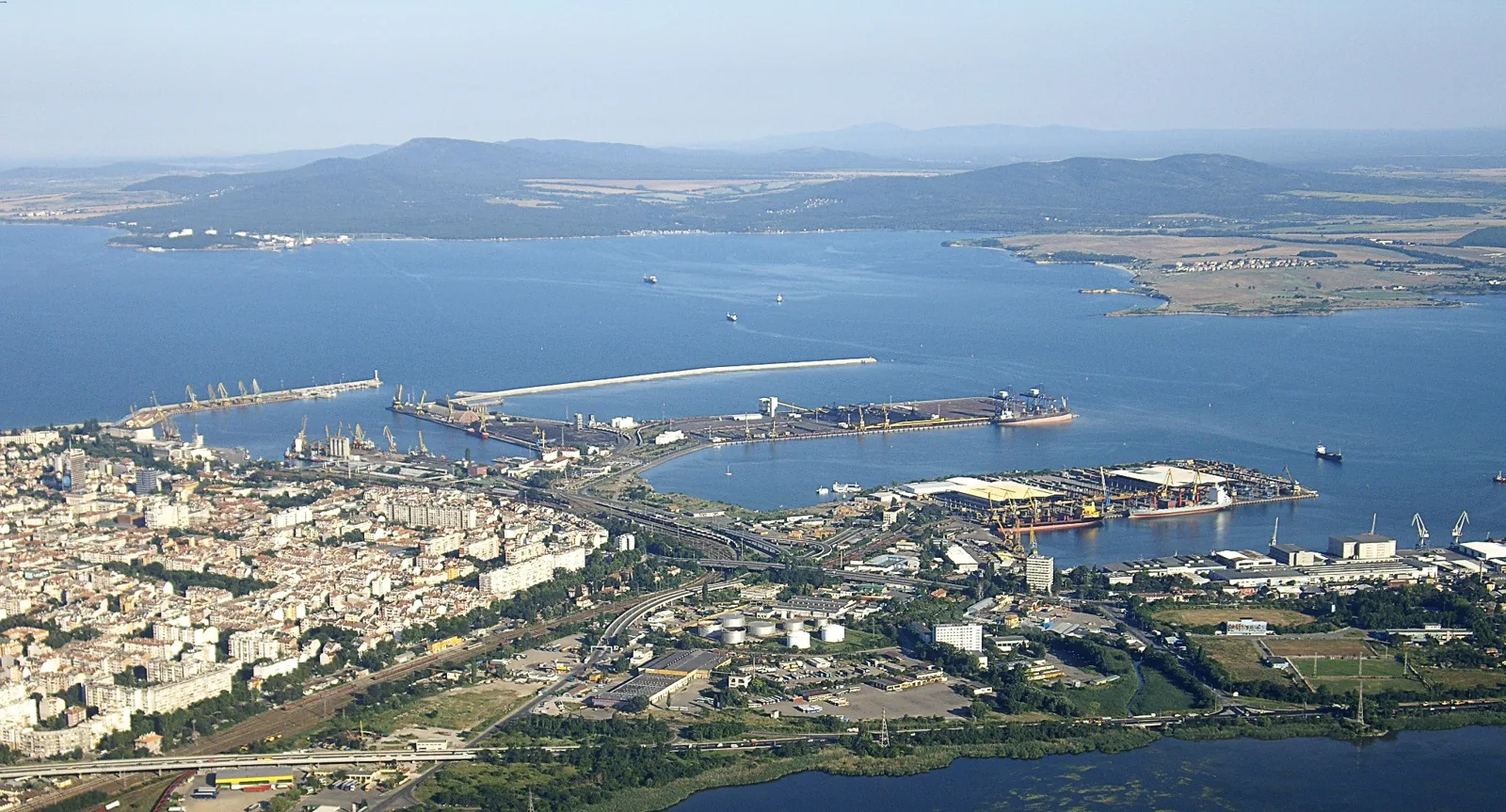
Bulgaria has formally asked NATO to deploy combat aircraft and anti-drone systems to strengthen its defences after a series of drone attacks on commercial shipping in the Black Sea, Defence Minister Dimitar Stoyanov said on Friday, Reuters reported. The request, sent in letters to the NATO Secretary General and the Supreme Allied Commander, marks the most direct step Sofia has taken since drones began hitting cargo ships in the waters off Bulgaria and Romania this month. NATO had not immediately responded to a request for comment, Reuters reported.
What exactly has Bulgaria asked NATO for?
Bulgaria has asked the alliance to strengthen its capabilities, which Stoyanov said also means deploying additional forces on Bulgarian territory. "We have sent letters and a request to the NATO Secretary General and the Supreme Allied Commander, urging them to strengthen our capabilities," he said, adding that Sofia is awaiting their decision. Alongside the deployment request, Bulgaria expects to join a NATO anti-drone initiative by the end of October — Stoyanov told a parliamentary hearing on Wednesday that the expectation was that "by October 30, we will already be part of the project." He also said he planned to meet his Romanian and Turkish counterparts soon to coordinate a common approach to the Black Sea situation. Romania and Bulgaria have already jointly asked the North Atlantic Council to put the ship attacks on its agenda at a dedicated session next week.
What attacks prompted the request?
The request follows a run of drone strikes on merchant ships in the western Black Sea. On October 13, drones hit two cargo ships off the Bulgarian coast; one of them, the Guinea-Bissau-flagged HS Dignity, sank, leaving 11 sailors missing at sea, Reuters reported. Drones had struck two other cargo ships in the same waters on October 6. This week, drones also hit two ships that caught fire off Romania's Black Sea coast. Bulgaria's transport ministry said the search and rescue operation for the missing sailors resumed on Wednesday after bad weather and darkness forced a suspension on Tuesday evening. The sinking prompted Sofia to summon Russia's ambassador.
Who does Bulgaria say carried out the attacks?
Bulgaria has stopped short of explicitly accusing Russia of carrying out the attacks. Prime Minister Rumen Radev said on Tuesday that their outcome "benefits the Russian Federation." Russia's ambassador to Sofia, Eleonora Mitrofanova, said she had no information from the Russian Defence Ministry about attacks on commercial vessels, but did not rule out that they could be a provocation by a third party, according to the Bulgarian government as reported by Reuters. Bulgaria has separately proposed a moratorium on attacks on civilian ships in the Black Sea. Attribution of the strikes therefore remains unresolved in the reporting opened for this article: no government has published evidence assigning responsibility, and no party has claimed the attacks.
Why is shipping so exposed in the western Black Sea?
Merchant ships are exposed because the war's geography has pushed Ukraine's trade towards NATO's coastline. Russia has been bombing Ukraine's Black Sea ports, forcing Kyiv to rely increasingly on river ports on the Danube and on shipping routes close to the coasts of Bulgaria and Romania, Reuters reported. Ukraine, for its part, has increasingly targeted Russian grain-exporting ships in other parts of the Black Sea and near the mouth of the Don River in the Sea of Azov. That combination has moved the drone war's edge into waters where NATO members' search-and-rescue services, rather than the belligerents' navies, are the first responders when a merchant ship is hit.
What happens next?
What happens next rests with NATO's decision on Sofia's request, the trilateral coordination Stoyanov described with Romania and Turkey, and the anti-drone initiative Bulgaria expects to join by October 30. If the alliance agrees to deploy aircraft and counter-drone systems, it would be the first such reinforcement of the southeastern flank prompted by the shipping attacks. If it does not, Bulgaria's protection of the shipping lanes off its coast will rest on its own forces and on whatever the joint Romanian-Bulgarian diplomacy at the North Atlantic Council produces. Either way, the question the attacks have raised — how far the Ukraine war's drone campaign can reach into the waters of alliance members without a formal finding of who is responsible — remains open.
This article is drawn from Reuters reporting opened and read for this article: the October 16 report of Defence Minister Stoyanov's statement in Sofia and the October 14 report of his parliamentary hearing. Statements by Bulgarian officials and by Russia's ambassador are reported as those sources stated them; attribution of the ship attacks is unresolved in that reporting and is presented as such here. The market snapshot figures are snapshots checked at publish time, not live prices. This article is not financial advice.