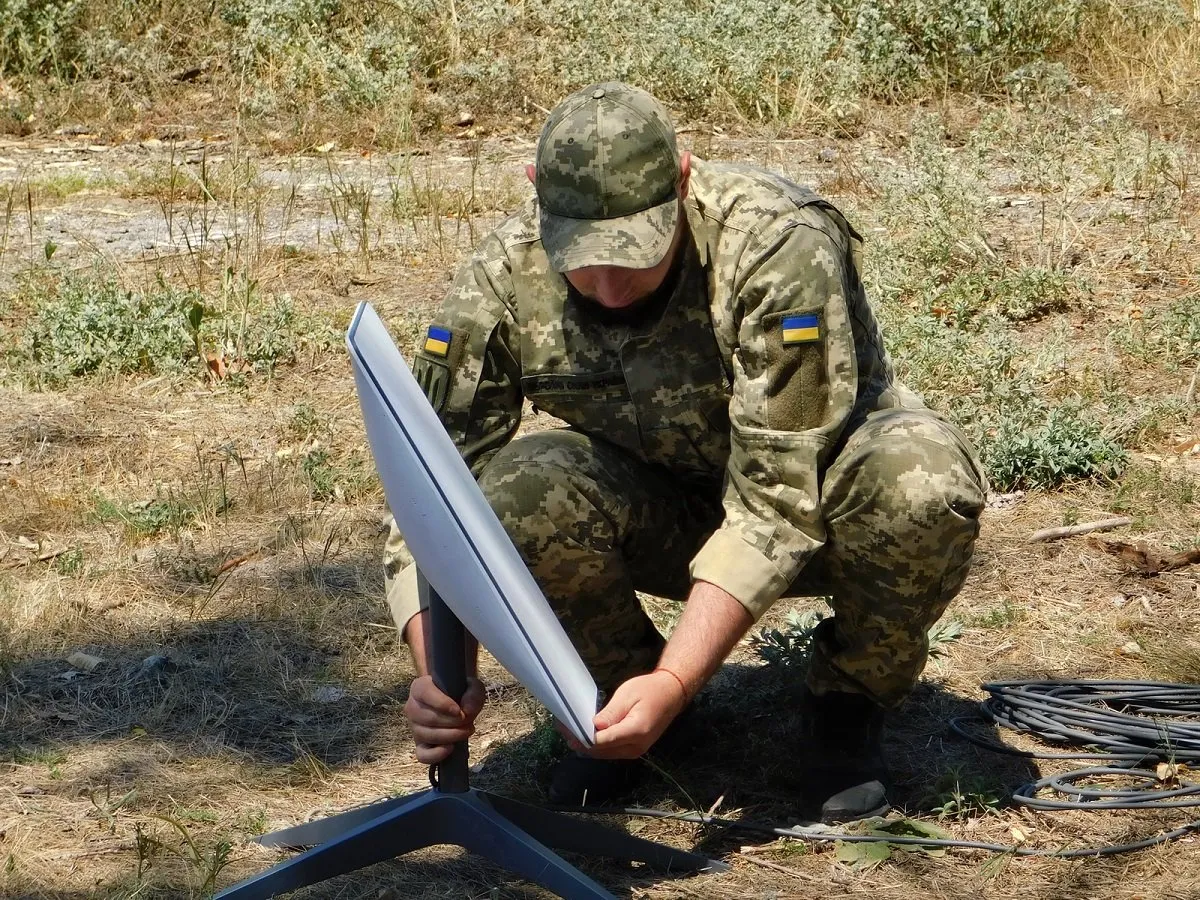
The order to limit Starshield, the military-grade satellite service Ukraine's forces use for battlefield communications and drone guidance, came from inside the White House, two US officials and a Western official briefed on the matter told Reuters on Thursday. A senior US official, asked about the order, said no such request was ever made by the president, and the White House did not respond to questions about whether another administration official made it. The account — reported by Reuters alone so far, with no independent confirmation available at publication — arrived as President Volodymyr Zelenskiy joined an EU summit in Brussels on Friday, and a day after President Donald Trump called Ukraine's resumed strikes on Russian oil refineries a "disgrace" in a Newsmax interview aired Thursday.
What did the officials say about the Starshield order?
The officials, speaking on condition of anonymity, said Pentagon leaders received a message that Ukraine's Starshield service needed to be slowed, but did not say who inside the White House took the decision or who implemented it, Reuters reported. A senior Ukrainian official said Kyiv was told in calls on Tuesday and Wednesday that it was a White House decision. Ukraine's defence ministry said the terminals had stopped working on fast-moving objects; a person in the ministry said on Thursday they now work in motion up to about 160 kph (100 mph). Ukrainian officials said the restrictions complicated strike missions and slowed interceptor drones used against incoming Shahed drones. SpaceX chief executive Elon Musk said on Wednesday that, because the US government owns and controls Starshield, any limits are decided by the US military or the president. SpaceX, the Pentagon and Ukraine's embassy in Washington did not respond to Reuters requests for comment.
Why is Washington pressing Kyiv over refinery strikes?
The Starshield move came while Trump pressed Ukraine to stop attacking Russian refineries, which he has blamed for high energy prices ahead of November's US midterm elections, Reuters reported. In the Newsmax interview he said Zelenskiy was harder to deal with than President Vladimir Putin and repeated that he is not a fan of the Ukrainian president. Reuters noted that experts attribute the energy-price surge mainly to the US-Israeli war with Iran and the largely shut Strait of Hormuz, not to Ukraine's strikes. The pressure had already been delivered in person: at an October 9 meeting in Miami, Trump's son-in-law Jared Kushner and envoy Steve Witkoff told Ukrainian officials Washington was frustrated the strikes continued despite repeated requests to stop, according to a separate person familiar with the matter cited by Reuters, and presented the US diesel deal with Russia — more than 2.25 million barrels — as an attempt to soften Moscow's stance on peace talks. Zelenskiy called that decision weak; Trump has since called for Zelenskiy's removal, and Reuters previously reported US officials had threatened to halt intelligence on Russian missile launches, though Trump said on Tuesday that sharing continues.
What is Zelenskiy asking Europe for in Brussels?
Zelenskiy arrived saying there were no signals Russia was ready to end the war, so Ukraine had to prepare for winter — and that the winter package meant energy, air defence and funding for the rest of this year and for 2027, Reuters reported from Brussels. Dutch Prime Minister Rob Jetten said he was unhappy with how few countries had pledged new financial support, called Trump's language wrong, and said Friday would be about the diplomatic situation and surviving the winter. Belgian Prime Minister Bart De Wever warned the EU's existing 90 billion in support would run out. Reuters reported Ukraine had agreed a plan with European partners to close a $27 billion military-spending deficit this year, while Finance Minister Sergii Marchenko has put next year's unfunded budget gap at $32.6 billion, before an estimated $40 billion in allied military supplies. EU leaders have criticised Trump's diesel deal; the administration is also considering easing sanctions on some shadow-fleet tankers, a US official said on Wednesday.
What else moved on the eve of the summit?
Putin played down the refinery attacks, saying they had caused nothing particularly significant, Reuters reported. On Thursday Russia decreed the local assets of French, German, Swedish and Dutch companies — among them flooring maker Tarkett and packaging makers Menshen, Sverige International Holdings and Sonoco — placed under temporary management, following a similar move last month against Nestle, Auchan and Metro; the Kremlin called it a reversible response to EU states' role in the war. In the latest attacks inside Ukraine, Reuters reported Russian drone strikes on Kharkiv killed three people according to local authorities, strikes on the Volyn region bordering Poland left 370,000 people without power, and Kyiv introduced emergency power cuts during strikes, according to provider DTEK — figures published here as Reuters reported them, without independent confirmation at publication.
This is not financial advice. The White House-origin account of the Starshield order rests on Reuters' anonymous sourcing and is published as Reuters reported it, alongside the senior US official's denial that the president made any such request; no second tiered source had confirmed the account when this article was published.