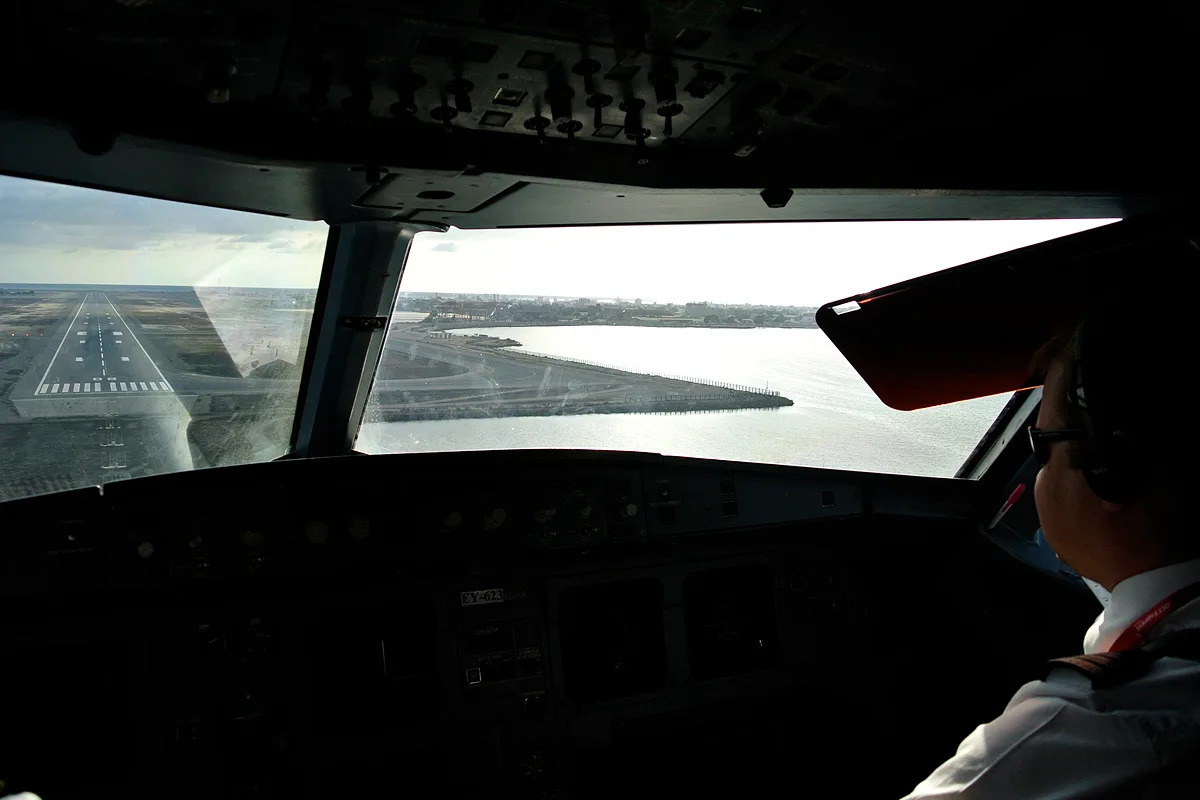
Two missiles landed on the grounds of Aden International Airport in southern Yemen on Friday, the second attack on the airport in less than a week, while the Saudi-led coalition said it had intercepted a ballistic missile headed for Yanbu, the Red Sea city that serves as a key outlet for Saudi oil exports bypassing the Strait of Hormuz, Reuters reported. No casualties were reported at the airport, where a Yemenia Airways flight bound for Cairo was preparing for takeoff when the missiles landed, according to the Aden Security Department.
What happened at Aden airport?
The Aden Security Department said two missiles landed on the airport grounds and blamed the Iran-aligned Houthi group, Reuters reported. The department said it was the second attack on the facility in less than a week. The Houthis did not immediately claim responsibility for Friday's strike, and the attribution rests on the security department's statement as reported by Reuters; there was no independent confirmation of who fired the missiles. The strike came a day after an attack on Aden's al-Maashiq presidential palace compound, and Reuters reported that in recent days the Houthis have targeted sites in government-held parts of Yemen including the airport and the presidential palace in the interim capital.
What did the coalition say it intercepted?
The Saudi-led coalition said it had intercepted a ballistic missile headed for Yanbu and had also destroyed two cruise missiles over the Red Sea and three drones in Saudi Arabia's Southern and Riyadh regions, Reuters reported. The coalition did not identify those behind the attacks. Yanbu matters beyond Saudi Arabia: it is a key outlet that lets the kingdom ship crude to international markets via the Red Sea without passing through the Strait of Hormuz, which has been largely throttled since the regional war widened in February. Saudi Civil Defense authorities had earlier issued alerts in the Jazan region and the southwestern city of Khamis Mushait, and early on Saturday issued an alert for Abha, near the Yemeni border, before sending an all-clear, according to the updated Reuters report.
What happened near Saada early on Saturday?
Houthi-affiliated media reported strikes east of Saada, Yemen's northwestern city, early on Saturday, and the Saudi-led coalition said it had destroyed two ballistic missile launchers in the area, Reuters reported. The exchange, as reported, has not been independently verified beyond the accounts Reuters carried from each side.
Why does this escalation matter?
The Aden airport strike and the Yanbu interception extend a pattern that has built since fighting between the Houthis and the Saudi-led coalition, which backs Yemen's internationally recognised government, reignited last month after a truce dating to 2022 held until this year. Reuters reported that the Houthis have repeatedly launched missiles and drones at Saudi Arabia since the conflict reignited, targeting airports, oil facilities and other infrastructure, and that aid agencies have warned humanitarian conditions in Yemen are worsening rapidly. A spokesperson for the Houthi-run health ministry said on Friday that 124 civilians had been killed and 327 wounded in what he described as Saudi aggression since the escalation began on September 3 — figures Reuters said it could not independently verify, and which are published here as that spokesperson's claim. Oil markets moved on the wider escalation on Friday: Brent crude briefly touched $110 a barrel for the first time since May, which Reuters linked to worries over escalating Middle East tensions and tighter global supplies, before settling at $109.86.
Attribution note: responsibility for the Aden airport missiles is the Aden Security Department's claim, reported by Reuters, and the Houthis had not immediately claimed the attack; the interception and launcher claims are the Saudi-led coalition's, as reported by Reuters, and the coalition did not identify who launched the missiles and drones it said it destroyed. The Houthi-run health ministry's casualty figures since September 3 are its spokesperson's claim and could not be independently verified by Reuters.