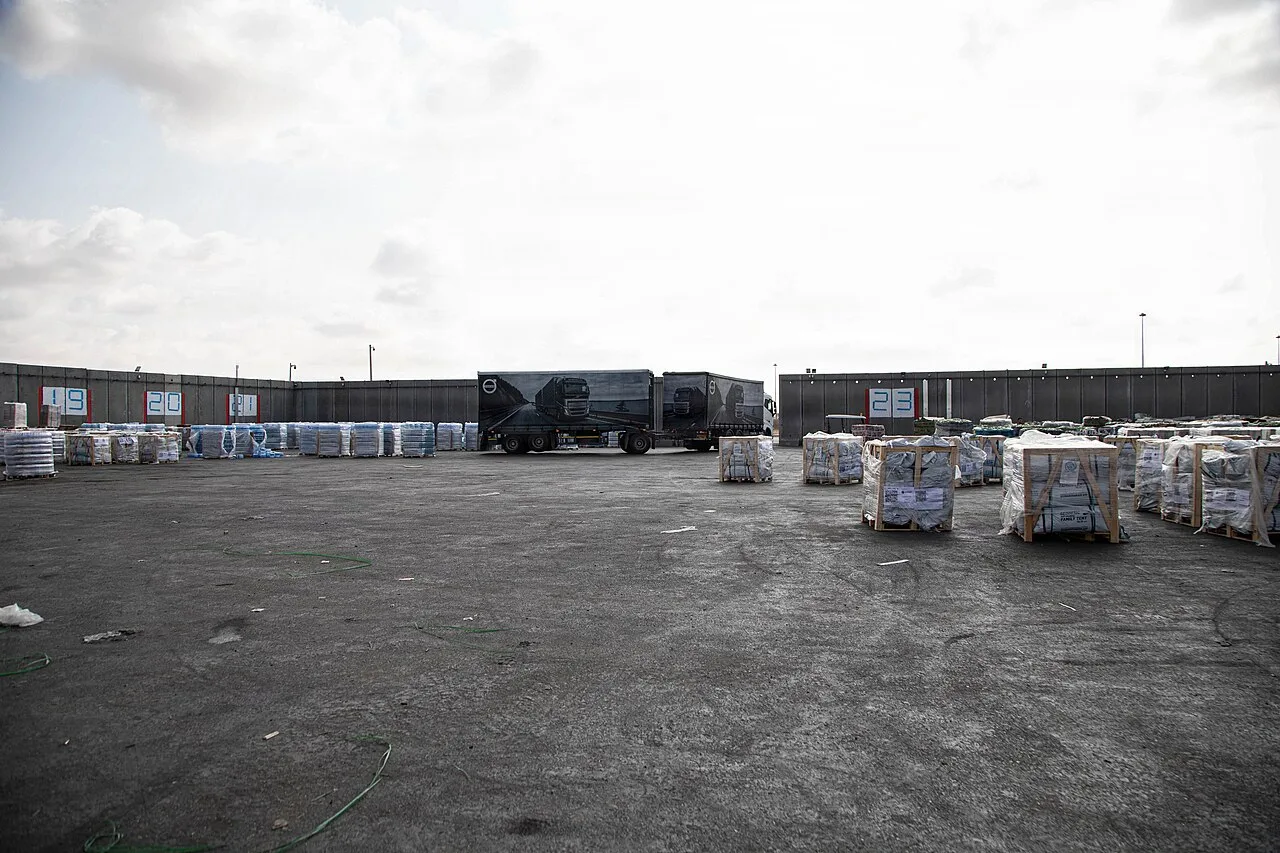
Not a single truck carrying commercial goods entered Gaza from Israel on Thursday — and for the roughly 2 million people who rely on that flow to stock the markets they buy food from, the halt means the larger share of the territory's supply line has stopped at the crossings. COGAT, the Israeli military body that oversees humanitarian affairs in Gaza, announced the stoppage on Wednesday, saying Gazan merchants had suspended coordination of the goods' entry, according to Reuters. Nahed Shhaibar, the head of the private transport union in Gaza, confirmed that no commercial truck from Israel entered on Thursday — though he said trucks carrying humanitarian aid did enter, as did trucks carrying commercial goods from Egypt through an Israeli-controlled crossing.
Why did the merchants stop coordinating?
COGAT's account is that the merchants told it they stopped coordinating in response to a 10,000 shekel (about $3,220) fee imposed by Hamas on each truck entering Gaza, and a Hamas demand that 30% of all their sales in Gaza be carried out in cash. That account of the merchants' reasons is COGAT's; the merchants' own public statement was not carried in the reporting opened for this article.
What does Hamas say about the fee?
Hamas gives a different account of the same payment. It said the 10,000 shekel payment was a voluntary contribution by wealthy Gazans to a national fund that seeks to provide for those in need, such as widows and orphans, and that cash payments were encouraged because of what it described as an acute cash shortage in the territory. The two accounts — an imposed per-truck fee, on COGAT's version, and a voluntary charitable payment, on Hamas's version — cannot both be true, and neither has been independently verified. What is documented, by the transport union on the ground, is the result: the trucks stopped.
How far could truck entries fall?
COGAT said the merchants' decision would cut the total number of trucks carrying both humanitarian and commercial goods into Gaza to around 300 a day — about half. Even the usual flow falls far short of what Gaza is owed: Israel is obliged under a US-mediated agreement to allow a minimum of 600 trucks a day, and says commercial goods are needed to supplement aid supplies; diplomats say far fewer than 600 trucks normally enter each day, and Shhaibar put the usual figure closer to 300 in total, with two thirds carrying commercial goods. On Shhaibar's figures, a halt to the commercial flow from Israel removes the larger share of what Gazans buy in markets, even while aid trucks continue.
Why does it matter now?
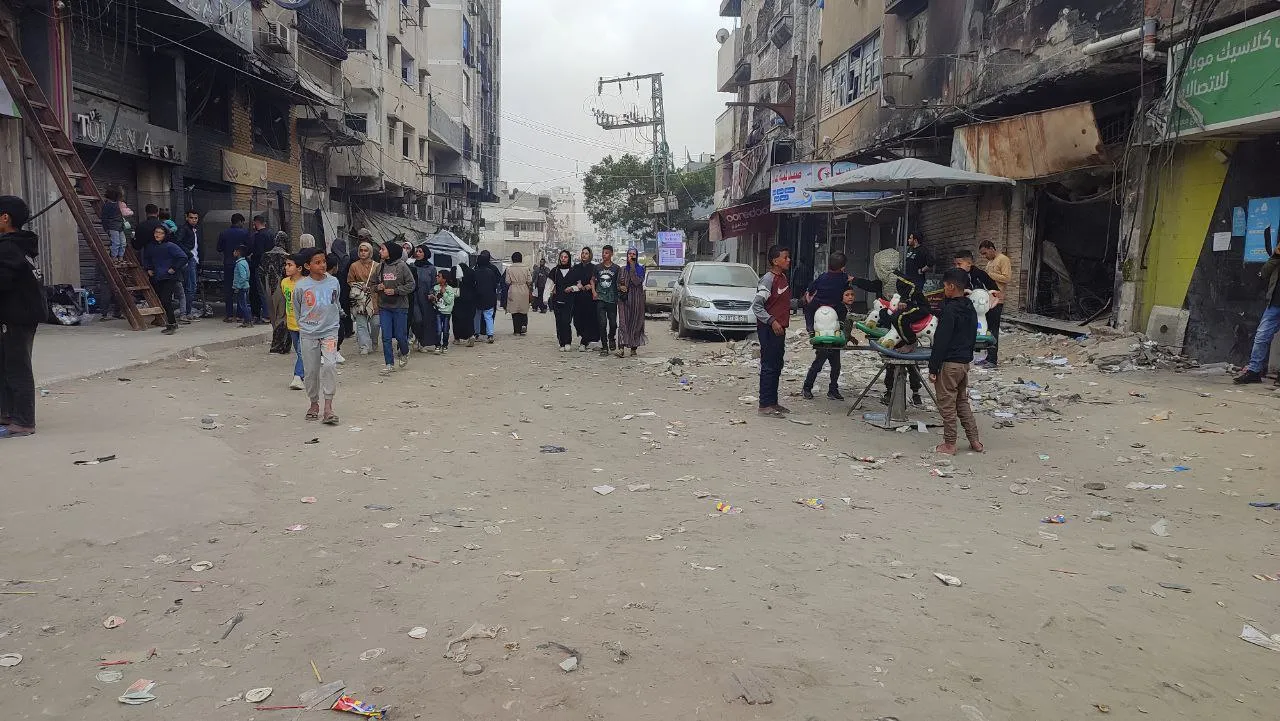
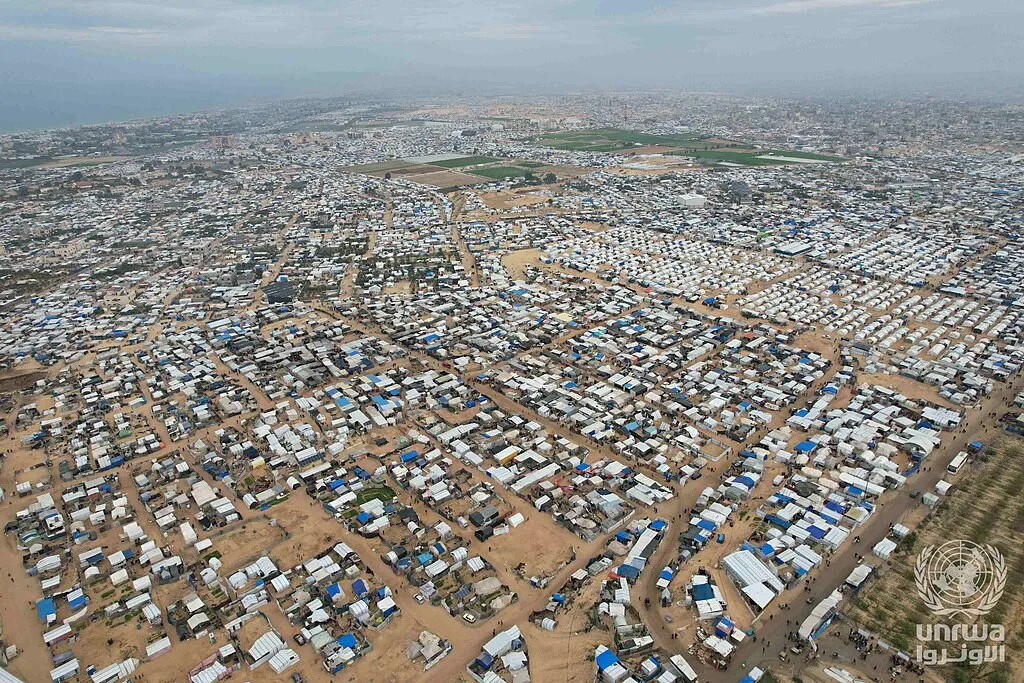
A majority of Gaza's roughly 2 million people are dependent on aid supplies after three years of war, repeated displacement and severe restrictions on deliveries, and a global hunger monitor warned in July that more than two thirds of Gazans could face acute hunger by the end of the year, Reuters reported. The halt came as the UN Security Council held an open debate on Thursday at which UN officials said more than 1,400 Palestinians have been killed in Gaza since the October 2025 ceasefire agreement, that nearly all of Gaza's 2.1 million people still need shelter assistance with current supplies meeting only about 17% of needs, according to the IOM, and that aid remains held back by underfunding and restrictions including limited access to more than 64% of Gaza's land, according to OCHA. Commercial goods are the part of the supply flow that stocks Gaza's markets; aid alone has not been the whole of what enters. For the people queuing at those markets, Thursday's stoppage is not an abstraction in a fee dispute — it is food off the shelves of a territory already warned of acute hunger.
The fee dispute is contested: COGAT's account and Hamas's account are published as each side stated them, and the truck figures as COGAT, diplomats and the transport union respectively gave them. The effect is not contested — a supply line into Gaza cut by about half, for a population of 2 million already facing hunger.