Syria in 2026 is a country in transition — and the transition is far from finished. In December 2024, Bashar al-Assad, president since 2000, fled and a rebel offensive captured Damascus, ending the country's 13-year civil war. What has replaced it is an interim government led by a former rebel commander, an army still being stitched together from rival militias, and a political process that many Syrians — Kurds, Druze, and minorities included — consider incomplete. This explainer maps who controls Syria in 2026, how that control was won, and what could still unravel it.
Key takeaways
- Ahmed al-Sharaa, leader of Hay'at Tahrir al-Sham (HTS), was declared Syria's transitional president in January 2025 after Assad's fall ended the 13-year civil war.
- After fighting in January 2026, interim government forces control the majority of Syria, including Damascus and Aleppo, the two largest population centres.
- On 18 January 2026, a 14-point agreement began integrating the Kurdish-led Syrian Democratic Forces (SDF): the SDF ceded Deir al-Zour and Raqqa provinces, and Kurdish forces are joining a single Syrian army.
- The UN estimated in July 2026 that around 3,000 Islamic State fighters remain active in Syria, focused on "hit-and-run attacks."
- Sectarian violence persists — Alawite communities were targeted in coastal areas in March 2025, and Druze groups clashed in Suweyda in July 2025.
Contents
- The fall of Assad and the interim government
- January 2026: the Kurdish integration deal
- The Islamic State's low-grade insurgency
- A transition still disputed
The fall of Assad and the interim government
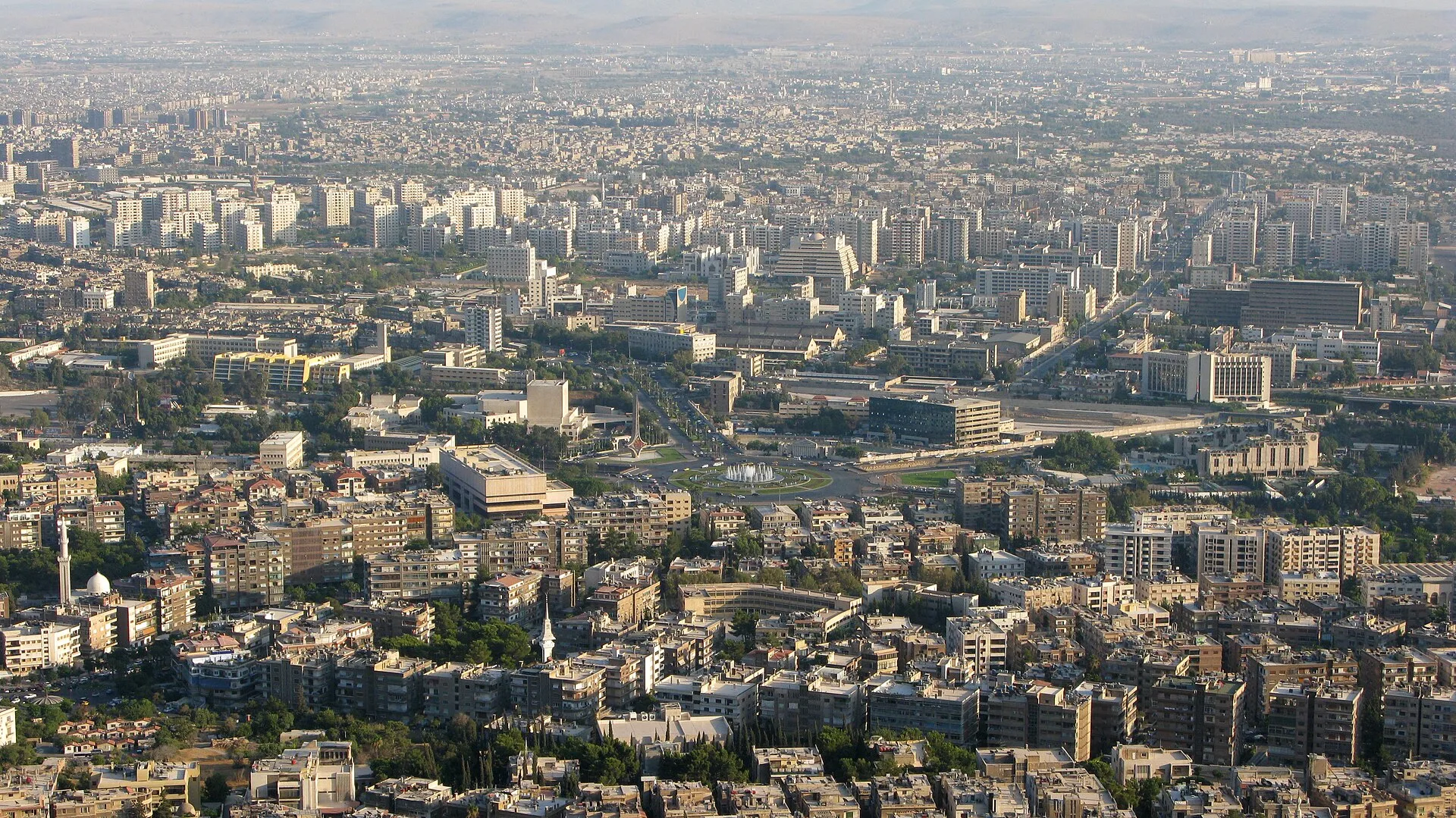
In December 2024, Bashar al-Assad fled Syria and a rebel offensive captured Damascus, bringing the civil war that began in 2011 to an end. Ahmed al-Sharaa — leader of one of the major rebel forces, Hay'at Tahrir al-Sham — was declared Syria's transitional president in January 2025, and an interim constitutional declaration came into effect that March.
Sharaa's rise has been one of the most remarkable political rehabilitations in recent memory. HTS has origins in Al-Qaeda, though it says it broke from the group in 2016, and it had previously governed Idlib province in northwest Syria. Since Assad's fall, foreign governments have steadily normalised relations with the new authorities: the UN Security Council removed the terrorist designation against Sharaa in November 2025, and both the United States and United Kingdom have de-listed HTS as a proscribed terrorist group. Sharaa visited the UK in March 2026 — meeting then–Prime Minister Sir Keir Starmer and King Charles III — following visits to Arab Gulf capitals, the United States, Russia and France, and an address to the UN General Assembly in 2025.
But power remains concentrated. The constitutional declaration gives the interim president sweeping authority, and analysts do not expect rapid democratisation. A transitional parliament met for the first time in July 2026 — 210 members intended to serve 30 months and help draft a permanent constitution — but women make up only 10% of MPs, and Kurdish leaders have described the body as unrepresentative.
January 2026: the Kurdish integration deal
The year's turning point came in January 2026. The country had begun the year with extensive fighting in Kurdish areas, and the interim government's drive to unify all militias into a single armed force had stalled — including the integration of the Kurdish-led Syrian Democratic Forces, which had previously controlled a much larger area of the northeast.
Fighting between interim government forces and the SDF erupted in Aleppo — displacing around 150,000 people — and across north-eastern Syria. In a rapid change of control, by mid-January interim government forces held many of the region's strategic points, oil fields, and the camps holding Islamic State fighters and their families.
Then, on 18 January 2026, a new 14-point agreement was announced between the SDF and the interim authorities. Under the deal, the SDF ceded territorial control over Deir al-Zour and Raqqa provinces; Kurdish-led forces are becoming part of a single Syrian armed force; all non-Syrian PKK fighters are to leave the country; and oil fields and external borders are to be administered by the interim authorities. Kurdish language and other cultural rights are to be protected. The SDF's armed forces have disbanded.
The result: interim government forces now control the majority of Syria, including Damascus and Aleppo — as assessed by the Institute for the Study of War's control-of-terrain map of February 2026, cited in the Commons Library briefing. Integration of the Turkish-backed Syrian National Army is still ongoing, and small Druze and Alawite armed groups remain outside the structure.
The Islamic State's low-grade insurgency
The Islamic State no longer holds territory in Syria — it lost its last enclaves years ago — but it has not gone away. In July 2026, the UN estimated the group retains around 3,000 fighters in Syria, focused on "hit-and-run attacks" in urban areas. Detained fighters and families remain in camps in what were SDF-controlled areas, with UN agencies intended to take over camp management. Up to 200 detainees escaped during the January 2026 fighting, the US estimated.
A transition still disputed
The transition's fragility is visible in the violence that continues. The interim government's incomplete control over its own forces contributed to extensive violence in coastal areas in March 2025, in which Alawite minorities were targeted; in July 2025, extensive fighting involving Druze groups erupted in Suweyda, and Druze areas have still not participated in the interim parliament's selection. Kurdish groups criticised the constitutional declaration as "obstructing a democratic transition," and several Kurdish parties rejected the northeast's parliamentary vote as under-representing the region.
Meanwhile, jihadist groups have kept up a campaign of criticism against Sharaa's governance — including over Syria's decision to join the global anti-Islamic State coalition in November 2025 — which analysts say could in time threaten his support base.
Syria's new rulers have won the territory and the diplomatic recognition. Whether they can build a state that holds its minorities, disarms its rivals, and delivers "visible relief" to a war-exhausted population — the demand driving uncoordinated protests across the country in 2026 over prices, jobs, and accountability — will determine whether the post-Assad transition becomes a settlement or merely a pause.