What is ceasefire monitoring? It is the unglamorous machinery that stands between a signed truce and a renewed war: observers, patrols, cameras, drones and daily reports whose job is to watch, record and report — not to enforce. When a ceasefire holds in Gaza, Lebanon or Ukraine, or when it collapses, there is usually a monitoring mission nearby trying to document what happened. This explainer describes how that machinery works, who runs it, and why it breaks down.
Key takeaways
- Ceasefire monitoring rests on three UN peacekeeping principles — consent of the parties, impartiality, and non-use of force — and monitors observe and report rather than enforce.
- Modern missions combine ground patrols with drones, stationary cameras and satellite imagery; the UN's peacekeeping chief says monitoring "can no longer be just about being present."
- The OSCE's Special Monitoring Mission to Ukraine — an unarmed civilian mission deployed in spring 2014 that used drones, cameras and daily public reports — is the closest template for any future Ukraine ceasefire.
- Monitoring creates a shared factual record and can slow escalation, but it cannot manufacture peace: without accountability for violations, monitors can end up meticulously documenting a truce's death.
Contents
- The basic job: observe, record, report
- Who does the monitoring
- How a monitoring mission works day to day
- The OSCE in Ukraine: the closest template
- Why monitoring so often fails
The basic job: observe, record, report
Ceasefire monitoring starts from a simple premise: wars often restart because of miscalculation, misunderstanding, or deniable provocations. A neutral third party that sees everything — and publishes what it sees — makes surprise harder and accountability possible. As the UN's Under-Secretary-General for Peace Operations, Jean-Pierre Lacroix, told the Security Council in May 2025:
"The original mandate of UN peacekeepers was to provide impartial observation, meticulous reporting and confidence-building support for the political processes aimed at resolving conflicts peacefully." — Jean-Pierre Lacroix
The governing rules have not changed since peacekeeping began in 1948. Effective ceasefire monitoring depends on three core principles: consent (the parties agree to be monitored), impartiality (monitors do not take sides), and non-use of force (except in self-defence and defence of the mandate). Lacroix's standard is that peacekeepers must be "perceived as credible and unbiased observers who can accurately record and report incidents." A monitor who is seen as partisan loses the one asset that matters: trust in the record.
Crucially, monitors are not enforcers. UN observer missions have no mandate to stop fighting; they document it. The logic is that a shared, credible record raises the political cost of cheating — a dynamic that matters enormously in places like [Gaza, where ceasefire arrangements have repeatedly stalled](/articles/2026-09-27-gaza-death-toll-ceasefire-stalls).

Who does the monitoring
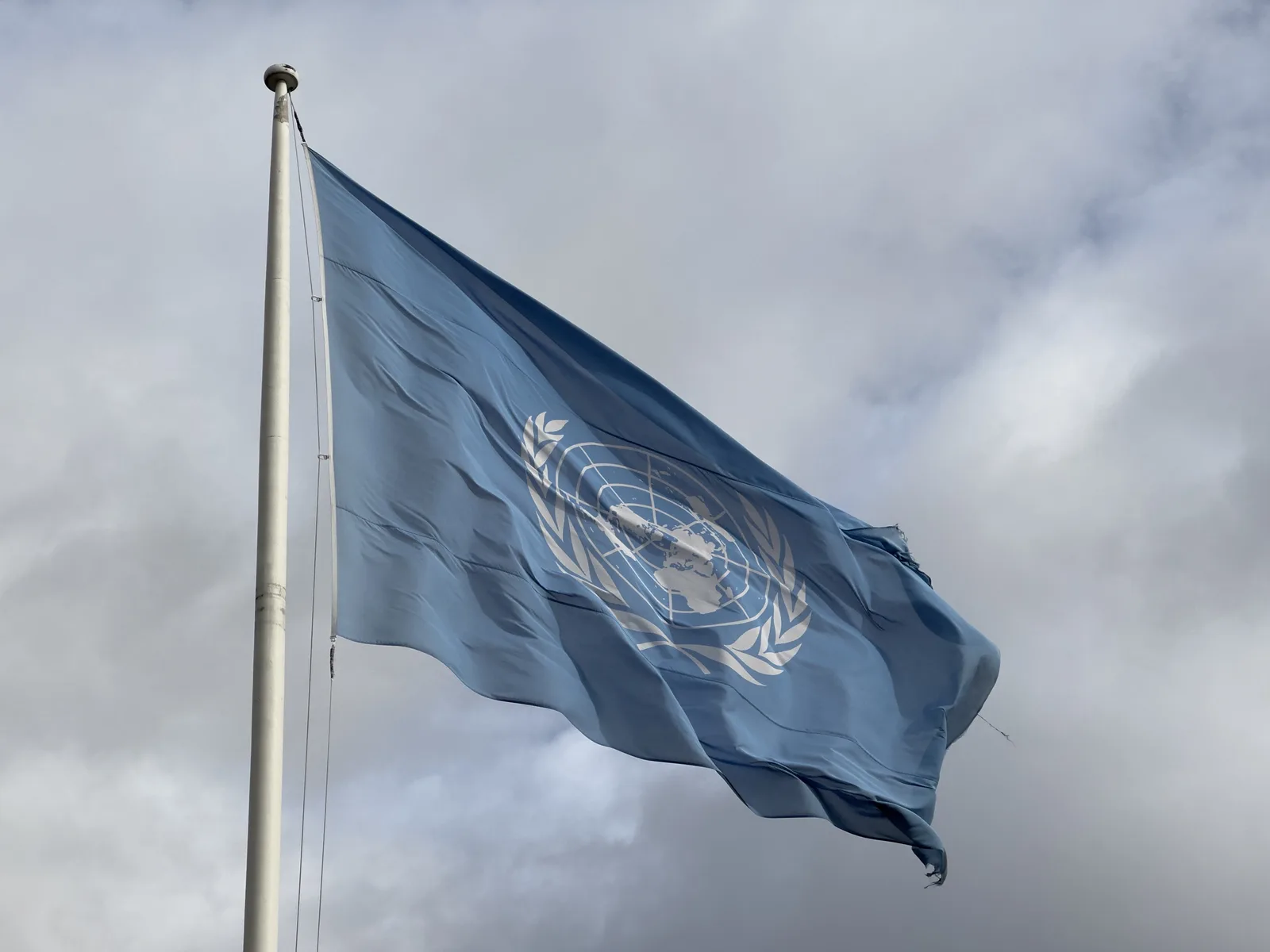
Three kinds of bodies do most ceasefire monitoring. United Nations peacekeeping operations are the heavyweights. Established by the Security Council and directed by the Secretary-General, they deploy military, police and civilian personnel — the blue helmets — under UN command. Since 1948, more than two million people from 125 countries have served in 72 UN peacekeeping operations, which collectively won the Nobel Peace Prize in 1988. UNIFIL in southern Lebanon is a current example: under Security Council Resolution 1701, passed in 2006, it helps maintain a weapons-free zone between the Blue Line — the de facto border — and the Litani River, with exceptions for the Lebanese army and UNIFIL.
Regional and political organizations run civilian monitoring missions. The leading example is the OSCE's Special Monitoring Mission to Ukraine (see below). These missions are unarmed by design — their authority comes from consensus among member states, not firepower.
Multinational and ad hoc mechanisms fill gaps: joint commissions of the belligerents themselves, third-country observer teams, or NGO and journalist networks that corroborate violations. In today's conflicts, satellite-imagery firms and open-source analysts increasingly perform a parallel monitoring function — a field we cover in our explainer on [how OSINT analysts verify combat footage](/articles/2026-09-27-how-osint-analysts-verify-combat-footage).
How a monitoring mission works day to day
A monitoring mission's day is built around patrols and reporting. Ground teams patrol the ceasefire line and flashpoints, talk to local authorities and civilians, and check specific commitments: Are heavy weapons withdrawn to the agreed distances? Fixed cameras and drones watch sectors patrols cannot reach, and the mission publishes its findings — daily situation reports, rapid "spot reports" on incidents, and thematic reports on trends.
Lacroix told the Security Council that technology now allows missions to "observe vast and complex landscapes in real time, overcoming the limitations of older methods that relied primarily on physical presence." But he stressed that technology alone does not create peace: "ceasefire monitoring can no longer be just about being present." It has to understand — and act on — what is happening on the ground, fast.
The day-to-day work also includes what monitors call freedom of movement: the right to go where the agreement says they can go. Denial of access is itself one of the most common early indicators a ceasefire is failing.
In a briefing in Hamilton, Canada, Lacroix added that "future monitoring efforts will need to address threats that extend beyond the traditional physical domains" — influence operations, cyberattacks and hybrid threats. He also stressed that missions cannot function without political backing: "The support of Member States, the support of host government and host parties, and more importantly, the support of this Council... will continue to be absolutely essential."

The OSCE in Ukraine: the closest template
The OSCE's Special Monitoring Mission to Ukraine (SMM) is the most relevant precedent for any future ceasefire in the current war. Deployed in spring 2014 after a consensus decision by all OSCE participating states, it was an unarmed civilian mission tasked with gathering information, establishing facts about incidents, monitoring respect for human rights, facilitating dialogue to reduce tensions, and reporting on any restrictions of its own freedom of movement. At its peak the mission fielded around 700 observers from more than 50 participating states.
The SMM used modern equipment — including drones and stationary cameras — to monitor adherence to the ceasefire, and shared its observations publicly: daily reports, spot reports on specific incidents, and thematic reports on trends. Its reporting was strikingly granular, logging thousands of ceasefire violations and restrictions on monitors' movement.
Scholars studying the mission have drawn hard lessons. A peer-reviewed study in Global Policy notes that the OSCE recognized in its own review that there was no "functional accountability mechanism to assign responsibility and to take follow-up action when violations occurred." Monitoring established the facts; nobody imposed consequences. That tension, between neutrality and accountability, is the central dilemma of ceasefire monitoring.
Why monitoring so often fails
Monitoring fails in predictable ways. Consent collapses: a party that agreed to be watched starts denying access, harassing patrols, or jamming the mission's drones. Impartiality is contested: each side accuses the monitors of favoring the other, and in an information war, the monitoring mission itself becomes a target of disinformation — a problem UNIFIL's head, Lt. Gen. Aroldo Lazaro Saenz, has publicly flagged around Resolution 1701. Reports have no teeth: as the OSCE's Ukraine experience showed, meticulous documentation without an enforcement mechanism becomes a chronicle of failure rather than a brake on it. The mandate is too thin: monitors observe the line while the war moves elsewhere — into cyberspace, into sabotage, into economic warfare.
None of this means monitoring is pointless. A shared factual record narrows the space for lying, gives diplomats something to negotiate around, and can slow the slide from incident to escalation. But the honest lesson of the record — from UNTSO's armistice lines to the OSCE's daily reports from Donetsk — is the one Lacroix stated plainly: monitoring can support a political process. It cannot substitute for one.