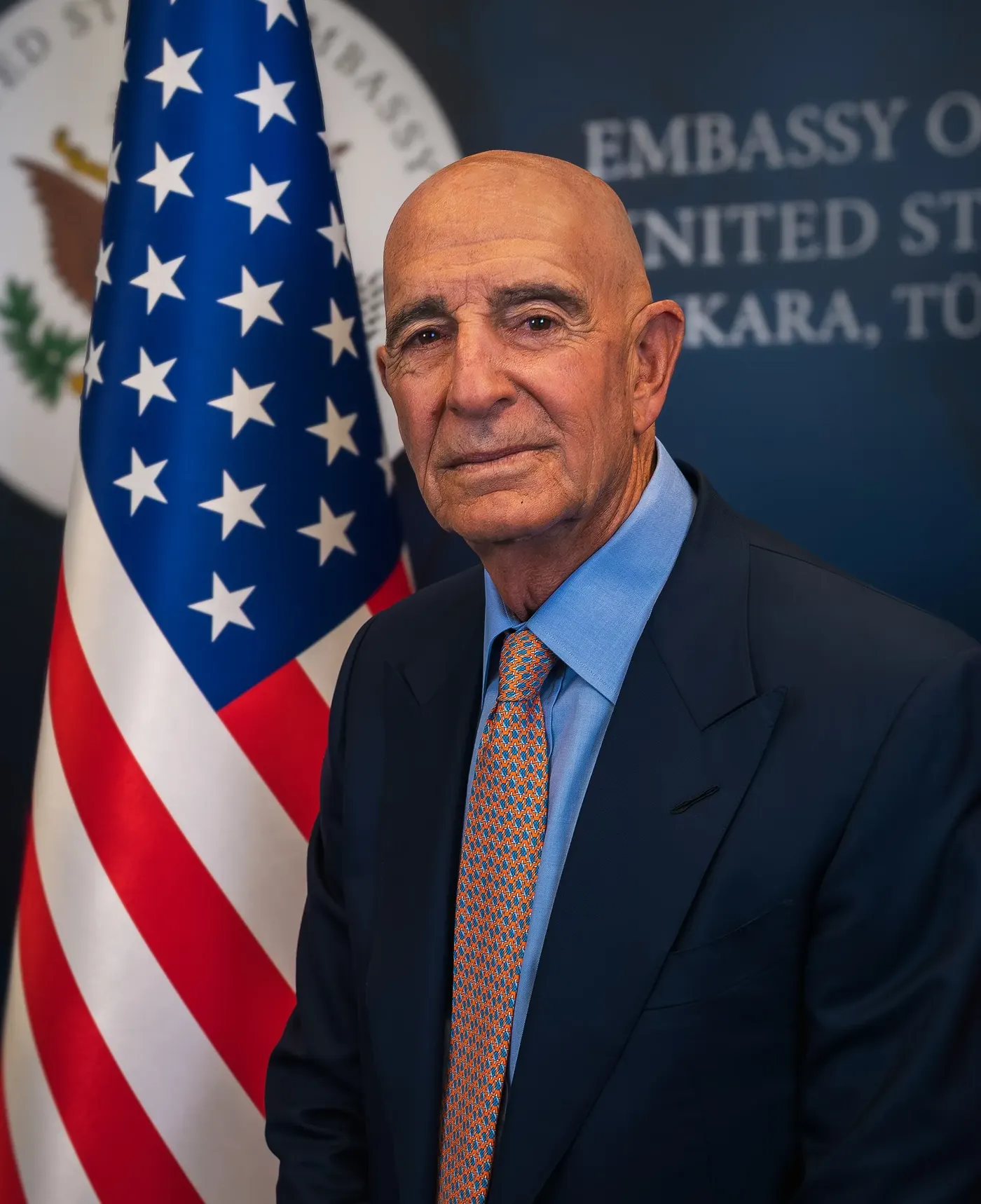
A US strike on Iran could come as soon as this weekend, President Donald Trump's ambassador to Turkey said on Friday — a timeline the president himself then said he knew nothing about, on the same day eight foreign ministers meeting in Istanbul agreed unanimously against any new attack. "Could there be a strike this weekend? Absolutely," Tom Barrack told podcast host Mario Nawfal, in an interview given while visiting the Gulf and reported by AFP. Barrack, who is also Washington's point man on Syria, holds no direct role on Iran — a qualification AFP stated in its own copy, and one that frames how the remark should be read: it is an envoy's public warning, not an announced decision. No strike order, target set or operation has been confirmed by any government in the reporting opened for this article.
What did Barrack actually say?
He paired the warning with an open door and a limited aim. President Trump "is very clear. He's open and available and accessible to a deal and we've been at the table for months and months and months," Barrack said. He said negotiations had been ongoing for months but warned that continued threats against the United States, its allies and the Gulf region would trigger consequences: "If you keep threatening the world, our allies, the Gulf, there will be a consequence. The consequence won't be regime change." He added: "The United States — the president of the United States — has said he's not interested in regime change," and "The problem with regime change always is, what's the day-two scenario?" That position contradicts Israeli Prime Minister Benjamin Netanyahu, who faces elections on Tuesday and has in recent days repeatedly vowed to topple Iran's clerical state following two major bombing campaigns against it since last year, AFP reported. Trump has also signalled an openness to resuming strikes after a long deadlock in diplomacy, although he earlier said an attack would not happen before the US congressional elections on November 3.
Asked about Barrack's comments in Florida, Trump played down the possibility of an imminent strike: "If that's the case, I don't know anything about it." Reuters reported separately that on Friday Trump said the US could end the war quickly, but questioned whether Washington should seek a swift conclusion or allow the conflict to gradually wind down. Iran, for its part, has responded to the threat of further US action by warning it could take a more aggressive approach to defence: Revolutionary Guard spokesperson Hossein Mohebi announced the activation of what he called a "decentralised mosaic defence" doctrine, warning that Iran would no longer limit itself to proportionate responses and could take the initiative by launching attacks, TBS News reported. Tensions have also extended to potential disruption of regional infrastructure, including Iranian threats against Gulf internet infrastructure and continuing friction around the Strait of Hormuz — the subject of this site's October 23 report on Tehran's undersea-cables planning.
What did the Istanbul ministers agree?
The opposite course, unanimously, on the same day. Turkish Foreign Minister Hakan Fidan met his counterparts from Egypt, Pakistan, Saudi Arabia, Germany, France, Britain and Italy in Istanbul on Friday to discuss the Iran war, Houthi attacks on Saudi Arabia, and Russia's war in Ukraine — the first collective meeting of the Regional Four (R4) and the E3 alongside Italy, Reuters reported. "We are all in agreement that a new attack on Iran would expand the war in the region," Fidan told a press conference afterwards. "A military intervention on Iran is not in any way a solution. Nobody approves this at the moment." He added that diplomacy and dialogue were the only way to end the war, and that the ministers had discussed possible parameters to ensure the war does not expand further, without elaborating. French Foreign Minister Jean-Noel Barrot said renewed escalation between Iran and the United States would only have losers and would raise oil prices. German Foreign Minister Johann Wadephul said Germany, France and Britain were ready to negotiate with Iran to rule out its acquisition of nuclear weapons, while calling for support for Saudi Arabia and Yemen.
The Istanbul comments followed a New York Times report on Wednesday, carried by Reuters, that the US and Israeli militaries had drawn up specific plans for renewed strikes against Iran after next month's midterm elections, with likely targets including Iran's energy infrastructure, nuclear facilities, and its missile and drone arsenal, citing US officials. That reported timetable — after November 3 — sits alongside Barrack's "this weekend" and Trump's professed ignorance of it. The three public timelines do not agree, and none of the reporting opened for this article establishes which, if any, reflects an actual order.
How are markets pricing the weekend risk?
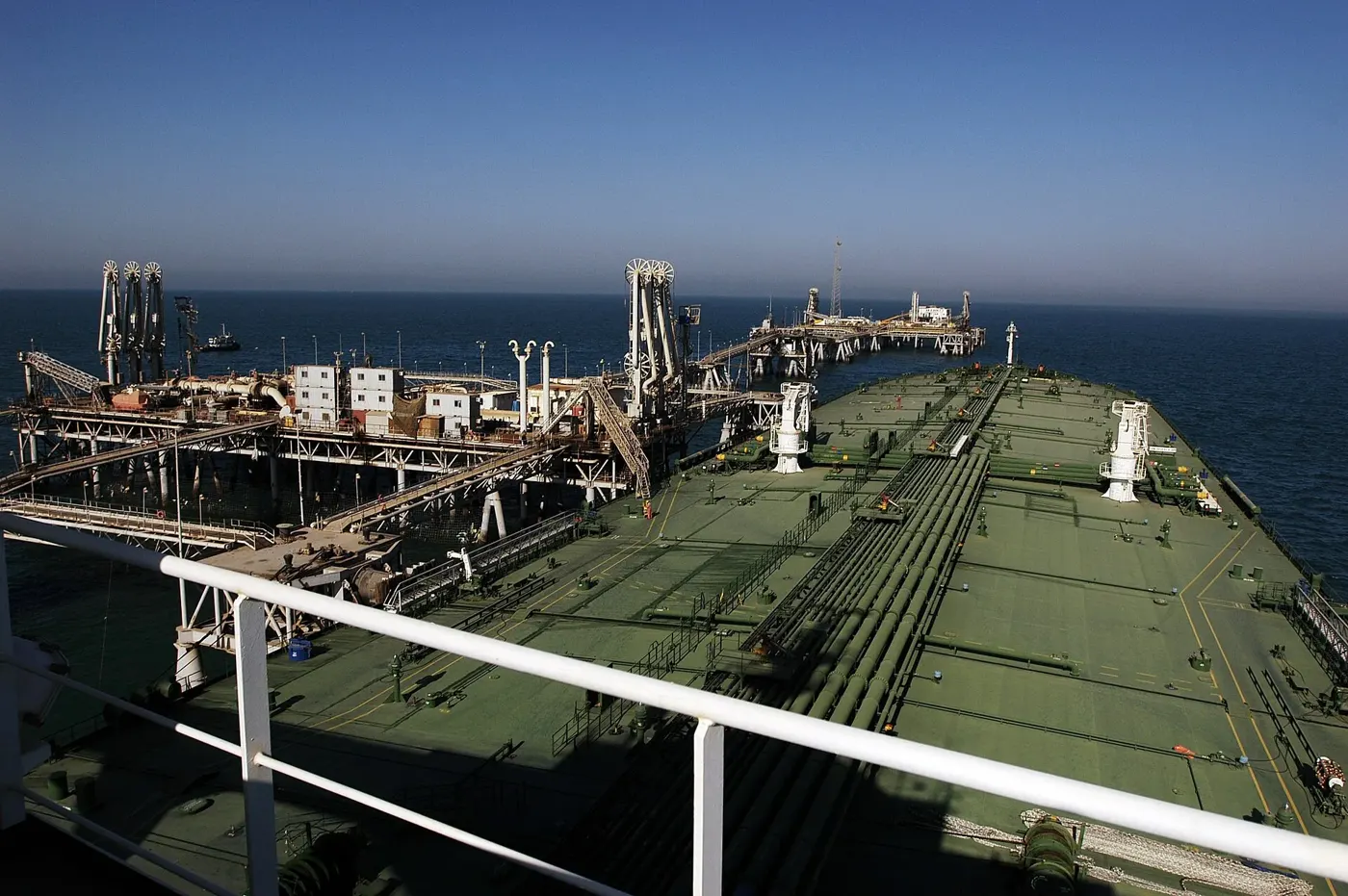
Oil closed the week at its highest in nearly six months. Brent crude futures settled at $116.72 a barrel on Friday, up $3.55 or 3.14 percent — their highest settlement since April 29 — and US West Texas Intermediate closed at $103.27, up $3.80 or 3.8 percent, Reuters reported. Brent finished the week up 6 percent and WTI 2.3 percent higher. Reuters attributed Friday's advance to Houthi attacks in Saudi Arabia stoking concerns over further disruption to energy supplies from the Middle East, where UAE authorities also reported an oil spill from a tanker off Umm Al Quwain; the ministry did not say what caused the spill and authorities have not identified the tanker. "Fears of supply disruptions drove the advance after Iranian-backed Houthi rebels carried out a series of attacks across Saudi Arabia, including on energy infrastructure," said Adam Turnquist, chief cross-asset strategist for LPL Financial. October has been the worst month for attacks on commercial shipping in the Strait of Hormuz and nearby waterways, according to data compiled by a Washington-based think tank that has tracked maritime security incidents since 2017, Reuters reported. The snapshot box above carries the settlement figures with their check time; they are publish-time snapshots, not live prices, and this article offers no view on what prices will do next.
This report is drawn from AFP's October 23 dispatch, opened and read in full via its verbatim carrier; Reuters' October 23 Istanbul report, opened and read in full via its verbatim carrier; TBS News' October 24 report, opened and read in full; and Reuters' October 23 oil report, opened and read in full via its verbatim carrier. Barrack's weekend remark is published as what it is — a statement by an envoy without a direct Iran portfolio, as AFP itself noted — and President Trump's on-record response is stated alongside it. No US strike decision has been announced in the reporting opened.