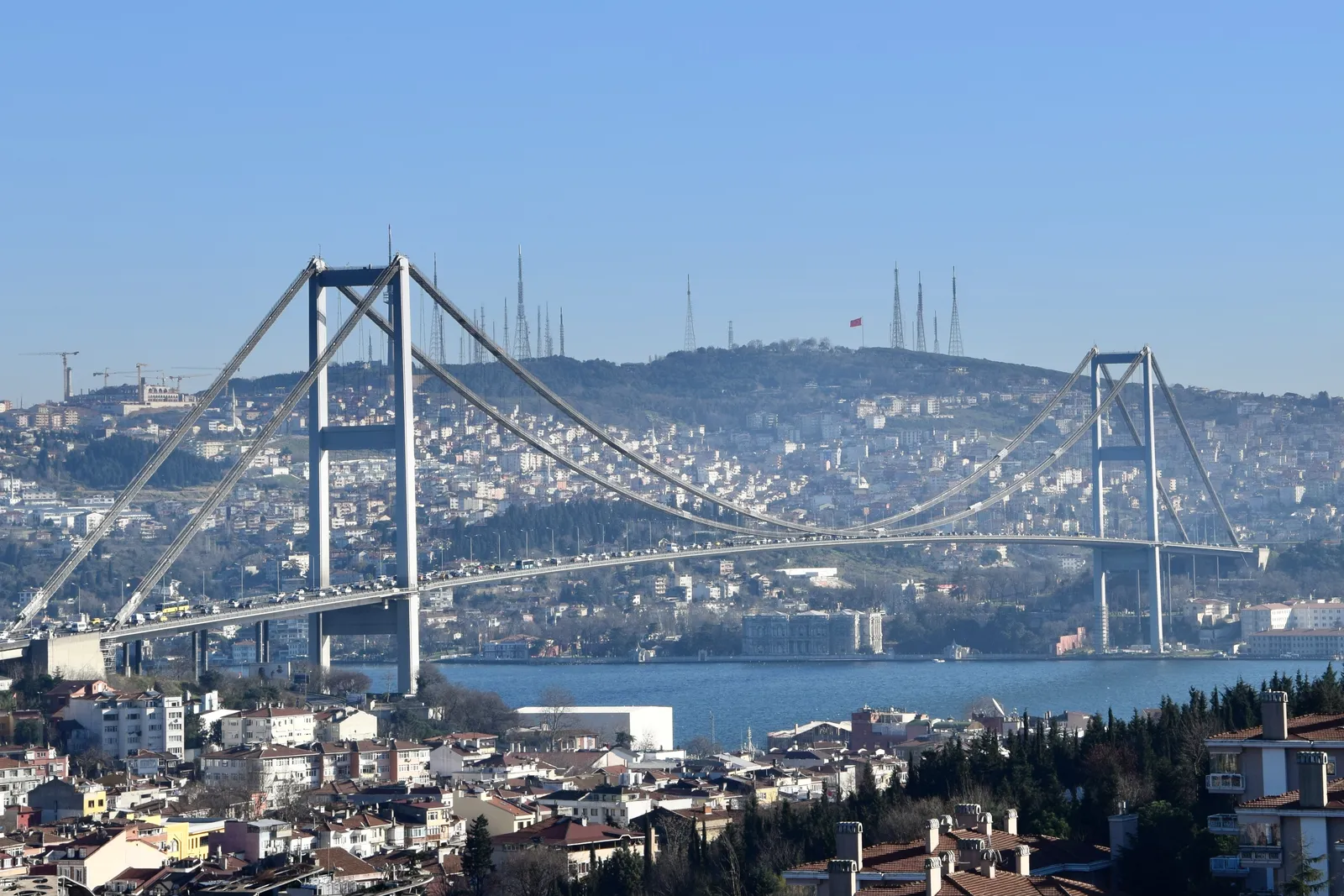
Turkey will host the foreign ministers of Egypt, Pakistan, Saudi Arabia, Britain, France and Germany in Istanbul on Friday for talks on regional conflicts — the first meeting in this seven-country format — as wars involving Iran, Yemen and Ukraine threaten shipping routes and regional security, a Turkish diplomatic source told Reuters on Thursday. Foreign Minister Hakan Fidan will chair the meeting, which Turkey itself initiated. The agenda reaches across every active conflict file this site covers: the Israeli-Palestinian issue, the Strait of Hormuz, Yemen, and the effort to end the Russia-Ukraine war.
Who is meeting in Istanbul on Friday?
Fidan and six counterparts: the foreign ministers of Egypt, Pakistan and Saudi Arabia from the region, and of Britain, France and Germany from Europe. The seven countries will meet in this format for the first time, at Turkey's initiative, the source said. No agenda document or joint-statement plan was described in the reporting opened for this article, and the meeting's expected outcomes were not stated — the source described what the ministers are expected to discuss and the lines Fidan is expected to take, not any agreement the group is expected to reach.
What is on the agenda?
Four conflict files, plus the format itself. The ministers are expected to discuss the Israeli-Palestinian issue; the latest situation in the Strait of Hormuz, where Iran's Islamic Revolutionary Guard Corps said on Thursday that four vessels were hit in the northern Persian Gulf and three more collided with mines west of the strait — a claim reported by Reuters that has not been independently confirmed; developments related to Yemen, whose Houthi movement has struck targets across Saudi Arabia this week, killing at least one person at Dammam's civilian airport and two at a Saudi oil field on Wednesday; and efforts to end the Russia-Ukraine war. The fifth item is structural: opportunities for closer cooperation between the regional and European countries — the reason a seven-country table is being set at all.
What will Turkey argue?
Fidan is expected to emphasise the need for a diplomatic solution to the war between the United States and Iran, and the importance of freedom of navigation in the two straits that frame the region's energy trade — Hormuz at the mouth of the Gulf and Bab el-Mandeb at the mouth of the Red Sea. Both are under pressure at once: the IRGC's vessel claims around Hormuz, and the Houthis' campaign from Yemen's coast. He will also reiterate Turkey's support for Saudi Arabia's security against attacks by Yemen's Iran-aligned Houthi militants under the Mecca Joint Defence Agreement signed between Turkey, Pakistan and Saudi Arabia — two of whose other signatories, Pakistan and Saudi Arabia, will be at the same table. On Ukraine, Fidan will tell counterparts that Turkey has been working to stop the war spreading to the Black Sea, pointing to the regional security risks the conflict poses, the source said.
How are markets pricing the straits risk?
The talks convene with energy markets already pricing the insecurity the agenda describes. Brent crude futures climbed $2.82, or 2.59 percent, to $111.64 a barrel at 06:26 GMT on Thursday, close to a five-month high, and US West Texas Intermediate crude gained $2.24, or 2.31 percent, to $99.39, after more Houthi attacks in Saudi Arabia stoked concerns over a broader escalation of conflict and further disruptions to crude supplies, Reuters reported. "Oil prices remain well bid, with ICE Brent back above $110 per barrel this morning following additional deadly attacks on Saudi Arabia," ING analysts said in a note on Thursday. US crude stocks fell by 3.06 million barrels last week, the Energy Information Administration said — a draw roughly four times the 820,000 barrels analysts had expected in a Reuters poll. Spot gold moved the other way: it slid 1.1 percent to $4,094.90 an ounce by 03:33 GMT, its lowest since October 14, as rising oil prices stoked inflation concerns and reinforced expectations that interest rates could stay higher for longer, Reuters reported. The snapshot box above carries the figures with their check times; they are publish-time snapshots, not live prices.
This report is drawn from Reuters' October 22 report of the Istanbul meeting announcement, opened and read in full on reuters.com, where every element of the meeting, the agenda and Fidan's expected lines rests on a single Turkish diplomatic source's account, as stated above; Reuters' October 22 oil report, opened and read in full via its verbatim carrier; and Reuters' October 22 gold report, opened and read in full via its carrier. The IRGC's vessel claims are published as that force's claim, carried by Reuters, with no independent confirmation in the reporting opened.