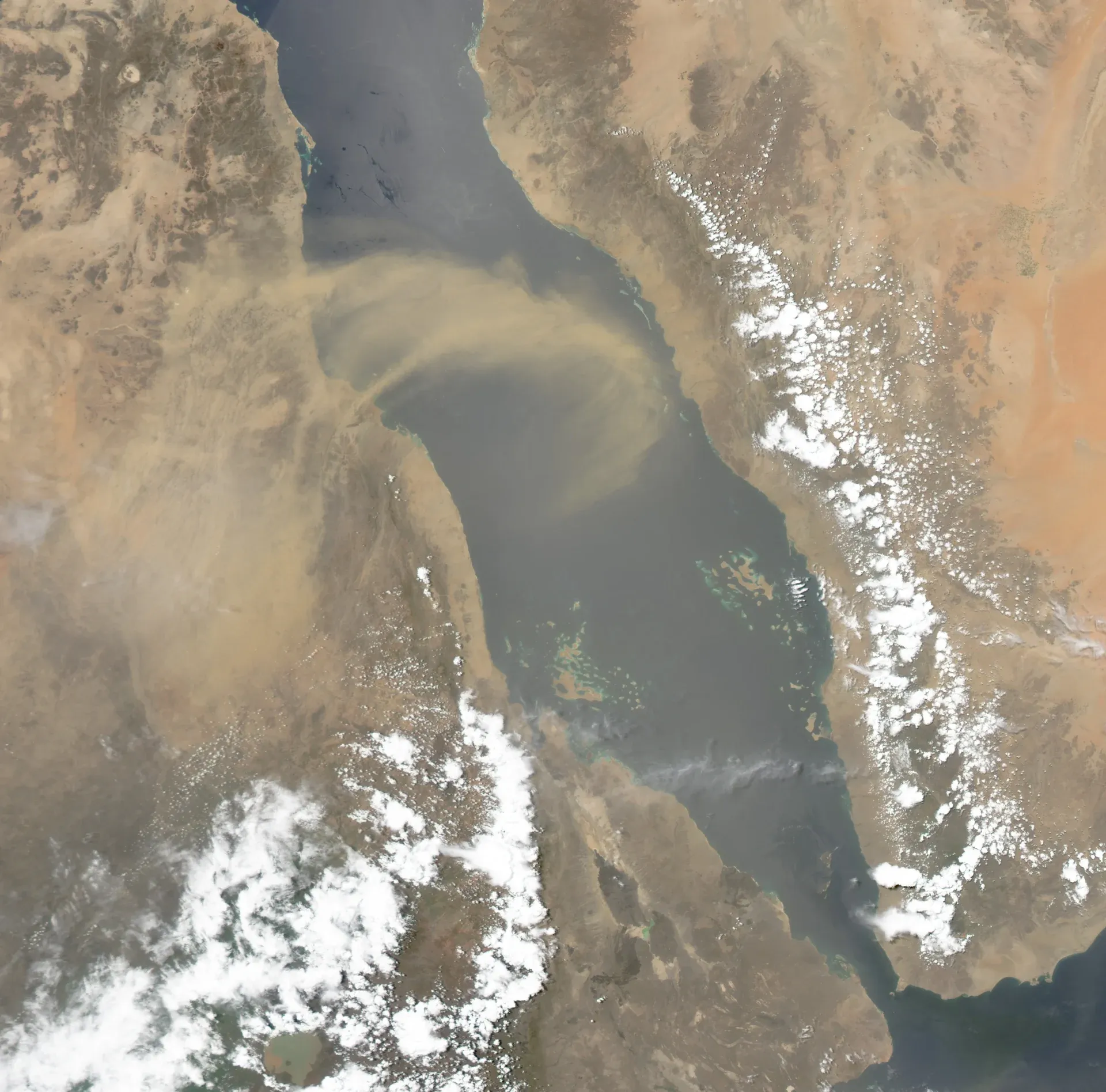
Three more vessels were struck by unidentified projectiles in the Strait of Hormuz on Monday evening, and a bulk carrier anchored off the UAE coast was hit on Sunday — four more vessels in two UKMTO warnings received on Tuesday, with all crews safe and no attacker named. The incidents extend a November pattern of near-daily strikes in the waterway, which carried nearly one-fifth of global crude oil supplies before the US-Israeli conflict with Iran, Reuters reported. The Gulf file is tracked on this site's Middle East hub, and the waterway itself is set out in our Strait of Hormuz explainer. Attribution is absent from the reports: UKMTO named no attacker, and this article names none.
What changed on Tuesday 24 November?
What we know: two more UKMTO warnings landed on Tuesday, covering four more vessels. A bulk carrier anchored at Dibba, off the UAE coast, was struck on its port side by an unknown projectile at 10:26 UTC on Sunday 22 November, starting a fire on board; no casualties were reported, UKMTO said in warning 218-26, a time-late report received on Tuesday. The anchorage lies 23 nautical miles north-east of Khor Fakkan. Separately, three vessels transiting eastbound through the Strait of Hormuz were struck by unidentified projectiles at 20:25 UTC on Monday 23 November, UKMTO said on Tuesday in warning 219-26; all three continued their journeys and all crew members were accounted for, with damage and any environmental impact unknown. Reuters carried the three-vessel report on Tuesday.
What is claimed: Iran's Revolutionary Guards navy said three "violating" oil tankers caught fire after hitting naval mines in the strait on Monday, Press TV reported, Reuters noted. The United States is investigating whether Iran was behind cyberattacks on as many as 50 energy tankers, the Wall Street Journal reported, Reuters noted.
What is unverified: whether the three vessels in UKMTO's warning are the same three tankers the Revolutionary Guards said hit mines — no source opened establishes that, and the two accounts describe different weapons (unknown projectiles in the UKMTO warning; mines in the Guards' claim) and different outcomes (the UKMTO vessels continued their transit; the Guards' tankers are said to have caught fire). The two accounts are kept separate here. No vessel names, flags or damage details have been published for any of the four vessels in Tuesday's warnings, and UKMTO attributes none of the strikes.
Oil eased on Tuesday even as the shipping risk persisted. Brent crude futures fell 40 cents, or 0.45%, to $88.97 a barrel by 0147 GMT after posting their lowest close since 31 August on Monday, and WTI slipped 23 cents, or 0.29%, to $79.94, after hitting its lowest since 26 August, Reuters reported. The figures in the snapshot box are Tuesday's 0147 GMT trade as reported by Reuters; they are not live prices, and nothing in this article is financial advice.
What changed on Monday 23 November?
The two tankers hit near Khasab on Saturday were two different vessels — the Hong Kong-flagged VLCC Torkel and the Hong Kong-flagged Suezmax Arina — and at least 22 attacks were reported in and around the strait in November as of Sunday, the second-highest monthly figure since the war began. That identification resolves the open question in the original report below, which could not establish whether the stern hit 11 nautical miles north of Khasab and the engine-room hit 17 nautical miles east of Khasab were one vessel or two. They were two: the outbound Torkel was hit in the stern at about 0500 UTC and its crew was evacuated, according to maritime security firm Vanguard Tech, and at about 0550 UTC the outbound Arina was hit in the engine room and the strike started a fire on board, the Maritime Executive reported; no casualties were reported in either incident. Vanguard Tech and analyst Noam Raydan both identified the vessels, the Maritime Executive reported, and Raydan counts at least 22 confirmed attacks in and around the strait since the start of the month. A third tanker was hit a day earlier: fire erupted aboard the Captain Leon, a Marshall Islands-flagged chemical and oil tanker, after it was struck at the bow at 3pm UTC on Friday, and all crew were reported safe, the risk firm Marisks said, CNN reported. Marisks did not confirm who was behind the attacks, though it said Iranian involvement was "assessed as likely" — an assessment, published here as such; UKMTO itself attributes none of the hits.
The count is now a record pace. In October the number of attacks reported to UKMTO exceeded 30 for the first time since the war began in late February, and as of Sunday at least 22 attacks were reported in November, the second-highest figure since the war began, according to CNN's analysis of UKMTO data; before October, reported attacks averaged around 10 a month. The numbers are likely an undercount, since UKMTO reports only incidents verified through primary sources: "Additional incidents are known but cannot be independently verified," the centre said in its weekly overview. UKMTO counted six tankers attacked in the week to 18 November and has recorded 106 incidents in the strait since the conflict began on 28 February, and transits fell to 263 that week from 308 the week before, the Maritime Executive reported; the Joint Maritime Information Center rates the threat in the strait as "severe", meaning an attack is highly likely.
Oil held its risk premium on Monday. Brent crude futures fell 47 cents, or 0.51%, to $92.10 a barrel by 0738 GMT, and WTI fell 43 cents, or 0.52%, to $82.98, after Brent rose to a session high of $93.12, Reuters reported; Brent declined 4% last week and WTI 5%. "A tense US-Iran stalemate increasingly looks like the base case through year-end, but Trump can still flip-flop over the prospect of renewed military action," said Vandana Hari, founder of oil market analysis provider Vanda Insights. "The ebb and flow of threats and harsher rhetoric from Washington and Tehran will likely continue to drive the marginal geopolitical risk premium in crude, while keeping prices broadly rangebound unless either side takes more concrete steps towards escalation," Hari said. Reuters noted the fighting continues to support prices: on Sunday the Iran-aligned Houthi movement claimed it attacked a Saudi Arabian oil refinery — the Rabigh claim this site has reported only as an unconfirmed claim — while UKMTO reported multiple attacks on shipping in the Gulf and near the strait over the weekend. The figures in this paragraph are Monday's 0738 GMT trade as reported by Reuters; the snapshot box now carries Tuesday's figures (see the update above). They are not live prices, and nothing in this article is financial advice.
What did UKMTO report on Saturday?
The tanker was transiting outbound when the projectile hit its stern, UKMTO said, in the account Reuters published on Saturday morning. Khasab lies on Oman's Musandam Peninsula at the entrance to the strait. Shipping through the strait has been disrupted since Iran moved to close the waterway following the eruption of the conflict on 28 February, Reuters reported. No injuries were reported in Saturday's incident, and UKMTO said the environmental impact was unknown.
A second UKMTO report circulated on Saturday with different particulars. The Indian outlet NewKerala, carrying the UKMTO warning, described a tanker struck in its engine room by an unknown projectile 17 nautical miles east of Khasab at 0550 UTC on Saturday, in a warning posted on X, labelled an attack and sourced to military authorities, with no casualties reported and any environmental impact unconfirmed. Whether that report describes the same vessel as the stern hit 11 nautical miles north of Khasab — two positions, two parts of the ship, one morning — was not clear in the sources opened, and the two reports are kept separate here rather than merged into one incident. NewKerala's account also carried an IRGC claim from earlier in the day: that its Aerospace Force had intercepted and shot down a US MQ-9 drone over the strait with a newly deployed air defence system. That claim rests on the IRGC alone in the sources opened and is published only as its claim.
How frequent have the incidents become?
At roughly one incident per day in November, on UOB Group's count — and at least 22 attacks were reported in the month as of Sunday, on CNN's count. UOB Group, a Singapore-based bank cited by Finimize in its Friday market wrap, said incidents were running at "roughly one incident per day in November". Reuters cited reports of two tankers striking naval mines on Thursday, Finimize reported — the IRGC Navy's claim, which this site reported on Thursday and Friday only as a claim, in the oil prices report and the markets briefing. Saturday's UKMTO report differs from the mine claims in kind: it is the maritime authority's own incident report of a projectile hit, with no attribution offered by UKMTO and none established in the sources opened.
The pattern now runs alongside the Red Sea escalation covered in our report on the Saudi coalition's Hodeidah port strikes and the Houthis' warnings: two chokepoints, two incident streams, one shipping system absorbing both.
Why did oil rise on Friday and fall on the week?
Both things happened: Brent settled up 0.6% at $92.57 on Friday while ending the week down 3.4%, and the sources opened attribute the two moves to different forces. Brent crude for January delivery rose 0.6% to settle at $92.57 a barrel on Friday, ending the week with a 3.4% loss — its third straight weekly decline — while WTI rose 0.9% to $83.98 on the day and fell about 5% on the week, the Wall Street Journal and Finimize reported. The weekly decline is the supply story: crude futures fell for a third straight week as increasing supply out of the Middle East outweighed concerns about continuing strikes across the region, the Journal reported, with Macquarie's Walt Chancellor noting that "resilient flows through the Strait of Hormuz remain the story for energy markets broadly, extending to LNG recently", while adding that "we cannot altogether dismiss the potential for escalation". Friday's rise is the risk story: traders repriced shipping risks around the strait and bought crude ahead of the Thanksgiving holiday, Finimize reported. The next dated waypoint is the OPEC+ meeting on 29 November, which traders are watching for any hint of tighter supply, Finimize reported. The figures in this section are Friday's settlements; the snapshot box was refreshed on Tuesday 24 November with Reuters' 0147 GMT trade (see the update above). None of the figures are live prices, and nothing in this article is financial advice.
Update sources (24 November 2026): Reuters (24 November, read in full via the rostered devdiscourse.com syndication) for the three-vessel UKMTO report; Ship & Bunker (24 November, read in full) and AzerNEWS (24 November, read in full) for the Dibba bulk-carrier warning's particulars, both quoting UKMTO verbatim; and Reuters (24 November, read in full on reuters.com) for Tuesday's oil figures, the Revolutionary Guards' mine claim as carried by Press TV, and the Wall Street Journal's cyberattack-investigation report. Whether the three UKMTO vessels are the three tankers in the Guards' mine claim is not established in any source opened, and the two accounts are kept separate. The snapshot box was refreshed on 24 November with Reuters' Tuesday 0147 GMT figures, as labelled in the box.
Update sources (23 November 2026): the Maritime Executive (22 November, read in full) for the Torkel and Arina identifications, the evacuation and fire details and the UKMTO weekly counts; CNN (22 November, Tier 2, read in full) for the Captain Leon strike and the November count of at least 22 attacks; and Reuters (23 November, Tier 1, read in full via the rostered wtbx.com carriage) for Monday's oil figures in the snapshot box. The update resolves the original report's open question: the two Saturday UKMTO reports described two different vessels. Marisks' 'assessed as likely' Iranian involvement is published as its assessment; UKMTO attributes no hit. Original sources: Reuters (21 November 2026, read in full on reuters.com) for the UKMTO stern-hit report and the strait's pre-war share of global crude; NewKerala (21 November 2026, read in full) for the second UKMTO warning's particulars, published with its separateness stated; Finimize (20 November 2026, read in full) for the UOB incident-rate line and the weekly market framing; and the Wall Street Journal's 20 November oil reports (Tier 2, finance desk) for the settlement figures in the markets box. The two UKMTO reports are not merged: their positions and impact points differ, and no source opened establishes whether they describe one vessel or two. The IRGC's MQ-9 and mine claims are published only as its claims. Market figures in the original report are Friday settlements as reported by the Journal; the weekly Brent change is the Journal's 3.4% figure (Finimize's wrap put the weekly drop at about 4%, and that divergence is noted rather than smoothed). The snapshot box was refreshed on 23 November with Reuters' Monday 0738 GMT figures, as labelled in the box.