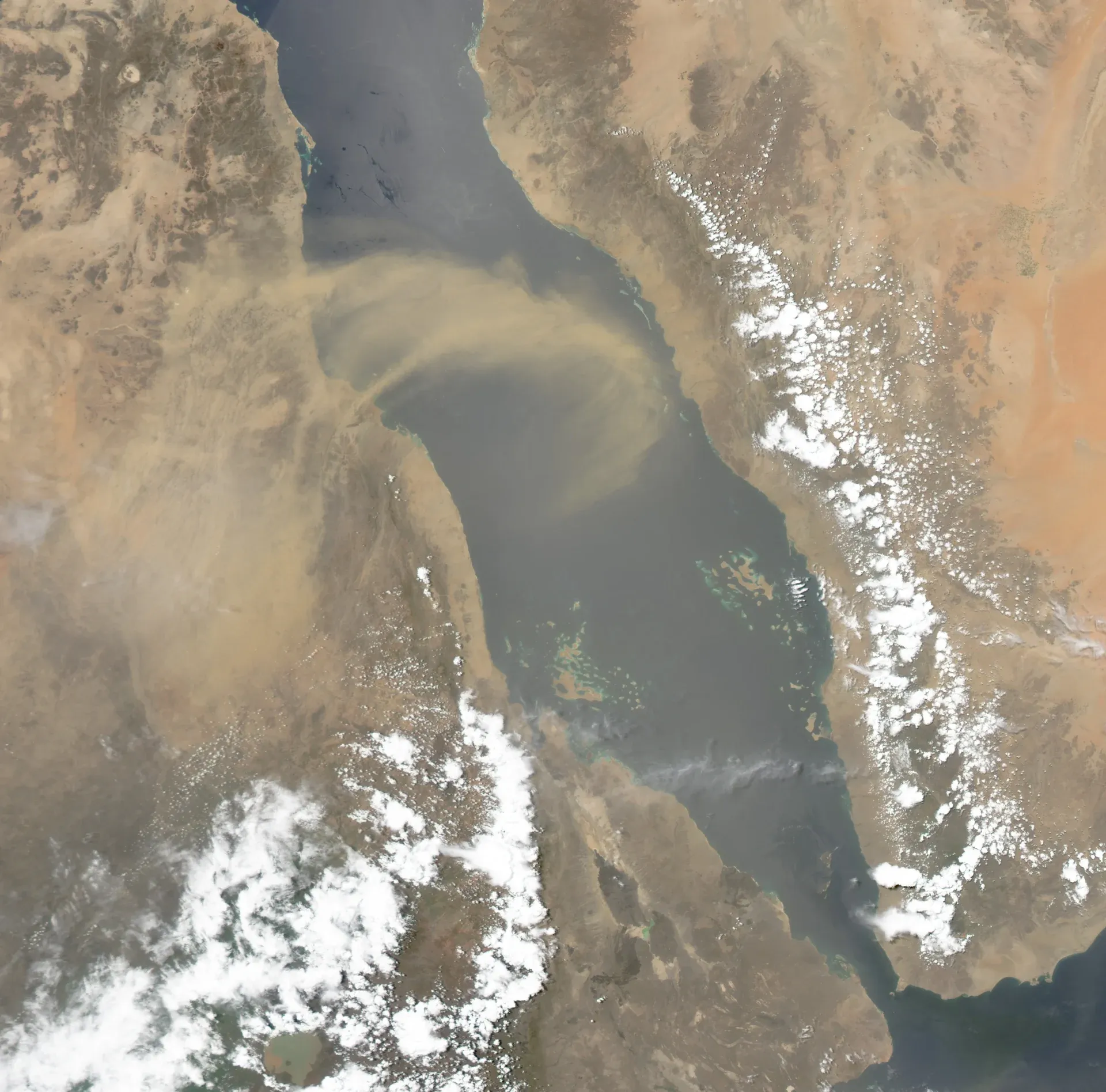
The Houthis fortify Bab al Mandeb: the movement is constructing a network of fortifications, including tunnels and berms, along the strait at the southern edge of the Red Sea coastal plain, and has begun deploying radar systems to detect vessels transiting it, unspecified military and local sources told the UK-based, Qatari-owned newspaper Al Araby Al Jadeed on 21 November, the Institute for the Study of War (ISW) reported. The Gulf and Red Sea files are tracked on this site's Middle East hub, and the strait itself is set out in our Bab al-Mandeb explainer. The fortification claims rest on unnamed sources carried by one newspaper and reported by a Tier 3 assessment; they are published here with that attribution and with ISW's own caution attached.
What are the Houthis building along the strait?
Fortifications designed to survive airstrikes and to watch the shipping lane, on the sources' account. The tunnels, in particular, are designed to conceal and protect Houthi armoured vehicles, military equipment and weapons crews deployed to the area from Saudi airstrikes, the sources claimed. The radar systems now being deployed along the strait are there to detect vessels transiting it, they added, and recent Houthi construction work atop Jabal Kahbub could indicate plans to install missile and drone launchers overlooking the strait. The radar interest is not new: international media reported on 19 September that Iranian Islamic Revolutionary Guard Corps (IRGC) operatives visited Houthi positions along the Bab al Mandeb to survey potential radar positions, ISW noted. ISW's assessment of what this adds up to is direct: the Houthis are "now likely exploiting this favorable operational environment to establish a fortified base for close-range strikes on vessels in the strait, if these reports are accurate" — and radar arrays along the strait would likely let the movement track nearby vessels with greater accuracy and use short-range weapons, including artillery, against them.
Why can they build there now?
Because the other side left. Yemeni government-aligned forces have withdrawn from all positions within 65 kilometres of the Bab al Mandeb in recent days — the pullback this site reported on 15 November, when government forces withdrew from the Bab el-Mandeb area — and that withdrawal has insulated the terrain and logistical lines on the coastal plain from potential ground or artillery attacks and enabled the Houthis to secure the area, ISW reported. ISW has assessed since September 2026 that consolidated Houthi control over terrain along the strait would permit the movement to use a broader range of strike platforms to threaten shipping in it. ISW also read the movement's recent promises to ensure safe passage for non-Saudi civilian vessels as something else: "declarations of illegal authority over international shipping", with the movement "setting long-term conditions to control international maritime traffic with violent force".

Are government-aligned forces fighting back anywhere?
In Lahij Governorate, reportedly — though ISW could not verify the claims. UK-based, Saudi-owned media reported on 21 November that Yemeni government-aligned forces engaged Houthi fighters in the vicinity of Mabaq, along the Taiz–Aden ground line of communication in Maqatirah District, northern Lahij, and that the Houthis had attacked government-aligned forces north of Jabal Kharaz in central Lahij on 20 November, ISW reported. An independent Yemeni journalist separately reported on 20 November that government-aligned forces assaulted and recaptured several Houthi-held positions near Am Sarih, recaptured Jabal Habanan, about 15 kilometres north of Am Sarih, and advanced into the nearby village of al Hanjarah. "ISW-CTP cannot verify any claims of Yemeni government advances in Lahij Governorate at the time of this writing," the update said, and it assessed that government-aligned forces have repeatedly demonstrated poor coordination and face a high risk of overextension in the governorate, where recent Houthi deployments indicate the movement seeks to overwhelm them with simultaneous engagements along several lines toward Aden — the advance this site covered in the Houthis' 60-kilometre push toward Aden.
What else did the weekend bring on this front?
The air war over Saudi Arabia continued. Saudi air defences intercepted a Houthi drone over southern Saudi Arabia and three ballistic missiles over Riyadh on 20 November, and intercepted another Houthi drone over Riyadh on 21 November, ISW reported, citing the coalition spokesman's statements — the Riyadh interceptions are the ones this site folded into its report on the Saudi coalition's Hodeidah port strikes. ISW assessed that the Houthis likely targeted Saudi critical infrastructure on 20 November as part of an ongoing campaign to compel Saudi Arabia to end military operations in Yemen and accept Houthi economic demands, which include ending Saudi support for Yemen's government, lifting Saudi controls on Houthi-controlled ports and airports, and granting the Houthis control over Yemen's oil and gas resources.
Sources: the Institute for the Study of War and Critical Threats Project's Iran Update of 21 November 2026 (Tier 3, read in full on understandingwar.org). The fortification, radar and Jabal Kahbub claims are those of unspecified military and local sources speaking to Al Araby Al Jadeed, as reported by ISW, and are published as such — no second source confirming the construction was opened for this article, and ISW's own conditional wording is carried in the text. The Lahij fighting claims are published with ISW's non-verification stated. The Saudi interception claims are the coalition spokesman's, as cited by ISW.