The Seven Years' War, explained: from 1756 to 1763, two coalitions — France, Austria, Saxony, Sweden, and Russia against Prussia, Hanover, and Great Britain — fought across Europe, North America, India, the Caribbean, and West Africa, folding the Anglo-French struggle for colonies into one conflict. It was the first war fought on a global scale: the National Army Museum says it "can claim to be the original 'world war'"; Churchill titled his chapter on it "The First World War" — what naval historian Daniel Baugh calls "an accurate name for it." The peace left Britain the world's leading colonial power, France's overseas empire in ruins, and Prussia — survivor of a war against three great powers — confirmed among their ranks.
Key takeaways
- Two wars became one: Austria's bid to retake Silesia from Frederick the Great's Prussia collided with the Anglo-French colonial rivalry in North America and India. A "diplomatic revolution" — France aligning with old enemy Austria, Britain with Prussia — fused them into one global conflict.
- The fighting started early and ran long: clashes in the Ohio Valley began in 1754, formal declarations followed in 1756, and peace came only in February 1763 with the treaties of Paris and Hubertusburg.
- Britain bought victory: William Pitt's government borrowed heavily, subsidized Prussia's war in Europe, and reimbursed the colonies for raising troops — winning a world war and nearly bankrupting the treasury.
- The bill came due in people, not just pounds: no reliable global death toll exists — Fred Anderson notes there are "no good compilations" even for North America — but disease dwarfed battle deaths: the Royal Navy lost 1,512 men in action and 133,708 to disease, two-thirds to scurvy.
- Victory seeded the next revolution: London's postwar taxation drive triggered the Stamp Act crisis and Pontiac's Rebellion; France's humiliation drove it into the American Revolution on the Patriots' side fifteen years later.
Contents
Overview
What was the Seven Years' War? It was a global war (1756–1763) between an alliance of France, Austria, Saxony, Sweden, and Russia on one side and Prussia, Hanover, and Great Britain on the other, with the Anglo-French struggle for North America and India folded into the same conflict — the first war fought across five continents, which is why historians from Churchill to Baugh treat it as the original world war.
Why did it start?
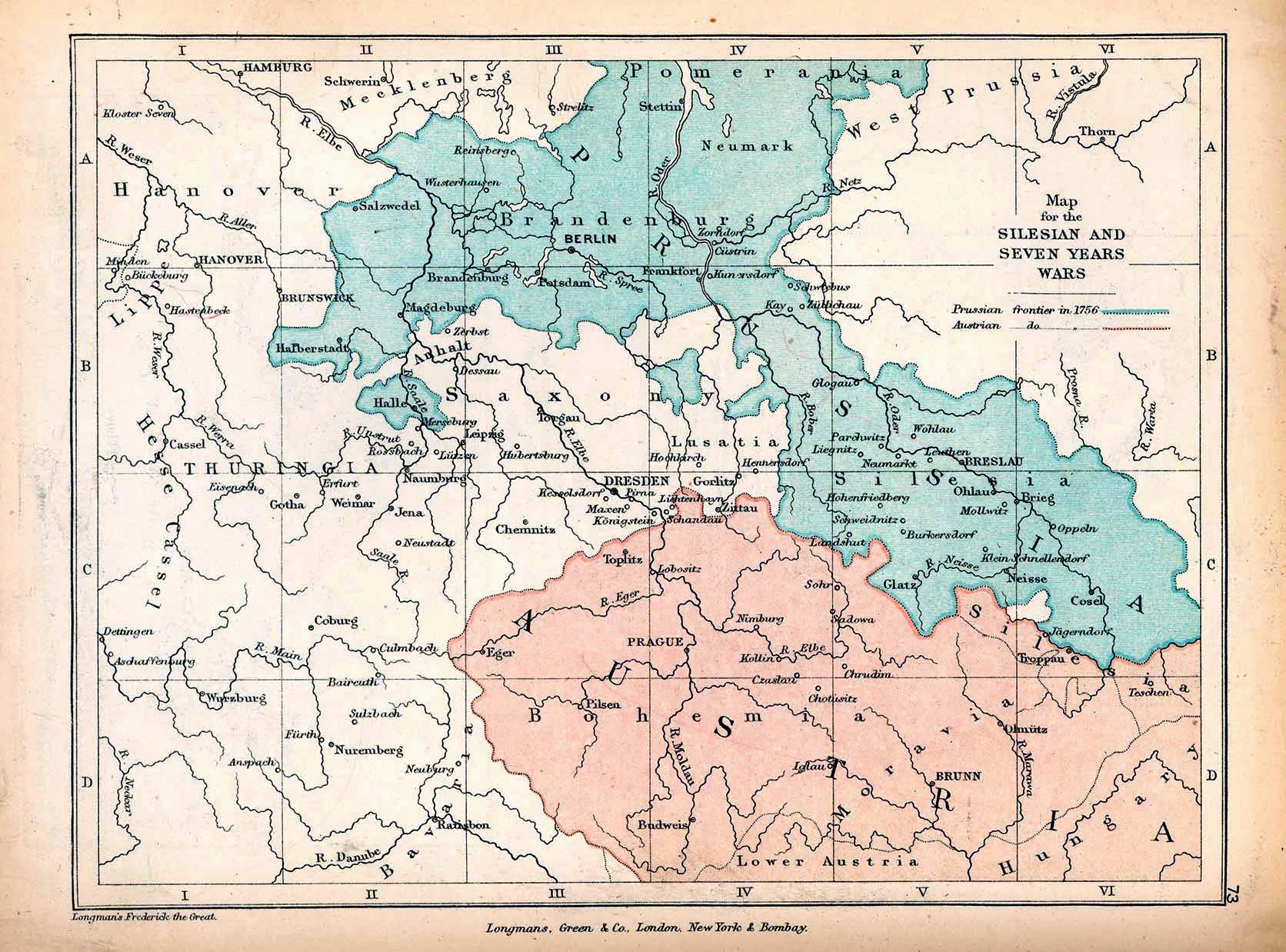
Two rivalries ignited at once. In Europe, the cause was Silesia: Frederick II of Prussia had seized the rich province from Austria's Habsburgs in the 1740s, and Vienna was determined to take it back. In the colonies, Britain and France were sliding toward war over the Ohio Valley and India, where their settlers and trading companies were already fighting by proxy. What Britannica calls the "diplomatic revolution" followed: France allied with its traditional enemy Austria, while Britain aligned with Prussia — largely to shield Hanover, the British dynasty's German possession, from a French attack. Learning that Austria, Russia, and France meant to crush him, Frederick struck first, invading Saxony in August 1756.
How did the fighting unfold?
North America saw the first blood. Fighting began in 1754 over disputed borderlands — the French and Indian War — and the early years went badly for Britain: the young George Washington was defeated, and in July 1755 General Edward Braddock was ambushed and killed near Fort Duquesne (modern Pittsburgh). The tide turned when William Pitt took direction of the war in 1757: borrowing heavily, he paid Prussia to hold the line in Europe and poured British money and troops into America. Louisbourg fell in 1758; in September 1759 General James Wolfe took Quebec on the Plains of Abraham — both Wolfe and the French commander Montcalm were mortally wounded; and Montreal surrendered in September 1760, ending French power in Canada.
India fell to audacity: Robert Clive, with 750 Europeans and 2,500 Indian troops against Siraj-ud-Daulah's army of 50,000, won at Plassey in June 1757 after learning that several of the Nawab's commanders were plotting against him. The victory, as the National Army Museum puts it, "cleared Bengal of all opposition"; the surrender of Pondicherry in January 1761 marked the end of French power in India.
Europe was Frederick the Great's desperate holding action. Austria, Russia, and France converged on Prussia while Britain subsidized the fight and tied down French armies in western Germany — Ferdinand of Brunswick's allied force won at Minden on 1 August 1759. By 1762 the coalition was cracking: Russia and Sweden made separate peace with Prussia, and a financially exhausted France began looking for the exit. Spain's entry on France's side in 1762, including an invasion of Portugal that British-backed Portuguese forces repelled, changed nothing.
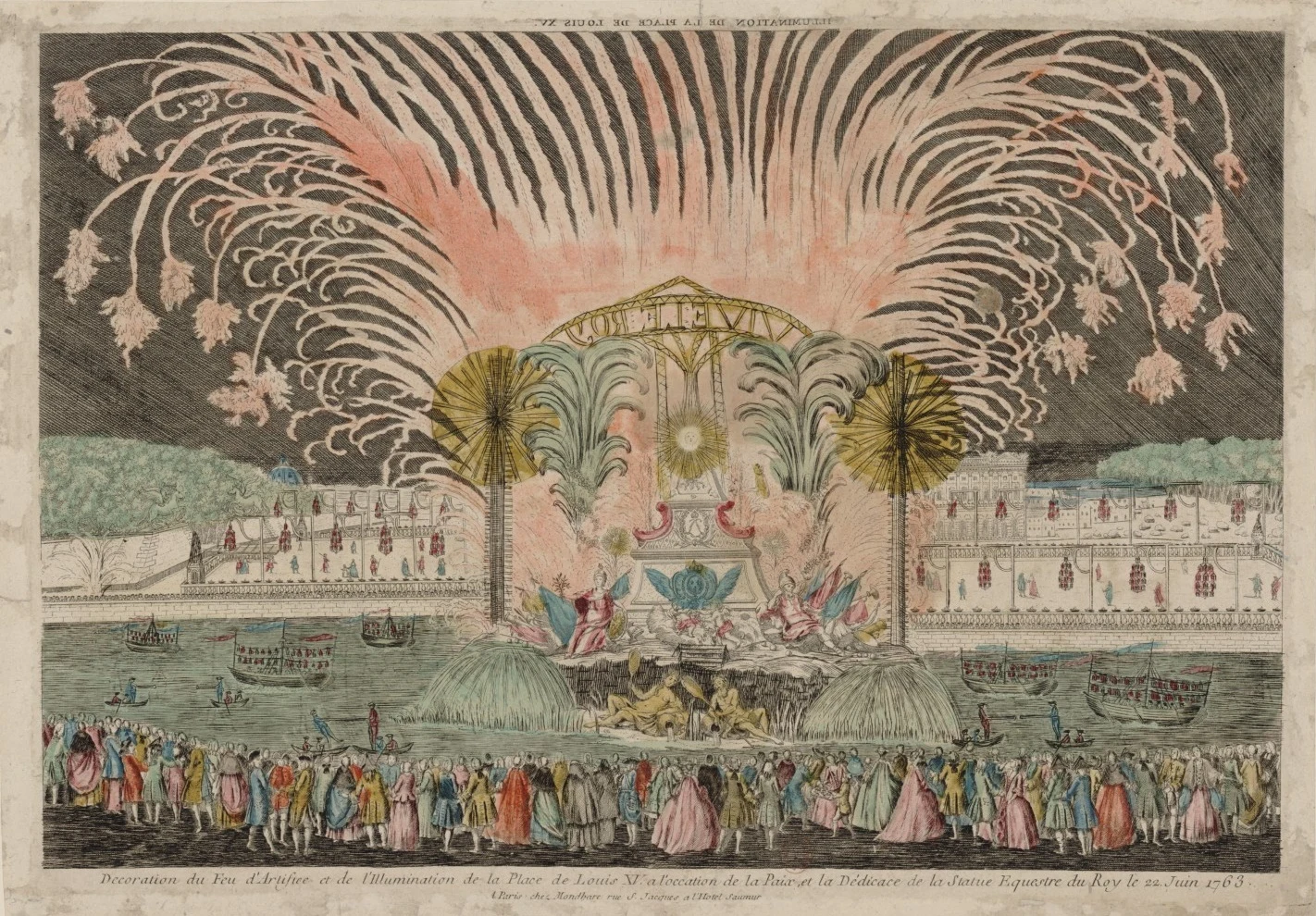
It ended at the negotiating table, twice: the Treaty of Paris (10 February 1763) between Britain, France, and Spain, and the Treaty of Hubertusburg (15 February 1763) between Austria, Prussia, and Saxony. France lost Canada and Louisiana; Britain took Florida; Prussia kept Silesia.
Casualties
How many people died? No trustworthy global total exists; treat any single number with suspicion. Fred Anderson — professor of history emeritus at the University of Colorado Boulder and author of Crucible of War — told researchers at George Mason University's Roy Rosenzweig Center for History and New Media that "there aren't really any good compilations of statistics for the war in North America," offering only "guesswork": roughly 100,000 colonists plus 30,000 British regulars and 30,000 naval personnel served Britain in North America, against at most 38,000 on the French side — 6,500 French army regulars, 4,650 colonial troops, about 12,000 Canadian militia, and 10,000–15,000 Native warrior allies.
Two things the sources do establish. First, disease killed far more than weapons: military historian Al Nofi's Combat Information Center reports that during the war the Royal Navy lost just 1,512 men killed in action — and 133,708 to disease, two-thirds of them to scurvy. Second, the war devastated Indigenous nations: Anderson argues it destroyed the long-standing American diplomatic system in which Native nations had played a central, balancing role between the empires. In Nova Scotia, the British expulsion of the Acadians — "hundreds" deported, "many of the exiles" suffering cruelly per History.com — stands as the war's clearest episode of civilian persecution.
Economic effects
What did the war cost? Britain won by spending money it did not have. Pitt's strategy, as History.com summarizes: borrow heavily, "pay Prussia to fight in Europe," and reimburse the colonies for raising troops. The result: a treasury stretched to its limit, and a colonial administration determined to make the empire pay for itself.
France paid the heavier relative price. Baugh's The Global Seven Years War emphasizes that sea power strangled French preparations while "by 1758, the French government experienced significant money shortage" — a fiscal crisis, he argues, that was "worrying, debilitating and difficult to solve," and that shaped France's conduct of the war and its humiliation at the peace. The material payoff went almost entirely to Britain: the National Army Museum records that the war's victories "consolidated what has been called the 'First British Empire'" — North America, the Caribbean sugar islands, Senegal, and commercial supremacy in India, where the East India Company's position after Plassey and Pondicherry made Britain the subcontinent's rising power.
The postwar economy of empire then detonated politically. Anderson's Crucible of War (Knopf, 2000) shows London's attempts to reform and tax the enlarged empire — the Stamp Act crisis — colliding with a near-simultaneous pan-Indian uprising, Pontiac's Rebellion, which he treats as postwar developments rather than preludes to a revolution nobody yet anticipated.
How it shaped the world
Britain became the first global superpower. The Treaty of Paris ended the Anglo-French colonial contest decisively: France lost Canada and its Indian footholds, ceded Louisiana to Spain, and watched Britain take Florida, Caribbean trade, and Senegal. History.com's verdict is that the treaty "ensured the colonial and maritime supremacy of Britain."
Prussia survived to become a great power. Hubertusburg's restoration of pre-war borders confirmed Frederick's possession of Silesia — the prize Austria had gone to war to recover — and his resistance against Austria, Russia, and France at once established Prussia as a permanent factor in the European balance of power.
The war redrew North America and broke its old diplomacy. The British conquest forcibly incorporated New France into the empire; the Royal Proclamation of 1763 that followed was, in the Canadian government's telling, the Crown's first official recognition of Indigenous rights in Canada — issued because the war had destroyed the Native nations' old balancing role between two empires. Anderson's central thesis is that this destruction, combined with colonists' first direct experience of British regular officers — who treated them as subordinates, not partners — "laid the groundwork in shared experience for a common view of the world, of the empire, and of the men who had once been their masters."
It set up the American Revolution twice over. Britain's debt drove the taxation drive behind the Stamp Act crisis; France's humiliation drove it, fifteen years later, into the war on the Patriots' side — History.com notes French bitterness over the lost empire "contributed to their intervention in the American Revolution."
What historians debate
Is "first world war" the right label? Baugh says yes and calls Churchill's chapter title accurate, while conceding the war's ultimate object for London and Versailles was European security and influence — empire was the prize, not the original motive. Lawrence Henry Gipson, whose fifteen-volume The British Empire Before the American Revolution remains the classic American treatment, called it "The Great War for the Empire." The 2024 Oxford Handbook of the Seven Years' War — 38 essays edited by Emma Hart, Marie Houllemare, and Trevor Burnard — treats it as a "world-transformative event," deliberately drawing authors from Europe, South Asia, and the Americas to move beyond the old Anglo-American frame.
Historians also disagree about what the war was about. Anderson's Crucible of War insists North America was its most important theater and greatest prize — the war began, he shows, in a Pennsylvania backcountry skirmish involving a 22-year-old George Washington. Baugh's maritime history pushes back toward Europe and sea power: for him the decisive mechanism was Britain's ability to strangle French finance and shipping while subsidizing allies on the continent — Rossbach in 1757, he argues, was the turning point. The outcome they agree on: a British world order that endured for a century.
Sources
- Britannica — "Seven Years' War" (definition, causes, the diplomatic revolution, FAQ): https://www.britannica.com/event/Seven-Years-War
- National Army Museum (UK) — "Seven Years War" (theaters, Plassey, Quebec, Minden, peace terms): https://www.nam.ac.uk/explore/seven-years-war
- HISTORY.com Editors — "French and Indian War" (the North American theater, Pitt's strategy): https://www.history.com/articles/french-and-indian-war
- HISTORY.com Editors — "The French and Indian War ends" (This Day in History, February 10; treaty terms and aftermath): http://history.com/this-day-in-history/february-10/the-french-and-indian-war-ends
- Government of Canada — "Seven Years' War in Canada (1756–1763)": https://www.canada.ca/en/services/defence/caf/militaryhistory/wars-operations/seven-years.html
- Roy Rosenzweig Center for History and New Media, George Mason University — "Accounting for the Seven Years' War in North America" (Fred Anderson's force estimates, Oct. 26, 2023): http://podcasts.rrchnm.org/show/worlds-turned-upside-down/blog/accounting-for-the-seven-years-war-in-north-america/
- Fred Anderson — Crucible of War: The Seven Years' War and the Fate of Empire in British North America, 1754–1766 (Alfred A. Knopf, 2000): https://www.betterworldbooks.com/product/detail/crucible-of-war-the-seven-years--war-and-the-fate-of-empire-in-british-north-america-1754-1766-9780375406423
- Daniel Baugh — The Global Seven Years War 1754–1763: Britain and France in a Great Power Contest (Routledge, 2nd ed., 2021): https://timesbookshop.co.uk/the-global-seven-years-war-1754-1763-9781138212824/
- Daniel Baugh — The Global Seven Years War 1754–1763, Introduction (Churchill's "First World War" chapter; Gipson's "Great War for the Empire"): https://www.perlego.com/book/2520518/the-global-seven-years-war-17541763-britain-and-france-in-a-great-power-contest-pdf
- Emma Hart, Marie Houllemare & Trevor Burnard (eds.) — The Oxford Handbook of the Seven Years' War (Oxford University Press, 2024): https://www.dymocks.com.au/the-oxford-handbook-of-the-seven-years-war-by-emma-hart-and-marie-houllemare-9780197622605
- Al Nofi's Combat Information Center, Issue #147 — Royal Navy disease vs. battle deaths in the Seven Years' War: https://m.strategypage.com/cic/docs/cic147a.asp