The chokepoint
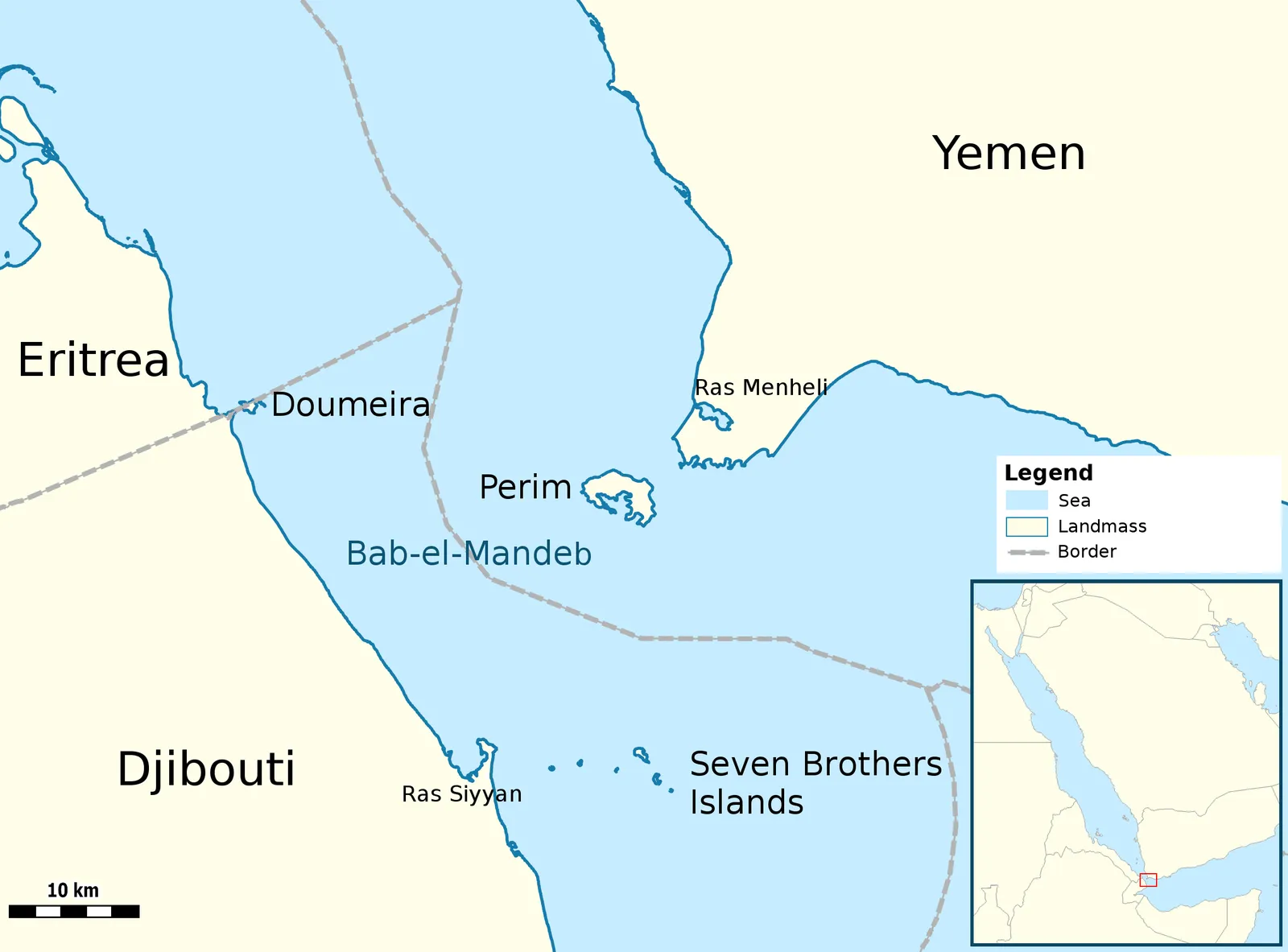
The Bab el-Mandeb strait connects the Red Sea with the Gulf of Aden and the Indian Ocean — and it is one of the great chokepoints of world trade. About 20 miles (32 km) wide at its narrowest, it sits between Yemen to the east and Eritrea and Djibouti to the west, split by Perim (Mayun) Island. The western channel — 16 miles wide and 650 feet deep — carries international shipping; the eastern channel, just 2 miles wide, handles local traffic.
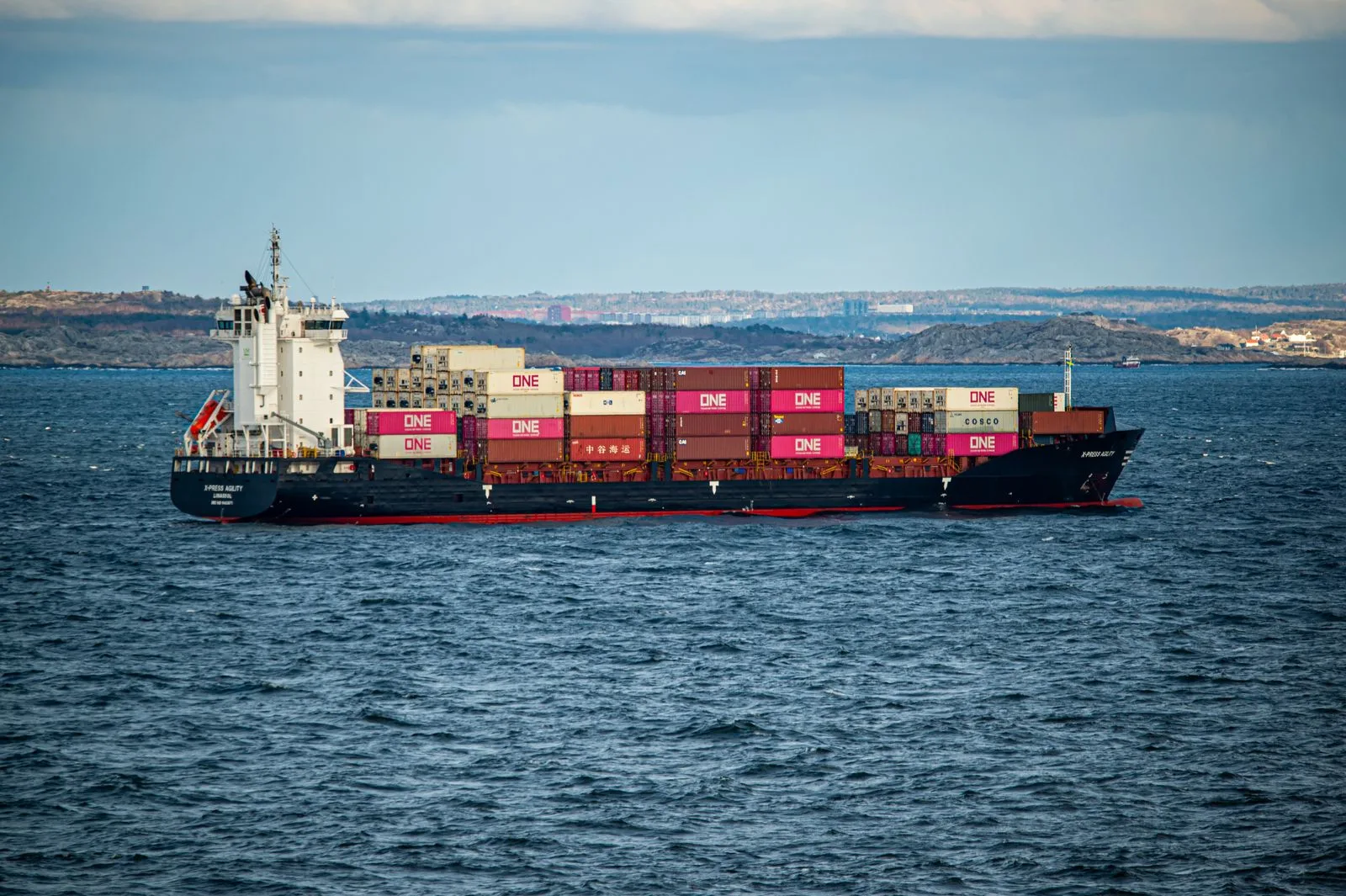
Its importance dates to the 1869 opening of the Suez Canal, which let Asia–Europe trade bypass Africa. Today, roughly one-tenth of seaborne oil trade passes through Bab el-Mandeb — the third-busiest oil chokepoint in the world after Malacca and Hormuz — along with roughly one-quarter of global container trade, according to Britannica. The foreign military bases clustered in Djibouti — American, Chinese, and several European — testify to its strategic weight.
The attacks
Since November 2023, Yemen's Houthis have conducted dozens of attacks on commercial ships transiting the Red Sea, endangering crews and threatening freedom of navigation, according to the US Defense Intelligence Agency. The Houthis are non-state actors in Yemen whose military capabilities have expanded with Iranian support since at least 2015, the DIA reports. The interests of at least 65 countries have been affected.
The first widely reported attack was the seizure of the Bahamian-flagged vehicle carrier Galaxy Leader on November 19, 2023, which was taken to the Yemeni port of Hodeidah. Early attacks targeted vessels with Israeli links, framed as a response to the Gaza conflict — but by February 1, 2024, more than 30 attacks had been reported on vessels of varying flags, many with no Israeli connection at all. The weapons used include ballistic missiles, drones, and autonomous underwater vehicles.
The international response
- December 18, 2023: The United States announced Operation Prosperity Guardian, a multinational maritime initiative including Bahrain, Canada, France, Italy, the Netherlands, Norway, Seychelles, and the United Kingdom.
- January 10, 2024: The UN Security Council adopted Resolution 2722, calling on the Houthis to cease attacks and release the Galaxy Leader and its crew.
- January 12, 2024: The US and UK launched their first offensive strikes on Houthi targets inside Yemen (Operation Poseidon Archer). Attacks continued despite the multinational effort.
- February 20, 2024: The European Union launched its own mission, Aspides, with Belgium, France, Germany, Greece, and Italy participating.
The economic cost
The impact on trade was swift and severe. By mid-February 2024, container shipping through the Red Sea was down roughly 90% compared with December 2023, the DIA reported. The Red Sea normally carries 10–15% of international maritime trade. Rerouting around Africa adds roughly 11,000 nautical miles, one to two weeks of sailing time, and about $1 million in fuel per voyage; war-risk insurance premiums jumped to 0.7–1.0% of a ship's value from under 0.1%. At least 29 major energy and shipping companies rerouted their vessels.
Britannica notes that the 2023 attacks cut traffic through the strait to below half of normal levels — and that while attacks subsided in 2025, traffic had still not recovered.
Operational figures in this explainer reflect reporting as of early 2024 (the DIA assessment's information cutoff was April 5, 2024) unless otherwise noted.