Key takeaways
- Saudi Arabia formed a new multinational Red Sea naval coalition in 2026, headquartered in Riyadh, after the Houthis announced a maritime blockade on July 20 and attacked the Saudi oil tanker NCC Ghazal.
- Thirteen countries have joined — including Türkiye, Egypt, Pakistan and Djibouti — but the UAE and Oman have stayed out, and the United States has not formally signed on.
- It is the third coalition effort: the U.S.-led Operation Prosperity Guardian (December 2023) and the EU's Operation Aspides (February 2024) preceded it, backed by UN Security Council Resolution 2722.
- Researchers calculate that a 30-day Houthi blockade of the Bab el-Mandeb strait could cost the global economy $30 billion — yet naval deployments so far have failed to deter attacks, because the mere threat of a strike keeps ships away.
Contents
- The first wave: Prosperity Guardian and Aspides
- The July 2026 blockade and the tanker that forced Riyadh's hand
- Inside the Saudi-led Red Sea naval coalition
- Can warships reopen a strait?
- What to watch
Three multinational naval forces now share the mission of keeping the Red Sea open — the newest one led not by Washington or Brussels, but by Riyadh. The Red Sea naval coalition that Saudi Arabia assembled in 2026 marks a shift: the kingdom that spent a decade bombing the Houthis from the air is now organizing the region's own maritime defense.
The first wave: Prosperity Guardian and Aspides
The Houthis began attacking commercial shipping in the Red Sea in November 2023, framing the campaign as solidarity with Palestinians during the Gaza war — though many of the vessels hit had no Israeli connection. The details of that first crisis, from the seizure of the Galaxy Leader to the sinking of the Rubymar, are covered in our explainer on [the Red Sea shipping crisis](/articles/2026-09-27-red-sea-shipping-crisis-explained).
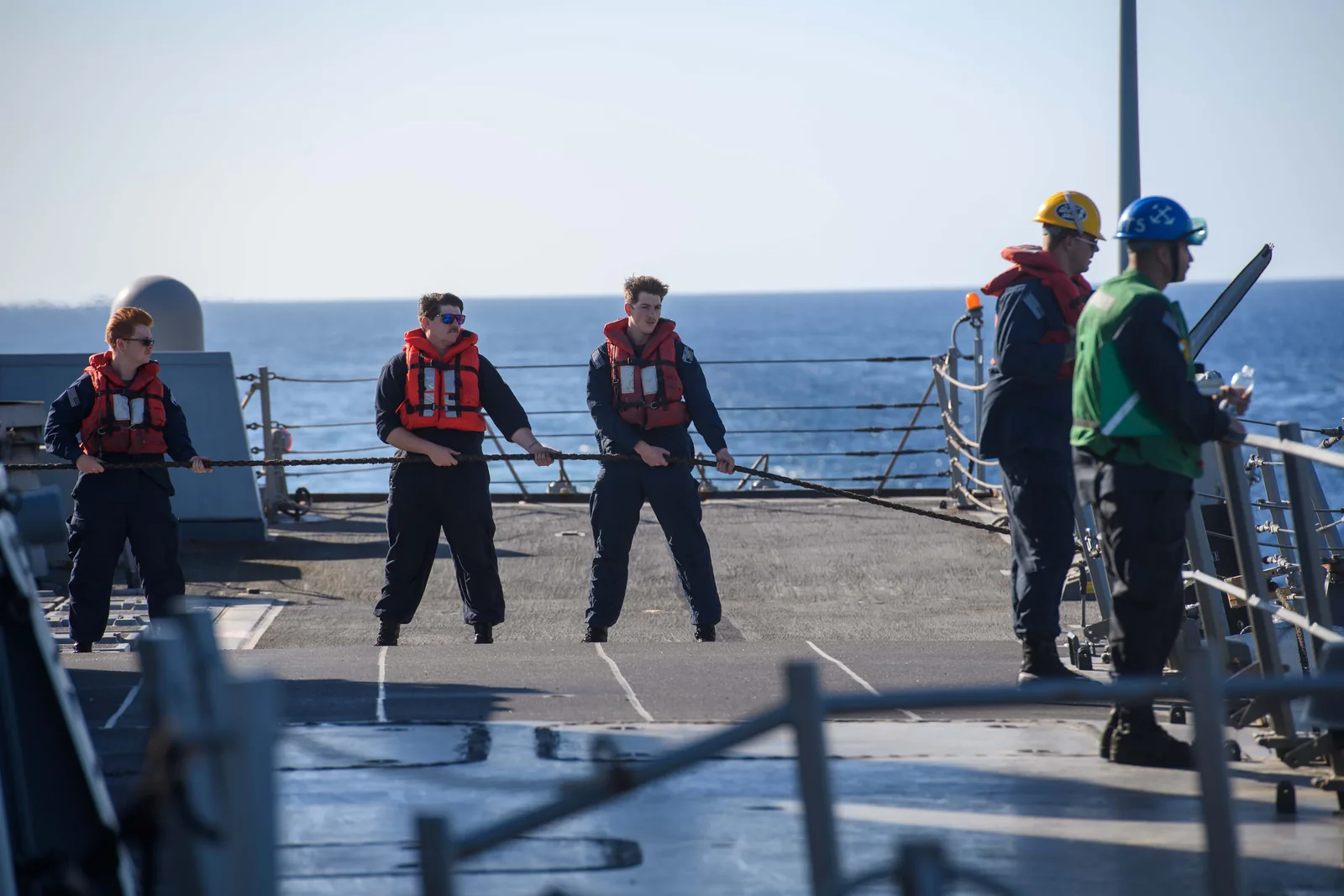
The international response came in layers. On December 18, 2023, the United States announced Operation Prosperity Guardian, a multinational maritime initiative coordinated through the existing Combined Task Force 153. On January 10, 2024, the UN Security Council adopted Resolution 2722, demanding the Houthis cease attacks. Two days later, the U.S. and UK launched offensive strikes on Houthi targets inside Yemen. On February 20, 2024, the EU launched its own mission, EUNAVFOR Aspides — "shields" in Greek — headquartered in Greece.
The campaign has been grinding. According to the U.S. Congressional Research Service, the Houthis attacked shipping from October 2023 to December 2024, paused for months, then resumed in July 2025 — sinking two vessels. The United States ran an expanded strike campaign from March to May 2025 before an Oman-mediated truce halted U.S. strikes in exchange for an end to attacks on U.S. vessels.
The July 2026 blockade and the tanker that forced Riyadh's hand
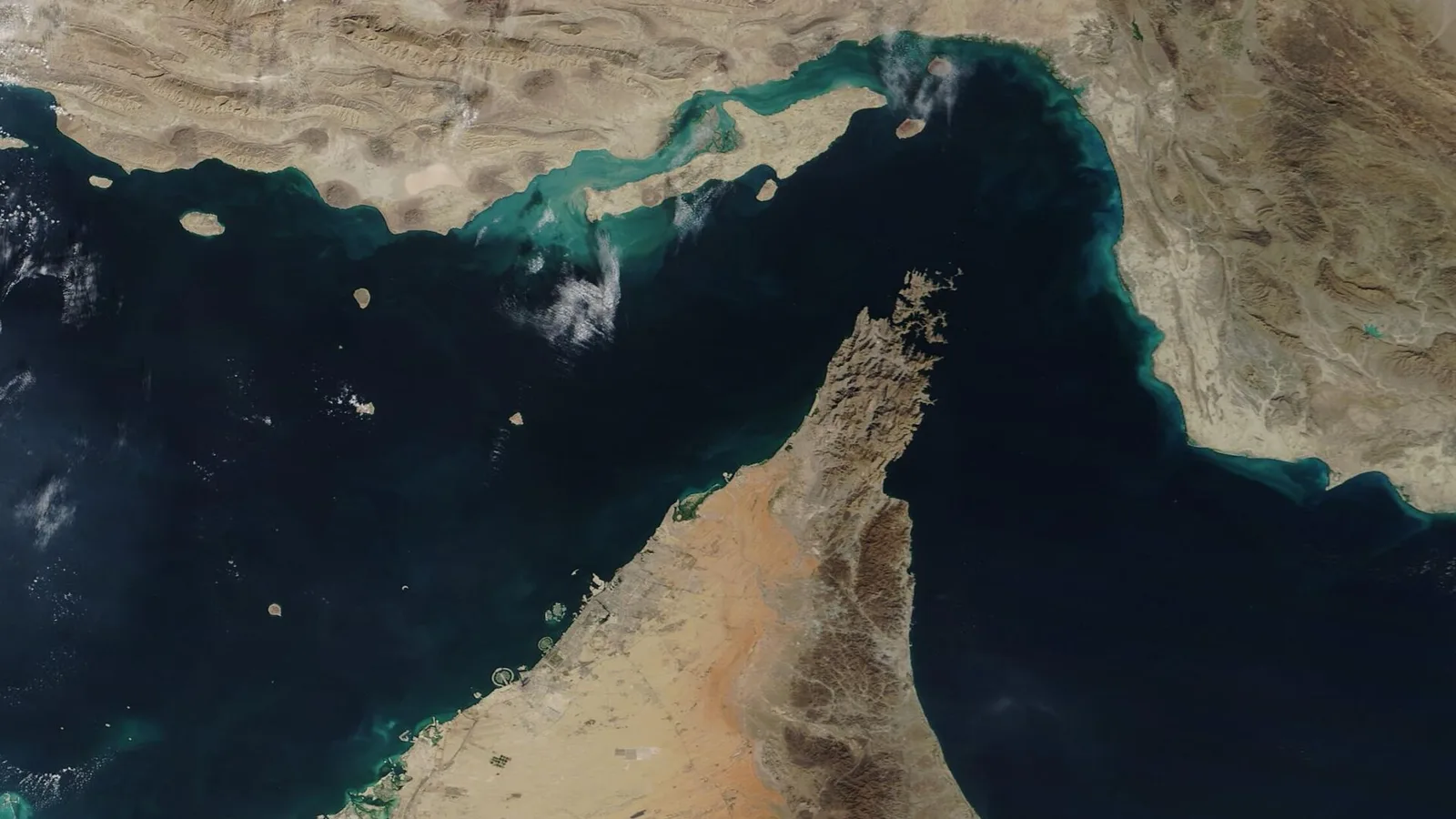
The trigger for the Saudi coalition was a Houthi maritime blockade announced on July 20, 2026. The context was a Middle East in which both of the region's great chokepoints were contested at once: with the Strait of Hormuz effectively closed to Saudi oil exports during the wider Iran-U.S.-Israel confrontation, the kingdom had redirected shipments through its Red Sea port of Yanbu. The Houthis then targeted vessels on that route — including the Saudi oil tanker NCC Ghazal.
Houthi military spokesman Yahya Saree said the group "targeted the Saudi oil tanker, NCC Ghazal, with ballistic missiles, forcing it to change course." In announcing the blockade, the Houthis framed it as retaliation for years of Saudi military operations, accusing Riyadh of imposing "an unjust and oppressive siege" for more than a decade while "plundering our resources."
The Houthis have also been reported to be planning an organization to collect fees from ships transiting the Bab el-Mandeb strait — effectively a toll on one of the world's busiest waterways. Yemen's information minister, Moammar al-Eryani, described the reported move as "a dangerous escalation aimed at transforming one of the world's most strategic maritime corridors into a permanent source of funding for the militia's military and terrorist activities." Under international maritime law, ships hold a right of transit passage through straits used for international navigation, and bordering states cannot impose tolls on passing vessels.
Inside the Saudi-led Red Sea naval coalition
Saudi Arabia's answer was to build its own alliance. The new Red Sea naval coalition is headquartered in Riyadh and intended to coordinate maritime security operations — escorting commercial shipping, running naval patrols and deterring attacks — across the Red Sea and nearby waterways, according to Al Jazeera's reporting.
As of late July 2026, thirteen countries had agreed to participate: Türkiye, Egypt, Pakistan, Jordan, Kuwait, Bahrain, Qatar, Djibouti, Somalia, Bangladesh, Yemen, Sudan and the Comoros. The lineup is notable for who is missing: the United Arab Emirates and Oman have not joined. The Saudi defense ministry said the door remains open for others to accede to the coalition's charter.
Saudi defense minister Prince Khalid bin Salman met U.S. officials around the same period and, according to Saudi accounts, said the kingdom opposed a broader regional conflict while remaining prepared to respond to threats — declaring that Saudi Arabia was ready to "defend itself" and "does not need the US to get involved."
"The Houthis want to copy the Iranian model and this will shut down two main straits, the gateways into the Gulf and Red Sea." — Afrah al-Zouba, Yemen's foreign minister-designate
Can warships reopen a strait?
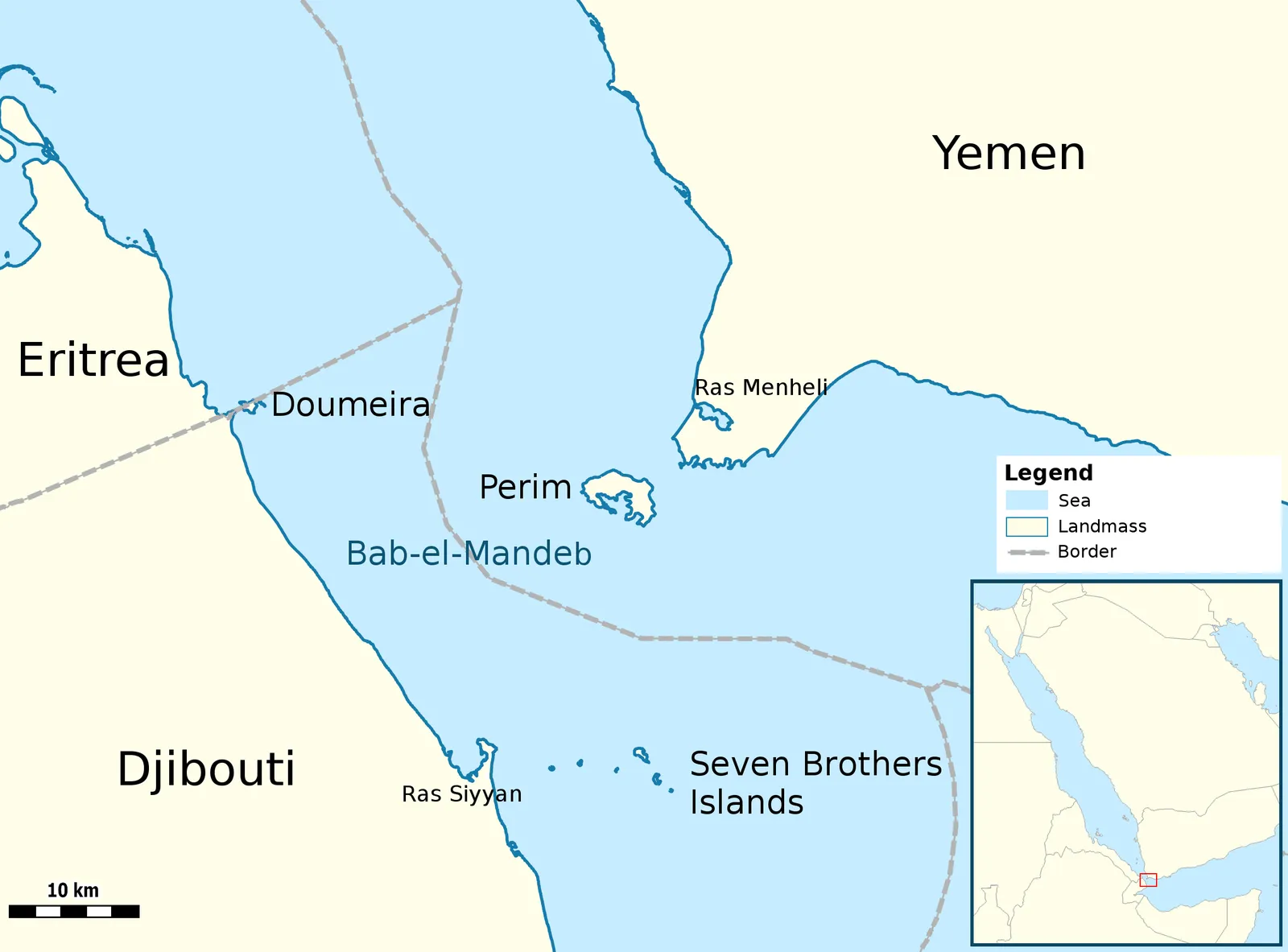
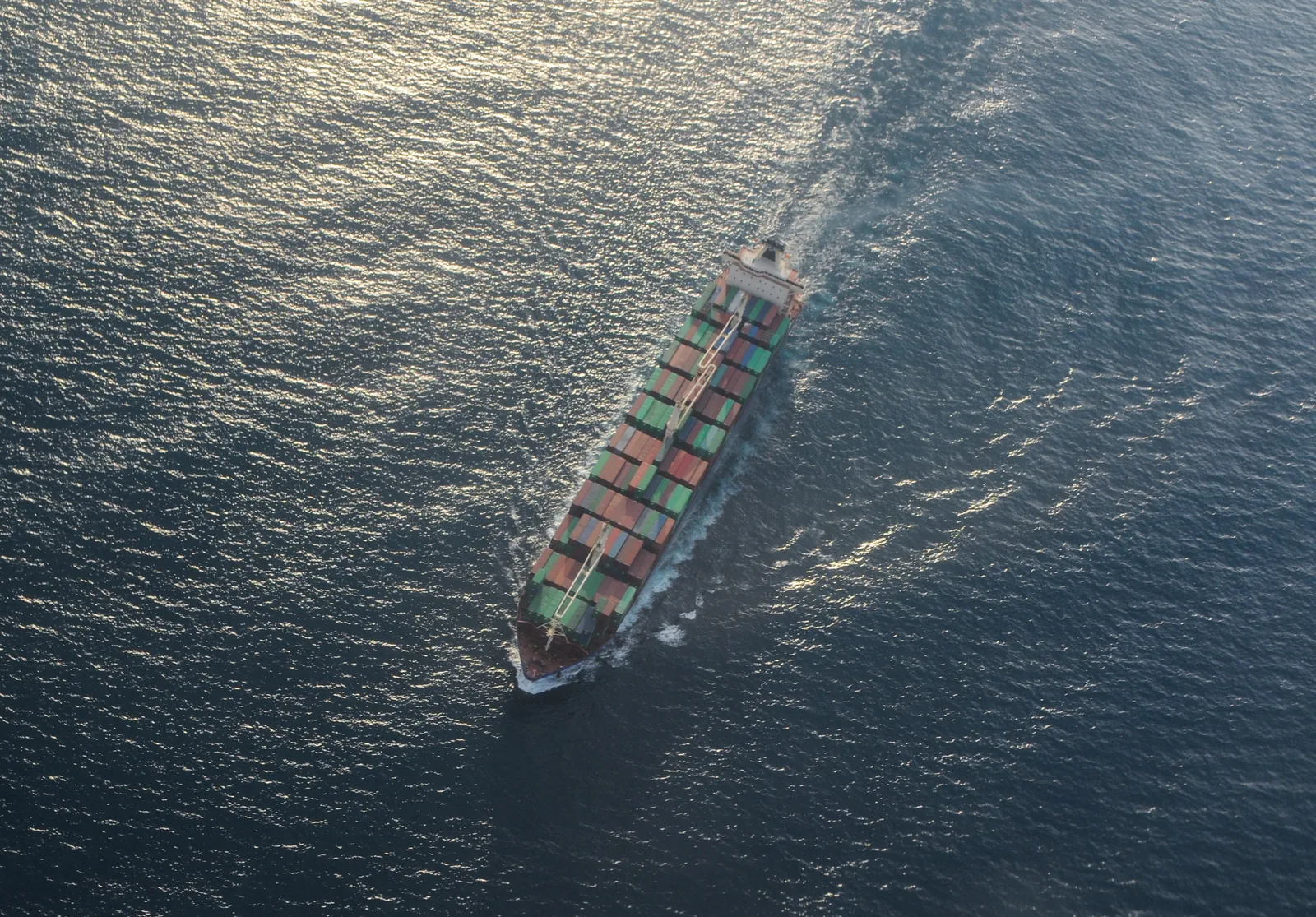
The stakes of the mission are enormous. Around 30% of global seaborne trade passes through the Red Sea route, and the Bab el-Mandeb strait — about 18 miles (29 km) wide at its narrowest — carried more than 4 billion barrels of oil in 2024. Research published in Nature Communications in 2025 calculated that a 30-day Houthi blockade of the strait could inflict $30 billion in economic losses. More than a dozen countries depend on the strait for over half their maritime trade by value, including Eritrea (87%), Djibouti (78%) and Sudan (67%).
Yet the record of naval power against this threat is sobering. As researchers at The Conversation noted in September 2026, "earlier attempts by the U.S. and its allies in both the Bab al-Mandab and the Strait of Hormuz have failed. The mere threat of attack has deterred many vessels from crossing each waterway." Aspides operates with only a handful of ships in theater at any given time, limiting how many commercial vessels it can cover. The data bears this out: only 22 vessels transited the Bab el-Mandeb strait on September 20, 2026, according to the IMF and Oxford University's PortWatch platform — compared with around 70 per day before the Houthis began attacking shipping in 2023, and around 30 per day before the latest escalation.
The pattern is consistent: warships can escort, intercept and retaliate, but they cannot make shipowners accept the risk. Insurance premiums spike, crews refuse transits, and cargo diverts around the Cape of Good Hope at far higher cost. Deterrence at sea requires the attacker to believe the cost exceeds the gain — and the Houthis, backed by Iranian weaponry, targeting data and military advice (though Tehran denies directing attacks), have repeatedly calculated otherwise.
What to watch
Membership: whether the United States formally joins, and whether the UAE and Oman reconsider, will decide the coalition's real naval weight. The toll scheme: if the Houthis move from threatening ships to systematically extracting transit fees, the confrontation shifts from deterrence to something closer to a protection racket — much harder for escort missions to solve. The Hormuz link: with both chokepoints contested simultaneously, pressure on the Red Sea cannot be read in isolation; any easing or tightening at Hormuz will move traffic, prices and risk calculations at Bab el-Mandeb in turn.