The Greek War of Independence explained: from February 1821 to September 1829, Greek revolutionaries fought the Ottoman Empire for an independent Greece — and won it only after Britain, France and Russia intervened and destroyed the Ottoman-Egyptian fleet at Navarino. The revolt began with a failed invasion of Moldavia and simultaneous risings in the Peloponnese, survived two Greek civil wars, and by 1827 was close to defeat: Egyptian forces under Ibrahim Pasha had retaken the Peloponnese and taken Missolonghi and Athens. What reversed it was not a Greek victory but a European one — an allied fleet action its own governments had not quite ordered, followed by a Russian land war. The compiled record counts 15,000 Greek revolutionaries and 44,000–50,000 Ottoman soldiers killed in the fighting, and puts civilian deaths anywhere between about 245,000 and 625,000 — the widest range in this archive, and itself the central fact about how this war was fought.
Key takeaways
- Greece was won twice — once by Greeks, once by Europeans: the revolutionaries took the Peloponnese in 1821 and held it against three Ottoman invasions, then lost it to Egypt's army in 1825–27; the powers' fleets and Russia's army settled the outcome in 1827–29.
- The war was a war on civilians from its first weeks: massacres by both sides began with the revolt — the Peloponnese's Muslim population was destroyed as a settled community in 1821, and Ottoman forces answered at Constantinople, Chios, Cyprus and Missolonghi.
- Navarino was an accident that decided a war: Codrington's orders were to make "a friendly demonstration of force"; a shot at a British truce boat turned it into the destruction of some 60 Ottoman-Egyptian ships, the last major fleet action fought entirely under sail.
- Independence was bought on credit: the London loans of 1824–25 carried a nominal GBP 2.8 million of debt, of which only a fraction reached Greece; the reduced debt was settled only in 1878.
Contents
- Why did the revolt begin?
- How was the war fought?
- How many people died?
- What did the war cost, and who paid for it?
- How did the war shape the world?
Why did the revolt begin?
It began in a conspiracy founded far from Greece. The Philiki Etaireia — the "Friendly Brotherhood" — was founded in Odessa in 1814 by Nikolaos Skoufas, Emmanuil Xanthos and Athanasios Tsakalov, to organise a rising against Ottoman rule. The ground it worked was real: Britannica records that by 1821 the desire for independence was common among Greeks of all classes, their nationality fostered by the Orthodox Church, the survival of the Greek language and the empire's own administrative arrangements, and intensified by Greek economic progress and Western revolutionary ideas. EBSCO's account adds that Greek merchants had come to dominate much of the empire's commerce and Phanariote Greeks held high Ottoman office.
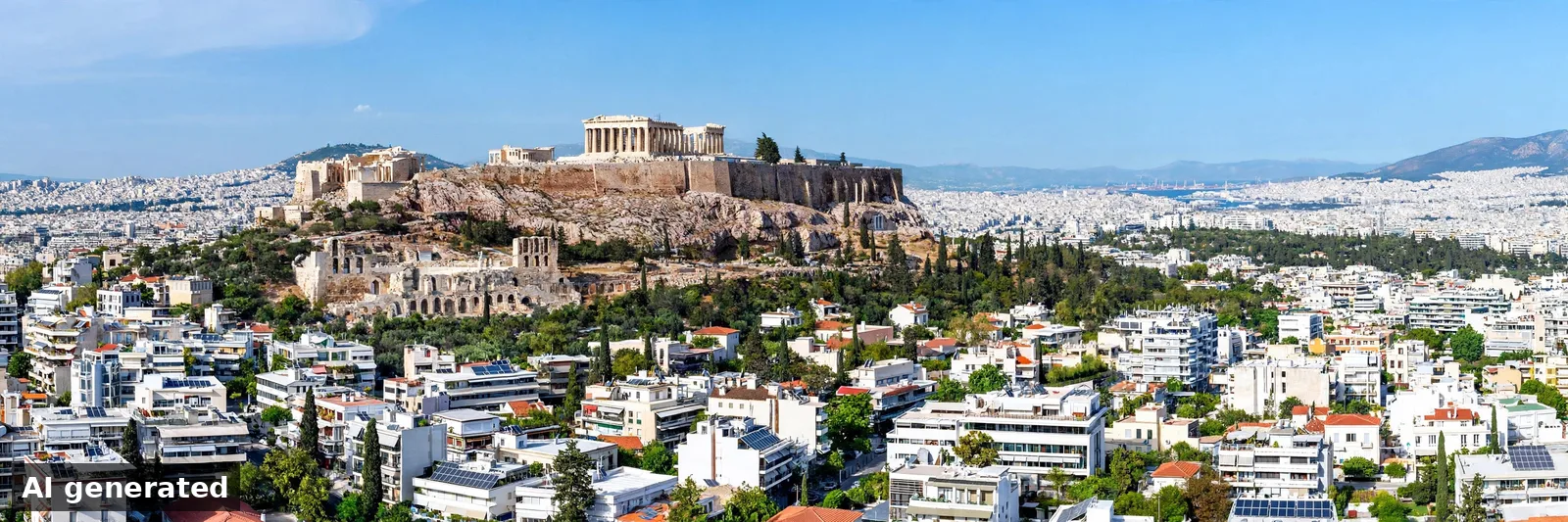
The society planned its insurrection for 25 March 1821, the Feast of the Annunciation, but the plans were discovered and it started early. In February 1821 its leader, Alexander Ypsilantis, crossed the Prut into Turkish-held Moldavia with a small force; he was soon defeated — EBSCO dates his crossing to 7 March 1821 (23 February on the Julian calendar) and records that he fled to Austria and died in Vienna in 1828. The failure in the north did not stop the south: on 17 March 1821 the Maniots were the first to declare war, and on 25 March — the traditional date of Greek independence — sporadic revolts broke out across the Peloponnese, in Greece north of the Gulf of Corinth and on several islands. David Brewer, in The Greek War of Independence (2001), argues that after 1453 Greece became "a small, poor and backward part of this great empire" and that it was principally the Christian church that enabled the Greeks to keep their sense of national identity.
How was the war fought?
In three phases, and the Greeks won the first and lost the second. In 1821 the revolutionaries took the Peloponnese: in September, under Theodoros Kolokotronis, they captured Tripolitsa, its Ottoman capital, and in January 1822 they declared the independence of Greece. Greek fleets kept Ottoman reinforcements from arriving by sea, and the Turks attempted three times between 1822 and 1824 to invade the Peloponnese and failed each time — Kolokotronis destroyed Dramali Pasha's invasion army at Dervenakia in 1822. But the victory was poisoned from the start by massacre (the next section) and by politics: internal rivalries produced civil war in 1823 between Kolokotronis and Georgios Kountouriottis, head of the government formed in January 1822, and a second civil war in 1824 — the same three-phase division EBSCO's account uses.
The second phase nearly ended the revolution. Sultan Mahmud II, unable to defeat the Greeks, called in his Egyptian vassal Muhammad Ali, who agreed to send his son Ibrahim Pasha in return for territorial gains (EBSCO's account describes Ibrahim as Muhammad Ali's stepson). Ibrahim landed at Methoni on 24 February 1825 with 10,000 infantry and 1,000 cavalry — French-trained troops who, unlike the forces the Greeks had faced, stood their ground — and by the end of 1825 he held most of the Peloponnese. Missolonghi fell in April 1826 after a year's siege, Athens in August 1826, and the acropolis in June 1827. Greek fears were sharpened by the alleged "barbarisation project," a plan attributed to Ibrahim to deport the entire Christian Greek population to Egypt as slaves: the compiled record is explicit that it is not clear even today whether the project was real, but the possibility alone created strong demands for humanitarian intervention in Europe.
The third phase was fought by other people's fleets and armies. The Greek cause had won considerable popular support in Britain and France — the philhellene movement, whose volunteers had been coming since 1821 (the compiled record counts some 360 who travelled from Marseille alone by the end of 1822; Lord Byron was the most famous of them) — while Russia was traditionally hostile to Turkey and sympathetic to its Orthodox coreligionists. Britain and Russia agreed the St Petersburg Protocol in April 1826, proposing mediation on the basis of an autonomous Greece; France joined them in the Treaty of London in July 1827. The Turks refused, and the three powers sent their squadrons to Navarino Bay. There, on 20 October 1827, Codrington — under orders, Britannica records, to make "a friendly demonstration of force," which he interpreted as authorising open combat if fired upon — anchored his outnumbered fleet (11 ships of the line, 9 frigates and 4 smaller ships, about 1,200 guns, against more than 2,000) among the Ottoman-Egyptian ships and tried to negotiate; when the Turks fired on a boat carrying a British truce message, the allied fleet fired back, and within a couple of hours about three-fourths of the Ottoman-Egyptian ships had been sunk or burned by their own crews. No European ship was sunk. In 1828 a French expeditionary force pressed the Egyptians to withdraw, Russia declared war and marched into the Balkans, and by the Treaty of Adrianople in September 1829 the sultan accepted Greek autonomy. The London Protocol of 3 February 1830 declared Greece an independent monarchical state, and by July 1832 the frontier was fixed, Prince Otto of Bavaria had accepted the crown, and the sultan had recognised independence outright.
How many people died?
No side counted, and the honest presentation is the compiled record's ranges, with their seams showing. In the fighting itself, the record counts 15,000 Greek revolutionaries killed against 44,000–50,000 Ottoman soldiers. The civilian figures are of a different order and quality: an estimated 230,000–600,000 Greek civilians and 15,000–25,000 Muslim civilians dead as a result of the war. The record's own aftermath summary gives the Muslim figure as 25,000 flat, against the casualty table's range — a discrepancy this article reports rather than resolves, because it illustrates the larger problem: the civilian ranges rest on contemporary consular and partisan estimates, and deaths from famine and epidemic were never estimated at all.
What the record does establish, episode by episode, is the war's character. In the Peloponnese, William St Clair writes, upwards of twenty thousand Turkish men, women and children were killed by their Greek neighbours in a few weeks of slaughter in the spring of 1821; the fall of Tripolitsa that September was the worst single Greek atrocity in numbers, and some estimates put Turkish and Muslim Albanian civilian deaths at the rebels' hands between 6,000 and 15,000. George Finlay, in his History of the Greek Revolution (1861), claimed the extermination of the Muslims in the rural districts was a premeditated design; the massacres record notes that massacres of Turkish civilians started simultaneously with the outbreak of the revolt itself, and records the argument of some historians that Ottoman atrocities were given wide coverage in Europe while Greek atrocities tended to be suppressed or played down. The Ottoman answer was of the same kind at larger scale: Patriarch Gregory V was hanged at the Patriarchate gate on Easter Sunday, 9 April 1821; Archbishop Kyprianos and 486 prominent Greek Cypriots were executed in Nicosia that July; and at Chios in April 1822, of a population of 100,000–120,000, some 25,000 were killed and another 45,000 — mostly women and children — sold into slavery, while the wider estimate is that up to 100,000 Chiots were killed or enslaved in total and 20,000 escaped as refugees. Missolonghi's population was exterminated almost entire after its fall in 1826. St Clair characterised the whole war as "a series of opportunist massacres"; Yanni Kotsonis argues the violence was demographic in nature, destroying an entire category of population as the goal of the warfare itself. Between those readings — opportunism and design — the numbers cannot adjudicate, because they are the weakest part of the record. At Navarino alone, Britannica gives the losses precisely: Allied, 700 dead and wounded; Turko-Egyptian, 6,000 dead and wounded, 60 ships destroyed.
What did the war cost, and who paid for it?
It was paid for, first, by a countryside the compiled record describes as ravaged by ten years of fighting, full of displaced refugees and empty Turkish estates, its land question requiring reforms over several decades — and, second, by the strangest financial instrument of the age: sovereign debt issued by a state that did not yet exist. The Greek government had been desperately short of money since the start of the revolution. Its envoy Andreas Louriotis reached London in February 1823, assisted by the London Greek Committee; the philhellene Edward Blaquiere's September 1823 report, the compiled record notes, grossly exaggerated Greece's economic prosperity. The first loan was floated in February 1824, attracting some GBP 472,000; a second followed on 7 February 1825 and, although the government had squandered the first loan's money, was oversubscribed and raised some GBP 1.1 million — this time managed by a Board of Control in London, because the City did not trust the Greek government to spend it wisely, and spent in part on Lord Cochrane's naval command and on steamships, the first use of a mechanised warship in a war.
Eric Klopfer's LSE study puts the two loans' combined nominal value at GBP 2.8 million, contracted before Greece was recognised as a sovereign state, and is blunt about the proceeds: only a fraction eventually reached Greece, and the management was ridden with misuse, culminating in a public scandal. In 1878 the creditors and the Greek government settled the loans, by then worth GBP 10 million with unpaid interest, for GBP 1.5 million. Klopfer's study cites Reinhart and Trebesch's "The Pitfalls of External Dependence: Greece, 1829–2015" (NBER Working Paper 21664, 2015) for the loan totals. No source opened gives a comparable Ottoman-side financial total, and none is claimed here; the record instead shows the territorial price — the Peloponnese, the Saronic Islands, the Cyclades, the Sporades and continental Greece ceded to the new state, and Crete ceded to Egypt as Muhammad Ali's price.
How did the war shape the world?
It invented a precedent Europe spent the next century following. For the first time, the compiled record notes, a Christian subject people had achieved independence from Ottoman rule and established a fully independent state recognised by Europe; where previously only large nations had been judged worthy of national self-determination, the Greek revolt legitimised the concept of small nation-states and emboldened nationalist movements among the empire's other subject peoples — Poland's November Uprising followed within months, encouraged by the Greek victory, though it failed. Mark Mazower, in The Greek Revolution: 1821 and the Making of Modern Europe (2021), makes the largest version of the claim: that outside views of the revolution gave rise to nationalism in Europe and the modern nation-state system, and that Greece became the hook for contemporary arguments about slavery, humanitarian intervention, European identity and population transfer. The claim has its critics in the same record: Alan Mikhail's New York Times review faults Mazower for not fleshing out the Ottoman side and sometimes presenting a one-sided view of Ottoman Turks. The older scholarship frames the facts more narrowly — Charles W. Crawley's The Question of Greek Independence (1930) remains the standard work on the diplomacy, and Douglas Dakin's The Greek Struggle for Independence, 1821–1833 (1973) its "thorough and balanced account."
The state the war made was smaller than the nation it claimed. The new kingdom's population numbered 800,000 — less than one-third of the 2.5 million Greeks living in the Ottoman Empire — and its imported Bavarian king arrived at Nafplion in February 1833 to rule a country under the guarantee of the three powers that had created it, its republican constitution of 1827 set aside by the London Protocol. The gap between the kingdom and the "unredeemed" Greeks outside it became the Megali Idea — in the compiled record's words, "the goal of uniting all Greeks in one country," in accordance with which the Greek state sought the liberation of the unredeemed Greeks for a great part of the next century, a drive this archive follows in its explainers on the Balkan Wars and the Greco-Turkish War. Navarino's narrower legacy is technological: the last major fleet action of the sailing-ship era, fought in the same years in which Greek loan money was buying the war's first steam warship. It is filed in this site's History archive.
Sources: Encyclopaedia Britannica, 'War of Greek Independence' and 'Battle of Navarino'; EBSCO Research Starters, 'Greek Independence from the Ottoman Empire'; Eric Klopfer, 'Debt and Independence' (LSE, 2023); Kirkus Reviews on David Brewer (2001); the book record of Mark Mazower, The Greek Revolution (2021); and the compiled records at Wikipedia, 'Greek War of Independence' and 'Massacres during the Greek War of Independence' — all read in full during this run, with URLs in the frontmatter sources box. Limitation: the compiled record's table and aftermath summary differ on the Muslim civilian figure (15,000–25,000 against 25,000), as the body discloses; no source opened gives a verified Ottoman-side financial total, so none is claimed; the war's end is dated three ways in the sources — fighting to September 1829, recognition in February 1830, final settlement in 1832 — and the article carries all three rather than silently choosing one.