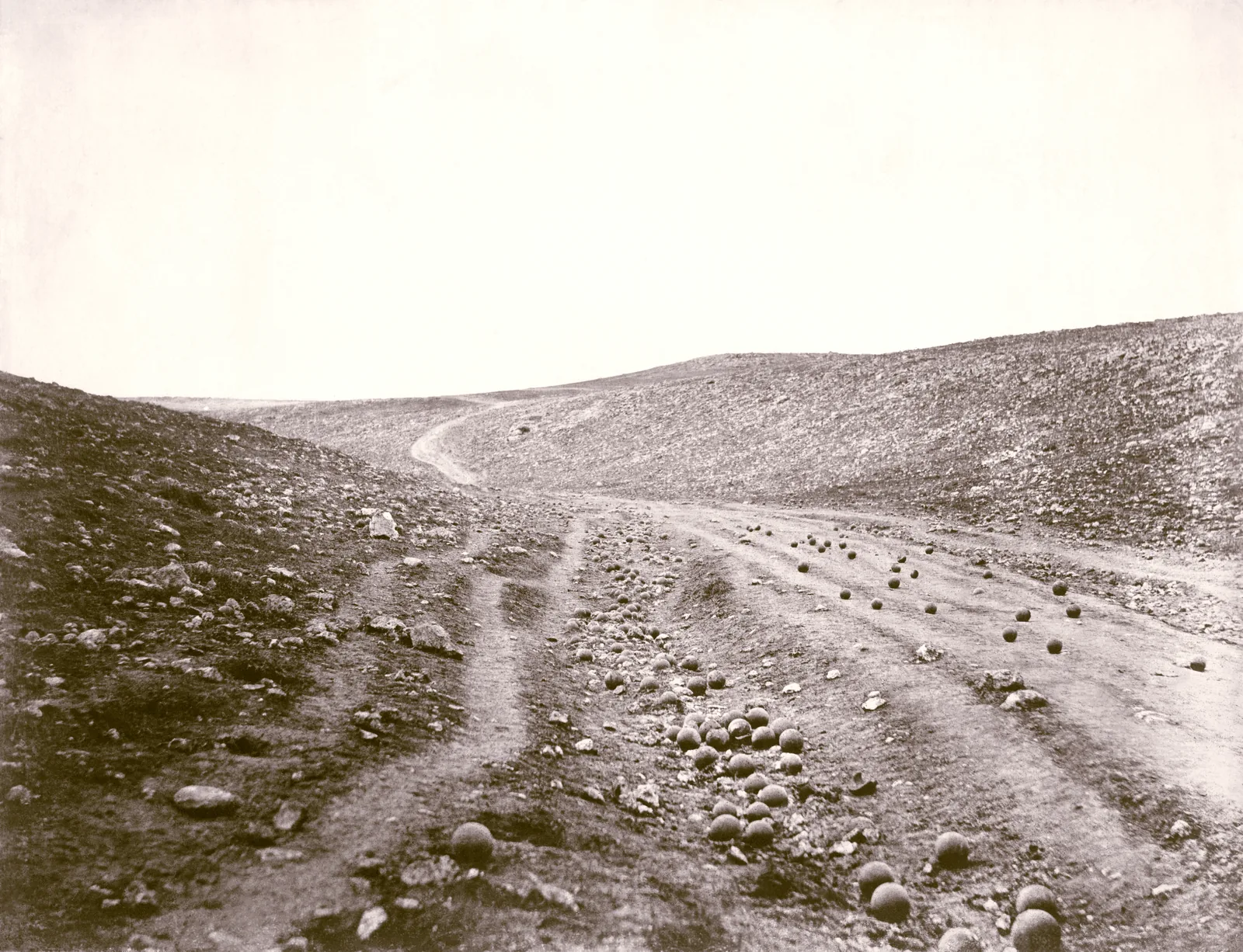
The Crimean War — fought from October 1853 to February 1856 between Russia and an alliance of Britain, France, the Ottoman Turks, and (from January 1855) Sardinia-Piedmont — is often called the first modern war. As an academic study of the conflict puts it, it was "the first modern war because of the massive use of new weapons such as rifles and shell guns," fought with the electric telegraph linking army commanders, politicians, and press correspondents, and covered extensively by newspapers like the Times. It ended with the Treaty of Paris, signed on March 30, 1856 — and its consequences echoed for decades.
Key takeaways
- The first modern war: Rifled guns and shell guns did the killing, the electric telegraph linked commanders, politicians, and the public, and correspondents reported battles in near real time. Academic research calls it the first European war after 40 years of peace — and the first modern one.
- A staggering human toll: Britannica puts total casualties at roughly 500,000, split about evenly between the sides; historian Richard Evans cites 600,000 dead, some 500,000 of them from disease. The History Today historian Brian James puts allied dead at 252,000 — only 70,000 of them killed in battle.
- A financial breaking point: The war cost Britain £154.2 million, according to James. Russia's State Council warned the Tsar of likely state bankruptcy if the war continued, and Russian troops took three months to reach the front — there were no railways south of Moscow.
- A long shadow: The Treaty of Paris neutralized the Black Sea and set the Danubian principalities on the road to Romanian independence; Russia's defeat spurred the abolition of serfdom; and the war's medical horrors helped pave the way to the First Geneva Convention of 1864.
Contents
Overview of the Crimean War
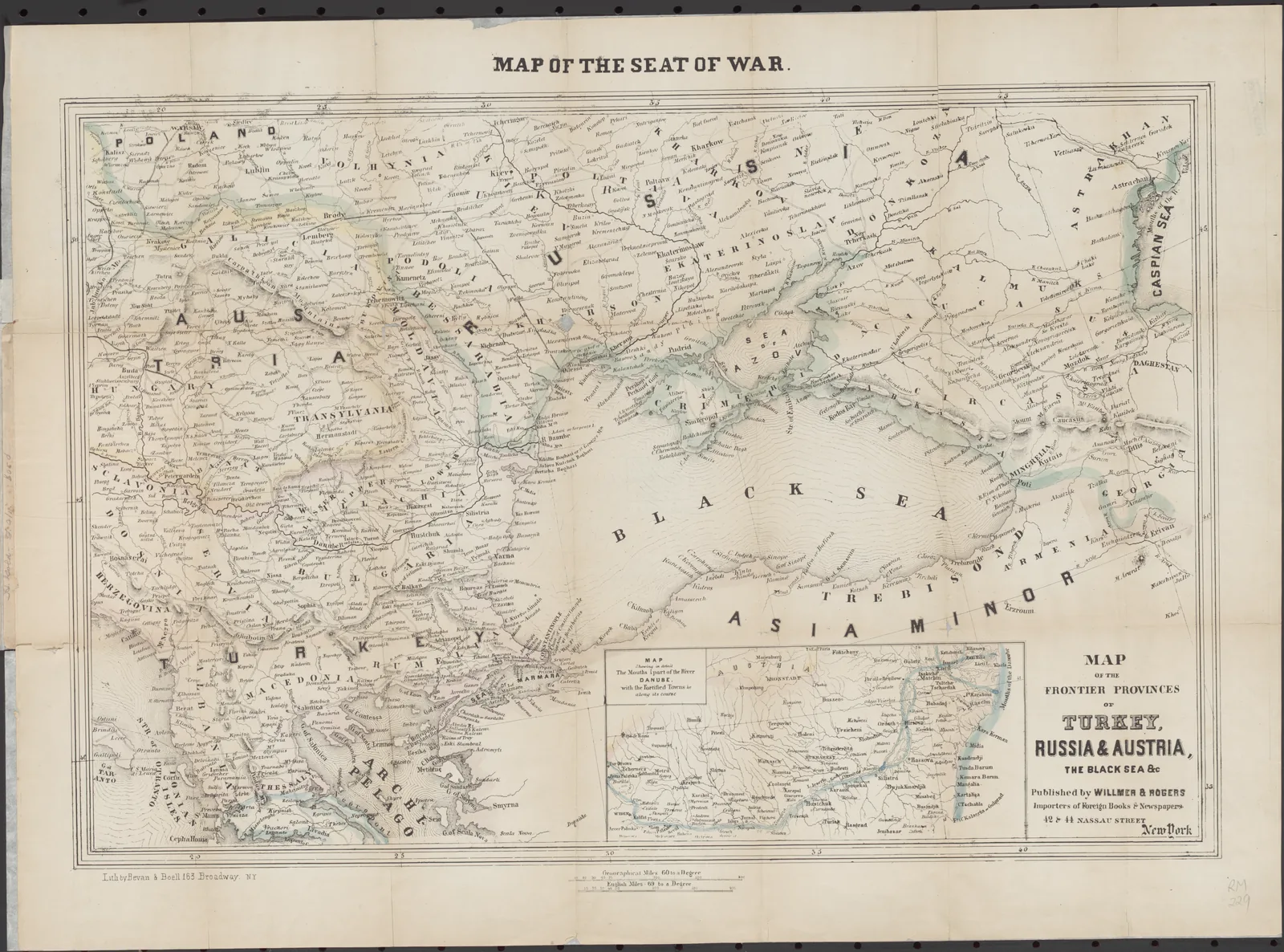
According to Britannica, the war's immediate causes lay in two disputes: Russia's claim to protect the Orthodox Christian subjects of the Ottoman Sultan, and a quarrel between Russia and France over the holy places in Palestine. The Ottoman Turks declared war on Russia on October 4, 1853. After the Russian fleet destroyed a Turkish squadron at Sinope, Britain and France declared war on March 28, 1854. Austria, though not a belligerent, occupied the Danubian principalities in August 1854, forcing Russia out of them.
The fighting centered on the Crimean Peninsula. The Allies landed in September 1854 and won the battles of the Alma (September 20), Balaklava (October 25), and Inkerman (November 5) — then settled into the long siege of Sevastopol, Russia's great naval fortress. Sardinia-Piedmont joined the alliance on January 26, 1855, sending 10,000 troops. The siege ground on until the French assault on the Malakhov redoubt forced the Russians to evacuate Sevastopol on September 11, 1855.
Peace came not from a decisive battlefield verdict but from diplomatic pressure. Austria's threat to join the Allies pushed Russia toward negotiations: preliminary peace terms were agreed on February 1, 1856, the Congress of Paris met from February 25 to March 30, and the Treaty of Paris was signed on March 30, 1856. Its terms guaranteed the integrity of the Ottoman Empire, stripped Russia of southern Bessarabia, neutralized the Black Sea, and opened the Danube to the shipping of all nations.
British public feeling ran hot from the start. The Illustrated London News, declaring war in April 1854, called the Russian emperor "the wicked disturber of the peace of the world" and "the Imperial Barbarian, whose pretensions are an outrage to Europe" — a sample of the press-fueled war fever that academic research says made an early negotiated peace politically impossible.
Casualties
The Crimean War's death toll is given as a range across the sources, and disease — not battle — did most of the killing. Britannica puts total casualties at roughly 500,000, suffered about equally by the two sides, with disease accounting for a disproportionate share.
Historian Richard Evans, in a Gresham College lecture, gives a higher figure: 600,000 dead in total, some 500,000 of them from disease — "as in all other wars of the time." He cites mortality rates of 22% among British troops, 30% among the French, and 50% among the Russians. Brian James, writing in History Today, puts the allied dead at 252,000, "only 70,000 in battle, the rest from disease."
The sanitary catastrophe was no secret at the time. Academic research on the war's press coverage notes the "appalling sanitary and living conditions" caused by poor medical facilities, inadequate clothing and equipment, and a failure to prepare for a long war. Florence Nightingale's nursing mission in the British hospitals and Mary Seacole's work at the front became famous precisely because the official medical provision was so dire — and the telegraph carried the scandal home to a Victorian public that had never before followed a war so closely.
Economic effects
The Crimean War was ruinously expensive for everyone who fought it — and it exposed Russia's economic backwardness to the world. Brian James puts Britain's bill at £154.2 million, an enormous sum for a mid-Victorian state, spent in large part on an expeditionary force operating a continent away with poor organization and supply.
Russia could not afford the war at all. Evans notes that the Russian State Council warned the Tsar that state bankruptcy was likely unless he halted the conflict, and that the country lacked the infrastructure to sustain a modern campaign: no railways ran south of Moscow, so moving troops to the Crimea took some three months. Russian infantry still carried smoothbore flintlocks effective at 200 yards against Allied rifles accurate at 1,000. As Grand Duke Konstantin, the Tsar's brother, admitted:
"We are both weaker and poorer than the first-class powers."
The Ottoman Empire, the war's ostensible beneficiary, gained little economically. Evans observes that before long it was "the sick man of Europe again," and that two decades later it would be defaulting on its debts and facing renewed Russian pressure. The war had been fought in the Ottomans' name, but the financial gains flowed to the western allies' contractors and creditors.
How it shaped the world
The Treaty of Paris redrew the map of southeastern Europe. Russia was pushed back from the central position in European politics it had held since 1815: the Black Sea was neutralized, the Danubian principalities gained their independence — the first step toward the formation of Romania — and southern Bessarabia, which Russia had held since 1812, was returned.
Inside Russia, defeat was transformative. Britannica notes that the war "awakened Alexander II to the need for modernization," and Evans describes the consequences in detail: the defeat led directly to the abolition of serfdom and a sweeping program of liberal reforms under Alexander II. The lesson drawn in St. Petersburg was that a serf-based, industrially backward state could not compete with the great powers.
Britain's reckoning was institutional rather than territorial. Public disquiet over the war's mismanagement helped bring down Lord Aberdeen's government in 1855; a Royal Commission investigated the army's failures; and in the late 1860s and early 1870s Britain reformed how it financed, organized, and supplied its armed forces — eventually abolishing the purchase of army commissions. Evans notes that France, by contrast, emerged as the war's best-performing power: Napoleon III's prestige soared, the Congress of Paris was held in his capital, and France re-entered European politics as an active force.
Diplomatically, the war broke the old order. Austria's decision to side against Russia destroyed the conservative Holy Alliance partnership and left Austria "friendless, with fatal consequences," in Evans's phrase. Britannica traces the chain directly: without Russian backing, Austria suffered defeats in 1859 and 1866 — the wars that made possible the unification of Italy and Germany. Meanwhile the Italian statesman Cavour, who had sent 15,000 Piedmontese troops to the Crimea, used the alliance with France to set Italy on the path to unification. With the Concert of Europe effectively ended, the powers were free to pursue the rivalries that would define the next half-century.
One legacy belongs to humanitarian law. As the ICRC's Daniel Palmieri documents in a peer-reviewed study, the war's suffering moved public opinion across Europe and demonstrated the value of third-party medical care — through Nightingale's work on the British side and that of Grand Duchess Elena Pavlovna on the Russian side. That experience paved the way to the International Conference of 1863 and the First Geneva Convention of August 22, 1864 — what the ICRC calls "the first of modern international humanitarian law."