The Algerian War explained in one line: from 1954 to 1962 the FLN fought France for an Algeria that French law said was France itself — and France, which built an army of half a million, broke the FLN's urban networks and by 1959 held military control of most of the country, discovered that none of that could make Algerians French, lost its Fourth Republic in the attempt, and signed Algeria away at Évian.
Key takeaways
- Algeria was legally France, not a colony: the 1848 constitution made it an integral part of the Republic in three departments, which is why Paris treated secession as amputation — and why the war, when it came, was fought under the fiction that no war existed (see Why did the war start?).
- The FLN's strategy was political from the first night: as historian Natalya Vince argues, its leaders knew they could not beat the French army outright, so they aimed to erode France's political will — guerrilla war at home, diplomacy at the United Nations abroad (see How did the war unfold?).
- France won the military war and lost the political one: the Battle of Algiers destroyed the FLN network in the capital in 1957 and the Challe Plan suppressed the ALN across the north in 1959 — after de Gaulle had already concluded the status quo was untenable (see How did the war unfold?).
- The death toll is a range, not a number: historians' estimates of total deaths run 400,000–700,000; Horne estimated about one million Algerian casualties; the FLN and the Algerian government claim 1.5 million (see How many people died?).
- The settlement was decided by ballot, overwhelmingly: 5,975,581 Algerians voted for independence on 1 July 1962 and 16,534 against — after French voters had approved the Évian Accords by about 91 per cent (see How did it shape the world?).
Contents
- Overview
- Why did the war start?
- How did the war unfold?
- How many people died?
- What were the economic effects?
- How did it shape the world?
- What do historians debate?
Overview
The Algerian War was fought between France and the Algerian National Liberation Front (FLN) from 1 November 1954 to the ceasefire of 19 March 1962, and it ended with Algeria's independence from France after 132 years of French rule. France won most of the battles — it dismantled the FLN’s Algiers network in 1957 and held military control of most of the country by 1959 — and lost Algeria anyway, because those victories could not make the war politically sustainable in France or legitimate in Algeria. It began on the night of 31 October–1 November 1954 — the Toussaint Rouge, Red All Saints' Day — when the newly formed FLN launched coordinated attacks across Algeria and issued a proclamation calling on Algerians to join a national struggle for the restoration of a sovereign, democratic and social Algerian state within the principles of Islam, waging guerrilla war at home and diplomacy abroad, particularly at the United Nations (Britannica). Premier Pierre Mendès France set the French tone on 12 November: the Algerian departments were part of the French Republic, had been French for a long time, and were irrevocably French — between them and metropolitan France there could be no conceivable secession (Country Study text).
That legal claim was the war's core problem. France built its army in Algeria to 500,000 troops (Britannica); the compiled record puts the maximum maintained from 1956 to 1962 at 470,000, alongside 90,000–180,000 Harkis — Algerian auxiliaries in French service. The two sources count the human mobilisation differently and the figures cannot be added together: Britannica puts some two million conscripts drafted over the course of the war, while the compiled record puts 1.5 million men mobilised in total — different counts of drafts, rotations and service, published here as each source gives them. Against them the FLN fielded an internal guerrilla army, the ALN, and an external army held behind the Tunisian and Moroccan borders. The war was also several wars at once: EBSCO notes that Muslim factions fought each other, the pieds-noirs — the European settlers — at times attacked the French government they judged too weak, the army in Algeria became a law unto itself, and violence spilled over into metropolitan France, with moderates on all sides targeted by extremists on all sides.
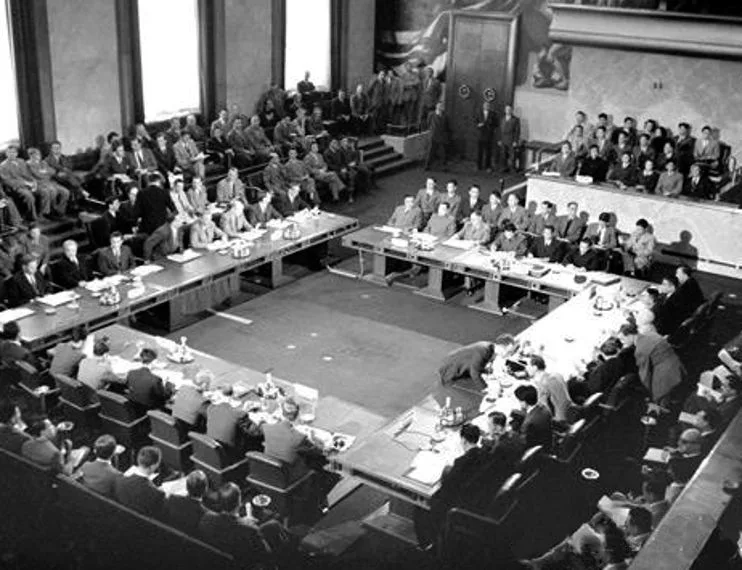
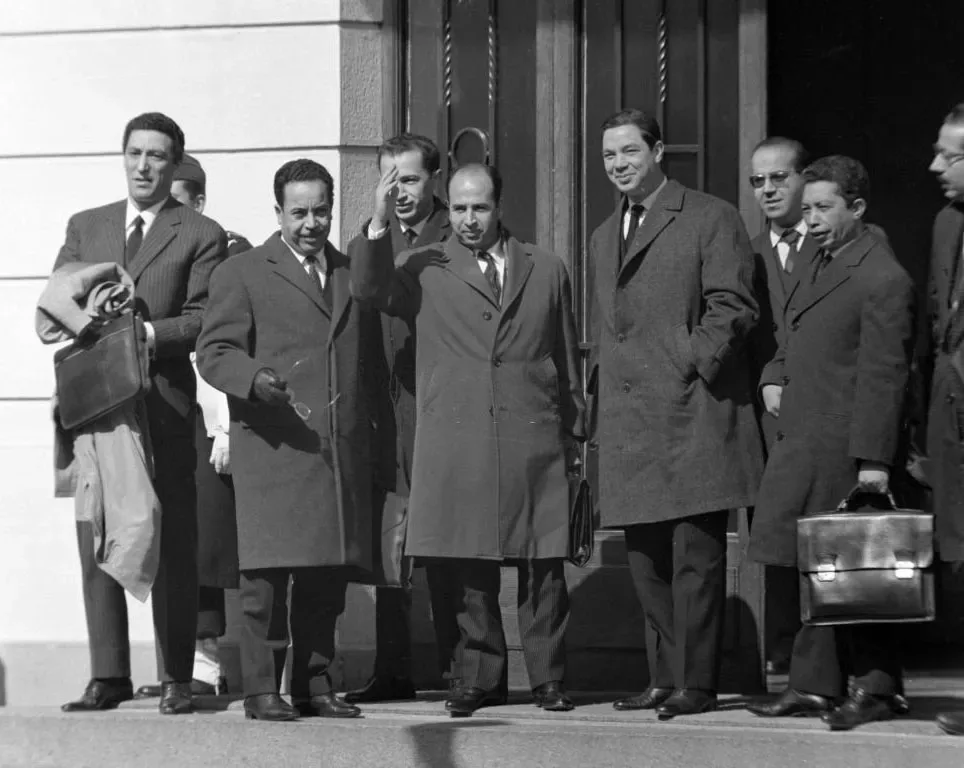
It ended not with a battlefield decision but with a negotiated exit. The Évian Accords — 93 pages of declarations (compiled Évian record) — signed on 18 March 1962 after final negotiations led for France by Louis Joxe and for the FLN's Provisional Government of the Algerian Republic (GPRA) by Krim Belkacem, ordered a ceasefire for 19 March and a referendum on self-determination, and gave the Europeans of Algeria equal legal protection for a transitional period, including respect for property (Encyclopedia.com; Country Study text). French voters approved the Accords by about 91 per cent on 8 April; on 1 July, some six million Algerians voted for independence and only about 16,000 against (Britannica; the precise tally in the Origins account is 5,975,581 to 16,534). De Gaulle recognised Algerian independence on 3 July, and the provisional executive proclaimed 5 July — the 132nd anniversary of the French entry into Algiers — as Independence Day (Country Study text).
Why did the war start?
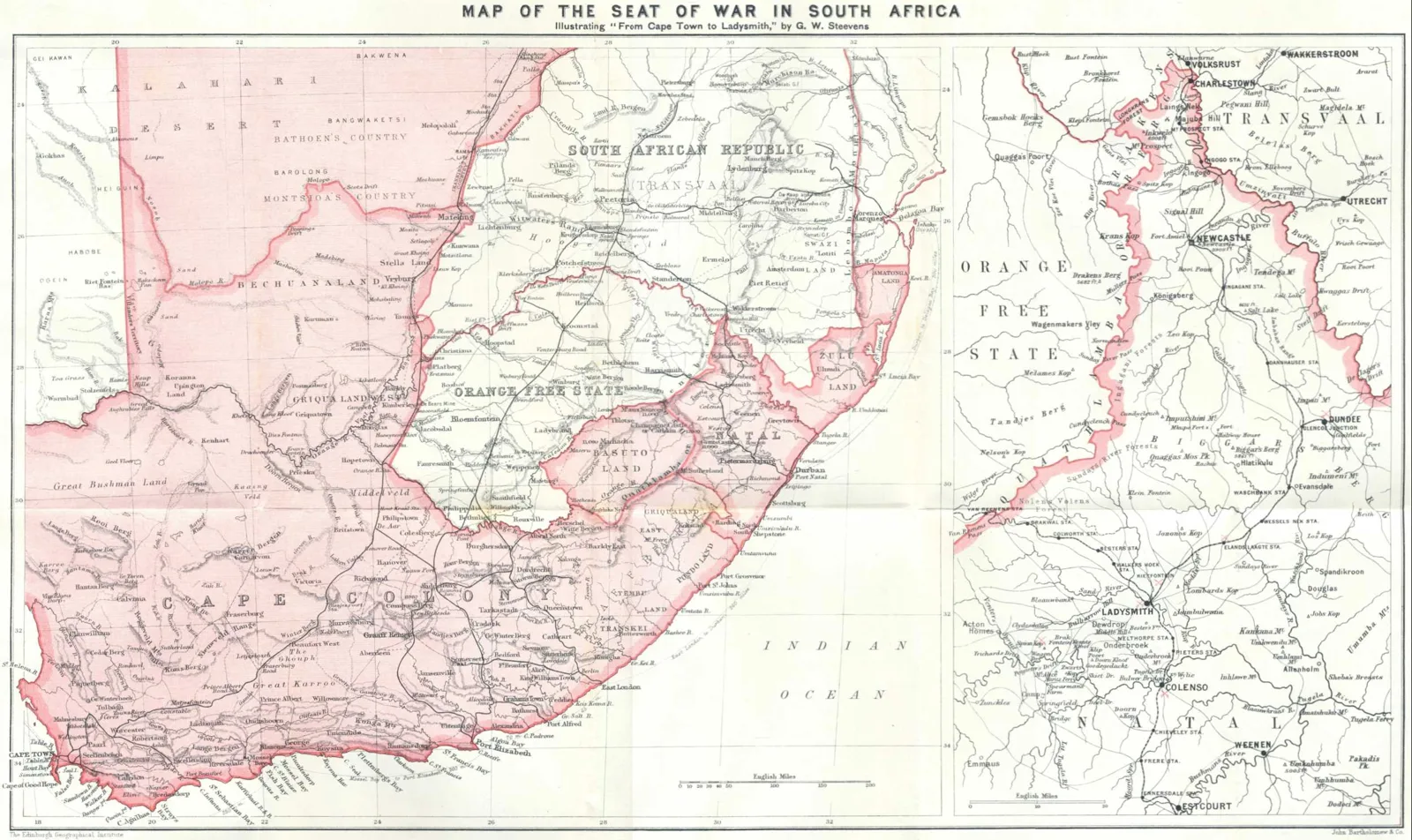
The war started because Algeria occupied a place no other French possession did: conquered from 1830, it was declared by the constitution of 1848 to be an integral part of France and divided into the three departments of Alger, Oran and Constantine — while its Muslim majority lived under a separate legal status. From 1865 Muslim Algerians could apply for full French citizenship, but few did, since it required renouncing Muslim personal law and was widely regarded as apostasy; all Algerians received full citizenship only in 1946 (EBSCO). In parallel, the French conducted systematic seizure of land and repression of indigenous political movements, and European settlers — the pieds-noirs, about a million strong by 1954 — held the best land and dominated the economy of a territory whose Muslim population numbered roughly nine million (EBSCO).
EBSCO dates the struggle's opening to 8 May 1945, VE Day itself: a Muslim protest in Sétif turned into a massacre of European settlers, and the French army retaliated with a counter-massacre; the compiled record puts the Sétif and Guelma killings at 6,000 to 30,000 Algerians dead and notes that some historians treat them as a cause of the war. Nine years of struggle and broken French promises followed (EBSCO). In 1954, former members of the paramilitary Special Organization (OS) split from the MTLD, formed the committee that became the FLN, and prepared military action; its nine chefs historiques — Aït-Ahmed, Ben M'Hidi, Ben Boulaid, Boudiaf, Didouche, Krim, Khider, Bitat and Ben Bella — led the rising (Britannica). France, which in May 1954 had just lost Indochina, was determined not to lose its oldest, nearest and legally most integrated territory next (compiled record).
How did the war unfold?
The war unfolded in three phases: an FLN insurgency that France answered with massive reinforcement (1954–56), a French military ascendancy bought with methods that destroyed the war's political legitimacy (1956–59), and a negotiated withdrawal conducted over the armed opposition of the settlers and part of the army itself (1959–62). The first attacks, centred on Batna and the Aurès, were militarily ineffective, but the uprising spread into strongholds in Little Kabylia and the Aurès that lay beyond French control, and Paris answered with a state of emergency and ever larger forces (Britannica).
The decisive escalation came in August 1955, when a widespread outbreak around Skikda (Philippeville) in the Constantine region killed nearly 100 Europeans and Muslim officials — the Country Study puts the dead at 123 — and French army and settler countermeasures killed somewhere between 1,200 Algerians according to French sources and 12,000 according to Algerian sources (Britannica). After Philippeville, in the Country Study's words, all-out war began. In August–September 1956 the FLN's Soummam congress organised Algeria into six autonomous zones (wilayat), created a National Council of the Algerian Revolution and an executive committee, and set out the movement's platform (Britannica). That autumn France granted independence to Morocco and Tunisia to concentrate on Algeria, and French intelligence diverted the plane carrying Ben Bella, Boudiaf, Khider and Aït-Ahmed to a forced landing, imprisoning the FLN's external leaders in France for the rest of the war — an act Britannica notes hardened the remaining leadership's resolve.
From 1956 into the summer of 1957 the FLN tried to paralyse Algiers itself in the Battle of Algiers: bombings and assassinations against military and civilian European targets, answered by General Jacques Massu's paratroopers, who resorted to the torture and summary execution of hundreds of suspects until the FLN's leadership in the capital was eliminated or driven out (Britannica). France simultaneously sealed the borders — electrified fences and the Morice Line against Tunisia and Morocco — separating the internal guerrillas from some 30,000 armed Algerians based beyond them (Britannica), and in February 1958 bombed the Tunisian frontier village of Sakiet Sidi Youssef, killing civilians including schoolchildren and drawing an Anglo-American mediation mission (Britannica). Historian Natalya Vince's reading, carried in the compiled record, explains the FLN's persistence through these defeats: its leaders understood they could not win a direct military victory, so they practised asymmetric, revolutionary warfare designed to erode France's political will — raising the war's cost, exhausting public support, and exposing French repression to undermine its moral authority.
In May 1958 the strain broke the French state itself. A settler uprising in Algiers, backed tacitly by army officers, demanded Algeria's integration with France and de Gaulle's return; within weeks de Gaulle headed the government, and the Fourth Republic gave way to the Fifth (Britannica). In September 1958 the FLN formed its government-in-exile, the GPRA, under Ferhat Abbas (Britannica). De Gaulle granted all Muslims full citizenship rights and at Constantine on 30 October announced a plan of schools, medical services, jobs and access to the higher public service — and, in 1959, General Maurice Challe's mobile offensives suppressed major rebel resistance across the north (Britannica; Country Study). Yet, as the Country Study puts it, political developments had already overtaken the army's successes: on 16 September 1959 de Gaulle publicly declared that Algerians had the right to determine their own future (Britannica).
The endgame was violent on the French side itself. Settler ultras staged the Barricades Week insurrection in Algiers in January 1960, which collapsed after nine days for lack of military support; in April 1961 four generals, among them former commanders-in-chief Raoul Salan and Maurice Challe, attempted a putsch that collapsed in three days; and the Secret Army Organization (OAS), formed by settlers and officers opposed to independence, waged a campaign of random terror to disrupt negotiations (Britannica). Negotiations with the GPRA opened in May 1961 — a month after de Gaulle suppressed the generals' rebellion (Encyclopedia.com) — broke off, resumed in March 1962, and produced the Évian Accords.
How many people died?
No agreed total exists, and the honest answer is a set of attributed ranges that diverge by a factor of three or more. The compiled tabulation puts historians' estimates of total deaths at 400,000–700,000, against the FLN and Algerian government's claim of about 1,500,000 Algerian deaths. Between those poles sit the other published figures this article found in its opened sources: other French and Algerian sources at approximately 960,000 dead; French officials and historians at around 350,000 — a figure the compiled record notes was regarded by many as an underestimate; Alistair Horne's estimate of Algerian casualties at around one million; and EBSCO's summary that estimates run as high as two million out of a population of ten million, with its consensus estimate "less than a million, but not that much less". The FLN's own estimate in 1962 had been 300,000 dead from war-related causes, before Algerian sources later raised the figure to about 1.5 million (Country Study text).
The components are more precisely documented than the total, but they are not agreed either, and this article does not present them as single numbers. The compiled record, citing Horne (p. 538), puts FLN soldiers killed at 140,000 to 152,863 — including 12,000 killed in the FLN's own internal purges and some 4,300 Algerians of the FLN and its rival MNA killed in metropolitan France. For French soldiers it carries three different counts in three places: 25,600 killed in its headline tabulation, 23,196 killed in its infobox, and French military authorities listing 17,456 dead, of whom 5,966 died in accidents, with 65,000 wounded. For Europeans it likewise gives 6,000 civilian deaths in the headline tabulation, while French figures elsewhere in the same record counted European-descended civilian casualties exceeding 10,000, including 3,000 dead, across 42,000 recorded violent incidents. French sources estimated that 70,000 Muslim civilians were killed, or abducted and presumed killed, by the FLN. Martin Evans, citing Gilbert Meynier, implies at least 55,000 to 60,000 non-Harki Algerian civilians were killed during the conflict without specifying which side killed them (compiled record). One further figure in the Country Study text warns against treating the battle deaths as the whole toll: uncounted thousands of Muslim civilians died in French ratissages, bombing raids and vigilante reprisals, and among the more than two million uprooted Algerians many thousands died of starvation, disease and exposure.
The killing did not stop cleanly at the ceasefire. Large numbers of Harkis — the Algerian auxiliaries who had served with the French army — were murdered in post-independence reprisals, with estimates in the opened record running from 30,000 to 150,000 killed; about 90,000 people in some 20,000 Harki families escaped to France, some helped by their French officers acting against orders (compiled record). This article therefore publishes no single death toll for the Algerian War: it publishes the range 400,000–700,000 (historians) to 1,500,000 (FLN/Algerian government claim), with Horne's roughly one million and EBSCO's "less than a million, but not that much less" between them, each figure attached to the source that produced it.
What were the economic effects?
The war's deepest economic effect inside Algeria was the deliberate uprooting of its rural society. Under the regroupement programme of 1957–60, the French military removed more than two million Algerians — over a fifth of the Muslim population — from their villages, mostly in the mountainous districts, and resettled them in supervised camps and fortified villages in the plains, to cut the guerrillas off from food, recruits and shelter (compiled record; Country Study). The compiled record describes the result: in hundreds of villages, orchards and croplands not already burned went to seed for lack of care, the displaced found it difficult or impossible to re-establish their previous economic and social systems in poor living conditions, and the disruption of relocation continued to be felt a generation later. Over 8,000 villages were destroyed in the course of the war (compiled record).
For France, the war was a mobilisation on a scale no post-1945 colonial campaign matched, though the two opened sources count it differently — 1.5 million men mobilised in total (compiled record) against some two million conscripts drafted across its eight years (Britannica), counts that reflect different definitions rather than figures that can be combined — with the army in Algeria absorbing 470,000–500,000 troops at its peak. De Gaulle's answer, once in power, was to try to buy the political problem away: the Constantine announcement of October 1958 promised adequate schools and medical services, employment creation and Muslim entry into the higher ranks of the public services (Britannica). What France would not surrender cheaply was the Sahara: the Origins account of the Évian negotiations lists sovereignty over the Sahara — where France had discovered petroleum in 1956 — among the four questions the talks turned on, alongside pied-noir guarantees, French bases and nuclear-testing privileges (France had detonated its first atomic bomb in the Sahara in 1960), and the framework of future association.
Independence then triggered one of the fastest population transfers of the century. Upon independence in 1962, 900,000 European Algerians fled to France within a few months, fearing FLN revenge; the French government was unprepared to receive so many refugees, which caused turmoil in France (compiled record). The same record’s overall total — one million Europeans fled — counts the whole exodus rather than only its first months, which is why the two figures differ. The Évian settlement had promised that French aid would continue and that Europeans could depart, remain as foreigners, or take Algerian citizenship (Britannica), and its Chapter II framed a future of Franco-Algerian "cooperation" (Encyclopedia.com); Horne's verdict, noted in the Évian record, is that most provisions of the agreements were overtaken by events. Algeria emerged independent but with its countryside displaced, its settler-run commercial and administrative class gone in a single summer, and its economy — as EBSCO notes of the decades since — dependent on hydrocarbon exports whose price swings bring recurring uncertainty.
How did it shape the world?
The Algerian War shaped the world first by remaking France. The Fourth Republic died of it: by 1958, in EBSCO's summary, France's failure to pacify Algeria and rising popular opposition destroyed the Fourth Republic, and the Fifth Republic — France's current constitution, built around a strong presidency — came out of that failure. De Gaulle, brought to power by the Algiers junta's demand that Algeria be kept French, used that power to let Algeria go, surviving the Barricades Week, the generals' putsch and repeated OAS assassination attempts to do so (Britannica; EBSCO). In Algeria, Ben Bella emerged from the FLN's internal contests to become premier in September 1962; Algeria was admitted as the 109th member of the United Nations on 8 October 1962, and in November his government banned all political parties except the FLN. Boumédiènne deposed him in 1965, and Algeria remained a one-party state until the civil war of the 1990s (compiled record).
Second, it became the century's reference case for revolutionary and counterinsurgency war. The FLN's method — guerrilla integration with the rural population, urban terror answered by systematic torture, and a diplomatic front at the United Nations aimed squarely at the stronger power's political will (Vince, in the compiled record) — was studied on both sides of later wars. EBSCO records the direct line into American practice: in Vietnam the United States "practically duplicated France's set of Algerian mistakes", and when the American military revised its counterinsurgency doctrine for Iraq and Afghanistan it drew heavily on the Algerian experience. Alistair Horne's own framing of his history, in his 2006 preface, is that the war's repercussions continue to be felt not only in Algeria and France but throughout the world, and that the conflict "looks less like the last colonial war than the first post-modern insurgency" (Air University review of Horne).
Third, it reset the terms of decolonisation. Algeria was not a protectorate that could be quietly released, as Morocco and Tunisia had been in 1956: it was, in law, France — and its independence therefore demonstrated that even settler colonialism backed by half a million troops could be ended by a movement that lost most of its battles. The GPRA's recognition by the Arab and communist states (Britannica) — and, in the compiled record's fuller list, its quick recognition by Morocco, Tunisia, China and several other African, Arab and Asian countries — and the UN General Assembly's annual consideration of the Algerian question from 1955 (compiled record) made Algeria the template case for the era's new international politics of self-determination.
What do historians debate?
Historians debate, first, whether the thing they are describing is allowed to be called a war. In France it was officially fought as "operations for the maintenance of order"; the government called it the Algerian events, the Algerian problem, a pacification — never a war — and only in 1999 did the National Assembly's recognition permit the Algerian War to enter French school syllabi as a war: la guerre sans nom, the war without a name (compiled record, historiography). After reports of torture reached France in 1956–57 it acquired its other enduring French name, la sale guerre, the dirty war. The torture question itself moved from denial to admission over decades: General Paul Aussaresses acknowledged in 2000 that systematic torture was used and that the deaths of Ali Boumendjel and of the FLN's Algiers leader Larbi Ben M'Hidi had been disguised as suicides; General Jacques Massu, who had commanded in Algiers, came to favour an official condemnation; and in 2018 France officially admitted that torture was systematic and routine (compiled record).
Second, they debate the numbers, and the numbers are politics. The FLN's progression from its own 1962 estimate of 300,000 dead to the Algerian state's 1.5 million, set against French officials' 350,000 and historians' 400,000–700,000, is the single most contested fact of the war; this article's practice, following its sources, is to publish the attributions and let the range stand. Third, they debate perspective. Horne's A Savage War of Peace (1977) is regarded as the leading book on the subject in English, yet the historiographical survey notes it was written from a French rather than an Algerian perspective, and that Horne — who had condemned the French bombing of Sakiet Sidi Youssef in 1958 — was accused of concerning himself with cause and effect rather than right and wrong. The English-language field around it is named in EBSCO's bibliography: Martin Evans's The Memory of Resistance (1997) and France's Undeclared War (2013) on French opposition and the war France would not name; Todd Shepard's The Invention of Decolonization (2008) on how the war remade France itself; Phillip C. Naylor's France and Algeria: A History of Decolonization and Transformation (2000), cited in the Évian record; and Guy Pervillé's La Guerre d'Algérie (2007), cited in the compiled record's casualty notes. Guy Pervillé also wrote the standard study of the settlement itself, Les accords d'Evian (1962) (2012).
The debate that matters most may be the one Vince's argument settles least. If the FLN won by making the war politically unbearable rather than militarily unwinnable — and the French army's own 1959 position supports that reading — then Algeria is the case that separates military success from political victory in modern war. If, as other readings stress, de Gaulle's France chose the Fifth Republic and European modernisation over Algérie française once integration would have meant full equality, then the war was lost in Paris before it was settled at Évian. The sources opened for this article support both mechanisms operating together; they do not support the simpler story, still common on both shores, that one side simply defeated the other.