Elon Musk said on Wednesday that limits on Starshield, the military satellite service whose restriction disrupted Ukrainian drone missions overnight, are decided by the US military and ultimately by President Donald Trump, not by SpaceX. Ukraine's defence ministry said on Wednesday evening that connectivity had improved for speeds up to 160 km/h, but that a speed cap remained in place. A senior US official told Axios that the Trump administration was not responsible for the restrictions, the Associated Press reported. Who imposed the limit, and why, remains disputed.
What did Musk say?
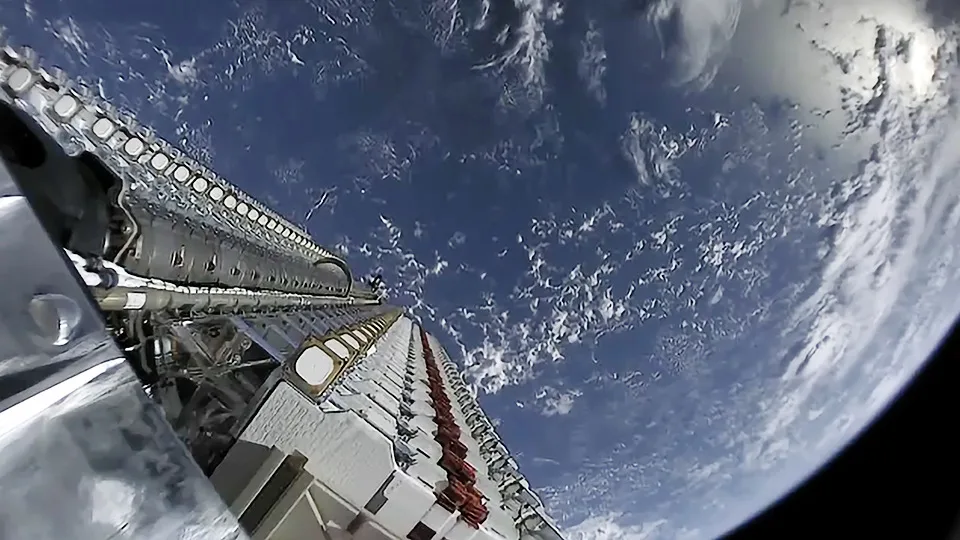
Musk said Starshield systems are owned and controlled by the US government, and that limits on their speed or use are set by the US military and the president. In the same post on X, reported by Reuters, he distinguished Starshield from Starlink, the commercial service owned and controlled by SpaceX, whose use he said is limited to civilian or defensive activities. Reuters noted that Starshield is SpaceX's business unit for military and intelligence satellite systems for the Pentagon, that its secure communications use dedicated terminals and enhanced encryption but rely on the Starlink constellation as a backbone, and that the Pentagon is its largest customer.
Ukraine's defence ministry gave a different account of who maintains the limit, AFP reported: the ministry said SpaceX continues to maintain the 161 km/h limit, that actual limits were significantly lower through much of Wednesday, and that by Wednesday evening the quality of the connection had improved for speeds up to 160 km/h. The two accounts did not address each other directly, and neither side said how the limits would change from here.
What did the United States say?
A senior US official told Axios the Trump administration was not responsible for the restrictions, the AP reported, while White House officials told Ukrainian counterparts they did not control SpaceX. According to the AP's account of the Axios reporting, Ukrainian officials contacted the White House, the CIA and the Pentagon seeking clarification, and one source said the administration planned to contact the company. The AP also reported that Ukrainian officials suspect the limitations may be connected to Trump's demand that Kyiv stop attacking Russian oil refineries, and stated plainly that no evidence has established that Trump ordered the satellite restrictions to pressure Kyiv.
Ukraine's defence ministry said the remaining cap of about 100 mph (161 km/h) was still too low for intercepting some Russian jet-powered drones, the AP reported, citing Axios. Former defence minister Mykhailo Fedorov said on X that connectivity at speeds of up to 160 km/h was being restored and that removing the speed limit entirely was now critical for Ukraine's defence.
Why does it matter?
The exchange moves the dispute from a technical failure to a public disagreement over control of a system Ukraine's military depends on. As reported earlier on Wednesday, Ukrainian officials said the restriction came without warning, dropped drone connections for 10 to 20 seconds at speeds of 110–120 km/h according to the 7th Rapid Reaction Corps, and disrupted missions, logistics and reconnaissance while Russian missile attacks on Kyiv and Kharkiv left about 600,000 people without power. Polish Foreign Minister Radoslaw Sikorski, whose government pays for Ukraine's Starlink subscriptions, publicly challenged Musk over whether he was playing politics with his products.
What is established is narrow: a speed restriction took effect overnight, service had partly improved by Wednesday evening, and the cap had not been removed. What is not established is who ordered the restriction or why. Musk's account assigns the decision to the US government; the Ukrainian defence ministry's account assigns the cap's maintenance to SpaceX; and a senior US official, via Axios, denied administration responsibility. This article presents those three accounts as they stand, unreconciled.