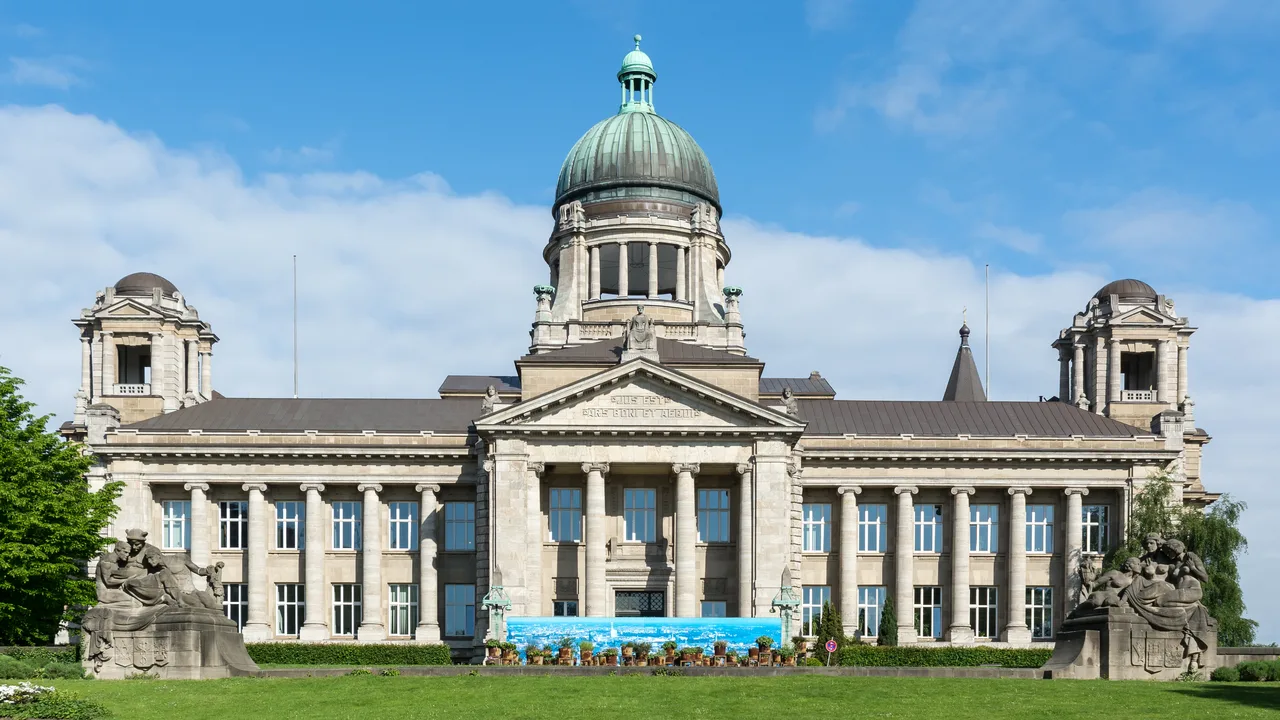
The Nord Stream trial opened at the Hamburg Higher Regional Court on Wednesday, putting a former Ukrainian military officer in the dock over the September 26, 2022 explosions that ruptured three of the four Nord Stream gas pipelines under the Baltic Sea. The defendant, identified under German privacy rules only as Serhii K., is accused of organising the operation on behalf of unidentified Ukrainian state entities. He denies any involvement, and Ukraine's government denies ordering or carrying out the attack. The proceedings are expected to continue into February, according to Reuters and Al Jazeera.
What is Serhii K. accused of?
Serhii K. is accused of leading a team of Ukrainian agents — including divers and an explosives expert — that prosecutors say planned and carried out the sabotage, Reuters reported. According to the prosecution case reported by Reuters and Al Jazeera, he travelled into Germany through Poland about three weeks before the attack using a forged Ukrainian passport, and the group used a sailboat hired in the northern German city of Rostock to reach waters near the Danish island of Bornholm, where they attached military-grade explosives fitted with timers to the pipelines on the seabed.
German prosecutors say the actions he is accused of — attacking civilian targets and causing explosions that destroyed infrastructure and damaged public services — would amount to a war crime, Reuters reported. The alleged aim, prosecutors say, was to disrupt a major source of foreign revenue for Russia after its full-scale invasion of Ukraine earlier in 2022. Serhii K., a 50-year-old former officer, was arrested in Italy in August 2025 under an international warrant and extradited to Germany that November, Al Jazeera reported. He is the only person on trial.
A second suspect, Vladimir Z., whom prosecutors describe as one of the divers in the team, was arrested in Croatia in August, and a Croatian court last month approved his extradition to Germany, according to Al Jazeera. Reuters likewise reported that Croatian authorities had arrested a man identified as Vladimir Z. who prosecutors believe was one of the divers.
What happened to the pipelines in September 2022?
The blasts ruptured three of the four concrete-coated steel pipelines in the Nord Stream system, which ran 1,200 kilometres (750 miles) from Russia to Germany at a depth of 80 to 110 metres under the Baltic. Swedish seismologists detected several explosions on September 26, 2022, some 17 hours apart, and the ruptures sent large plumes of methane gas into the atmosphere, Reuters reported.
Before the war, Germany received about half of its natural gas imports through Nord Stream 1, by far the largest and most modern Russian pipeline serving western Europe. The system was built by Russia's Gazprom to supply up to 110 billion cubic metres of gas to Germany and sat at the core of economic ties between the two countries. A second pipeline, Nord Stream 2, was built to double that supply, but Berlin cancelled its approval shortly before Russia's invasion, and Moscow had already cut supplies through Nord Stream 1 in response to European sanctions before the explosions. The blasts sealed the end of Germany's longstanding dependence on Russian gas, Reuters reported. Denmark and Sweden later closed their own investigations, while German investigators focused on the rented yacht and reported finding traces of underwater explosives on board, the BBC reported.
How have the governments involved responded?
Ukraine's government has denied any involvement, and President Volodymyr Zelensky has consistently said his country was not involved, according to the BBC. The denial is a sensitive point in relations between Kyiv and Berlin: Germany is Ukraine's largest European supplier of military aid, and Reuters described the case as diplomatically and politically awkward for a German government that remains staunchly supportive of Ukraine despite the investigative trail.
Russia's government said on Monday that it expected a just verdict that would reveal the names of the perpetrators and of those who ordered the operation, Reuters reported. In the first months after the attack, Western officials mainly pointed at Russia; Moscow denied involvement, called the suggestion that it would destroy its own pipelines absurd, and blamed the United States and Britain, which denied involvement, according to Reuters and the BBC.
Why does the trial matter beyond the courtroom?
The hearing matters because it is the first public test of evidence that has until now circulated as leaks, briefings and official suspicion. Reuters noted that the trial, expected to continue into February next year, could also carry domestic political weight in Germany: the far-right Alternative for Germany, which has led opinion polls for more than a year, has called for an end to military aid for Ukraine and a restoration of energy ties with Moscow. Whatever the court decides about one defendant, its findings on who planned the operation — and on whose orders — will be read closely in Berlin, Kyiv and Moscow. The defendant is presumed innocent unless the court finds otherwise, and his denial, and Kyiv's, are stated in this article alongside the prosecution case.
This article reports the prosecution's allegations and the responses to them as published by Reuters, Al Jazeera and the BBC. The charges against Serhii K. are allegations that the Hamburg court has yet to test in full; he denies any involvement, and no verdict has been reached.