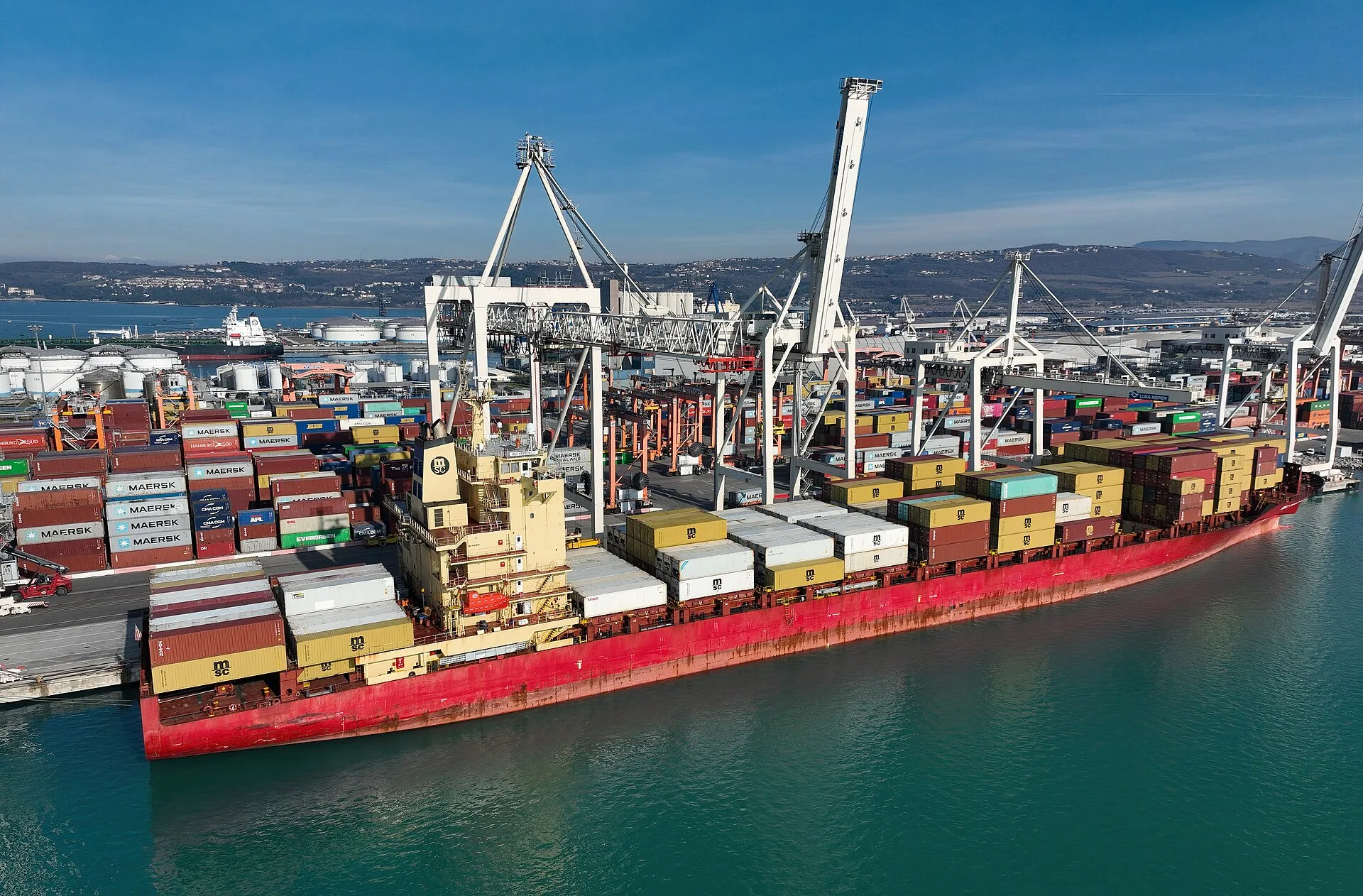
The Singapore-registered container ship GFS Pride has sunk in the Strait of Hormuz after being struck by an unknown projectile on October 13, Singapore's Maritime and Port Authority (MPA) said on Wednesday, and a second Singapore-registered container vessel, the GFS Giselle, was struck on October 14 and sustained hull damage. All 21 crew members aboard the GFS Pride were safely evacuated and no injuries were reported, the MPA said. All 22 crew aboard the GFS Giselle were safe, and the vessel reached a safe anchorage under its own propulsion. The MPA said there were no Singaporeans aboard either vessel, that it was in contact with the vessels' management company, and that it was monitoring the situation.
What happened to the two Singapore-registered ships?
The GFS Pride was struck on October 13, sustained damage and caught fire, and later sank; the GFS Giselle was struck on October 14 and survived with hull damage. Maritime security sources told Reuters the GFS Pride, a small container ship of 2,824 TEU capacity, had sunk, and the Hydrographer of Pakistan issued a navigational warning dated October 14 reporting the vessel sunk with floating containers in the water and cautioning mariners. According to data from the International Maritime Organization, the UN shipping agency, the loss of the GFS Pride is the second vessel sinking since the US-Iran war began on February 28, Reuters reported. Riviera Maritime Media, citing UKMTO alerts and the maritime intelligence firms Vanguard and Marisks, reported the GFS Pride was hit about one nautical mile east of Ras Makhbuq, Oman, was reported on fire and adrift in the early hours of Wednesday, and that a later navigational warning reported it sunk. The vessel's UAE-based manager, GFS Ship Management FZE, could not immediately be reached for comment, Reuters reported.
What else was reported hit around the strait?
A third vessel damaged in an earlier attack was also reported to be sinking on Wednesday, and at least one further container ship was reported struck. The Antigua and Barbuda-flagged bulk carrier Cape Dao, struck by a projectile on September 23, was reported to be sinking close to the strait after an unsuccessful rescue attempt, maritime security sources told Reuters, and the British maritime risk group Vanguard said the same in a note on Wednesday. Riviera reported the Cape Dao was hit by two projectiles northeast of Khasab on September 23, killing one Indian seafarer at the time, and that a NAVAREA IX warning on October 13 reported it sinking off Oman. Riviera also reported, citing Vanguard and Ambrey, that a GFS-managed container ship, the Al Saadiyat, was struck at about 1700 UTC while making an outbound transit, with no crew casualties or significant damage reported, and that the vessel continued its voyage; that identification rests on the maritime firms' reporting and had not been confirmed by a flag-state authority at publication time.
Who is being blamed for the strikes?
No authority has attributed the projectile strikes, and the accounts that exist conflict. The MPA described both projectiles as unknown and said the continued attacks on commercial shipping endangered seafarers and breached international law. Iran's Islamic Revolutionary Guard Corps Navy claimed, in an account carried by Riviera, that the GFS Pride struck a naval mine while navigating what it described as an unauthorised route through the strait; that claim is published here as the IRGC's account only — no independent confirmation of a mine strike was available in the sources opened, and it does not explain the projectile the MPA reported hitting the GFS Giselle. Reuters reported on Wednesday, in separate reporting based on two senior Iranian officials, that Iran is deploying new tactics against ships transiting Hormuz, including a faster attack tempo; Tehran has not publicly claimed these two sinkings in the sources opened for this article.
This is not financial advice. The sinkings and crew outcomes are published as stated by Singapore's Maritime and Port Authority, whose statement was carried independently by Reuters and by Bernama, and by the maritime security sources named in the text. The IRGC mine account is a claim by one party to the conflict and is not independently confirmed.